Knowing what to do during a power outage in the first few minutes keeps you safe and saves money later. Most outages last under a few hours, but some run for days. A calm, simple routine works for both.
Quick Answer
What to do during a power outage: check whether only your home is affected, report the outage to your utility, use flashlights instead of candles, keep the fridge and freezer closed, and use only safe heat or cooling. Never run a generator or grill indoors. Conserve phone battery by lowering brightness and using low power mode.
Key Takeaways
- Check first: look at the breaker panel and the neighbors before you call anyone.
- Light: flashlights and lanterns are safer than open flames.
- Food: a closed fridge keeps food safe for about 4 hours, a full freezer about 48 hours (FDA).
- Carbon monoxide: never use a generator, grill or camp stove inside.
- Phone: keep it in low power mode and save calls for what matters.
Table of Contents
How Do You Check If It Is Only Your Home?
Look outside first. If neighbors have lights on and you do not, the problem is likely inside your home. If the whole street is dark, the outage is in the grid.
If only your home is out, go to the breaker panel. Look for a tripped breaker (switch sitting in the middle or off position). Flip it fully off, then on. If it trips again, stop. Something on that circuit is faulty, and repeated resetting can cause damage.
Next, unplug sensitive electronics such as computers, TVs and game consoles. When power returns, a surge can damage them. Leave one lamp switched on so you know when the power is back.
If you see a downed line, stay far away and assume it is live. Call 911 and your utility. Do not touch anything it is touching. For injuries, see our guide on electrical injury first aid.
How Do You Report a Power Outage to the Utility?
Use your utility’s outage page or text line first, then the phone number printed on your bill. Reporting helps crews locate the fault, especially if only a few homes are out.
Have your account number or service address ready. Many utilities offer an outage map with an estimated restoration time. Check it on your phone, but remember it is an estimate and often changes.
Save your utility’s number and website in your phone before an outage. Call 911 only for emergencies such as downed lines, fire, or a medical device failure that puts someone at risk. Ready.gov[1] lists the basic steps for outages.
If your home has a medical need that depends on power, register with your utility’s medical priority program if it has one. Do this before an outage, not during.
Popular Guides
Is It Safe to Use Candles in a Power Outage?
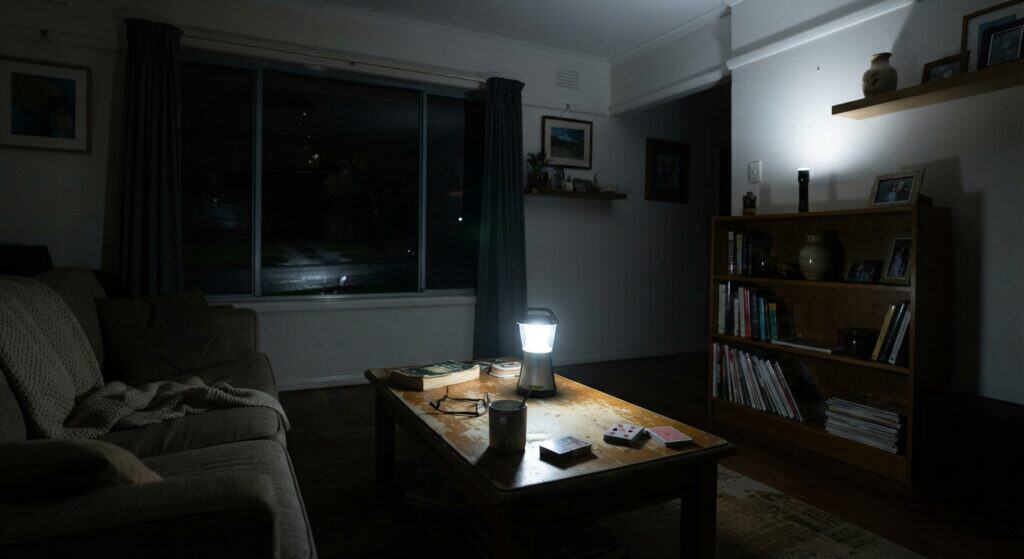
No. Use flashlights, headlamps or battery lanterns. Candles are an open flame in a dark home, and they are easy to knock over or forget.
Keep a flashlight within reach of each bed and one in the kitchen. Headlamps are best because they free both hands. Check batteries twice a year and store spares with the lights. Our guide to battery lanterns for power outages covers good options.
Use lanterns on tables and floors, not on shelves where they can fall. Turn off the lights you do not need so you save battery. A single lantern in the main room is enough for most evenings.
Go through your power outage preparedness kit now and make sure you have lights, spare batteries and a radio in one place.
Featured
How Long Does Food Last Without Power If You Keep the Fridge Closed?
A closed fridge keeps food safe for about 4 hours. A full freezer holds its temperature for about 48 hours, and a half-full one for about 24 hours, according to FoodSafety.gov[2]. Every door opening shortens that time.
Before you open the door, decide what you need. Take it out fast and close it. A fridge thermometer is the best way to judge safety. Food that has stayed at 40°F or below is safe. Do not taste food to check it.
If the outage runs past 4 hours, move key items into a cooler with ice. Group freezer items tightly, since a packed freezer stays cold longer. The USDA Food Safety and Inspection Service[3] has a full guide on what to keep or throw out.
| Food | After 4+ hours above 40°F | Why |
|---|---|---|
| Raw meat, poultry, fish | Toss | Bacteria grow quickly |
| Milk, soft cheese, yogurt | Toss | Perishable dairy spoils |
| Cooked leftovers | Toss | Not safe warm |
| Cut fruit and vegetables | Toss | Cut surfaces spoil |
| Eggs | Toss | Raw eggs are perishable |
| Hard cheese, butter | Keep | Low moisture holds up |
| Ketchup, mustard, jam | Keep | Acidic or sugary |
| Whole fresh fruit | Keep | Skin protects it |




How Do You Stay Warm or Cool and Avoid Carbon Monoxide?
Dress in layers or move to the coolest room, and never use fuel-burning devices indoors. Carbon monoxide has no smell and can kill in a closed space.
Warning
Never run a generator, grill, camp stove or charcoal burner inside your home, garage or near windows. Keep generators outside and well away from the house. Use battery-powered CO alarms. If an alarm sounds or anyone feels dizzy, headachy or sick, go outside and call 911. See the CDC carbon monoxide page[4].
Staying Warm
Gather everyone in one room and close the doors. Wear layers, hats and socks. Hang blankets over windows at night. Our guides on safe sleeping during power outages and winter outage prep go further. In freezing weather, read about preventing frozen pipes.
Staying Cool
Close blinds, stay on the lowest floor, drink water and wear light clothing. Watch older adults, babies and pets closely. See staying cool without AC. For deeper safety on fuel and heat, read carbon monoxide safety during outages.
Articles
How Do You Save Phone Battery During a Power Outage?
Turn on low power mode, lower screen brightness and close unused apps. Text instead of calling, because texts use less power and often go through when calls fail.
Switch off Wi-Fi and Bluetooth if you do not need them, and keep the phone in airplane mode when you are not checking for updates. Cold drains batteries faster, so keep the phone close to your body.
Charge a power bank before storms. A 10,000 mAh bank usually gives a phone around two to three charges, depending on the phone. See power banks for emergency charging. A car charger also works, but run the car only outdoors with good airflow, never in a closed garage.
Pro Tip
Set one check-in time, such as every two hours, to look at outage updates. This stops constant scrolling that drains the battery.
Recommended Reading
Power Outage Timeline: First Minutes to 48 Hours
A simple order of actions keeps you from missing key steps. Use this as a guide.
| Time | What to do |
|---|---|
| First 5 minutes | Check breakers and neighbors, grab flashlights, unplug electronics, leave one lamp on |
| First hour | Report outage, check the utility map, keep fridge closed, charge devices from a power bank |
| 2 to 4 hours | Set up one living room, plan meals that need no cooking, move key items to a cooler |
| 4 to 24 hours | Discard perishables above 40°F for 4 hours, ration phone use, check on neighbors |
| 24 to 48 hours | Eat freezer food first, consider shelter or a warming or cooling center, review extended outage steps |
Power Outage Example: What the First Night Looks Like
Imagine a family of four when the lights go out at 6:30 p.m. in winter. Dad checks the panel, sees no tripped breakers, and looks outside. The whole street is dark.
At 6:40 they report the outage by text and see a restoration estimate of 11 p.m. They put lanterns on the table and unplug the TV. At 7:30 they eat a cold dinner and keep the fridge shut.
By 10 p.m. the house is 62°F. They move into the living room, hang blankets over windows and bring in mattresses. The estimate slips to 3 a.m. They run no stove or generator indoors. Phones stay at 40 percent through low power mode.
The power returns at 4 a.m. The thermometer reads 38°F in the fridge, so the food is fine. They reset the clocks and plug devices back in one at a time.
Power Outage Safety for Babies, Older Adults, Pets and Medical Needs
People who depend on power or struggle with temperature need a plan early. Babies and older adults lose or gain heat quickly, so check on them often.
If someone uses an oxygen concentrator or other powered medical device, call your utility and your device supplier at once, and go to a place with power if the backup will not last. Call 911 for any medical emergency. Keep insulin and other cold medicines in a closed fridge, and ask your pharmacist about safe limits. For safe storage of medicine, see securing medications.
Keep pets inside with you, with water. For children, stay calm, play simple games in the lantern light and explain what is happening. See protecting children during disasters.
When Should You Leave Home During a Power Outage?
Leave when the home cannot stay safe or the outage threatens health. Signs include indoor temperatures that keep dropping toward freezing, extreme heat with signs of heat illness, or a medical device that cannot run.
- Someone shows signs of hypothermia (shivering, confusion, slurred speech) or heat illness (hot dry skin, confusion, fainting). Call 911.
- A carbon monoxide alarm sounds. Get out first, then call.
- You smell gas. Leave, then call from outside. See how to shut off utilities.
- The outage is expected to last days and you have no safe heat or cooling.
Check local emergency management for open warming or cooling centers. Before you go, read securing your home during evacuation.
Common Power Outage Mistakes to Avoid
- Opening the fridge often. Each opening lets cold air out. Decide what you need first.
- Using a generator or grill indoors. It can cause fatal carbon monoxide poisoning. Run it outside, far from windows.
- Burning candles unattended. They start fires. Use battery lights.
- Leaving everything plugged in. A surge on return can damage electronics. Unplug key items.
- Running a gas oven for heat. It is unsafe and can produce carbon monoxide.
- Tasting food to test it. Dangerous bacteria cannot be seen or tasted. Use a thermometer.
- Ignoring home security. A dark house draws attention. See low-tech security during outages.
What to Do When the Power Comes Back On
Wait a few minutes before plugging in, then add devices one at a time. This avoids a surge or overloaded circuit.
Check the fridge and freezer temperature. Throw out anything that stayed above 40°F for more than 4 hours. If the freezer still has ice crystals, food may be safe to refreeze. Reset clocks and any timers on medical or heating devices.
Restock batteries, recharge power banks and note what ran short. If you use a well, read how to test well water safety. Then improve your plan with our guide to prepping for outages in any season.
Power Outage FAQs
Should I turn off my breakers during a power outage?
Not all of them. Turn off or unplug major appliances and sensitive electronics. Leave one light on so you know when power returns.
Can I use a gas stove during a power outage?
Yes for cooking, if it lights safely and the room is ventilated. No for heating, because it can release carbon monoxide.
Is it safe to drink tap water during an outage?
Usually yes for city water, but follow local notices. Well pumps stop without power, so store water before a storm.
Can I charge my phone in my car?
Yes, if the car is outdoors with good airflow. Never run it in a closed garage because of carbon monoxide.
Do I need to call the utility if neighbors already did?
Yes, it helps. Your report confirms your address is affected, and it can reveal a smaller fault on your own line.
Will a landline phone work in an outage?
Sometimes. Old copper landlines may work, but cordless and internet phones need power. A charged cell phone is a better backup.
Official Power Outage Resources
Government
Ready.gov Power Outages
Federal guidance on preparing for and handling outages.
Government
CDC Carbon Monoxide
Symptoms, causes and prevention of carbon monoxide poisoning.
- Ready.gov
- FoodSafety.gov
- USDA Food Safety and Inspection Service (fsis.usda.gov)
- CDC carbon monoxide page (cdc.gov)