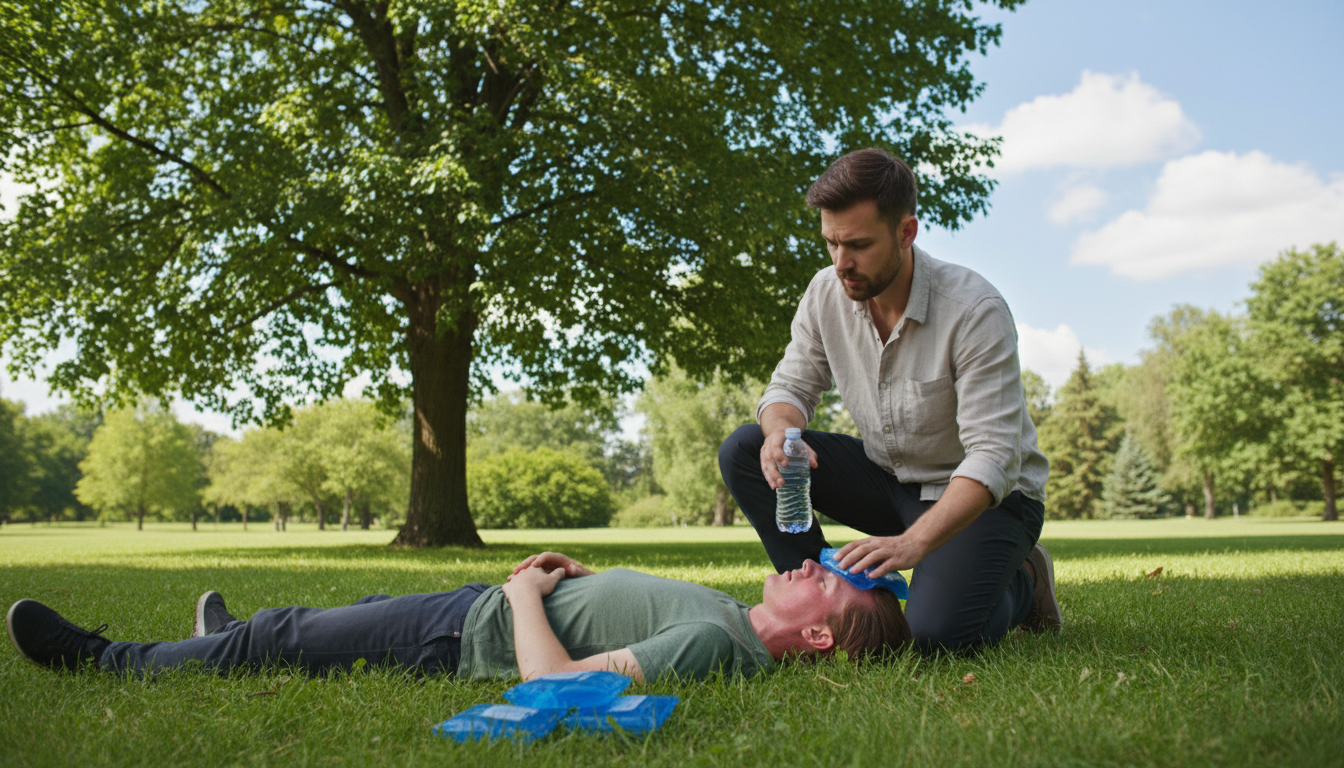
Imagine you’re at a backyard barbecue on a hot summer day. Someone nearby suddenly stops talking. Their skin looks red and feels burning hot. They’re confused and stumbling. This person needs immediate help.
Heat stroke is a life-threatening emergency that strikes fast and hard. It happens when your body’s cooling system fails. Your body temperature can spike above 105-106°F in minutes.
At these extreme temperatures, proteins in your cells start to break down. Your brain, kidneys, and heart can suffer serious damage.
The good news is that you don’t need medical training to take action. Knowing how to respond during those critical minutes before the ambulance arrives can save a life. Treating heat stroke without help starts with recognizing what’s happening and then cooling the person down as fast as possible.
This article teaches you what you need to know. You’ll learn how to spot heat stroke before it’s too late. You’ll discover cooling techniques that actually work.
You’ll understand managing heatstroke alone during the critical window before professional help arrives.
The Red Cross and emergency medicine physicians confirm that quick action saves lives. You can protect yourself and your loved ones. This information is designed for everyday people, not just medical professionals. Read on to gain the skills and confidence you need.
Table of Contents
Understanding Heat Stroke: When Your Body’s Cooling System Fails
Your body works hard to stay at 98.7°F. When it’s too hot, your skin sweats and blood vessels expand. This helps cool you down.
But, if it’s too hot or you’re outside too long, your body can’t cool down fast enough. When your body temperature goes over 105-106°F, serious damage starts. Proteins in your cells break down and die.
This is why knowing the difference between heat exhaustion and heat stroke is so important. It helps you treat heat-related illness correctly.
The Difference Between Heat Exhaustion and Heat Stroke
Heat illness is a spectrum. Heat exhaustion and heat stroke are at different points on this spectrum. Knowing where someone is helps you know how to help them.
| Feature | Heat Exhaustion | Heat Stroke |
|---|---|---|
| Mental Status | Alert and aware | Confused or unresponsive |
| Common Symptoms | Dizziness, nausea, headache, weakness | Loss of consciousness, seizures, irritability |
| Body Temperature | Below 104°F | Above 104°F (often 105-106°F or higher) |
| Sweating | Heavy sweating | May stop sweating entirely |
| Urgency Level | Serious but person can often self-care | Life-threatening emergency |
Someone with heat exhaustion feels lightheaded and sick. They notice nausea and a pounding headache. Their thinking stays clear. They can talk to you and follow instructions.
Heat exhaustion treatment often involves rest in a cool place. Improvement usually happens within hours.
Heat stroke is much more dangerous. The person becomes confused. They might act irritable or aggressive. They stop sweating even though they’re burning up.
Their skin feels hot and dry. They may lose consciousness or have seizures. Treating heat-related illness independently becomes impossible at this point. Heat stroke demands emergency medical care right away.
What Happens to Your Body During Heat Stroke
Your body is like a car engine. Normal cooling keeps everything running smoothly. When an engine overheats and the radiator can’t keep up, parts start to fail.
Your body uses sweating and blood vessel dilation as its main cooling tools. Sweat on your skin evaporates and carries heat away. Blood rushes to your skin’s surface to release warmth. When you’re exposed to extreme temperatures for too long, these systems become overwhelmed and stop working well.
Beyond the surface, serious changes happen inside:
- Fluid shifts from inside your cells to outside spaces
- Electrolytes like sodium and potassium become unbalanced
- Your brain swells from fluid changes
- Your organs don’t get enough blood flow
- Proteins in your cells begin to denature and break apart at 105-106°F
This cellular damage causes the confusion, loss of consciousness, and organ failure that make heat stroke so dangerous. Every minute that body temperature stays elevated causes more damage.
Who Is Most at Risk for Heat-Related Illness
Some groups face much higher risk during hot weather. Understanding who needs extra protection helps you watch out for vulnerable people.
- Older Adults – Medications they take for heart disease or blood pressure affect how their bodies regulate temperature. Mobility issues keep them from moving to cooler spaces. They may forget to drink water.
- Young Children – Kids can’t recognize symptoms early. They don’t remove themselves from danger without help. Their bodies also adjust to heat more slowly than adults.
- People Experiencing Housing Instability – Without air conditioning or safe shelter, they can’t escape extreme heat. Cooling centers help, yet finding them and traveling there presents challenges.
- People with Certain Health Conditions – Obesity, heart disease, and mental health conditions increase risk.
- Outdoor Workers – Construction workers, landscapers, and farmworkers spend long hours in direct sun without shade.
Early summer brings particular danger because bodies haven’t adapted yet. Over several weeks of heat exposure, your body becomes more efficient at cooling. Sweat production increases. Your heart pumps blood to your skin more effectively. This adaptation takes time, making late June and early July specially risky months.
Recognizing the Warning Signs of Heat Stroke
Heat stroke is a serious medical emergency that needs quick action. Spotting the warning signs early is key to saving a life. Mental status changes are the biggest warning sign. If someone’s behavior changes suddenly, act fast.
Look for mental confusion and cognitive changes without warning. A person might repeat the same question over and over. They might seem very tired or confused, even if they were fine moments before.
Speech can become slurred, like they’ve been drinking alcohol. They might struggle to answer simple questions. In severe cases, they could lose consciousness.
- Skin that was sweaty suddenly becomes dry and feels burning hot to the touch
- Face appears bright red or alarmingly pale
- Breathing becomes rapid and shallow
- Heartbeat races and feels weak
- Vomiting or nausea occurs
- Vision problems or blurred sight
- Possible seizures or muscle jerking
The stop of sweating is very dangerous. Your body’s cooling system has shut down. This means your internal temperature keeps rising with no way to stop it.
Here’s a simple checklist for spotting heat stroke:
- Mental confusion or strange behavior
- Dry, hot skin (no more sweating)
- Rapid breathing or heartbeat
- Slurred speech or difficulty speaking
- Loss of consciousness
In hot environments, assume heat stroke first and act immediately. Don’t wait for all symptoms to appear. A construction worker who stops making sense, a grandmother confused at a family picnic, or an athlete collapsing during practice all need emergency help. When in doubt, call 911 and begin cooling measures right away. Time matters greatly when treating heat stroke.
Treating Heat Stroke Without Help: Emergency Steps You Can Take
When heat stroke hits, the first thing to do is call 911 immediately. Quick actions can prevent serious brain damage or save a life. You don’t need fancy tools—items at home can be lifesavers. OSHA’s heat exposure illness first aid says cooling is key.
The goal is to cool the person down fast. Use what you have to cool them down. Keep them in a cool spot, remove heavy clothes, and start cooling right away. Don’t wait for the ambulance to start these steps.
Rapid Cooling Methods That Work
There are many ways to cool someone down. Choose what you can do:
- Cold water immersion: Use a tub, pool, or large container to immerse the person up to their neck in cold water. Be careful with their head if they’re not awake.
- Cold wet towels and ice packs: Use cold, wet cloths on the skin, then ice packs on the neck, armpits, and groin. Fan the area well.
- Cold shower: If they can stand and are awake, a cold shower cools the whole body fast.
Keep cooling for at least 20 minutes or until help comes. Never leave someone alone in water if they’re unconscious. Don’t give them drinks if they’re not fully awake. Watch how they respond closely.
When Evaporative Cooling Is Most Effective
Evaporative cooling works by letting water on the skin evaporate, cooling the body. It’s best in dry places like Utah and Arizona where moisture evaporates quickly.
| Climate Type | Evaporative Cooling Effectiveness | Best Alternative Method |
|---|---|---|
| Dry Climates (Utah, Arizona, Nevada) | Highly Effective | Spray bottle misting with fans |
| Humid Climates (Florida, Louisiana, Texas) | Less Effective | Cold water immersion or ice packs |
To use evaporative cooling, mist the skin with water from a spray bottle, then use a fan. Wet a light t-shirt and put it over their skin, then fan it. In humid places, this method doesn’t work well. Use cold water immersion or ice packs instead.
Remember, don’t put ice directly on skin for too long, as it can cause frostbite. Don’t give alcohol to drink. Even if they seem to cool down, they need medical help.
Preventing Heat Stroke Before It Happens
You don’t have to stay indoors all summer to stay safe. Smart planning and awareness help you enjoy warm weather while protecting your health. Heat stroke prevention tips start with understanding your personal risk factors and taking action before dangerous situations develop.
Environmental temperatures above 100°F create serious risk, but the threat isn’t just about the thermometer reading. Humidity plays a huge role in how your body cools itself. A 95°F day in dry Arizona feels very different from 95°F in humid Louisiana. People new to hot climates face extra danger because their bodies haven’t adapted yet.

Timing matters most when following heat stroke prevention tips. Schedule outdoor work or exercise for early morning or evening when temperatures drop. If you must stay outside during peak heat, take frequent breaks in shade or air-conditioned spaces. Wear lightweight, light-colored, loose-fitting clothes that let sweat evaporate.
Create Your Heat Safety Plan
Build your defense against heat-related illness with these practical strategies:
- Drink water and eat salty foods to maintain electrolytes
- Know which medications affect your body’s cooling ability
- Never leave children or elderly people in parked cars
- Monitor early warning signs like lightheadedness and muscle cramps
- Locate cooling centers before attending outdoor events
Listen to your body’s signals. Feeling dizzy, developing a headache, or experiencing nausea means stop activity immediately, move to shade or air conditioning, cool down, and hydrate.
| Risk Factor | Why It Matters | Prevention Action |
|---|---|---|
| High Humidity | Sweat cannot evaporate efficiently from skin | Limit outdoor time; increase water intake |
| Peak Sun Hours (10 AM–4 PM) | Direct sun exposure raises body temperature rapidly | Schedule activities for early morning or evening |
| Age (Young Children, Elderly) | Body’s cooling system works less effectively | Check on neighbors; supervise children closely |
| Certain Medications | Diuretics and antihistamines reduce sweating | Discuss heat safety with your doctor |
| Dehydration | Body cannot cool properly without fluids | Drink regularly; balance water with electrolytes |
Check on elderly neighbors during hot weather. Make sure their air conditioning works and they have drinking water available. These simple actions save lives.
Heat stroke prevention tips empower you to take control. By recognizing your risk factors, planning ahead, and respecting your body’s warning signs, you transform summer from a danger zone into a season you can safely enjoy with confidence and awareness.
Conclusion
Heat stroke is a serious condition that can be deadly. But, it’s mostly preventable. Knowing how to act quickly can save lives. If someone’s mental state changes, call 911 right away.
Until help arrives, cool the person down using water, ice, fans, or shade. These steps can be lifesaving.
Three important tips can keep you and your loved ones safe. First, know the difference between heat exhaustion and heat stroke. This is key to knowing when to call for help.
Second, start cooling measures right away when treating heat stroke without help. This is while waiting for paramedics. Third, prevention is the best strategy. Stay hydrated, avoid peak heat hours, and listen to your body’s early signs.
Check on vulnerable people during heat waves. This might seem like a lot to remember. But, once you know what to do, it becomes second nature. You’ll feel more confident enjoying summer activities safely.
Share what you’ve learned with family, friends, coworkers, and neighbors. People who work outdoors, the elderly, and youth sports coaches need this knowledge. Heat stroke is preventable, recognizable, and treatable with the right information and preparation.
You now have the tools to keep yourself and those around you safe during hot weather. Stay cool, stay aware, and enjoy your summer with peace of mind.
FAQ
What’s the difference between heat exhaustion and heat stroke?
Heat exhaustion is a warning sign that your body needs to cool down. You might feel nauseous, dizzy, or unwell. But you can usually answer questions clearly.
Heat stroke is a serious condition where your body can’t cool itself. You might get confused, have trouble speaking, or lose consciousness. If someone seems fine and then gets confused in the heat, it’s heat stroke. Call 911 right away.
How hot does it have to be to get heat stroke?
Heat stroke can happen at temperatures over 105-106°F. But it’s not just about the temperature. Humidity also plays a big role.
In humid places, it feels hotter than in dry areas. People new to the heat or who are physically active are at higher risk. Certain medications can also increase the risk of heat stroke.
What should I do first if I suspect someone has heat stroke?
Call 911 right away—it’s a medical emergency. Move the person to a cooler place if you can.
Start cooling them down using cold water, wet towels, or ice packs. Use these on the neck, armpits, and groin. Keep cooling for at least 20 minutes or until help arrives.
Is cold water immersion really safe for treating heat stroke?
Yes, cold water immersion is safe and effective. Submerge the person up to their neck, supporting their head if needed. It’s faster than other methods.
Remember, never leave someone alone in water. Keep cooling until medical help arrives. Cold water immersion might be uncomfortable, but it’s lifesaving.
What if I don’t have access to a pool or bathtub for cold water immersion?
Use cold, wet towels or ice packs on the neck, armpits, and groin. Spray them with water and fan them vigorously. This evaporative cooling works well.
Even a garden hose can help cool someone down. Use what you have to cool the person while calling for help.
Why does my sweating stop when I have heat stroke, and why is that so dangerous?
Sweating helps cool your body. When you have heat stroke, sweating stops. This is dangerous because your body can’t cool itself.
Without sweating, your body overheats like an engine without coolant. This can damage your brain, heart, and kidneys. Stopping sweating is a warning sign for heat stroke.
Can I mistake heat stroke symptoms for intoxication or a diabetic emergency?
Yes, symptoms can look similar. But if someone is in a hot place and shows these signs, it’s likely heat stroke. Call 911 and let medical professionals decide.
Don’t delay help while trying to figure it out. Treating it as an emergency is safest.
Why is evaporative cooling less effective in humid climates?
Evaporative cooling needs air that’s not too wet. In humid places, sweat and misting water can’t evaporate well. Fans don’t help much either.
People in humid areas are at higher risk for heat stroke. Use cold water immersion or ice packs in humid climates.
Should I give someone with heat stroke water or sports drinks while waiting for help?
Only if they’re fully awake and can swallow safely. Don’t give them anything if they’re confused or unconscious. They could choke on it.
If they’re alert, water or sports drinks with electrolytes are okay. But be careful with plain water alone. It can dilute your blood too much.
What medications increase my risk for heat stroke?
Diuretics, blood pressure medications, antihistamines, and some psychiatric medications can raise your risk. Talk to your doctor about these risks, espcially in summer or when outdoors.
They might suggest adjusting your medication or increasing your fluid intake. Never stop taking your medication without talking to your doctor first.
How much water should I drink to prevent heat stroke?
There’s no one answer because it depends on many factors. Drink enough to keep your urine pale or colorless. Aim to drink regularly during outdoor activities.
Don’t wait until you’re thirsty. Drink water or electrolyte drinks every 15-20 minutes. Avoid drinking too much plain water at once.
What are the early warning signs that my body is overheating before heat stroke develops?
You might feel dizzy, have a headache, or get muscle cramps. You could feel nauseous or have a racing heart. These are warning signs.
Stop what you’re doing and cool down if you notice these signs. They’re your body’s way of telling you to slow down. Don’t ignore them.
How long should I continue cooling someone with heat stroke?
Keep cooling for at least 20 minutes or until help arrives. Don’t stop cooling just because they seem better. Heat stroke can be deceptive.
Continue cooling without pause. Emergency responders will take over when they arrive. Your job is to cool them as much as possible.
Are elderly people really more at risk for heat stroke than younger adults?
Yes, they are at much higher risk. Older adults have trouble regulating their body temperature. They might take medications that make it harder to cool down.
They’re also more likely to have health conditions that increase the risk. Check on elderly neighbors and family members during heat waves. They might need help staying cool.
Why shouldn’t I apply ice directly to someone’s skin during heat stroke treatment?
While using cold water and ice packs is okay, don’t apply ice directly to the skin. It can cause frostbite or ice burns. Use a cloth or wet towel to protect the skin.
Focus on areas where major blood vessels are close to the surface. Cold water immersion or wet towels are safer and more effective.
Can children get heat stroke more easily than adults?
Yes, children are at higher risk. Their bodies can’t cool down as well, and they sweat less. They might not even realize they’re overheating.
Watch for signs of overheating in children during outdoor activities. Make sure they have plenty of water and take breaks in the shade. Teach them about heat safety, but also protect them.
What should I do if someone has heat stroke but refuses help or seems to recover quickly?
Call 911 even if they seem better. Heat stroke can cause serious damage hours after the initial symptoms. Don’t let someone refuse medical help.
Explain that they need a doctor’s evaluation. If they’re confused or combative, it’s a sign of severe heat stroke. They need emergency care right away.
How do I help someone with heat stroke if I’m outdoors with no access to cold water or ice?
Call 911 first, then move them to shade and have them lie down. Remove excess clothing. Use any water you have to wet their skin.
Use a fan to evaporative cool them. If near water, submerge them. Keep cooling them until help arrives. Use what you have available.
Is it safe to treat heat stroke at home, or should I always go to the hospital?
Heat stroke always needs emergency medical care. You can start cooling them at home, but they need a doctor’s evaluation. Doctors can check for organ damage and ensure proper care.
Don’t try to treat heat stroke at home alone. Call 911 and let medical professionals handle it. Home treatment is not enough.
How do I check on vulnerable neighbors or friends during heat waves?
Check on them regularly during hot weather. Call or visit them at least daily, more often during extreme heat. For elderly neighbors, visit them in person.
Ensure they have working air conditioning, enough water, and food. Check if they’re managing their medications. Offer to run errands or provide transportation to cooling centers.