In today’s world, we often rely on grocery stores for food. This is true, even more so in cold seasons when fresh food is hard to find. Long term food storage is key when we can’t use refrigeration or freezers.
With a bit of creativity, we can use non-electric food storage methods and sustainable food storage practices. This helps us keep food on hand and boosts our self-sufficiency.
Key Takeaways
- Understanding the importance of long term food storage
- Exploring non-electric methods for preserving food
- Adopting sustainable practices for food storage
- Promoting self-sufficiency through food preservation
- Reducing reliance on grocery stores and agribusiness
Table of Contents
The Importance of Electricity-Free Food Storage
With more natural disasters happening, it’s key to store food without electricity. Hurricane Fiona hit Nova Scotia in September 2022. It left hundreds of thousands without power for weeks, causing a lot of food to go bad.
It’s important to be ready for emergencies. Emergency food storage tips can help people and families get through power outages.
Preparing for Power Outages and Emergencies
Having a plan for storing food without electricity is a must. This means using food preservation techniques that don’t need electricity.
| Method | Description | Benefits |
|---|---|---|
| Canning | Sealing food in airtight containers | Long-term preservation, nutrient retention |
| Dehydrating | Removing moisture from food | Lightweight, easy to store, retains nutrients |
| Root Cellaring | Storing food in a cool, dark place | Maintains freshness, low energy required |
Sustainability and Self-Sufficiency Benefits
Storing food without electricity is good for emergencies and for living off the grid. It makes us less dependent on big food systems.
Key Principles of Long-Term Food Preservation
Keeping food fresh for a long time means knowing how different methods work. It’s about controlling moisture, temperature, and light to stop food from going bad.
- Use airtight containers to prevent moisture entry
- Keep storage areas cool and dark
- Monitor stored food regularly for signs of spoilage
How to Store Food Long Term Without Electricity: Traditional Methods
Traditional ways to keep food fresh for a long time without electricity are very effective. These methods have been around for centuries and are reliable today.
Water Bath and Pressure Canning
Water bath and pressure canning are top choices for food preservation. Canning seals food in jars or cans and heats them to kill bacteria. Water bath canning works for foods like fruits and pickles. Pressure canning is needed for foods like meats and veggies.
| Canning Method | Food Type | Equipment Needed |
|---|---|---|
| Water Bath Canning | High-acid foods (fruits, pickles) | Large pot, jar lifter, jars |
| Pressure Canning | Low-acid foods (meats, vegetables) | Pressure canner, jars |
Salt Curing and Smoking
Salt curing and smoking are old ways to keep meats fresh. Salt curing uses salt to remove moisture, stopping bacteria growth. Smoking adds flavor and preserves meat by drying it and using smoke’s germ-killing power.
Fermentation and Pickling
Fermentation and pickling use good bacteria to keep food fresh. Fermentation makes a brine solution that helps these bacteria grow, preserving the food. Pickling is a type of fermentation that uses vinegar or acid to keep food fresh.

Dehydration and Drying Techniques
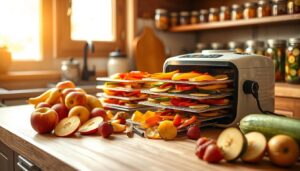
Dehydration and drying are great ways to store food for a long time. They remove water from food, stopping mildew, bacteria, and mold. This keeps fruits, vegetables, and herbs fresh for longer.
Sun and Air Drying Methods
Sun and air drying have been used for ages to keep food fresh. Just put food in the sun and make sure air moves well. It works well for drying fruits, herbs, and thin veggie slices. For more info, check out University of Minnesota Extension.
Building Simple Solar Dehydrators
Building a simple solar dehydrator helps control drying better. You can make one with wood, plastic, and mesh. It dries food faster and better than sun drying alone.
Foods Best Suited for Dehydration
Some foods dry better than others. Fruits like apples, bananas, and apricots work well. So do veggies like carrots, beans, and peas. Herbs like basil, oregano, and thyme keep their taste and smell when dried.
Proper Storage of Dried Foods
After drying, store foods right to keep them good. Use airtight containers to keep out moisture, light, and heat. Glass jars or Mylar bags with oxygen absorbers help keep food fresh longer.
Using dehydration and drying in your sustainable food storage practices lets you enjoy foods all year. It helps with emergency food storage tips and makes you more self-sufficient.
Root Cellaring and Natural Cooling Methods
To keep fresh produce all year, think about root cellaring and other non-electric cooling ways. These methods help store food for a long time without electricity. They’re great for emergencies and green living.
Creating an Effective Root Cellar
A good root cellar keeps food fresh by controlling humidity, air flow, and coolness. Find a spot with natural insulation, like a basement or dugout. Make sure it has good air flow to avoid too much moisture.

Optimal Storage Conditions for Different Vegetables
Each vegetable needs its own storage setup to last longer. Carrots and beets like it cool and humid. Cabbages and potatoes can handle a bit warmer. Knowing this helps keep food fresh longer.
| Vegetable | Optimal Temperature (°F) | Optimal Humidity (%) |
|---|---|---|
| Carrots | 32-40 | 90-100 |
| Beets | 32-40 | 90-100 |
| Cabbages | 32-45 | 80-90 |
Alternative Cool Storage Solutions for Limited Space
If you don’t have much room, try root cellar alternatives. You can use insulated boxes or cold frames to keep things cool.
Monitoring and Preventing Spoilage
It’s key to check on your stored food often to stop it from going bad. Look for any signs of rot and keep the storage area the same. This way, you can keep your food fresh for a long time.
Conclusion: Building Your Sustainable Food Storage System
By mixing old ways like canning, dehydrating, and root cellaring, you can make a strong sustainable food storage system. This system doesn’t need electricity. It makes you more self-sufficient and secure, giving you peace of mind when emergencies hit.
Using emergency food storage tips and off-grid food storage solutions is easy. Begin with basics like rice, beans, and flour. Then, save fresh food by canning or dehydrating. Use root cellars to keep cool and store food longer.
Creating a sustainable food storage system is simple and steady. Always update your stock, plan meals with what you have, and shop your pantry first. These sustainable food storage practices help you have a steady food supply. They also cut down on needing outside help.
FAQ
What are the most effective methods for storing food long term without electricity?
Good methods include canning, salt curing, smoking, and fermentation. Pickling, dehydration, and root cellaring are also effective. These ways keep food fresh and full of nutrients.
How do I ensure the safety of my stored food?
Use tested ways to preserve food. Choose the right containers and check your food often. A clean, dry place is key for storing food safely.
Can I use my existing pantry as a root cellar?
Your pantry might work for some storage. But, a root cellar needs cool temperatures and high humidity. You might need to change your pantry or find another cool spot.
What types of food are best suited for dehydration?
Dehydrate fruits, veggies, and herbs. Apricots, apples, carrots, and kale are great choices. Dehydrating removes water, making them lighter and easier to store.
How can I maintain the quality of my dried foods?
Store dried foods in airtight containers. Use glass jars or Mylar bags. Keep them in a cool, dry spot. Check on them often to keep them fresh.
Are there any alternative solutions for food storage if I have limited space?
Yes, use under-bed storage or buried containers. Old appliances can also be repurposed. Stackable containers or shelves help use space well.
How can I build a sustainable food storage system?
Mix preservation methods like canning, dehydrating, and root cellaring. Store food to keep its quality and nutrients. Regular checks ensure your food stays safe and good to eat.