Having a reliable water supply is key for preppers in emergencies. Proper emergency preparedness water storage means you can drink clean water when it’s most needed.
But, many preppers miss important parts of water storage. This can lead to water that’s not safe to drink. This is very bad in a crisis, so knowing what to avoid is critical.
Knowing these issues helps you keep your water safe and ready. This makes you more prepared for emergencies.
Key Takeaways
- Understand the importance of proper water storage for emergency preparedness.
- Learn common mistakes that can lead to contaminated water.
- Discover effective water storage tips to secure your supply.
- Enhance your emergency preparedness with reliable water storage solutions.
- Ensure access to clean drinking water during a crisis.
Table of Contents
The Critical Role of Water in Emergency Preparedness
Water is key in emergency prep, more than just a basic need. In disasters, clean water can mean life or death.
The Three-Day Water Myth: Why You Need More
Many think a three-day water supply is enough. But experts say store at least one gallon per person per day for drinking, cooking, and hygiene.
Having more water stored can greatly improve your survival chances in long emergencies.
Calculating Proper Water Requirements Per Person
Figure out your water needs by counting household members and activities needing water. A good rule is to store at least one gallon per person per day.
- Drinking water
- Cooking and food preparation
- Hygiene and sanitation
Beyond Drinking: Additional Water Needs Often Overlooked
Water is not just for drinking; it’s also key for other daily needs.
Hygiene and Sanitation Requirements
Enough water for hygiene and sanitation is vital to stop disease spread. This includes water for handwashing, cleaning, and personal hygiene.
Cooking and Food Preparation
Water is needed for cooking and meal prep. Without it, food can be unsafe, and nutrition suffers.
By knowing all your water needs, you can better prepare for emergencies. This ensures the health and safety of you and your family.
Common Water Storage Mistakes Preppers Make
Preppers often make big mistakes when storing water. This can hurt their emergency plans. Knowing these mistakes helps preppers keep their water safe and ready for emergencies.
Using Improper Storage Containers
One big error is using the wrong containers. The right container is key to keeping water safe and good to drink.
Milk Jugs and Other Degradable Plastics
Milk jugs and other plastics are not good for long-term water storage. They can make the water unsafe by adding chemicals.
Non-Food Grade Containers and Chemical Leaching
Containers not made for food or water can leak chemicals into the water. Always use containers made for storing food or water.

Neglecting Water Rotation and Maintenance
Not rotating and maintaining water is a big mistake. Regularly changing the water keeps it fresh and safe. For more tips, visit https://cityprepping.com/lessons/3-mistakes-preppers-make-when-storing-water-3/.
| Container Type | Suitability for Water Storage | Risk of Contamination |
|---|---|---|
| Food-Grade Plastic | High | Low |
| Non-Food Grade Plastic | Low | High |
| Stainless Steel | High | Low |
Inadequate Water Treatment Procedures
Not treating water well can make it unsafe. Preppers need to use the right methods to keep water safe.
Poor Storage Location Choices
Choosing the wrong place to store water can also harm it. Things like temperature changes, sunlight, and nearby contamination risks matter a lot.
Temperature Fluctuations and Sunlight Exposure
Changes in temperature and sunlight can hurt water quality. Keep containers in a cool, dark spot to avoid these problems.
Contamination Risks from Surrounding Materials
Keep containers away from things that could contaminate them. Store them in a clean, dry area, far from things that could make them dirty.
By knowing and avoiding these mistakes, preppers can keep their water safe. This makes their emergency plans stronger.
Effective Water Storage Solutions and Best Practices
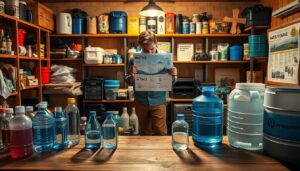
A good water storage plan is key for preppers. It needs the right containers and upkeep. Water storage solutions help keep clean water ready for emergencies.
Selecting Appropriate Storage Containers
Picking the right containers is vital for prepper water storage. They must be strong, safe, and good for long-term storage.
Food-Grade Plastic Options
Food-grade plastic is a top pick for water storage. It’s tough and cheap. Make sure it’s BPA-free and made for drinking water.
Glass and Stainless Steel Considerations
Glass and stainless steel are other choices. Glass is safe and doesn’t add chemicals to water. Stainless steel is strong but can be pricier.
Diversifying Your Water Storage Portfolio
Having different storage types is smart. Store water in various spots and use different containers. This lowers the chance of contamination or loss.
Creating a Water Rotation Schedule
Rotating water is important to keep it fresh. Preppers should change their water every 6-12 months. This stops water from getting stale.
Proper Cleaning and Sanitization Protocols
Cleaning containers right is key to avoiding contamination. Use a gentle soap and a sanitizing mix. Check containers often for damage.
Following these water storage tips helps preppers create a strong water system. This ensures clean water is always ready for emergencies.
Water Treatment Methods for Long-Term Storage
Storing water for a long time needs more than just containers. It also needs good treatment methods. This keeps the water safe to drink in emergencies.
Chemical Treatment Options
Chemical treatment is a common way to purify water in emergencies. Chlorine and iodine kill bacteria and viruses. There are also easy-to-use commercial purifiers available.
Chlorine, Iodine, and Commercial Purifiers
Chlorine fights many pathogens. Iodine is great against viruses. Commercial purifiers come in tablets or liquid, making them simple to use in emergencies.
Proper Dosing and Safety Considerations
It’s important to follow the instructions for using these chemicals. Too little or too much can be harmful. It’s key to get it just right.
| Chemical | Dosage | Contact Time |
|---|---|---|
| Chlorine | 2 drops/gallon | 30 minutes |
| Iodine | 5 drops/gallon | 30 minutes |
Filtration Systems for Preppers
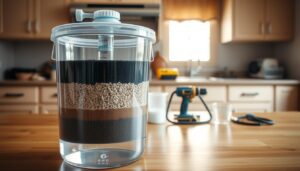
Filtration systems are another good way to purify water. They remove particles and some germs. For more info, check out The Family Guide to Storing & Purifying Emergency.

Testing and Maintaining Water Quality
It’s important to test the water often. This checks for bad stuff and makes sure treatments work.
Rainwater Collection and Alternative Water Sources
Collecting rainwater is a good alternative. A rainwater harvesting system can store rainwater for later use. It’s a great way to have more clean water.
Conclusion: Building a Resilient Water Storage System
Building a strong water storage system is key for preppers. It ensures they have water when they need it most. Avoiding Common Water Storage Mistakes Preppers Make helps keep water clean and plentiful.
Good water storage needs planning, the right methods, and regular upkeep. Using tips like picking the right containers and a water rotation plan helps. This way, preppers can always have clean drinking water.
A good prepper water storage system also thinks about other water needs. This includes water for hygiene and cooking. By storing different types of water and keeping it clean, you build a strong system.
By following the best practices and staying up-to-date, preppers can make a reliable water storage system. This system will help them face any crisis.
FAQ
What are the most common mistakes preppers make when storing water?
Common mistakes include using the wrong containers and not rotating water. Not treating water properly and choosing bad storage spots are also errors.
How much water should I store for emergency preparedness?
The amount needed depends on personal needs. A good rule is to store at least one gallon per person per day. This covers drinking, cooking, and hygiene.
What types of containers are suitable for long-term water storage?
Use food-grade plastic containers like HDPE or PET. They should be BPA-free and made for water storage.
How often should I rotate my stored water?
Rotate your stored water every 6-12 months. This keeps it fresh and prevents stagnation.
What are some effective methods for treating stored water?
Use chemical treatments like chlorine or iodine. Filtration systems, like activated carbon or reverse osmosis, also work well.
Can I use rainwater collection as a viable alternative water source?
Yes, rainwater collection is a good alternative. But, it must be collected and treated properly to ensure quality.
How can I maintain the quality of my stored water?
Regular testing and maintenance are key. Check pH levels and turbidity to keep your water quality high.
What are some additional uses for stored water beyond drinking?
Stored water is great for cooking, hygiene, and more. It can be used for flushing toilets or washing clothes.