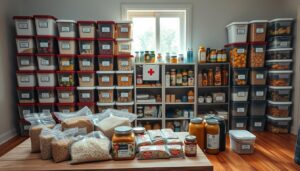
Finding the right amount of food for a family is key. It helps keep a good food supply. The needs of a family of four change a lot. This depends on age, how active they are, and what each person needs to eat.
Healthline says the average woman needs about 2,000 calories a day. The average man needs 2,500 calories to stay at their weight. Knowing these numbers helps plan enough family food supply for various times.
Having a good food supply is very important for families. It helps them get ready for anything. This intro helps us understand the food needs for 30, 60, and 90 days.
Key Takeaways
- Knowing daily calorie needs is key for planning a family food supply.
- Things like age and activity level affect a family’s nutritional needs.
- A good food supply is important for family readiness.
- Figuring out food needs for different times is very important.
- A family’s nutritional needs can change a lot.
Table of Contents
The Importance of Family Food Planning
In today’s world, having a good family food plan is key. It’s not just about having food. It’s about making sure your family eats well, no matter what.
Emergency Preparedness vs. Everyday Convenience
A good food storage plan does two things. It gets your family ready for emergencies. It also makes meal planning easier every day. Having non-perishable items ready can save lives in disasters. It also helps on busy days when cooking is hard.
Financial Benefits of Bulk Food Planning
Buying food in bulk saves money. It costs less per item. Plus, a good meal plan cuts down on food waste.
Setting Realistic Food Storage Goals
Setting goals for your food storage is important. Start by checking what food you already have. Then, figure out what your family needs to eat. Build up your stockpile slowly. This way, your plan is doable and keeps going.
Calculating Basic Nutritional Requirements for a Family of Four
Starting a food storage plan means figuring out your family’s daily needs. You need to know how many calories, proteins, carbs, and fats everyone needs. Also, think about any special diets.
Daily Caloric Needs by Age Group
Caloric needs change with age. Women usually need 2,000 calories a day, while men need 2,500. Kids and teens need different amounts based on their age and how active they are. Getting the right amount of calories is key for staying healthy and full of energy.
For a family of four, you might need 6,000 to 8,000 calories a day. This depends on who’s in your family and how active they are.
Essential Macronutrients to Consider
A good diet has proteins, carbs, and fats. Proteins help fix and grow things. Carbs give you energy. Fats help your body work right. Your stockpile should have all these to keep everyone healthy.
Special Considerations for Children
Children need special foods for growing up. Their diets should be full of nutrients for growth. But, they shouldn’t eat too much sugar or salt.
Water Requirements and Storage
Storing enough water is just as important as food. You should have at least one gallon of water per person per day. For a family of four, that’s 4 gallons a day. 
When you plan for water, think about how long you’ll store it. Also, consider how to make it safe to drink and the quality of your storage containers.
How Much Food a Family of Four Needs for 30 Days
To figure out how much food a family of four needs for 30 days, you need a plan. You must know their nutritional needs, what they like to eat, and their lifestyle.
Non-Perishable Staples Checklist
It’s important to have non-perishable items for a steady food supply. These items fall into several main categories:
Grains and Carbohydrates
- Whole grain rice
- Pasta
- Oats
- Bread crumbs
- Canned or dried cereals
Proteins and Legumes
- Canned beans (black beans, chickpeas, etc.)
- Canned tuna or salmon
- Nuts and seeds
- Dried lentils
- Canned or dried meats (jerky, etc.)
Canned and Preserved Foods
- Canned vegetables and fruits
- Soups
- Broths
- Tomato sauce
- Pickles and olives
Fresh Food Considerations
Along with non-perishable items, a 30-day food supply should include fresh foods. These are items that can be eaten before they go bad. Examples include:
- Fresh fruits and vegetables
- Dairy or dairy alternatives
- Meat, poultry, or fish
- Bread and baked goods
Meal planning is key to using up fresh food before it spoils. A meal plan helps organize your shopping list and budget.
Complete Shopping List with Quantities
Having a detailed shopping list with amounts helps manage your budget. It ensures you have enough food for 30 days. Here’s a sample list:
| Category | Item | Quantity |
|---|---|---|
| Grains | Rice | 20 lbs |
| Proteins | Canned tuna | 12 cans |
| Fruits/Vegetables | Canned beans | 6 cans |
Estimated Budget for 30-Day Supply
The cost of a 30-day food supply varies. It depends on what you like to eat, the brands you choose, and how you shop. A good estimate for a family of four is $300-$500. With careful planning and smart shopping, you can plan meals on a budget of $70/week.
By following this guide, families can make a detailed grocery list. This list meets their nutritional needs and stays within their budget.
60-Day Food Supply Essentials for Families
Going from 30 to 60 days of food means more than just doubling what you have. You also need to get better at storing and using up food. It’s important to keep your family’s diet balanced and varied.
Scaling Up: From 30 to 60 Days
Start by looking at your 30-day food supply. See if there are any missing nutrients or foods you like. Think about your family’s tastes, health needs, and any food allergies when adding more items.
Rotation Strategies for Medium-Term Storage
Keeping your food fresh is all about rotation. Use the “first in, first out” rule. Check expiration dates and move older items to the front regularly.
- Label stored food with the date it was stored.
- Keep a log of your stock, including quantities and expiration dates.
- Plan to use up older items in meals or donate them if they’re almost expired.
Recommended Quantities by Food Category
To stock up for 60 days, you’ll need a lot of different foods. Here’s a guide:
Pantry Staples
- Canned goods (vegetables, fruits, meats)
- Dried legumes (beans, lentils)
- Grains (rice, pasta, oats)
Freezer Items
- Meat (beef, chicken, fish)
- Frozen vegetables and fruits
- Prepared meals (soups, casseroles)
Shelf-Stable Options
- Nuts and seeds
- Dried fruits
- Canned or dried meats

60-Day Supply Shopping Strategy
When buying for 60 days, look for bulk deals, sales, and coupons. Focus on foods that are full of nutrients and don’t spoil easily. Make a list of what you need and stick to it to avoid buying things you don’t need.
By following these tips, you can create a strong 60-day food supply. It will help your family stay healthy and give you peace of mind during tough times.
90-Day Long-Term Food Storage Plan
Creating a 90-day food storage plan means looking at what you need to eat, how much space you have, and what you like to eat. This way, families can keep a steady food supply when emergencies or big changes happen.
Comprehensive Food Inventory for Three Months
Starting with a detailed food list is key for a 90-day plan. You need to figure out how many calories each family member will need for three months. Make sure to include a mix of non-perishable foods like canned items, dried beans, and grains.
- Canned vegetables and fruits
- Dried beans and lentils
- Whole grains like rice and quinoa
- Canned meats and fish
Balancing Variety and Practicality
It’s important to mix up your food choices to keep meals interesting and nutritious. But, you also need to think about how much space you have and what your family likes to eat.
| Food Category | Recommended Quantity |
|---|---|
| Grains | 300 lbs per person |
| Canned Goods | 200 cans per person |
Special Considerations for Extended Storage
When storing food for a long time, you need to keep it fresh and full of nutrients.
Vitamin and Nutrient Preservation
Keep your food in a cool, dry spot, out of the sun. Make sure to use the oldest items first to avoid waste.
Preventing Food Fatigue
To avoid getting tired of the same old food, mix up your meals. Use common ingredients in different ways to keep things interesting.
Building Your 90-Day Supply Gradually
Building up your 90-day food supply bit by bit makes it easier. Start by checking what you already have and what you need. Then, add more food little by little, using sales and buying in bulk to save money.
Storage Solutions and Preservation Methods
To keep your food stockpile fresh, use good storage and preservation methods. Right storage saves space and keeps food quality high.
Space-Efficient Storage Systems
For families with little space, using smart storage is key. Think about stackable containers or shelves. These systems keep your food organized and easy to find.
Food Preservation Techniques
There are many ways to keep your food fresh longer. You can use Mylar bags, freeze-drying, dehydrating, canning, or freezing. Each method works best for different foods.
| Preservation Method | Suitable Foods | Shelf Life |
|---|---|---|
| Mylar Storage | Dried goods, grains | Up to 25 years |
| Freeze-Drying | Fruits, vegetables, meats | Up to 30 years |
| Canning | Vegetables, fruits, meats | 2-5 years |
Monitoring and Maintaining Your Food Supply
It’s important to check your food often. Look for spoilage, pests, and damage. Also, rotate your food to keep it fresh.
Dealing with Dietary Restrictions in Long-Term Storage
Think about your family’s dietary needs when preparing your food stock. Include foods that fit different diets, like gluten-free or vegan.
Conclusion
Creating a well-planned food supply is key for families. It helps them be ready for emergencies and daily life. By planning meals and building a long-term food stock, families stay healthy and stable.
A good meal planning for families plan looks at everyone’s nutritional needs. This includes kids and those with special diets. Making a detailed grocery list for family of four is vital to meet everyone’s needs.
Following the tips in this article, families can stock up for 30, 60, and 90 days. This brings peace of mind and saves money on food.
In the end, a well-planned food supply is essential for family readiness. It helps families face unexpected events and stay well.
FAQ
How do I determine the daily caloric needs for my family members?
Daily caloric needs depend on age, sex, weight, height, and activity level. For example, a sedentary adult woman needs about 1,800 calories daily. An active adult man might need around 2,800 calories. Use a reliable nutritional resource or talk to a healthcare professional to find out each family member’s needs.
What are the essential macronutrients to include in my family’s food supply?
Essential macronutrients are carbohydrates, proteins, and fats. Aim for a mix: carbs should be 45-65% of daily calories, proteins 10-35%, and fats 20-35%. Include whole grains, lean proteins, and healthy fats in your food.
How much water should I store for my family?
Store at least one gallon of water per person per day. For a family of four, that’s 4 gallons daily. If you live in a hot climate or have special needs, store more water.
What non-perishable staples should I include in my 30-day food supply?
Include canned goods, dried legumes, whole grains, nuts, and dried fruits. Don’t forget cooking essentials like oil, salt, and spices. Use Mylar bags or airtight containers to keep food fresh.
How do I rotate my food supply to ensure it stays fresh?
Use a “first-in, first-out” strategy by placing new items behind older ones. Check expiration dates and consume or replace items as needed. Use a food inventory tool or app to track your stock.
What are some space-efficient storage solutions for my food supply?
Use stackable containers, shelving units, or under-bed storage. Maximize vertical space in pantries or closets. Invest in airtight bins or Mylar bags to keep food fresh. Label and organize your storage for easy access.
How can I accommodate dietary restrictions in my long-term food storage?
Identify your family’s dietary needs or restrictions, like gluten-free or vegan. Stock alternative food options. Consult a healthcare professional or registered dietitian for guidance.
What’s the best way to build a 90-day food supply gradually?
Start with a 30-day supply and add more over time. Focus on one category at a time, like grains or canned goods. Take advantage of sales and bulk purchasing. Shop during off-peak seasons.