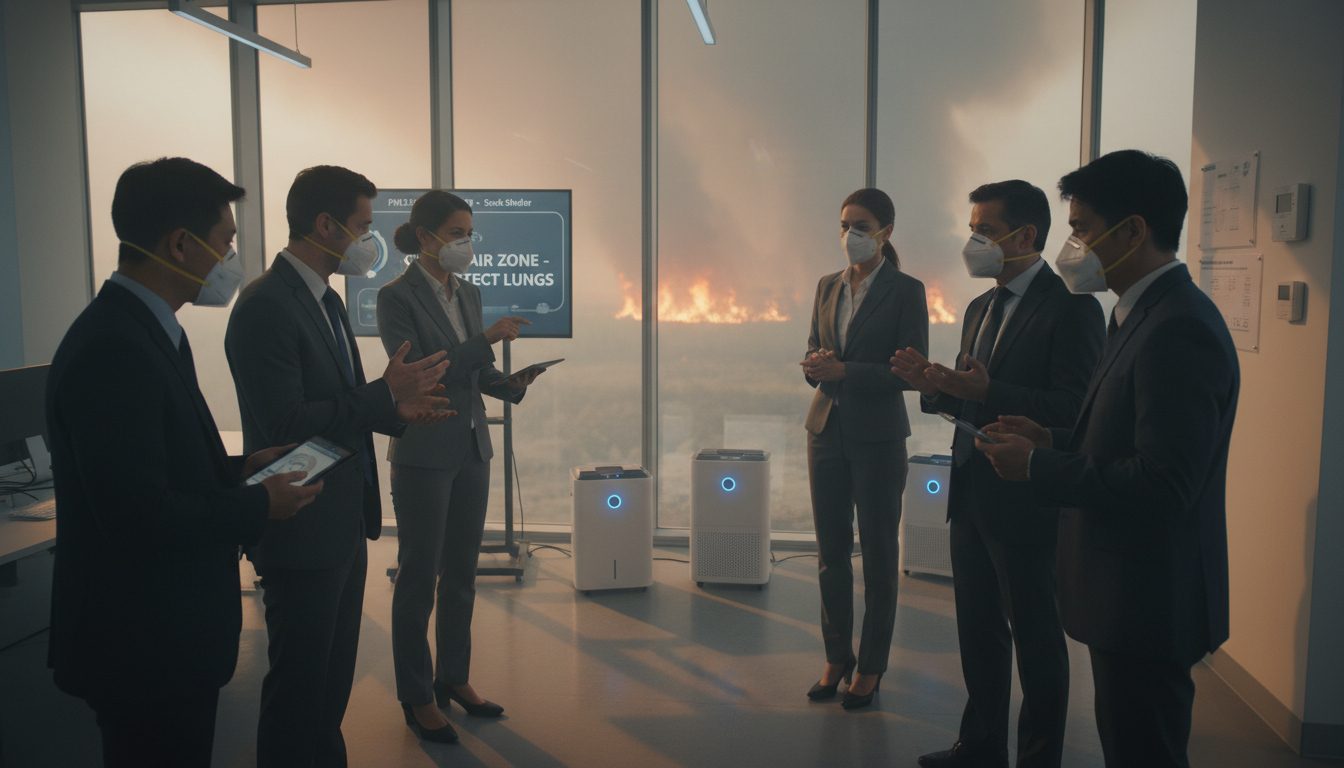
Wildfires are burning across the United States more often and with greater intensity than ever before. The smoke they create travels hundreds of miles, reaching communities far from the flames. Residents in western states know this danger well. People in other regions are learning it too.
Wildfire smoke is not just uncomfortable. It is a serious health threat. The EPA and CDC confirm that smoke contains toxic particles small enough to enter your lungs and bloodstream. These particles can cause real damage to your respiratory system and heart.
The American Lung Association warns that smoke exposure harms lung and heart health. It can worsen asthma, COPD, and other lung diseases. Particle pollution is also linked to certain cancers, dementia, and problems during pregnancy and birth.
The good news is that you can take action. Understanding the risks is your first step toward effective smoke inhalation prevention. Learning how to protect yourself and your family makes a real difference.
This article will guide you through wildfire smoke protection strategies. You will learn about health risks from smoke exposure. You will discover how to create a safe space in your home. You will understand which respiratory equipment works best. You will also learn how to monitor air quality safety in your area. The CDC provides detailed guidance on how to safely stay safe during a that covers all these topics.
Climate change is making wildfires more common. Your knowledge and preparation are your best defenses. Let’s start protecting your health today.
Table of Contents
Understanding the Health Risks of Wildfire Smoke Exposure
Wildfire smoke is different from regular air pollution. It has gases, chemicals, and tiny particles that can harm your health. The American Lung Association says it’s a toxic mix that can hurt your lungs and heart. Knowing how smoke affects you is key to protecting yourself and your family during wildfire season.
Wildfires release tiny particles that you can’t see. These particles can travel far and stay in the air for weeks. Learning about particulate matter exposure shows why smoke is so dangerous, even from far away.
How Particulate Matter Affects Your Respiratory System
Particulate matter includes tiny droplets and solid particles in the air. The smallest, PM2.5, is smaller than a human hair. Your body can’t stop these particles from getting into your lungs.
Once in your lungs, they settle deep where oxygen enters your blood. This can cause serious problems.
When you breathe in smoke, you might feel:
- Coughing and wheezing
- Difficulty breathing or shortness of breath
- Chest pain or tightness
- Eye, nose, and throat irritation
- Scratchy throat and runny nose
These symptoms happen quickly. Breathing wildfire smoke can also lead to heart attacks, strokes, and lung cancer. It can harm your heart, brain, and other organs.
Who Is Most Vulnerable to Smoke Inhalation
Some people are more at risk from wildfire smoke. Knowing your risk helps you stay safe. Your age, health history, and life situation play a role in your respiratory health during wildfires.
Children are at high risk because their lungs are growing. They breathe more air per pound of body weight than adults. Older adults (65 and above) have weaker immune systems and may have health conditions that smoke worsens.
The CDC says these groups are at higher risk:
| At-Risk Group | Why They Are Vulnerable |
|---|---|
| Children under 18 | Developing lungs, increased breathing rate, higher activity levels |
| Older adults (65+) | Weakened immune systems, existing health conditions |
| People with asthma | Smoke triggers attacks and inflammation in airways |
| People with COPD | Smoke worsens breathing difficulties and lung damage |
| People with heart disease | Particles can cause irregular heartbeats and reduce oxygen flow |
| People with diabetes | Higher inflammation levels make them more sensitive to smoke |
| Pregnant individuals | Smoke exposure linked to adverse pregnancy and birth outcomes |
| Outdoor workers | Longer exposure time and higher activity levels increase intake |
| People with chronic kidney disease | Reduced ability to handle inflammation from particle exposure |
If you’re in any of these groups, take smoke seriously. Particulate matter exposure is a real health risk during wildfire season. Stay informed about air quality and take action when smoke arrives.
Wildfire Smoke Protection: Essential Strategies for Your Home
Your home can be your best defense against wildfire smoke. By using smoke-proof home strategies, you make your home a safe place when air quality is bad. It’s important to be ready with the right tools and knowledge before smoke hits your home.
Begin by setting up a “clean room” where your family can breathe cleaner air. Choose a room that fits your needs:
- A room without a fireplace
- A space with the fewest windows and doors
- An area large enough for everyone to gather comfortably
- A bedroom or interior bathroom that seals well
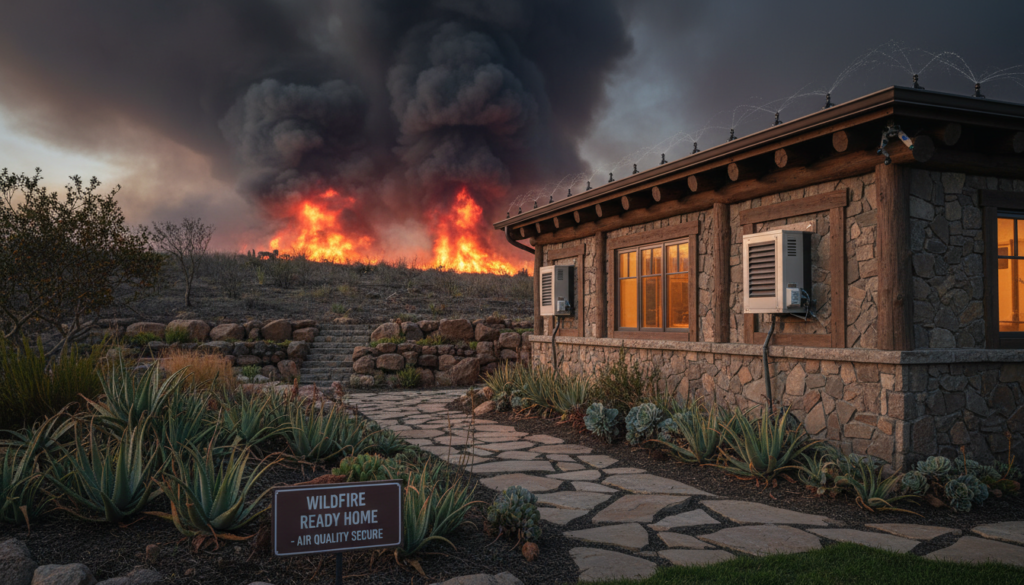
There are two main types of indoor air filtration systems. Portable air cleaners are good for single rooms, while whole-house systems clean air throughout your home. Look for units with HEPA filters to catch tiny smoke particles well.
For your central air system, upgrade to high-efficiency filters rated MERV 13 or higher if your system allows it. Set your HVAC to recirculate mode or close the outdoor air intake damper during smoky periods. This stops outside smoke from entering through fresh air vents.
Emergency air purifiers offer quick relief when smoke appears suddenly. Choose units with CADR ratings matched to your room size and HEPA certification for best results.
Remember these indoor air quality tips:
- Close all windows and doors tightly
- Seal gaps around doors with wet towels
- Avoid cooking on stoves, burning candles, or vacuuming
- Skip smoking indoors during smoke events
- Never leave DIY box fan filters unattended due to fire risk
These simple steps help create a smoke-proof environment. This way, you and your family stay safe during wildfire season.
Choosing and Using the Right Respiratory Equipment During Wildfires
When wildfire smoke fills the air, staying indoors is best. Keeping windows and doors closed helps protect your lungs. If you must go outside, wearing the right mask is key for Wildfire Smoke Protection.
The CDC suggests using NIOSH-approved respirators that fit snugly. A good seal blocks smoke before you breathe it. Knowing what works and what doesn’t is important for safety.
NIOSH Approved Respirators and N95 Masks for Smoke
N95 masks filter out at least 95 percent of airborne particles. NIOSH stands for the National Institute for Occupational Safety and Health. They test and certify respirators to ensure they work.
An N95 mask creates a tight seal around your nose and mouth. This traps particles before they reach your lungs.
Many people confuse surgical masks with N95 respirators. Surgical masks block large droplets but leave gaps. Wildfire smoke contains tiny particles that slip through these gaps. Only respirators with a tight seal provide real protection against smoke exposure.
Here’s how to wear N95 masks for smoke correctly:
- Cup the respirator in your hands with the nosepiece at your fingertips
- Position it over your nose and under your chin
- Pull the top strap over your head and rest it above your ears
- Pull the bottom strap over your head and place it below your ears
- Pinch the metal nosepiece firmly around your nose
- Perform a user seal check by covering the mask and breathing in and out
Facial hair prevents a good seal. Even stubble can reduce protection. KN95 and other international respirators work like N95 masks for smoke. Look for respirators labeled as NIOSH-approved or equivalent international standards.
| Respirator Type | Filtration Level | Seal Type | Best Use |
|---|---|---|---|
| N95 | 95% of particles | Tight seal required | Wildfire smoke exposure |
| Surgical Mask | Large droplets only | No seal | Not recommended for smoke |
| Cloth Mask | Minimal filtration | No seal | Not effective for smoke |
| KN95 | 95% of particles | Tight seal required | Alternative to N95 |
Protecting Children with Properly Fitted Masks
Keeping children safe during wildfire season is challenging. Most NIOSH-approved respirators are for adult faces. Young children can’t wear N95 masks for smoke because they don’t come in their sizes.
The CDC says children ages two and older can wear masks. But finding the right fit is key.
An uncomfortable or poorly fitting mask gets removed or worn incorrectly. A mask pulled down from the nose provides little Wildfire Smoke Protection. Parents should choose respiratory equipment that children can wear properly without compromising vision or comfort.
Try these practical approaches:
- Look for smaller KN95 respirators designed for children
- Select well-fitting multi-layer cloth masks as a backup option
- Practice wearing masks before wildfire season arrives
- Make mask-wearing fun with colorful or decorated options
- Check the fit regularly throughout the day
- Watch for signs of discomfort or breathing difficulty
The mask should sit over the nose and under the chin without leaving gaps. It should not block the child’s vision. Finding this balance between protection and comfort ensures children actually wear their masks correctly when outdoor air quality deteriorates. A mask worn properly protects far better than one sitting in a pocket.
Monitoring Air Quality and Knowing When to Take Action
You can’t always see or smell wildfire smoke. That’s why checking air quality data is so important. Tools help you stay informed and protect your family when smoke hits your area.
The Air Quality Index (AQI) is like a pollution forecast. It uses colors to show how clean or dirty the air is. It’s your guide to air quality, updating all day.
- Visit AirNow.gov on your computer
- Download the AirNow mobile app
- Check your phone’s built-in weather app
- Ask your smart home device for local air quality
Knowing AQI numbers helps you make good choices. When it hits “Unhealthy for Sensitive Groups” (orange, 101-150), people with asthma and the elderly should stay inside. At “Unhealthy” levels (red, 151-200), everyone should cut down on outdoor time.
The EPA’s Fire and Smoke Map shows active wildfires and smoke in real time. NOAA’s Fire Weather Outlook page displays fire watches and warnings. These tools let you see smoke coming before it arrives.
Start building your wildfire preparedness kit now. Include N95 masks, portable air cleaners, medications, important documents, a battery-powered radio, flashlights, first aid supplies, and food and water for days. Don’t forget pet carriers and supplies, as evacuation centers often don’t accept animals.
Make a family communication plan. Know your evacuation routes. Stay tuned to the Emergency Alert System and local emergency officials. Being prepared brings peace of mind and can save lives.
Conclusion
Wildfires are getting more common in the United States. Climate change is making smoke seasons longer and more intense. But, you can protect yourself and your family. This article has given you the tools to stay safe when smoke arrives.
Wildfire smoke is dangerous and can harm your lungs. Some groups are at higher risk, like children and older adults. You now know how to keep your home smoke-free and how to choose the right masks.
You also know how to check air quality. This helps you act fast when it gets bad. Planning ahead is key to staying safe.
The American Lung Association says talking to your doctor is important. If you have certain health conditions, talk to your doctor about your smoke safety plan. Knowing warning signs and when to call your doctor is also important.
Building a shelter strategy with medical guidance can keep you safe. Share this info with your family and friends. Community preparedness is key to staying safe.
Visit AirNow.gov to track air quality. The EPA, CDC, and American Lung Association offer free resources. You can reach the Lung HelpLine at 1-800-LUNGUSA for personal guidance. Ready.gov has complete emergency planning info.
Protecting your respiratory health is an investment in your future. You have the knowledge and resources to breathe easier, no matter what wildfire season brings.
FAQ
How far can wildfire smoke travel, and can it affect me even if fires aren’t nearby?
Wildfire smoke can travel hundreds of miles. It can cross state lines and affect areas far from the fire. Smoke can be carried high into the atmosphere and then fall over distant areas, affecting air quality.
Monitoring air quality in your area is key, even if you’re not near a wildfire.
What exactly is PM2.5, and why is it so dangerous?
PM2.5 refers to tiny particles smaller than 2.5 micrometers. These particles can get deep into your lungs and bloodstream. They cause immediate respiratory symptoms and can lead to serious health problems.
Who is most vulnerable to the health effects of wildfire smoke?
Children, older adults, and people with health conditions are at higher risk. Children’s lungs are developing, and older adults may have weaker immune systems. People with asthma, COPD, and heart disease need extra caution.
Pregnant individuals and outdoor workers also face special risks during wildfires.
What is a “clean room,” and how do I set one up in my home?
A clean room is a safe space in your home during wildfires. Choose a room with few windows and doors. It should be large enough for your household.
This room will be your refuge, equipped with air filtration systems to keep air clean.
What’s the difference between HEPA filters and standard MERV filters for wildfire smoke protection?
HEPA filters capture 99.97% of particles 0.3 micrometers or larger. MERV 13 or higher filters are recommended for HVAC systems. Higher MERV ratings mean better filtration.
Check if your HVAC system can handle higher-rated filters before upgrading.
Is the DIY box fan filter method safe and effective for smoke inhalation prevention?
The DIY box fan filter method is cost-effective but comes with safety warnings. It can be risky if not assembled properly or left unattended. Use MERV 13 or HEPA filters and monitor the fan regularly.
Emergency air purifiers with HEPA certification are safer alternatives.
What should I look for when purchasing an emergency air purifier?
Look for a CADR rating that matches your room size. Ensure it has HEPA certification for effective filtration. Consider noise level and energy efficiency.
Match the unit’s coverage area to your room dimensions. Check reviews and verify HEPA certification from reputable sources.
How do I seal my home against wildfire smoke when windows and doors must stay closed?
Use wet towels to seal gaps around doors and windows. Set your HVAC system to recirculate mode. Avoid activities that worsen indoor air quality.
These strategies, along with proper filtration, create a barrier against poor air quality.
What’s the difference between N95 masks and surgical masks for wildfire smoke protection?
Surgical masks block large droplets but not fine particulate matter. N95 respirators filter out at least 95% of airborne particles and fit snugly around the nose and mouth.
For wildfire smoke protection, only NIOSH-approved respirators like N95s provide adequate protection.
How do I properly wear an N95 mask to ensure it actually protects me from wildfire smoke?
Position the mask over your nose and mouth, adjust the metal nose clip, and pull the straps securely. Perform a user seal check by covering the front of the mask and breathing in.
Facial hair can compromise the seal, so clean-shaven skin provides better protection. A mask that doesn’t seal properly offers little benefit.
Why can’t young children wear standard NIOSH-approved N95 respirators?
NIOSH-approved respirators don’t come in sizes small enough for young children’s faces. Standard adult N95 masks won’t seal properly on a child’s smaller face.
Parents should explore alternatives like well-fitting multi-layer cloth masks or smaller KN95s. These alternatives have limitations compared to properly fitted NIOSH-approved respirators.
How can I help my child wear a mask correctly during wildfire smoke events?
Make mask-wearing appealing for children. Decorate masks with fun patterns or stickers. Practice wearing them before an emergency.
Check the fit regularly and ensure it covers the nose, stays under the chin, and has no gaps. A mask that’s removed frequently or worn incorrectly provides little benefit.
What is the Air Quality Index (AQI), and how do I interpret the different categories?
The Air Quality Index is like a weather forecast for air pollution. It uses a color-coded scale. Green (0-50) indicates good air quality.
Yellow (51-100) means moderate air quality, acceptable for most people. Orange (101-150) signals “Unhealthy for Sensitive Groups.”
Red (151-200) means “Unhealthy” conditions for everyone. Purple (201-300) is “Very Unhealthy,” and maroon (301+) is “Hazardous.”
Understanding these categories helps you make informed decisions about when to activate air quality safety measures.
Where can I check the AQI and track wildfire smoke in my area?
Visit AirNow.gov or download the AirNow mobile app to access real-time air quality data. Many smartphones’ built-in weather apps now include AQI information.
You can also ask smart home devices like Amazon Alexa to provide your local AQI. For wildfire tracking and smoke plume visualization, check the EPA’s Fire and Smoke Map and NOAA fire weather resources.
What should be included in a wildfire preparedness kit?
A wildfire preparedness kit should include respiratory protection, medications, and medical equipment. Include important documents in waterproof containers, emergency contact information, and a battery-powered or hand-crank radio.
Flashlights with extra batteries, first aid supplies, and several days of non-perishable food and water are also essential. Don’t forget special considerations like pet supplies, medications, and mobility aids if needed.
Why do I need an evacuation plan in addition to air quality safety measures?
While air quality safety and smoke inhalation prevention protect you from smoke exposure, wildfires can escalate quickly, requiring evacuation. Have a family communication plan, know multiple evacuation routes, and stay informed through official channels.
Pre-plan transportation for pets, as many evacuation centers don’t accept animals. An evacuation plan complements your smoke protection strategies to ensure complete wildfire preparedness.
What special preparations should I make if I have pets during wildfire season?
Make advance arrangements for where your pets will go, as many evacuation centers don’t accept them. Microchip your pets and keep current photos for identification if you get separated.
Prepare a pet emergency kit with food, water, medications, medical records, carriers, and comfort items. Consider pet-friendly hotels in areas outside your evacuation zone, or arrange with friends or family in safer areas to take your pets.
What should I do if power outages occur during a wildfire event?
Power outages often accompany large wildfires, affecting your air quality safety measures. If your HVAC system shuts down, ensure your emergency air purifiers have battery backup or keep charged portable air cleaners ready.
Have flashlights, batteries, battery-powered radio, and alternative water sources available. If you’re relying on a clean room with filtration, be prepared with portable units that don’t require constant power.
Should I talk to my doctor about wildfire smoke preparedness?
Absolutely. If you’re in an at-risk category, consult your healthcare provider about your personal wildfire smoke preparedness plan. Discuss specific symptoms to watch for, when to seek medical attention, and whether medications should be adjusted or have emergency supplies on hand.
Your doctor may recommend additional precautions or preventive measures tailored to your health situation. This conversation ensures you have a complete approach to respiratory health during wildfires.
How can I help my community prepare for wildfire smoke and air quality threats?
Share information about air quality safety, smoke inhalation prevention, and wildfire preparedness with family, friends, and neighbors. Help vulnerable people in your community assemble preparedness kits and understand how to access AQI information.
Encourage neighbors to create communication plans and practice evacuation routes together. Support local emergency management efforts and attend community preparedness meetings. Community preparedness makes everyone safer, and sharing knowledge can literally save lives when wildfires arrive.
What are the most important resources for wildfire smoke protection and preparedness?
Key resources include AirNow.gov for air quality monitoring, the EPA’s wildfire smoke guidance and Fire and Smoke Map for tracking conditions, CDC wildfire smoke recommendations, and the American Lung Association’s Lung HelpLine (1-800-LUNGUSA) for respiratory health questions.
Ready.gov provides a wealth of information for emergency preparedness planning. State and local emergency management agencies offer region-specific information and evacuation guidance. Bookmark these resources before wildfire season begins so you can quickly access current information when air quality deteriorates or evacuation orders are issued.
Can I reuse N95 masks, and if so, how should I store them?
N95 masks can be reused multiple times if they’re not damaged or visibly soiled. Store used masks in a breathable paper bag between uses—never in plastic, which can trap moisture and promote mold growth.
Label each mask with the date and rotate through several masks if possible to allow them to air dry between uses. Replace masks when the elastic becomes loose, the mask is torn or crushed, or it becomes difficult to breathe through due to accumulated particles.
How long should I expect to wear respiratory protection during a wildfire smoke event?
The duration depends on the severity and longevity of the smoke event. Some wildfires create hazardous air for days or even weeks. Plan to wear N95 masks for smoke whenever you must go outside during “Unhealthy for Sensitive Groups” or worse air quality levels.
Most N95 masks can be worn continuously for several hours, though comfort decreases over time. For extended outdoor exposure, you may need to rotate masks or take breaks indoors to rest and recover. Check local air quality forecasts to anticipate when you’ll need respiratory protection and plan appropriately.
What symptoms suggest I’m experiencing harmful smoke inhalation, and when should I seek medical help?
Common symptoms include coughing, wheezing, shortness of breath, chest pain, eye and throat irritation, and fatigue. If you experience chest pain, severe difficulty breathing, rapid heartbeat, or confusion, seek immediate medical attention.
For people with existing respiratory or heart conditions, symptoms may be more severe—don’t delay calling your doctor if you notice worsening symptoms or need to use rescue inhalers more frequently. Children and older adults should be monitored closely. Contact poison control immediately if symptoms seem unusually severe.
Are there times when staying indoors isn’t enough protection from wildfire smoke?
In extreme cases where outdoor air quality is severely hazardous, even well-sealed homes with proper filtration may not provide complete protection. If AQI reaches hazardous levels (300+) or if your home is damaged or without power, evacuation may be necessary.
If you must stay in a compromised home, spend as much time as possible in your clean room with portable air purifiers. Use N95 masks when moving between spaces, and consider temporary relocation to a building with better air handling systems. Listen to official guidance and don’t hesitate to evacuate if conditions deteriorate beyond what your home’s systems can manage.
How does wildfire smoke affect outdoor workers and people with essential jobs outside?
Outdoor workers face extended exposure to particulate matter, making proper respiratory protection essential. Employers should provide NIOSH-approved respirators and ensure workers understand how to use them correctly, including fitting and seal checks.
Workers should monitor air quality conditions, take breaks in cleaner air when possible, and know when to reduce outdoor activity based on AQI levels. People in essential jobs during wildfires should discuss workplace accommodations with employers, report respiratory symptoms promptly, and ensure they have adequate respiratory equipment.
What’s the relationship between climate change and increasing wildfire smoke concerns?
Warmer temperatures and changing precipitation patterns create conditions favoring larger, more frequent wildfires. Wildfire seasons are starting earlier and lasting longer, and fires are burning more intensely. This means air quality safety and smoke inhalation prevention will likely become increasingly important concerns for more people in more areas.
Communities previously unaffected by wildfire smoke are now experiencing hazardous air quality. Understanding these trends reinforces the importance of establishing smoke protection strategies and wildfire preparedness measures now, before conditions worsen.