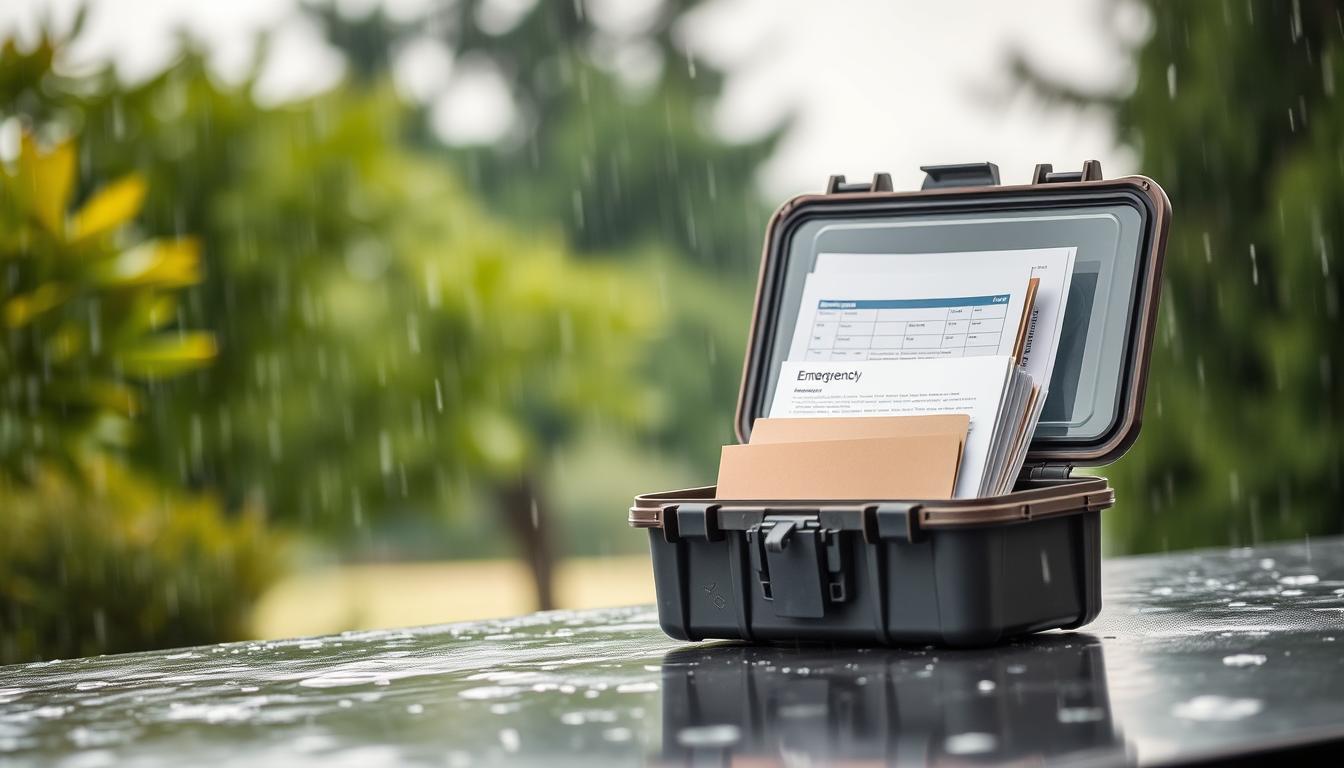
Disasters can happen without warning. A house fire can reach extreme temperatures, but your important documents are safe at floor level. A document protection container can shield them. Flames and water from firefighting efforts can destroy papers in seconds.
Floods also pose a threat. You need real protection that works when emergencies happen. Your birth certificates, passports, property deeds, and medical records are hard to replace once lost. Insurance policies, family photos, and financial documents are just as important.
A single disaster can erase years of paperwork in minutes. That’s why waterproof storage for documents is essential. It’s not just smart—it’s necessary for your family’s security and peace of mind.
Protecting your valuable items doesn’t have to be complicated or expensive. Emergency document storage solutions fit many budgets and living situations. Whether you live in a small apartment or a large house, you can find the right setup to keep your papers safe.
Smart document protection uses layers of defense. Stationary fireproof safes stay in your home and protect against fire and water damage. Portable waterproof bags let you grab essentials during evacuation and take them with you.
Combining both methods gives you complete protection whether you stay put or need to leave fast. Your documents deserve this level of care, and your family deserves the peace of mind that comes with it.
Table of Contents
Why Fireproof and Waterproof Protection Matters for Your Important Documents
Your important documents need strong protection against dangers. House fires and water damage are big threats to your financial and legal papers. A fireproof document safe or important papers storage box protects against both flames and water.
Knowing about these dangers helps you pick the right protection. This choice brings peace of mind to your family.
Understanding House Fire Temperatures and Document Vulnerability
House fires are hotter than most people think. They can reach about 2,000°F, but this extreme heat is mostly near the ceiling. Safes on the floor stay cooler during a fire.
Most fires in homes burn out in about an hour. When looking for a fireproof safe, a rating of 1,300°F to 1,550°F is enough. You don’t need the highest ratings for your documents to be safe.
Experts say a safe with a rating around 2,000°F is perfect for home use. It offers great protection without being too expensive.
The Dual Threat: Water Damage from Floods and Fire Suppression
Firefighters use lots of water to fight fires. This water can damage your documents, even as they’re being saved from the fire.
A flood-proof document case protects against water from different sources:
- Firefighting hoses spraying through your home
- Sprinkler system discharge
- Burst pipes from heat damage
- Natural flooding and basement water accumulation
Good safes can keep your documents dry for up to 100 hours underwater. This means your important papers stay safe from firefighting water or natural floods.
Real-life examples show why you need protection against both fire and water. A basement flood can ruin your financial records. A kitchen fire can soak your home with water. A big storm can bring wind, flooding, and fire all at once. Your flood-proof document case must protect against all these dangers.
Waterproof Storage for Documents: Choosing the Right Protection Level
Keeping your important documents safe is key. There are many ways to store them, each with its own benefits. The right choice depends on where you live, what documents you have, and how fast you need to access them.
There are several ways to protect your documents. A waterproof file box is good for everyday use. But, if you live in a flood-prone area, a moisture-proof document holder is better. Knowing what each option offers helps you choose wisely.
Protection ratings show how well containers keep documents safe from heat and water. Most fireproof bags can handle temperatures between 1,000°F and 4,000°F. For home use, a 2,000°F rating is a good balance between cost and safety. This means the container keeps your documents safe during a typical house fire, not that it can withstand direct flames.
Different materials are used for different needs. Portable bags often use silicone-coated fiberglass, while stationary safes use fire-resistant composites. Some use PVC-coated polyester for lighter needs. The material you choose affects how long your documents stay safe and how easy they are to carry.
Water protection varies a lot. Bags with sealed zippers can resist water for a short time. But, waterproof safes can keep documents safe for up to 100 hours underwater. Knowing the difference between water-resistant and fully waterproof options helps you choose the right one for your situation.
Storage size is important for organizing your emergency documents. You can find protection from small passport pouches to large duffels. Choose a size that fits your documents without folding or compressing them too much. This can damage papers over time. Think about your future needs as your collection may grow.
| Protection Type | Heat Rating | Water Protection | Best For | Portability |
|---|---|---|---|---|
| Portable Fireproof Bag | 1,000°F – 2,000°F | Water-resistant zippers | Quick evacuation | Very High |
| Waterproof File Box | 2,000°F – 2,500°F | Sealed construction | Home storage | Medium |
| Moisture-Proof Document Holder | 1,500°F – 3,000°F | Up to 100 hours submerged | Flood zones | Low |
| Heavy-Duty Fireproof Safe | 2,500°F – 4,000°F | Waterproof seals | Long-term storage | Not portable |
When picking a storage option, look for important certifications. UL and ETL ratings from independent testers verify claims. Reliable locks prevent theft, and the right size prevents damage. Don’t buy features you won’t use, but invest in protection that fits your needs.
Your location affects the protection level you need. Flood-prone areas need waterproof solutions, while fire-risk areas focus on heat ratings. Urban areas might prioritize theft prevention with locked safes, while rural areas focus on environmental protection. Creating waterproof paper copies adds extra security, no matter your primary storage method.
Consider using different protection methods for maximum safety. Keep originals in a waterproof file box at home, store copies in a moisture-proof document holder at a bank, and keep digital backups online. This layered approach helps your documents survive various disasters.
- Assess your climate and local hazards
- Determine which documents need protection
- Measure space available for storage
- Check for proper certifications and ratings
- Test locking mechanisms before purchasing
- Plan for document growth over time
Start by evaluating your specific needs, not just buying the most expensive option. A quality waterproof file box is enough if you live outside a flood zone. But, if you live in a flood-prone area, you need stronger waterproof protection. Match your protection level to your actual risks and budget.
Best Fireproof Safes and Document Chests for Home Protection
Choosing the right fireproof and waterproof storage is key to protecting your home. A good safe keeps your important papers safe from fires and floods. The best one for you depends on your budget, space, and how many documents you need to protect. Let’s look at the top options for real protection.
Top-Rated Fire and Water Resistant Safes
The Honeywell 1114 Lightweight Fire and Waterproof Chest is the top pick for serious document safety. It’s rated by Intertek ETL for withstanding 1,700°F for an hour. It also stays waterproof for up to 100 hours, protecting your documents from floods or fire systems.
This safe is worth the investment for several reasons:
- Holds both letter and legal-size documents
- Dimensions: 20″ x 17.2″ x 7.3″
- Weighs 42 pounds
- Price starts around $100
It’s heavier and takes up space. But, it offers much better protection for your important documents. It’s like the difference between basic and full protection.
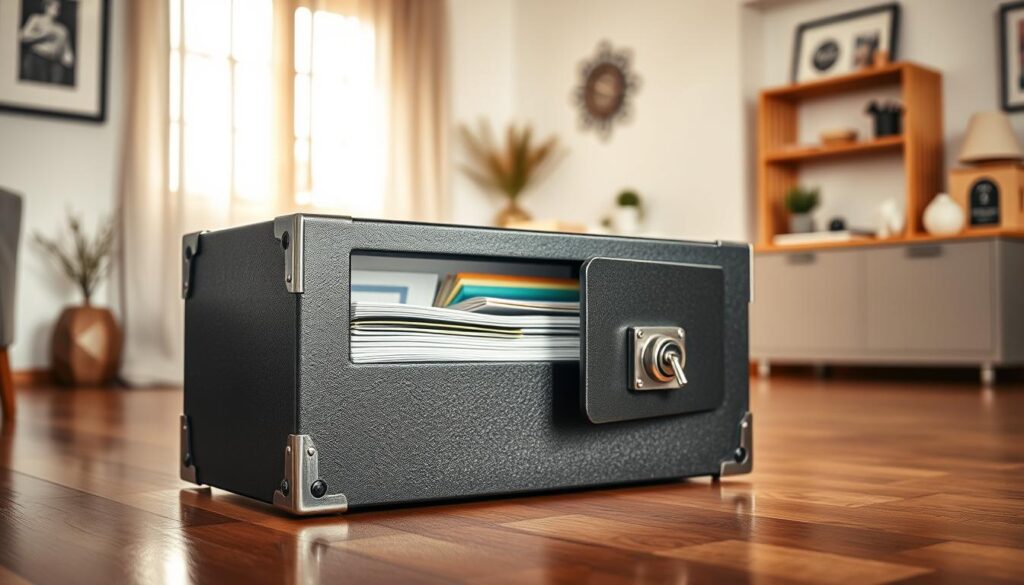
The Honeywell 1108 Fire/Water Large File Chest is great for those with lots of documents. It has the same 1-hour at 1,700°F rating as the 1114. At 84 pounds, it’s a “set it and forget it” solution that stays in one place.
| Safe Model | Fire Rating | Waterproof Duration | Document Capacity | Weight | Price Range |
|---|---|---|---|---|---|
| Honeywell 1114 | 1 hour at 1,700°F | 100 hours | Letter and legal documents | 42 lbs | $100+ |
| Honeywell 1108 | 1 hour at 1,700°F | 100 hours | Hanging file folders | 84 lbs | $150+ |
| Union Safe Company | 30 minutes at 1,550°F | Waterproof rated | 8.5″ x 11″ documents | 28 lbs | Under $100 |
Budget-Friendly Document Protection Options
You don’t have to spend a lot for a good safe. The Union Safe Company Waterproof and Fire Rated Document Safe is affordable. It has a UL rating for 30 minutes at 1,550°F and passed waterproof tests without leaking.
Here are the budget benefits:
- Costs less than $100
- Weighs only 28 pounds for easier placement
- Holds standard 8.5″ x 11″ documents
- Takes up minimal closet or shelf space
This safe has lower ratings than the more expensive ones. Remember, the maker can’t replace lost keys. Keep your key safe and separate from the safe.
Place your safe wisely for better protection. Put it away from exterior walls, on lower floors, and inside closets or interior rooms. Keep a detailed list of what’s inside your safe. This helps with insurance claims and reminds you what to protect.
Any fireproof and waterproof storage is better than none. Whether you choose a high-end model or a budget option, you’re taking a big step to protect your family’s important information.
Portable Waterproof Bags and Dry Bags for Emergency Evacuation
When you get an evacuation order, you must act quickly. Portable document bags let you take your most important papers with you. They are perfect for emergency situations like wildfires, hurricanes, or floods.
There are three types of portable waterproof bags. First, there are organized document bags with special compartments for papers and passports. Second, there are compact fireproof pouches that fit into larger bags. Third, there are large duffels for holding lots of documents and emergency supplies.
The DocSafe Document Bag is a top choice. It’s made of double-layered silicone-coated fiberglass and can withstand heat up to 2,000°F. It’s also waterproof. It has built-in organizers and a 3-digit code lock for security. It’s lightweight and easy to carry.
For those on a budget, the Boeciog Fireproof Document Pouch is a good option. It’s lightweight and offers basic protection. It’s great for individuals or couples who need a water-resistant file organizer.
| Product Name | Size | Weight | Heat Resistance | Best For |
|---|---|---|---|---|
| DocSafe Document Bag | 10″ W × 14″ L × 4″ D | 1.2 lbs | 2,000°F | Organized travel, quick grab |
| Boeciog Fireproof Pouch | 11″ W × 15″ L | 11.3 oz | 2,000°F | Budget-conscious individuals |
| BuilTuff Fireproof Duffel | 12″ W × 24″ L × 12″ H | 2.6 lbs | 2,000°F | Families, large document collections |
Families need bigger bags for passports, birth certificates, and insurance documents. The BuilTuff Fireproof/Waterproof Duffel is perfect. It holds two cubic feet of storage and has a shoulder strap and pockets for extra gear. It’s a good value at around $40.
Basic waterproof dry bags are great for non-critical gear. They come in 10L, 20L, and 30L sizes. They cost between $15 and $30 and are good for electronics and cash. But, they don’t protect against fire.
- Single person or couple: DocSafe or Boeciog pouch works perfectly
- Families with extensive paperwork: BuilTuff duffel provides ample capacity
- Multiple evacuation bags: Keep one in the car and one at home
- Gear organization: Pair document bags with waterproof dry bags for complete protection
It’s smart to have both stationary safes and portable bags. Your home safe keeps originals safe when you’re home. Portable bags protect copies during emergencies. This redundancy ensures you never lose important papers. Prepare by storing documents in both places and rest easy knowing your family’s records are safe.
How to Organize and Store Emergency Documents for Quick Access
Keeping important papers safe during a disaster is more than just buying a container. You need a solid plan to grab what you need fast. Every moment counts when emergencies strike. Planning ahead is key.
Start with an emergency document checklist to know what’s most important. Begin small if it feels too much. Add more documents as you go. Focus on protecting what keeps your life running and proves who you are.
Essential Documents Every Emergency Kit Should Include
Your emergency kit should have documents sorted into groups. This makes finding things easier when you’re stressed. Not all papers are equal, so grab the most important first.
| Document Category | Specific Documents | Storage Priority |
|---|---|---|
| Identification Documents | Passports, driver’s licenses, birth certificates, Social Security cards | Grab First |
| Financial Records | Bank account information, investment statements, property deeds, vehicle titles | Safe Storage |
| Insurance Policies | Homeowner’s insurance, health insurance, auto insurance, life insurance | Grab First |
| Medical Information | Vaccination records, prescription lists, medical history, doctor contacts | Grab First |
| Digital Backups | Encrypted USB drives, external hard drives, scanned family photos | Grab First |
| Family Records | Emergency contact information, guardianship documents, pet records | Grab First |
Your checklist should include originals when possible. Use certified copies for many documents. Keep originals at home and copies in your portable bag. Some families also store duplicates in safe deposit boxes.
Layered Protection: Combining Safes with Portable Document Bags
The best defense is a layered protection strategy. Use multiple storage methods, not just one. Think of it like backup systems for your most precious information.
Your home fireproof safe holds original documents. Carry copies and critical papers in your portable document bag. Store the bag inside your safe when you’re home. Move it to a spot you can reach fast when danger comes.
- Keep originals in a stationary fireproof safe at home
- Maintain copies in a portable waterproof bag
- Store the portable bag inside your safe during normal times
- Move it to an accessible spot during evacuation watches
- Choose bags with card slots, document dividers, and passport pockets
- Label everything clearly for fast identification
Assign responsibility for grabbing the document bag. Practice this plan with your family. Run through it at night to see if you can find everything without lights. When real emergencies happen, muscle memory takes over.
Consider how people building a reliable bug-out bag for preppers include document protection as a core component. Your documents deserve the same care as food and water supplies.
Update your emergency document checklist yearly. Refresh digital backups twice a year. Replace damaged papers. Add new insurance policies. Shed outdated statements. Keep emergency contact information current. Schedule this maintenance for the same date each year—like during tax season or after your birthday.
Test your evacuation plan quarterly. Can everyone find the document bag in the dark? Can someone unfamiliar with your system locate it? Does everyone know where you’re meeting if you get separated? These drills transform your preparation from paper planning into real muscle memory.
Conclusion
You now know the dangers to your important documents. Fire can destroy papers in minutes. Water from floods or fire systems can also ruin them. But, protecting your documents is easy and affordable.
Waterproof storage solutions are available. A fireproof pouch costs under $20. A good safe might cost $100 or more. Choose something that fits your needs and budget.
Think about what documents you need to protect most. Birth certificates, passports, property deeds, and family photos need real protection. A fire protection engineer advises, “Get the best safe you can afford.”
This investment in document protection is worth it when disaster strikes. Your emergency plan should include both options. Keep a safe at home for your most valuable records. Store portable waterproof solutions in an easy-to-grab spot for quick evacuation.
Start your protection plan today. First, decide which documents are most important to your family. Then, choose between a stationary safe, portable dry bags, or both. Pick products that fit your budget. Don’t let the safe sit empty in your garage. Fill it with your important papers right away.
Even a basic fireproof pouch is better than keeping records in a cardboard box. Taking action on document protection gives you peace of mind. You’ll feel better knowing your family’s important records are safe.
The small investment in waterproof storage solutions now can save you thousands later. Your documents and your family matter. Protect what counts most with the right tools today.
FAQ
How hot do house fires actually get, and what fire rating do I really need?
House fires can get very hot, but most are put out quickly. You don’t need the highest-rated safe. A safe rated for 1,550°F for 30 minutes is enough for most homes. The Honeywell 1114, rated for 1,700°F for 1 hour, offers extra protection without being too heavy.
Where you place your safe is key. Heat rises, so safes on lower floors stay cooler than those near ceilings or walls.
What’s the difference between water-resistant and waterproof protection?
Water-resistant means a container can handle splashing but not submersion. Waterproof containers can be submerged and protect contents. For flood protection, look for waterproof containers.
The Honeywell 1114 offers 100 hours of waterproof protection. This means your documents stay dry even in floods.
Why do I need both a stationary safe and a portable waterproof bag?
A stationary safe protects your documents at home. But during emergencies, you might only have minutes to grab essentials. A portable bag lets you quickly take copies or less-critical originals.
Keep originals in your home safe and copies in a portable bag. This way, you’re protected whether disaster strikes slowly or quickly.
How long will a waterproof bag actually stay waterproof?
High-quality waterproof bags, like the Honeywell 1114, stay waterproof for 100 hours. Cheaper options might only handle brief exposure. Always check the manufacturer’s specifications.
Even premium bags need occasional maintenance, like checking for seal degradation.
What documents should I prioritize protecting first?
Start with irreplaceable documents like passports and birth certificates. Then add financial essentials like property deeds and insurance policies. Don’t forget medical records and vaccination proof.
Include digital backups on encrypted USB drives. You don’t need to protect every document. Focus on what’s truly irreplaceable.
How much does proper document protection actually cost?
You can find options at every budget level. Basic fireproof pouches start at to . Waterproof dry bags range from to .
Quality portable document bags like DocSafe cost to 0. For stationary protection, the Union Safe Company model costs around 0 to 0. The Honeywell 1114 costs 0 to 0.
Consider it essential insurance. The cost of replacing lost documents often exceeds the price of a good container.
Is a portable waterproof safe the same as a fireproof one?
Not always. Some portable bags offer both fire and water protection. But many prioritize one over the other. Basic waterproof file boxes protect against water but lack fire insulation.
Look for bags that explicitly state both fire and water ratings. If it doesn’t say both, assume it excels at only one.
What’s the difference between silicone-coated fiberglass and PVC-coated polyester materials?
Silicone-coated fiberglass is heavier and more rigid, making it durable but less portable. PVC-coated polyester is lighter and more flexible, ideal for portable use.
Fire-resistant composites offer a middle ground. They’re lighter than fiberglass but more protective than basic polyester. Your choice depends on whether you prioritize portability or maximum protection.
Do I really need a 2,000°F rated safe for home documents?
Probably not. A 2,000°F rated safe provides impressive specs, but most house fires are extinguished in under an hour. A safe rated for 1,550°F to 1,700°F for 30 to 60 minutes is practically sufficient.
The Honeywell 1114 strikes the right balance between protection and practicality without excess cost or weight.
Should I keep my portable document bag in the safe at home?
Yes, when you’re home and not under evacuation threat, store your portable bag inside your stationary safe. This provides double protection.
During evacuation season, keep the portable bag in an easily accessible location. This layered approach maximizes protection.
How do I know where to place my home safe for optimal protection?
Place your safe on the lower floor of your home, ideally not in the basement. Interior closets or laundry rooms work well. Avoid the kitchen or fireplace area.
Keep the safe away from ceiling height and exterior walls. Most importantly, ensure it’s accessible to you but not advertised to visitors.
What happens to documents if my home floods—won’t they be destroyed?
Flooding is exactly why you need a waterproof document case. Paper documents absorb water quickly, but a sealed waterproof container protects contents. The Honeywell 1114’s 100-hour waterproof rating means documents stay dry even in extended flooding.
Without this protection, you’d lose everything. With it, you retrieve your documents intact even after your home dries out.
Can I store digital backups in the same container as paper documents?
Absolutely. Modern document protection containers accommodate both paper and digital media. Store encrypted USB drives alongside paper copies of important documents.
Some families also keep an external hard drive with scanned documents and family photos in a larger portable waterproof safe. The combination provides redundancy.
How often should I update the documents in my emergency storage?
Review your emergency document storage at least annually or whenever you acquire new important documents. Don’t just add documents—remove expired information.
Update your digital backups whenever you scan new documents or take family photos worth preserving. After an actual evacuation, refresh your portable bag’s contents.
Making this a annual task during spring or fall means your protection stays current.
What if I have extensive filing needs and standard safe sizes don’t work?
For larger document collections, the Honeywell 1108 is an excellent choice, though its 84-pound weight means it’s truly a “set it and forget it” solution. If you need even more capacity, consider combining a large home safe with a filing system inside it.
Organize documents to keep only truly irreplaceable originals in the safe (birth certificates, passports, property deeds) while less-critical copies stay elsewhere. This approach works better than purchasing an enormous safe.
Is a waterproof dry bag sufficient for protecting important documents?
Basic waterproof dry bags excel at water protection but lack fire insulation. They’re excellent supplementary protection for gear, backup hard drives, or camping equipment, but they shouldn’t be your primary solution for critical documents.
Use them as part of a layered strategy: keep originals in a stationary fireproof document safe and include dry bags as additional protection in your portable water-resistant file organizer or emergency kit.
What’s the best way to organize documents within the safe for quick access?
Use clearly labeled folders or an accordion file organizer inside your fireproof document safe, organized by category: identification, financial, medical, and insurance. Keep a master inventory list outside the safe (or memorized) so you know exactly what’s inside without opening it during an emergency.
Use a document checklist that includes passport numbers, Social Security information, and policy numbers—information you might need quickly even if you can’t access the physical documents immediately. For your portable waterproof storage for documents, use a more compact organization.
Should family members know where documents are stored?
Absolutely, but with security in mind. Your spouse, adult children, and an executor or trusted advisor should know where your important papers storage box is located and how to access it. You don’t need to announce the combination to everyone, but designated family members should know it exists, where it’s placed, and how to open it in an emergency or after you’re incapacitated.
Document this in your will or emergency plan. Keep a written copy of the safe combination in a secure location (perhaps with your attorney or executor) separate from the safe itself. This ensures that after a disaster, authorized family members can actually retrieve their irreplaceable documents.
Can I use a filing cabinet or lockbox instead of a dedicated safe?
Standard filing cabinets and lockboxes offer zero fire or water protection—they’ll burn or flood like any other furniture. A cardboard storage box is equally useless. Only products that are fireproof document safes or waterproof file boxes by manufacturers like Honeywell, Union Safe Company, or similar brands provide actual protection.
The rating means the product has been tested to withstand specific temperatures and water conditions. Cheap imitations and unrated containers give false security without real protection—it’s worth investing in a genuinely rated document protection container.
What should my family’s emergency plan say about document evacuation?
Your family emergency plan should designate one person responsible for grabbing the portable emergency document storage bag during evacuation. Assign a backup person in case the primary is unavailable. Specify the bag’s location (by the door, in the car, in the bedroom).
Include a simple checklist of other quick-grab items (medications, laptop, photos) to prevent confusion during chaos. Practice the evacuation plan at least annually—actually grab the portable bag and see how long it takes. Discuss what to do if you can’t safely reach the documents (prioritize human safety over paper).
Include in the plan where you’ll go and how you’ll access documents if your home is destroyed and you need information during recovery.
Do homeowners insurance and car insurance policies need to be in the safe?
Definitely. Keep copies of your homeowners and auto insurance policies in your fireproof document safe—they’re essential documents you’ll desperately need after a disaster to file claims. Store another copy in your portable waterproof storage for documents so you have access even if you evacuate.
Many people discover after a house fire or flood that they can’t find their insurance information, making claims much harder. Keeping these documents protected and organized means you can file claims immediately when you need recovery money most.
How do I protect documents if I’m renting?
Renters need the same waterproof storage for documents protection as homeowners—perhaps even more urgently. Prioritize a compact, portable document protection container that you can take when you move. A fireproof pouch or small waterproof file box takes minimal space and moves easily between apartments.
Focus on protecting personal documents: passport, birth certificate, financial records, rental agreements, and insurance policies. Landlords rarely provide safes, and renters often move frequently, so portable solutions work better than large stationary safes. The investment is equally important—your documents are just as irreplaceable whether you own or rent.
What’s the difference between 30-minute and 1-hour fire ratings?
A 30-minute fire rating means the safe’s exterior reaches that temperature while interior contents stay below damage threshold for 30 minutes. A 1-hour rating provides an extra 30 minutes of protection at slightly higher temperature. Most house fires are controlled within 30 to 60 minutes, so this difference is meaningful.
For stationary home safes, even the 30-minute rating is usually sufficient. The 1-hour rating provides extra assurance and is worth the modest additional cost if you can accommodate the larger, heavier safe—but either genuine rating beats no protection at all.
Can I keep my safe in a bedroom closet, or does it need special installation?
A bedroom closet is perfectly adequate and actually ideal—it’s interior, away from exterior walls, and below ceiling height where heat concentrates. No special installation is typically needed for portable safes like the Honeywell models; they can sit on a closet floor or shelf.
Ensure the closet can support the weight (the 1114 weighs 42 pounds, the 1108 weighs 84 pounds) and that adequate ventilation prevents moisture buildup. For very heavy safes or valuable collections, you might bolt them to the floor to prevent theft, but this isn’t necessary for fire and water protection. The key requirement is accessibility—you should be able to reach your document protection container quickly if needed, even in darkness or during evacuation.
What if I lose the safe’s key or combination?
Store the safe’s key in a separate secure location (not in the safe itself) or memorize the combination. Write the combination on paper and keep it with your will, with a trusted family member, or with your attorney—somewhere it won’t be lost if your house burns. If you forget the combination or lose the key, contact the safe manufacturer; Honeywell and other quality manufacturers can help you recover access or may