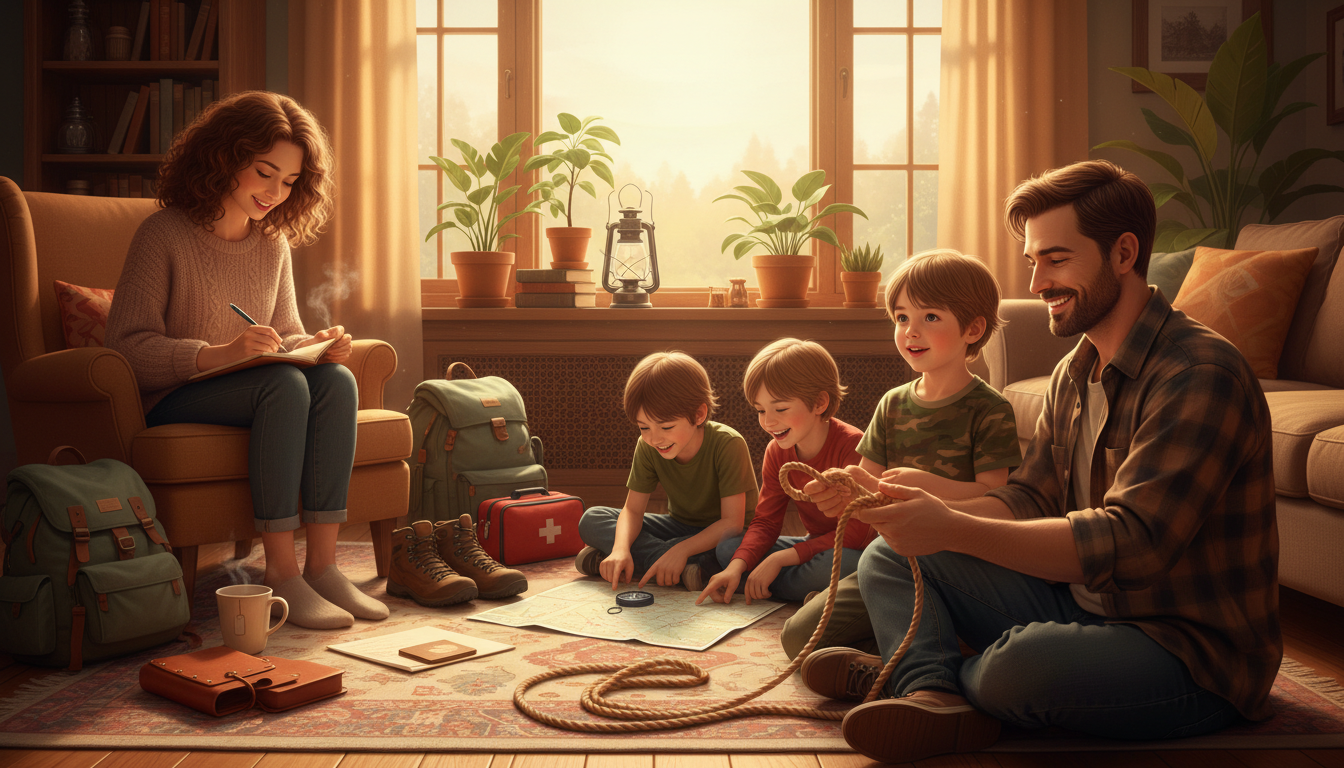
Welcome to a guide for parents and caregivers. It’s about building confidence in your kids. Teaching them survival skills helps them become self-reliant and think critically. You don’t need to be an expert to start this journey with your family.
Our world relies heavily on technology. But learning survival skills teaches kids to solve problems and think for themselves. These skills are important in everyday life, not just in emergencies. Kids love learning skills they see as important and real.
Teaching kids about emergency preparedness is simple. It starts at home with basic lessons and practice. Parents might worry they don’t know enough to teach these skills. But learning together strengthens family bonds and develops important skills.
Teaching kids survival skills takes time. It’s a journey of learning and growing. Starting now gives your children the gift of capability and confidence. Whether it’s a storm, a lost hike, or a power outage, your prepared child will stay calm and resourceful.
This guide will show you how to teach basic survival lessons at home. Each skill builds on the last. Your children will gain real abilities and the confidence that comes with competence. Let’s start today, right where you are.
Table of Contents
Why Teaching Kids Survival Skills Matters in Today’s World
Kids today are surrounded by smartphones and GPS. These tools make life easier but also leave a gap in practical knowledge. Teaching them basic survival techniques fills that gap. When kids learn to handle real-world challenges without devices, they gain confidence and independence.
Modern conveniences are a recent addition to human history. For thousands of years, people thrived using practical skills that we often overlook today. These skills are valuable now more than ever. Power outages, natural disasters, and getting lost happen to families everywhere. Teaching survival education to youth prepares them for these moments.
Building Self-Reliance and Problem-Solving Abilities
Learning to start a fire or navigate without GPS teaches kids to think creatively. They can’t just tap a screen for answers. They must observe, test ideas, and troubleshoot. This hands-on learning improves critical thinking skills that help in school, social situations, and future challenges.
Teaching self-reliance skills through survival practice boosts confidence. Kids learn they can accomplish difficult tasks through persistence and careful thought. These experiences build a strong belief in their abilities that goes beyond the wilderness.
- Develops creative problem-solving skills
- Builds confidence through real accomplishment
- Creates independence from technology
- Teaches resourcefulness in unexpected situations
Preparing for Emergencies Beyond Technology
Our technology-dependent lifestyle creates blind spots. When devices fail or situations require quick thinking without apps, families need backup plans. Survival education teaches practical knowledge that works when electronics can’t help.
Your family becomes stronger when everyone knows basic survival techniques. Each person understands fire safety, basic first aid, and how to stay calm under pressure. This collective knowledge makes your family ready for whatever life brings.
| Emergency Situation | Technology Limitation | Survival Skill Solution |
|---|---|---|
| Power Outage | Phones die, GPS unavailable | Fire-building and navigation skills |
| Getting Lost While Hiking | No cell signal or GPS connection | Reading natural markers and direction awareness |
| Equipment Failure in Wilderness | No internet to research solutions | Resourcefulness and practical problem-solving |
| Natural Disaster Event | Networks overloaded or offline | First aid knowledge and emergency response |
Survival skills are real insurance against life’s unpredictable moments. It’s not about living in fear. It’s about empowerment. Kids with practical knowledge and confidence face challenges differently. They see obstacles as puzzles to solve, not reasons to panic. This mindset shift makes them resilient and ready for any situation.
Swimming: The Most Critical Survival Skill for Children
Water is a big danger for kids today. Drowning is a leading cause of death for young people. That’s why teaching your child to swim is so important.
Swimming is key for water safety. It helps kids feel safe and confident in water. Water exists everywhere, from pools to beaches. Each place has its own dangers.
Begin with certified instructors for your child’s swimming lessons. They know how to teach safety and skills. Start with basics and then make it harder.
Key swimming skills include:
- Breath control through bubble-blowing games and face-in-water practice
- Floating on both front and back to conserve energy during emergencies
- Strong kicking techniques using kickboards for endurance
- Continuous swimming to build stamina and independence
- Treading water to stay upright and alert
- Self-rescue skills for returning to safety quickly
Teach your child to respect water. Explain how currents work and what water depth markers mean. This helps them feel more confident in water.
Outdoor safety means being ready for unexpected water situations. Practice what to do if a child falls into water. This helps them stay calm and float.
Swimming is a skill that lasts forever. Spend time practicing, celebrate small wins, and keep learning fun at home.
Teaching Kids Survival Skills Through Navigation and Direction Awareness
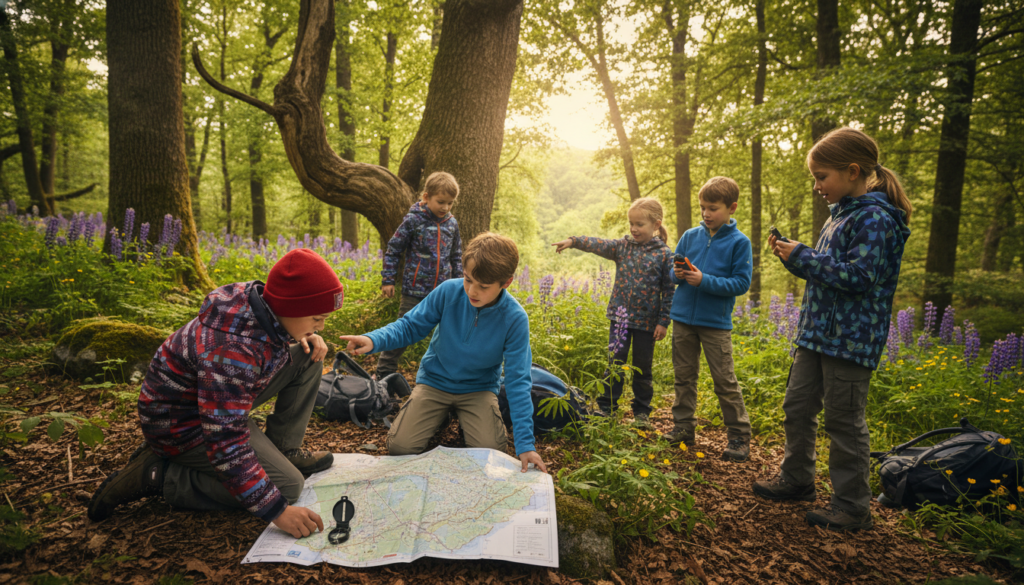
Navigation skills are key for kids in today’s world. They help kids feel confident, not just outdoors. Learning to navigate without tech is a big plus, as it’s useful when phones and GPS fail.
Many parents worry about letting kids explore alone. But, teaching kids to navigate changes this. Kids who know their surroundings move with purpose. They learn to notice landmarks and track the sun. This comes from practice and support from adults.
Developing an Innate Sense of Direction
Direction awareness takes practice, like reading or riding a bike. Start by having kids lead you home using different paths. Ask them which direction feels right and why. This builds their confidence over time.
Teach your kids to use natural markers for navigation:
- The sun rises in the east and sets in the west
- Shadows point north during midday in the Northern Hemisphere
- The North Star remains visible at night year-round
- Trees grow thicker branches on the south side
- Water flows downhill toward valleys and streams
Teaching kids these basic tools helps them in emergencies. Use these concepts on family outings. Make it fun by guessing directions before checking with a compass.
Paying Attention to Surroundings and Natural Markers
Good navigators pay attention to their surroundings. Teach kids to observe their environment actively. Play games where they recall details from walks, like distinctive trees or rock formations.
| Natural Marker | What It Shows | How Kids Can Use It |
|---|---|---|
| Distinctive Trees | Recognizable reference points | Use as landmarks to remember routes |
| Rock Formations | Unique landscape features | Mark trails and identify locations |
| Water Sources | Direction and elevation clues | Follow streams downhill to civilization |
| Moss Growth | Direction indicator on trees | Find north by observing north-facing sides |
| Animal Trails | Paths to water and shelter | Follow established routes through wilderness |
Play memory walk games on trails. Have kids describe what they saw. For older kids, teach basic map and compass skills. These tools are exciting and useful when kids understand their purpose.
Wilderness skills for kids also mean knowing how to find family in emergencies. Teach them where important people live and how to get there. Practice drawing maps and talking about safe routes. This mix of skills makes kids ready for real-life situations.
Safe Knife Handling and Tool Respect for Young Learners
Many parents worry about teaching kids to use knives. But, with supervision, it makes kids safer and more responsible. Learning to handle knives helps kids focus and learn survival skills.
Using the right tools at the right age is key. Start with butter knives for soft foods, then move to child-safe knives. As they grow, introduce pocket knives and fixed-blades. This teaches them to be self-reliant while staying safe.
- Always cut away from your body and fingers
- Keep your hand behind the blade at all times
- Pass a knife handle-first, never blade-first
- Maintain your knife clean and sharp
- Know exactly where your knife is at every moment
Practicing knife skills in real life helps them stick. Let kids help with food prep and small projects. This shows them the importance of knife respect and builds outdoor skills.
| Age Group | Tool Type | Activities | Supervision Level |
|---|---|---|---|
| Ages 4-6 | Butter knife | Spreading soft foods | Constant, hands-on |
| Ages 7-9 | Child-safe vegetable knife | Cutting vegetables, fruits | Close, nearby supervision |
| Ages 10-12 | Pocket knife with rounded tip | Whittling, simple cuts, cordage | Regular check-ins |
| Ages 13+ | Fixed-blade or full pocket knife | Food prep, bushcraft, detailed work | Periodic oversight |
Respect is not the same as fear. Teaching kids to handle knives with care makes them safe and competent. By doing real tasks, they learn to be confident and understand safety.
Fire Building and Outdoor Safety for Children
Fire is a powerful skill for kids to learn in the wilderness. It teaches them to be confident in nature and survive. Fire lets kids cook, warm up, purify water, and feel safe outside.
Jim Miller, a survival expert, says fire-building is key. He believes kids can survive almost anywhere if they know how to build a fire. Miller stresses the importance of tinder, kindling, and fuel wood before starting a fire.
Primitive Fire-Starting Techniques
Teaching kids about fire starts with the fire triangle. They need heat, fuel, and oxygen to make flame. Start by teaching them to gather materials in the right order:
- Tinder (dry leaves, bark, paper, cotton)
- Kindling (small twigs and branches)
- Fuel wood (larger logs for sustained fire)
Young kids can use matches and lighters with adult help. Older kids can learn to use ferro rods. They can even try flint and steel or bow drill for more wilderness skills.
Teaching kids to build fire structures is important. They should learn about teepee, log cabin, and lean-to fires. Each teaches different lessons about fire.
Understanding Fire Safety and Control
Teaching kids about fire safety is critical. They need to learn to build fires safely and under adult watch. Before starting a fire, they must pick a safe place. This means avoiding dry grass and flammable materials.
Teaching kids to control fires is also key. Fires should be small and easy to manage. They need to understand fire spreads fast and must always be respected. Set clear rules for when and how to build fires.
Teaching kids how to put out fires is the last step. They should learn to stir ashes, drown fires with water, and check with their hands. Never leave a fire alone.
Knowing basic burn first aid is also important. Kids should cool minor burns with water and cover them with a clean cloth. This teaches them to respect fire while using it responsibly.
Essential Knot-Tying and Practical Outdoor Skills
Teaching your kids to tie knots is a great way to introduce them to wilderness skills. These skills are essential for camping and emergencies. Unlike gadgets, knots are simple and always ready to use.
Start with a few key knots that cover most needs. Your child doesn’t need to learn many. Focus on these five basic knots:
- Square Knot – Joins two ropes of equal thickness together
- Bowline – Creates a fixed loop that won’t slip
- Clove Hitch – Secures rope to a post or tree
- Taut-Line Hitch – Adjustable loop perfect for tent lines
- Trucker’s Hitch – Provides mechanical advantage for tightening
Make learning knots fun by linking them to real tasks. Use the clove hitch for setting up tents. The trucker’s hitch is great for hanging clotheslines. The bowline is perfect for tarp shelters. This way, your child learns by doing.
Here are some tips to help your child learn:
- Start with thick rope before moving to thinner cordage
- Use different colored ropes to make patterns clearer
- Create memory phrases or stories for each knot’s steps
- Practice repeatedly until muscle memory develops
Teach basic sewing and other useful skills too. These skills help your child solve problems with simple tools. They prepare for any outdoor adventure or unexpected situation.
Conclusion
Teaching kids survival skills is a journey that starts with you. You don’t need to be an expert before you begin. Learning alongside your children creates stronger bonds and helps you both grow. Jim Miller notes that teaching a new skill is the fastest way to learn it yourself.
If you want your kids to master skills you never learned, start a new family tradition today. Your children will benefit from your effort and honesty.
Kids emergency skills development takes time and patience. Every child grows at their own pace with different interests and abilities. The Survival Mom reminds us not to compare your child to someone else’s.
Focus on what your child can do right now. Pick one skill from this article that interests your family most. Do some research if you need to. Set a specific date to practice together.
Start small and build from there.
Teaching self-reliance skills serves many purposes beyond emergency preparedness. These activities build your child’s confidence and problem-solving abilities. They develop critical thinking skills that help kids in school and life.
Most importantly, they create lasting family memories and connections. Modern technology is new to humans. We lived for centuries without it.
The skills in this article are timeless and valuable. They connect your children to human heritage and real-world capabilities.
You have everything you need to start right now. Pick one survival skill. Gather the materials you have at home. Choose a weekend afternoon.
Invite your kids to learn together. That’s how teaching kids survival skills begins. Every family can start where they are with what they have.
Your effort plants seeds of confidence and independence in your children. Start today and watch your family grow stronger together.
FAQ
Do I need to be an expert survivalist to teach my children these skills?
No, you don’t need to be an expert. Teaching survival skills to kids is a great way to bond as a family. You can learn together and make it fun. Start with something you’re interested in and do some research.
Practice together and show your kids that learning is exciting. Your enthusiasm will inspire them more than knowing all the answers.
At what age should I start teaching my children survival skills?
It depends on the skill and your child’s maturity. You can start with simple activities like learning to float or identifying landmarks. As they get older, you can teach more complex skills.
Knife handling might start at age 5-6 with butter knives. By age 8-10, they can use child-safe knives. Fire-building starts around age 10 with close supervision.
Focus on each child’s readiness and interest. Every child learns at their own pace.
Why is swimming considered the most important survival skill?
Swimming is key because drowning is a leading cause of death for kids. It’s a common risk, whether in pools, lakes, or unexpected accidents. Swimming teaches kids to save themselves and enjoy water safely.
Teach them to swim confidently and understand water dangers. This skill can literally save lives.
How can I help my child develop a sense of direction when we rely so heavily on GPS?
Start with simple activities like leading the way home from the park. Teach them to notice landmarks and use the sun to find direction. Play “memory walk” games to improve their spatial awareness.
Introduce basic map and compass skills as they get older. Regular practice helps build their sense of direction.
Isn’t giving a child a knife dangerous?
Giving a child a knife can be safe if done right. Start with simple tools like butter knives at age 5-6. Progress to child-safe knives by age 8-10, and then to pocket knives for older kids.
Teach them to respect sharp tools and follow safety rules. This way, they learn to use knives responsibly.
How do I teach fire-building safely without putting my child at risk?
Fire-building requires safety and respect. Start with matches and lighters under close supervision. Teach them to gather tinder, kindling, and fuel wood.
Use ferro rods or flint and steel for older kids. Focus on fire safety and control. Teach them to respect fire’s power and understand its utility.
What are the most important knots my child should learn?
Focus on essential knots like the square knot, bowline, and clove hitch. These have real-world uses like setting up tents or securing tarps.
Use different colored ropes and practice with thick rope before thin cordage. Create memory phrases to help remember steps. These knots are practical for camping and emergencies.
How does learning survival skills help with everyday life?
Survival skills build self-reliance and problem-solving. They help kids navigate without GPS and understand tool safety. These skills make them independent and confident.
They learn to solve problems and adapt to new situations. Survival training prepares them for everyday challenges.
What should I do if my child falls into water unexpectedly?
Swimming is the best protection. Teach kids to float and conserve energy. They should know how to stay calm and call for help.
Practice water safety and teach them to respect different water environments. This knowledge improves their survival chances in water emergencies.
Can I teach these skills in our backyard or does my child need wilderness access?
You can start teaching survival skills in your backyard. Swimming, knife skills, and knot-tying work well there. Navigation awareness develops on walks around your neighborhood.
Fire-building can happen in a controlled backyard fire ring. Start at home and practice regularly. This way, you can build skills progressively before venturing into more challenging environments.
How do I know when my child is ready for more advanced survival skills?
Look for signs like mastery of current skills, focus, and safety awareness. They should show interest in advancing and be physically ready.
Watch for genuine competence and respect for the activity. Each child’s journey is unique. Celebrate progress at their own pace.
What’s the best way to make survival skills practice fun?
Connect skills to activities your kids enjoy. Make navigation part of treasure hunts or geocaching. Practice knife skills while preparing snacks.
Build fires before camping trips for cooking meals together. Frame knot-tying as creating gear for climbing structures or setting up camp. Let kids choose which skills interest them most.
Make outdoor learning experiences feel like adventures. This way, your kids will develop a lifelong love for wilderness skills.
How can survival skills help if technology fails or we lose power?
Survival skills provide practical solutions when technology fails. Kids who know how to navigate, find water, and build fire aren’t helpless. They can adapt and solve problems creatively.
These skills give your child a backup system that doesn’t rely on electricity or devices. They become resilient and capable in any situation.