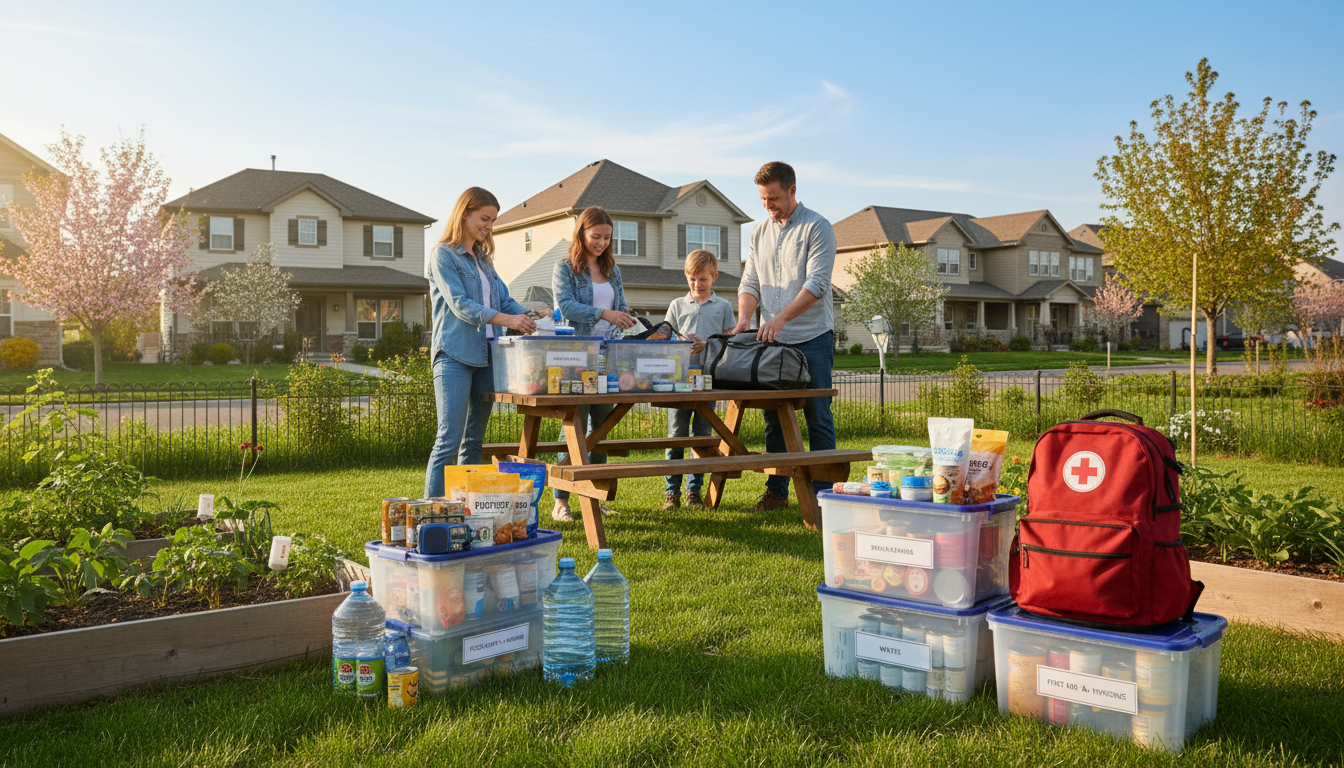
Talking about suburban prepping basics can make friends roll their eyes. They might think of someone hoarding supplies in a bunker. But the truth is far from it. Preparing for emergencies is not about living in fear. It’s about smart steps that make you feel safe and worry less.
Most people don’t flee to the wilderness during disasters. They stay with family, visit friends, or book a hotel. This fact changes how you should prepare for emergencies in suburbs. Your approach should match your real life, not some survival fantasy.
The best suburban preppers don’t live in constant fear. They prepare to reduce stress. Knowing you’re ready takes away uncertainty. You stop worrying about “what if” because you’ve planned for it.
Your neighbors won’t know you’re prepared. But your family will feel safer. This guide shows you how to prep in a way that fits your life. You’ll learn practical steps for suburban emergency preparedness without needing a special lifestyle or equipment.
Table of Contents
Why Suburban Preparedness Differs from Wilderness Survival
Preparing for suburban emergencies is different from wilderness survival. People often don’t understand what emergencies look like in cities. When disaster hits, you won’t be hiking in forests. Instead, you’ll deal with disrupted neighborhoods, stay with family, or go to hotels.
This difference is key when planning for urban emergencies.
Wilderness survival and suburban readiness have different focuses. In suburbs, you face practical challenges that wilderness training doesn’t cover. Your goal shifts to keeping comfortable and normal during disruptions.
Understanding Urban and Suburban Emergency Scenarios
Suburban areas face emergencies more often than extreme disasters. These emergencies need specific responses:
- Extended power outages lasting days or weeks
- Water main breaks disrupting clean water access
- Temporary evacuations from gas leaks or nearby fires
- Severe weather making roads unsafe for travel
- Short-term relocation to hotels or family homes
- Supply chain disruptions affecting store availability
These scenarios guide your preparation. Your suburban plan should tackle real threats, not just disaster movies.
The Reality of Modern Disaster Response
Studies show how disasters happen in today’s communities. Most people leave by car or plane, not on foot. Those displaced often stay with relatives, friends, or in hotels for a while.
Infrastructure issues are more critical than total societal collapse.
Research also shows community resilience. People help each other during crises. Neighborhoods unite, not fall apart. This changes how you prep for urban emergencies. You’re not preparing to be alone. You’re getting ready to handle disruptions while staying connected with your community.
Adapting Your Mindset for Suburban Settings
Switching from wilderness to suburban preparedness means being versatile and practical. Focus on being adaptable, not just on survival skills. Aim to keep things comfortable and normal during disruptions, not to create dramatic scenarios.
Your prep should fit into everyday suburban life. Learn about suburban survival planning that’s about responsible insurance and not bunker mentality. Prepare for real threats while looking like you’re just going about your day.
Here are mindset shifts to consider:
- Prioritize comfort items for temporary displacement
- Plan for staying in your home or nearby locations
- Build supplies that don’t worry your neighbors
- Focus on infrastructure disruptions, not civilization collapse
- Embrace community connections as part of your safety plan
This approach turns suburban survival planning from fear to smart planning. You’re ready for real suburban challenges with practical solutions.
Suburban Prepping Basics
Suburban prepping basics start with a simple truth. Having backup plans for everyday disruptions brings peace of mind. It’s like carrying a spare tire in your car. This way, you’re not stressed about being unprepared.
This approach doesn’t mean you need to turn your home into a bunker. It’s about taking small, practical steps. These steps fit well into suburban life.
The core of suburban prepping is building layers of readiness. Start with a 72-hour supply, then add two weeks, a month, and more. This method is easy to follow and doesn’t cost a lot. You’re building resilience step by step, without drawing attention.
Starting with neighborhood disaster readiness means focusing on key areas. These areas are important for suburban life:
- Water storage and purification systems for apartments and homes
- Food supplies that need little storage and no special conditions
- Basic first aid kits and essential medications
- Alternative cooking methods like camping stoves or fuel tablets
- Flashlights, batteries, and backup power solutions
- Important document copies stored securely
Suburban prepping basics say any preparedness beats none at all. You don’t need to be perfect. Start with items you’ll use during power outages or job changes. When you explore practical preparedness guides designed for everyday, you’ll find they’re more useful than doomsday thinking.
Remember, neighborhood disaster readiness gets stronger when you have supplies for different situations. Whether you’re at home, visiting friends, or in a hotel, your basics adapt. This flexibility is what makes suburban prepping smart. Supplies that work in many scenarios are truly valuable and give you lasting peace of mind.
Building Your Urban-Ready Bug-Out Bag
A bug-out bag is your portable safety net in unexpected situations. It’s different from wilderness survival kits because it focuses on comfort and practicality for city living. Your bag should have items that make temporary living bearable and look normal.
Real-world testing shows what really matters. Someone lived in a hotel room for a month with just a bug-out bag. They found that the first week’s items should have been packed from the start. This approach helps avoid guesswork and focuses on real needs.
Essential Items for Hotel and Apartment Survival
When staying in temporary housing, you need more than just basic supplies. Start with personal bedding because hotel linens can be a hygiene risk. Include pillowcases, a travel pillow, and quality sheets for any bed.
Basic kitchen items make survival easier. A real metal hand-crank can opener is better than flimsy ones. Also, pack comfortable eating utensils and quarters for laundry and vending machines.
Organization and convenience are key during stressful times. Bring over-the-door hooks, a small extension cord, and 3-to-2 prong converters. A programmable TV remote is useful when dealing with confusing hotel systems.
- Personal pillows and quality sheets
- Real metal can opener and cooking tools
- Comfortable eating utensils
- Extension cords and outlet adapters
- Over-the-door hooks
- Quarters for machines
- Basic hygiene supplies
- Entertainment remote or reading materials
Practical Everyday Tools That Don’t Raise Eyebrows
Your urban prepping strategies should fit into daily life. Battery-powered tools are key in cities where power can be unreliable. Use a quality AA/AAA battery charger with rechargeable batteries that look normal.
Multi-tools without tactical styling are perfect for everyday carry. First aid supplies in regular cases avoid drawing attention. Flashlights and portable chargers are common items everyone has. Each tool should have a real purpose and support your preparedness goals.
| Item Category | Recommended Gear | Why It Works |
|---|---|---|
| Power Solutions | Rechargeable batteries and charger | Standard and widely used |
| Tools | Compact multi-tool | Professional appearance |
| First Aid | Regular casing supplies | Looks like normal medicine kit |
| Lighting | Everyday flashlight | Common household item |
| Charging | Portable phone charger | Expected technology accessory |
TSA-Friendly Packing Strategies
Weight matters. Keep your bag under 50 pounds to avoid airline fees and theft. All gear should fit inside the pack to reduce loss risk.
TSA rules change often, so check them before traveling. Firearms and ammunition must be packed separately in checked baggage. MREs are forbidden due to heater elements. Everclear is allowed as drinking alcohol.
Request manual inspection and use real locks to prevent theft. Keep separate EDC kits for carry-on and checked baggage. Knowing these rules makes your family emergency supplies legal and practical.
- Keep total weight under 50 pounds
- Pack all gear inside the bag
- Check current TSA rules before travel
- Separate firearms and ammunition properly
- Avoid MREs with built-in heaters
- Use real locks and request manual inspection
- Maintain carry-on and checked baggage separation
- Test your bag in realistic scenarios
Your urban-ready bug-out bag shows smart thinking, not paranoia. These items address real comfort needs during temporary stays. Test your bag by staying in a hotel with only what you’ve packed. This real-world test ensures your urban prepping strategies work when needed.
Blending In: The Art of Discreet Preparedness
Keeping your survival plans secret is key in suburban survival planning. Many fear being seen as extreme or paranoid. But, smart preparedness should be hidden from the world. Your neighbors don’t need to know you’re ready for emergencies, and that’s perfectly fine.
The secret to being discreet is choosing gear that looks normal. When planning your home security, think about how your supplies will look to others. Your bug-out bag should look like quality travel luggage or a standard hiking backpack, not a military-style rucksack.
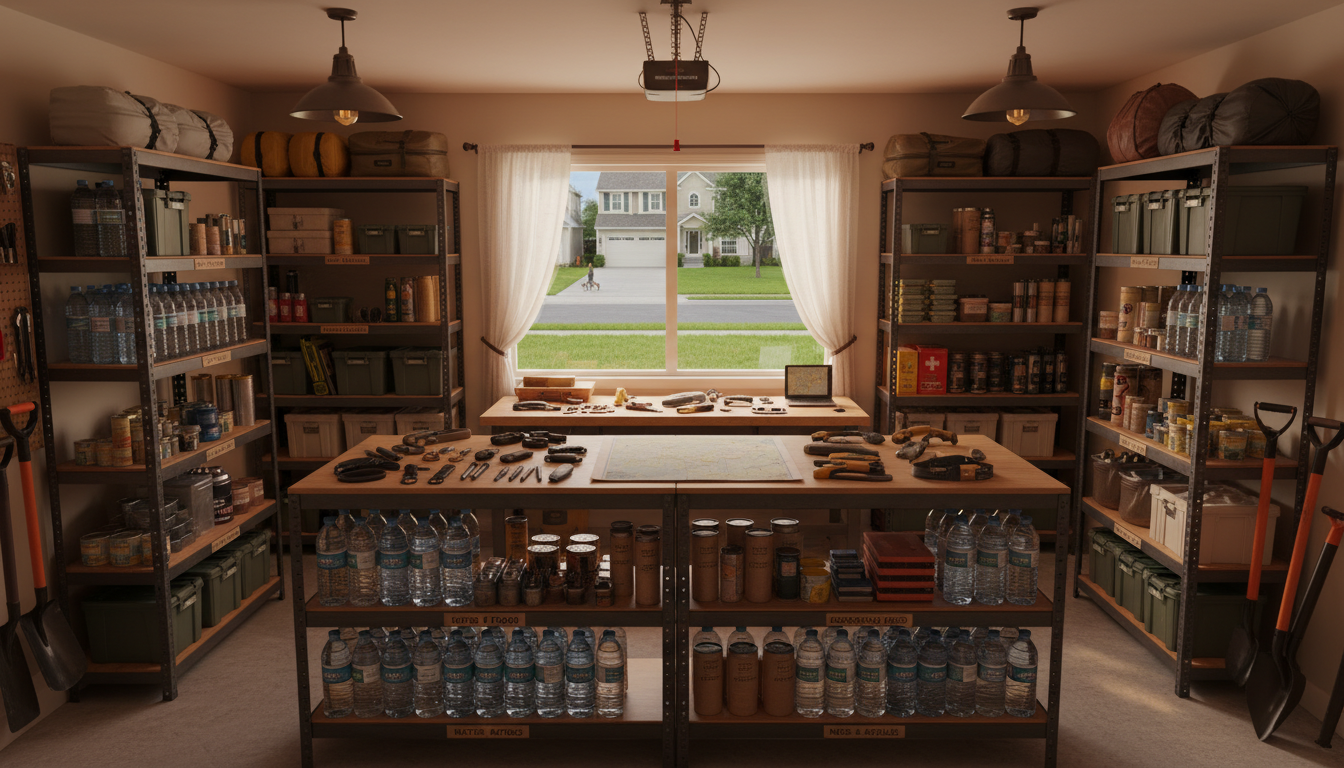
All tools and supplies must stay inside your bags and containers. Avoiding machetes, axes, or other equipment on the outside of packs is important. Everything visible should look ordinary and professional.
Here’s how to maintain low-profile preparedness in everyday situations:
- Store supplies in basements, garages, or closets instead of showing them openly
- Use neutral language when discussing readiness with others, such as “emergency supplies” or “power outage planning”
- Keep vehicle emergency kits organized like standard roadside supplies, not tactical loadouts
- Choose backpacks and bags in neutral colors that blend with everyday travel gear
- Pack a high-visibility safety vest for situations requiring visibility during roadside emergencies
Blending in doesn’t mean giving up on preparedness. It means being smart about how others see your readiness. Strong suburban survival planning respects both your safety and your community relationships. Operational security protects your preparations while maintaining the normal life you’ve worked to build.
Creating Peace of Mind Through Preparedness
Many think emergency preparedness makes people live in fear. But it’s actually the opposite. It makes you feel calm and confident every day. By protecting your family and home, you feel in control. This turns worries into plans you can manage.
Imagine driving without gas and no stations nearby. It’s stressful. But with a 5-gallon fuel container, you feel safe. Suburban self-sufficiency works the same way. Having food, water, and heat options means you sleep better.
Reducing Anxiety by Taking Control
Uncertainty causes stress in life. Without clear plans, emergencies seem too big to handle. But with a plan, you can face fears head-on.
Here’s how preparedness tackles common worries:
- Job loss fears lessen with food stored for months
- Power outages are less scary with backup systems
- Water worries disappear with purification methods
- Economic fears fade with emergency funds
Emergency preparedness gives you power. You’re no longer helpless. You’ve taken steps to protect your loved ones.
The Psychological Benefits of Being Ready
Being prepared improves your mental health. You sleep better, knowing your family is safe. You face challenges with confidence.
Working on preparedness plans strengthens family bonds. Kids learn valuable skills. Adults feel ready for anything.
Learning skills like water purification and first aid boosts your confidence. You become more self-reliant. This improves your mental strength.
Tiered Preparedness: From Get-Home Bags to Cached Supplies
Building family emergency supplies doesn’t mean carrying everything in one heavy backpack. The tiered preparedness approach spreads your gear across multiple bags and locations. This system lets you stay prepared without feeling burdened. You keep everyday carry items close, get-home bags in your vehicles, bug-out bags ready for evacuation, and pre-positioned supplies at destination points. Think of it like having backup plans for your backup plans.
This method works well for suburban homestead preparation because it matches real life. Most emergencies don’t require leaving your house. Some do require getting home from work. Only rarely do you need to evacuate completely. By organizing supplies in tiers, you address each situation with the right gear.
Multi-User Bag Philosophy for Families
Family bags work best when they’re not locked to one person. Instead of giving Mom the first aid kit and Dad the food, create bags that any family member can access and understand. This approach keeps your family emergency supplies flexible and useful.
Children should carry age-appropriate loads. A ten-year-old can manage five pounds. A teenager can handle fifteen. Adults split the heavier items. If one person gets separated or tired, others can grab supplies from any bag.
Use color coding or clear labels. Red bags hold medical supplies. Blue bags contain water and food. Green bags store tools. During stress and panic, simple colors work better than complicated systems. Every family member should know what each color means.
Store duplicates of critical items across bags. Don’t put all medications in one place. Don’t keep the only flashlight in a single backpack. If someone leaves a bag behind, your family will have essentials.
| Bag Type | Best For | Who Carries It | Weight Range |
|---|---|---|---|
| Everyday Carry (EDC) | Daily personal needs | Each person individually | 1-3 pounds |
| Get-Home Bag | Returning home during disruptions | Stays in each vehicle | 10-15 pounds |
| Bug-Out Bag | Family evacuation scenarios | Rotated among able family members | 20-30 pounds each |
| Cached Supplies | Extended shelter and resources | Pre-positioned at retreat locations | Varies by cache type |
Pre-Positioned Gear and Grab-and-Go Systems
Specialized bags let you grab only what you need for each emergency type. Your power outage kit differs from your evacuation kit. A house fire requires different supplies than a winter storm.
Create these focused kits for suburban homestead preparation:
- Camping and Shelter Bag – Contains tents, sleeping bags, air mattresses, lanterns, and camp lighting. This works for evacuation or extended power outages.
- Camp Kitchen Bag – Holds cooking stoves, folding tables, collapsible water buckets, fire-cooking gear, and cast iron cookware. Include hand-crank coffee makers and solar chargers.
- Medical and Trauma Bag – A bright red pack with surgical tools, over-the-counter medications, extra prescriptions, and antibiotics. Keep this accessible but clearly marked.
- Food and Water Kit – Store three weeks of shelf-stable food for your family. Check and rotate it once yearly.
- Tools Bag – Distribute heavy tools across multiple bags instead of one. A single bag gets too heavy to carry.
- Communications Bag – Pack handheld radio systems, solar panels, battery chargers, and backup radios. Include battery-powered TV or radio for news.
Your 72-hour bag shouldn’t focus on carrying food and water. People can survive three days without water and three weeks without food. Instead, carry tools to find and process water and food. A water filter, fire-starting supplies, and fishing gear serve you better than extra weight.
Build this system gradually. Start with one camping bag and one medical bag. Add more as your budget allows. Even partial implementation gives your family real protection. Your suburban homestead becomes safer with each addition.
Community Resilience vs. Solo Survivalism
The idea of a lone survivor in movies is exciting. But real disasters show us something different. Experts like Rebecca Solnit say communities come together in emergencies. Scholars like Quarantelli and Frailing have proven that disasters don’t lead to chaos and looting.
Your neighbors are not your rivals. They are your biggest help.
Being prepared in the suburbs is all about strong community ties. Most people don’t hide in bunkers. They go to their friends’ and family’s homes. This shows that neighborhood readiness is more important than just having supplies.
Your connections with neighbors help your community recover faster. This is more effective than trying to survive alone.
To build community resilience in your neighborhood, start with simple steps:
- Get to know your neighbors before emergencies happen
- Identify skills and resources within your block (medical training, generators, tools)
- Organize neighborhood preparedness meetings or block parties focused on emergency planning
- Create communication plans for when phones and internet go down
- Establish mutual aid agreements for shared help during crises
Keep your community trust by balancing openness with security. You don’t have to show everyone your supplies. But being known as reliable and willing to help is key.
Suburban preparedness thrives when neighbors support each other. Put as much effort into building relationships as you do into stockpiling. These connections offer security, shared resources, and emotional support during tough times.
Conclusion
Suburban prepping basics are simple and not scary. This guide shows that emergency prep is smart and practical. You’ve learned that suburban emergencies are different from wilderness ones.
You’ve made versatile bags for various situations. You’ve learned to keep your prep quiet, blending in with your community. These steps help you feel secure without drama.
The key to suburban self-sufficiency is being adaptable. You won’t know what emergency you’ll face or where you’ll be. Your gear and mindset must be flexible.
Having the right supplies and skills works in many places. This flexibility is more valuable than any fixed plan. Being adaptable makes you ready for almost anything.
Start with what you have now. You don’t need everything at once. Building suburban self-sufficiency is a gradual process.
Begin with one get-home bag. Add supplies to one room. Learn one new skill. Each step brings you closer to being ready.
This journey never ends, and that’s okay. There’s always more to learn and improve. But any progress counts.
Your preparedness makes your family feel secure and confident. You’ll develop valuable skills. You might also build stronger bonds with your neighbors and community.
Best of all, you’ll sleep better knowing you’re ready. Suburban prepping isn’t about fear or doom. It’s about taking control and enjoying peace of mind. Start today and trust yourself to build the resilience your family deserves.
FAQ
Isn’t prepping just for paranoid people who are afraid all the time?
No, it’s not just for paranoid people. In fact, getting ready can actually make you feel less anxious. By preparing for emergencies, you take control of uncertain situations. This makes you feel more confident and calm.
Studies show that taking action against worries can reduce stress. Instead of worrying about power outages or job loss, you know you’re ready. Preparing is about feeling secure, not scared.
What kinds of emergencies do suburban residents actually face?
Suburban emergencies are different from wilderness survival. They include long power outages, water main breaks, and gas leaks. Severe weather and job loss are also concerns.
These everyday scenarios are more common than apocalyptic ones. Suburban prep focuses on handling these situations. Most people go to hotels or family homes, not remote areas.
My neighbors think preppers are weird. How can I be prepared without raising eyebrows?
You can be discreet about your prep. Choose gear that looks normal, not tactical. Use bags that resemble travel or hiking packs.
Store tools and supplies inside bags, not on the outside. Talk about emergency supplies, not SHTF scenarios. Keep your vehicle and home prep looking like normal emergency kits.
What should actually go in a bug-out bag for suburban scenarios?
Bug-out bags for suburbs should focus on hotel living. Include bedding items, cooking tools, and entertainment. Don’t forget basic hygiene supplies and communication tools.
Think about what you’d buy for a hotel room. Include quality batteries and chargers, and a multi-tool. Aim for comfort and normalcy, not extreme survival gear.
How do I keep my bug-out bag under weight limits while staying prepared?
Use a tiered bag system. Have an EDC kit, get-home bags, a primary bug-out bag, and cached supplies. This way, you’re never carrying too much.
Keep your main bug-out bag under 50 pounds. Test your bag on trips to see what you really use. Organize items for air travel if needed.
Should my family have individual bags or shared family bags?
Shared family bags work better. Organize them so anyone can use them. Color-code or label bags for quick identification.
Children can carry age-appropriate loads, making them feel included. Adults can access any bag easily. This way, if someone is separated, the family can access supplies.
What’s the difference between a get-home bag and a bug-out bag?
Get-home bags are for returning home during disruptions. Bug-out bags are for evacuations. Get-home bags are smaller and lighter.
Each bag serves a specific purpose. You can add layers like camping gear and cached supplies. This makes your prep more manageable and effective.
How does suburban preparedness actually reduce anxiety?
Uncertainty and lack of control cause stress. Preparing turns vague worries into concrete plans. This gives you control over situations.
Knowing you have food and water stored can be comforting. This approach reduces anxiety, not increases it. It also helps you handle current events calmly.
What does tiered preparedness actually mean for my household?
Tiered preparedness means organizing supplies in layers. Start with everyday carry kits, then get-home bags, bug-out bags, and cached supplies.
Each layer is for a specific scenario. Focus on one tier at a time. This approach is more manageable and effective than one big kit.
How do I start suburban prepping without feeling overwhelmed?
Start small and build gradually. Begin with 72-hour readiness. Focus on essentials like food, water, and first aid.
Extend to two weeks, then a month, and longer. Take small steps and celebrate each success. Remember, preparedness is a journey, not a destination.
What important documents should I have backed up and in my bug-out bag?
Keep copies of critical documents in your bug-out bag. Include birth certificates, insurance policies, and medical records. Store originals in a fireproof safe.
Include pictures of your home and valuable items. Digital backups are also important. Keep a list of important phone numbers and contacts.
How do I organize specialized equipment kits like medical, cooking, and tools?
Organize kits by function. A medical kit should include medications and basic supplies. A cooking kit should have a can opener and portable fuel.
Tools should be organized by function. Color-code or label each kit clearly. Test each kit to ensure everything works.
Should I focus on getting supplies first or developing practical skills?
Both are important. Supplies without skills are limited. Skills without supplies won’t help much.
Start with basic skills like water purification and first aid. Practice these skills before needing them. As you develop skills, you’ll know what supplies you need.