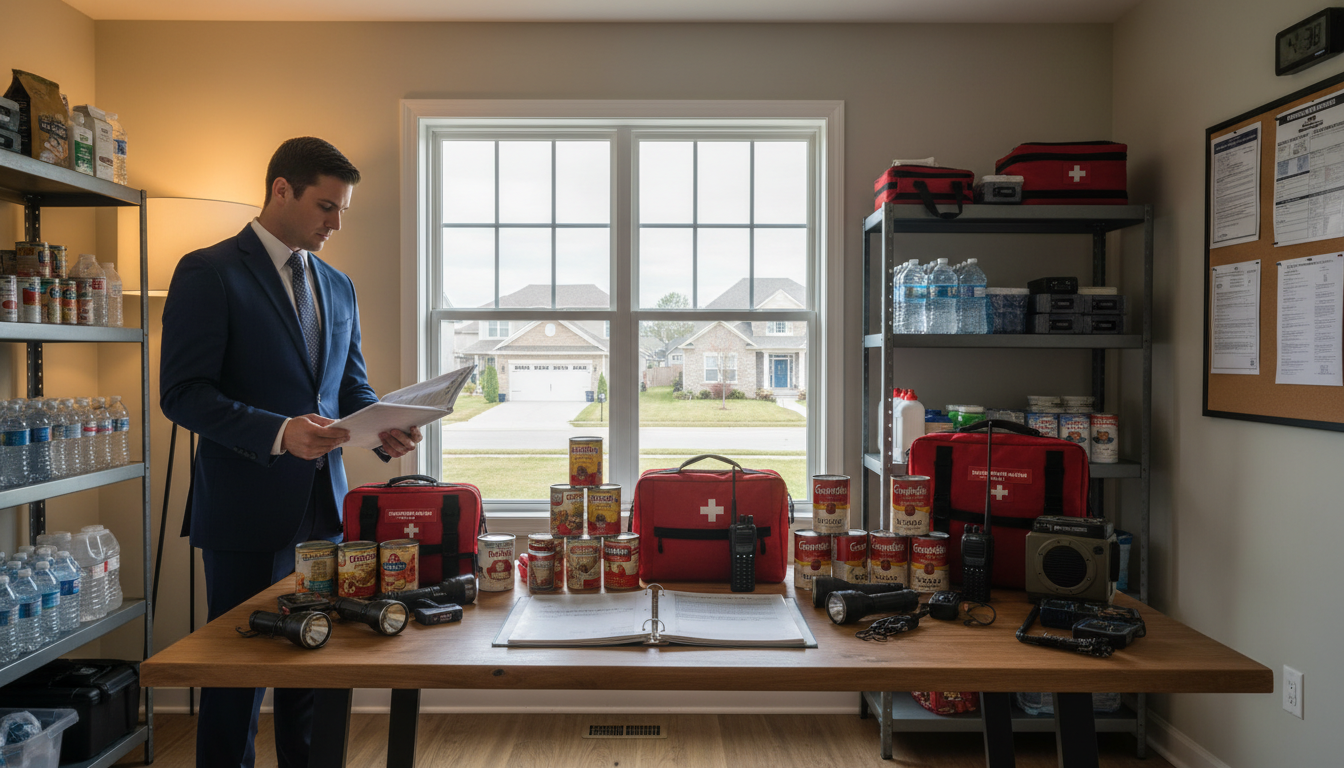
Emergencies can happen anytime. Power outages, severe weather, and unexpected events can make us stay indoors for days. These situations test our readiness and strength in unexpected ways.
The modern world brings new challenges to emergency response. Recent events like power outages, international conflicts, and natural disasters show crises are common. Security during shelter in place is more than just locking doors and staying inside.
Harding Bush, a former Navy SEAL and director for security operations at Global Rescue, shares a key truth. “Survival often depends on knowing the emergency type and how to act early.” This idea shapes our approach to emergency preparedness in today’s world.
Most people focus on supplies when preparing for emergencies. Water, food, and first aid are essential. But security during shelter in place needs more thought. You need systems for access control, communication plans, and safe areas in your home or facility.
This guide will help you plan for extended shelter-in-place situations. You’ll learn about controlling entry points, reliable communication, managing resources, and making smart decisions under stress. With the right preparation and knowledge, you can keep your family safe during any emergency.
Emergency preparedness safety is not hard. It needs planning and understanding. Let’s look at the security considerations important for sheltering in place.
Table of Contents
Understanding the Difference Between Shelter in Place and Lockdown
Many people confuse “shelter in place” and “lockdown.” This confusion can be dangerous. These two responses have different uses and actions. Knowing the difference can save lives.
Knowing when to stay calm and when to secure your location is key. Let’s look at what each response means and when to use them.
Shelter in Place as a Protective Pause
Shelter in place is like a protective pause. It’s a time to gather info and let authorities handle the crisis. This is for threats like hurricanes or chemical spills.
When you’re told to shelter in place, stay inside. This keeps you safe and lets emergency vehicles move freely.
Shelter in place has three main goals:
- Keep you safe from dangers outside
- Clear roads for emergency responders
- Give you time to prepare and gather supplies
This response is temporary and flexible. You’re not locked in. You can communicate and adjust as needed.
Lockdown Protocols for Immediate Threats
A lockdown is different from shelter in place. Understanding the difference is important. During a lockdown, all movement stops.
Lockdowns are for threats like active shooters or armed conflict. They assume danger is present right now. You must follow all instructions.
Lockdowns have key features:
- Secure all doors and windows
- Move to safe spaces
- Stop all movement
- Stop normal activities
- Follow police orders
Why Terminology Matters in Emergency Response
Using the wrong term can be dangerous. If you think it’s a lockdown when it’s not, you might panic. If you think it’s shelter in place when it’s not, you could be in danger.
| Aspect | Shelter in Place | Lockdown |
|---|---|---|
| Threat Type | External (weather, chemical, hazard) | Immediate, violent, lethal |
| Duration | Temporary and flexible | Until all-clear given |
| Movement | Limited but possible | Completely halted |
| Compliance Level | Recommended with some flexibility | Absolute and mandatory |
| Enforcement | Advisory from authorities | Police or military enforcement |
| Communications | You can communicate freely | Silent or minimal, follow orders only |
Emergency lockdown security needs clear language. When authorities use specific terms, they tell you what to do. Clear communication and preparation are key when seconds count.
The main difference is in the threat and timing. Shelter in place keeps you safe from outside dangers. Lockdowns protect you from immediate threats by keeping you in safe spaces. Both are lifesaving when used correctly.
Security During Shelter in Place
When you stay home during a shelter-in-place order, security is more than just locking your door. You need to understand different threats and know how to protect yourself. This depends on the danger, like bad weather, environmental hazards, or safety issues in your area.
Security during these times works in layers. First, you take basic steps like locking doors and staying inside. Next, you become more aware and use communication plans. For serious threats, you follow home security lockdown steps. This way, you can adjust your actions based on the situation.
Different dangers need different responses. For natural disasters, chemical spills, or gas leaks, seal your home and stay inside. If there’s violence or civil unrest, you need to take more action. Knowing when to step up your security helps keep your family safe without causing worry.
| Threat Type | Security Response Level | Key Actions |
|---|---|---|
| Severe Weather | Basic | Lock doors and windows, stay indoors, monitor weather updates |
| Environmental Hazard | Moderate | Seal entry points, turn off HVAC systems, remain sheltered |
| Violence or Civil Disturbance | High | Implement full lockdown procedures, secure all access points, maintain silence |
| Missing Person Alert | Moderate to High | Control building access, account for residents, coordinate with authorities |
Core lockdown steps protect you in serious threats. Lock all exterior doors and windows. Close and lock interior doors to control access. Draw blinds and curtains to hide inside. Turn off lights to make it look like no one’s home. Stay quiet and hidden to avoid drawing attention.
- Control who enters and exits your home
- Establish which rooms serve as safe spaces
- Know where communication devices are located
- Understand your home’s layout for quick movement
- Keep emergency contacts readily accessible
Plan for home security lockdowns before emergencies. Talk with your family about safe areas in your home. Practice moving to these areas quickly. Make sure your locks work and test your communication systems often.
Effective home security is about being ready without overdoing it. You’re not building a fortress; you’re preparing to respond confidently to threats. Knowing your options helps you make smart choices and keep your family safe while staying indoors.
Essential Security Planning and Preparation Measures
Getting ready for emergencies means taking action before they happen. Smart preparation turns panic into purposeful action. The best shelter guidelines focus on controlling entry, staying connected, and knowing where to go when danger appears.
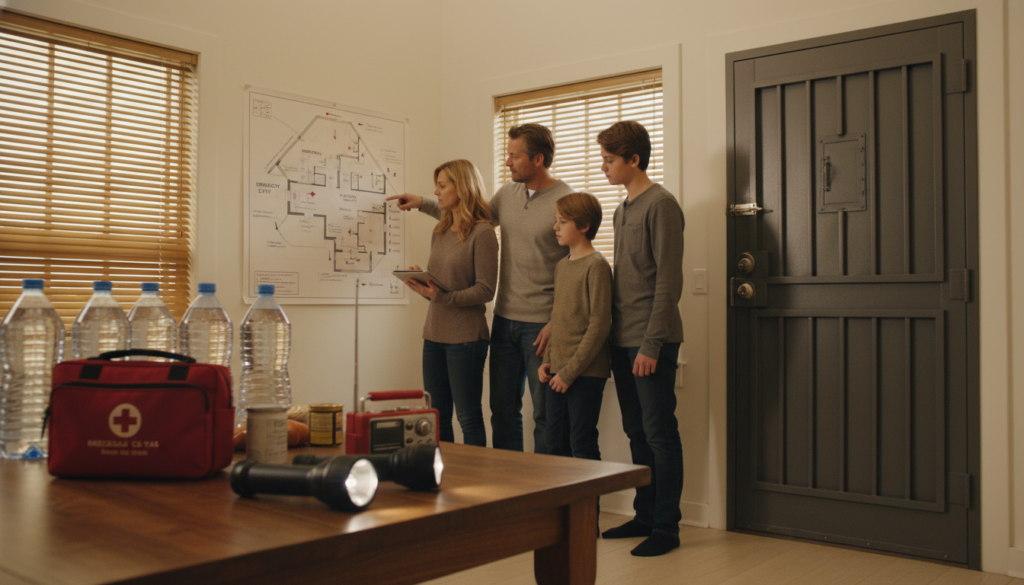
Planning ahead gives you confidence to act quickly when emergencies strike. Many families skip this step, thinking they’ll figure things out later. But, real experience shows that those who prepare calmly respond better, while the unprepared freeze or make poor choices.
Establishing Access Control and Entry Points
Start by walking through your home and identifying every way someone could enter. Check all doors, windows, garage doors, and basement access points. Each entry needs attention and appropriate security measures.
- Reinforce exterior doors with quality locks and deadbolts
- Install window locks on all accessible windows
- Secure garage doors and basement hatches
- Create a list of who has keys or access codes
- Plan how to quickly secure entry points during an emergency
Good locks matter, but planning matters more. Decide in advance who needs access during a crisis. Brief family members on procedures. Test your system before you need it under real stress.
Creating Communication Protocols for Extended Sheltering
Communication is key during extended shelter situations. Your family needs reliable ways to stay in touch, check on vulnerable members, and receive official updates. When primary systems fail, backup methods keep everyone informed and connected.
| Communication Method | Primary Use | Best For |
|---|---|---|
| Group Messaging Apps (WhatsApp, Signal) | Family check-ins and status updates | Quick messages when internet is available |
| Designated Phone Tree | Backup contact system with assigned callers | Situations when cell networks are overwhelmed |
| Local News and Emergency Alerts | Official threat information and instructions | Understanding evacuation orders or all-clear signals |
| Battery-Powered Radio | Receiving updates if power fails | Extended emergencies lasting days or weeks |
| Predetermined Check-In Times | Scheduled contact with family members | Maintaining regular connection without overwhelming systems |
Set up regular check-in schedules so family members expect to hear from each other at specific times. Choose trusted information sources before emergencies occur. Government agencies, local emergency management, and recognized news outlets provide reliable guidance. Learning shelter-in-place response strategies includes verifying official instructions and avoiding false information during crises.
Identifying Safe Areas Within Your Facility or Home
Different threats require different safe spaces. Walk through your home and evaluate each room for its protective qualities. Consider interior layout, window placement, and access points when making decisions.
Interior rooms without windows provide the best protection during severe weather, active threats, or dangerous outdoor conditions. Areas with hard cover—like concrete walls or heavy furniture—shield you from projectiles. Spaces with limited access points can be secured quickly when minutes matter for household safety during shelter.
Best safe areas share these qualities:
- Located in the interior of your home away from windows and external walls
- Contain necessary supplies like water, first aid, medications, and important documents
- Have solid construction and few or controllable entry points
- Offer enough space for your family to stay comfortably for extended periods
- Include communication devices or ways to receive emergency updates
Consider bathrooms, interior closets, basements, or interior hallways as safe zones. Stock these areas during calm times so supplies are ready when needed. Rotate stored water, food, and medications to keep everything fresh and functional.
Practice moving your family to designated safe areas without rushing or confusion. Repetition builds confidence and creates muscle memory. When real emergencies arrive, your family responds automatically without needing to think through each step. This preparation ensures home protection during emergencies becomes second nature.
Managing Resources and Infrastructure Security
When you shelter in place during an emergency, having the right resources is key. This means planning for power, food, water, medicines, and cash. Good planning keeps you and your family safe and reduces the need to go outside when it’s dangerous.
Resource management is the heart of your emergency plan. Without enough supplies, even the best security can’t keep you safe. Preparing these resources is simple. Just think about what you need and store it wisely.
Your first step is to get backup power. A generator is great when the power goes out. Choose the right size for your home. If a whole-house generator is too expensive, a portable one for essential systems works well.
Make sure your generator is in a safe place. Never put it in a basement where water might flood it. Keep 4 to 5 days of fuel ready and test your generator often.
For food and water, stock up enough for everyone in your home. Aim for 5 to 7 days of non-perishable food. For water, plan for one gallon per person per day. Check and rotate your supplies regularly. Also, build relationships with different food suppliers to ensure you have access to food even if local sources are cut off.
| Resource Type | Recommended Supply | Storage Location | Maintenance Schedule |
|---|---|---|---|
| Generator Fuel | 4-5 days supply | Safe, dry location away from home | Check monthly; rotate fuel quarterly |
| Non-Perishable Food | 5-7 days for all occupants | Cool, dry pantry or storage area | Inspect and rotate every 6 months |
| Potable Water | 1 gallon per person per day (minimum 3 days) | Food-grade containers in cool location | Replace water every 6-12 months |
| Prescription Medications | 5-7 day supply minimum | Cool, dry place; refrigerate if required | Request extended fills from pharmacy quarterly |
| Cash on Hand | Several hundred dollars in small bills | Secure home location or safe deposit box | Replenish if used; check annually |
Medical supplies are also key for home protection during emergencies. Talk to your doctor and pharmacist about getting more prescription medications. Stock a first aid kit, over-the-counter medications, and any special medical supplies you need. This way, you won’t have to leave home when it’s not safe.
Don’t forget about financial security. Electronic payments might not work during emergencies. Keep cash in small bills. Also, set up credit relationships with local stores and grocers before an emergency. This way, you can get supplies even if you can’t pay right away.
Guides on emergency preparedness, like those found in comprehensive emergency preparedness documentation, stress the importance of having enough medication and working with local suppliers. Having these plans in place reduces stress and keeps your family safe.
Your plan should also include manual backups for important equipment. If you need electric medical devices, have manual backups ready. Store important documents in waterproof containers. Keep tools and basic materials for emergency repairs. These steps ensure you can meet your family’s needs even if technology fails.
Overcoming Instinct with Intelligence and Situational Awareness
In emergencies, our brains often skip rational thinking. The fight-or-flight response, a survival tool for thousands of years, can lead to risky choices. People might run towards gunfire, drive into wildfires, or walk into violent crowds. This happens because our instincts tell us to flee without checking if it’s safe.
Understanding this instinct is key to making better choices in emergencies. It’s the first step in emergency preparedness safety.
Your choices in crises depend on the quality of information you have. Bad or incomplete info leads to poor decisions. Without up-to-date info, a safe-looking route could be dangerous. That’s why shelter in place protocols stress getting info from reliable sources, not just rumors or fear.
Recognizing Common Decision-Making Errors During Emergencies
Under pressure, people make the same mistakes. Knowing these patterns helps you avoid them.
- Abandoning shelter when sheltering is safer
- Underestimating how fast threats approach
- Overestimating your ability to outrun danger
- Acting on incomplete information instead of official guidance
- Failing to notice when situations change
Clear plans before a crisis help you act quickly when it happens. Preparing your shelter in place protocols now means your brain won’t freeze during the crisis.
Monitoring Official Instructions and Threat Evolution
Emergencies change fast. Initial plans might change too. Situational awareness is ongoing, not just a one-time check.
Stay informed by using trusted sources: local emergency management, weather services, official news, and verified social media. Learn to spot when threats grow or lessen. Know when to switch from sheltering to evacuating or vice versa.
Between a crisis and recovery is a transition period. It can be quick or long. Moving through it needs patience, communication, and teamwork. Your emergency preparedness safety relies on being flexible and adapting to changes.
Conclusion
Learning the difference between shelter-in-place and lockdown is key. It’s about understanding two strategies for staying safe in emergencies. Knowing which one to use can save lives.
Emergencies are unpredictable and can change quickly. But you can prepare for them. By following the steps we discussed, you can keep your family safe during a shelter-in-place situation.
You don’t have to do everything at once. Start with small steps. Check your home or workplace, gather supplies, and talk to your family about emergency plans. Every step you take makes you safer.
Being prepared today means you’ll be ready for tomorrow. You can’t control when emergencies happen. But you can control how prepared you are. Take action now and face the future with confidence.
FAQ
What exactly is a shelter-in-place order, and how is it different from a lockdown?
A shelter-in-place order means staying inside to avoid dangers like downed power lines or contaminated air. It’s about keeping you safe and preventing congestion. On the other hand, a lockdown is for immediate threats like armed conflicts or violent riots. It requires you to stay completely immobile until it’s safe to move.
Why should I prepare for extended shelter-in-place situations when I might only need to stay home for a few hours?
Even though some shelter-in-place situations are short, emergencies like earthquakes or wildfires can last longer. It’s smart to prepare for the worst-case scenario. This means having enough food, water, and power backup for 5-7 days or more.
What are the most critical entry points I need to secure in my home?
Focus on securing all exterior doors, windows, basement access points, and any other openings. Check your home room by room to find weak spots. Use quality deadbolt locks on doors and consider reinforcing frames. For windows, ensure locks work and think about adding security bars or film.
How should I establish communication protocols with my family during an extended shelter-in-place?
Set up different ways to stay in touch, like group messaging apps or walkie-talkies. Plan regular check-ins for vulnerable family members. Choose trusted sources for emergency updates, like local agencies or verified news outlets.
What safe areas should I identify within my home for different types of threats?
Find safe spots in your home for various threats. For weather or chemical threats, choose interior rooms without windows on the lowest level. For active threats, pick rooms with few entry points that can be locked quickly.
How much food, water, and supplies should I keep on hand?
Keep a 5-7 day supply of non-perishable food for everyone in your household. Store at least one gallon of water per person per day. Check and rotate supplies regularly to prevent spoilage.
What backup power solutions should I consider for my home?
Look into whole-house generators or portable generators for backup power. Make sure you have enough fuel for 4-5 days. Know how to safely use your backup power system and have manual alternatives for critical equipment.
Why do people make poor decisions during emergencies, and how can I prepare to respond more intelligently?
During emergencies, our ancient fight-or-flight response can be dangerous. It might make you flee when staying inside is safer. Practice situational awareness and make decisions based on official guidance.
How should I monitor changing conditions to know when to transition from shelter-in-place to evacuation?
Keep an eye on changing threats by monitoring official updates. Use multiple reliable sources for information. Be ready to adjust your response based on new information.
What’s the difference between emergency preparedness and survivalist thinking?
Emergency preparedness is about taking practical steps to protect your family. It’s different from survivalist extremes like hoarding or building fortresses. It’s about being ready for temporary disruptions, not assuming the worst.
How do I know which information sources to trust during an emergency?
Choose trusted sources before an emergency happens. Use local emergency management, National Weather Service, and verified news outlets. Avoid unverified social media and rumors.
Should I evacuate my home if an emergency is declared, or is it safer to shelter in place?
Decide based on the type of threat and official guidance. Weather emergencies usually mean evacuation. Other emergencies might require shelter-in-place. Always follow official instructions.
What should I include in my family’s emergency communication plan?
Include out-of-area contacts, meeting locations, and assigned roles for each family member. Practice your plan so it feels natural. Keep important information written down in case devices fail.
How can I help my children understand shelter-in-place situations without creating anxiety?
Explain emergencies in simple terms and reassure them of your safety plans. Practice drills calmly to help them understand. Assign them roles in your plan to make them feel involved.
What medical supplies should I prioritize for extended shelter-in-place situations?
First, focus on prescription medications and a well-stocked first aid kit. Include over-the-counter medications for common ailments. Keep a list of medications and their dosages for easy reference.
How do I balance security measures with maintaining a normal home environment?
Focus on practical security measures that don’t disrupt your home life. Use standard locks and maintain a routine. Store security supplies in accessible places without cluttering your home.
What financial preparations should I make for extended shelter-in-place situations?
Keep cash on hand and establish credit arrangements with local suppliers. Review insurance policies and document important financial information. Consider continuity plans with your employer or school.
How often should I review and update my shelter-in-place preparedness plans?
Review your plans at least twice a year, ideally during seasonal changes. Check supplies and update communication protocols as needed. Practice your plan regularly to ensure everyone knows their role.