Living in the countryside offers a special kind of peace. Many people crave the open space, fresh air, and connection to nature. This draws thousands of families away from busy cities each year.
Rural living comes with its own set of needs for emergency planning and preparedness. According to the United Nations, nearly 45% of the world’s population lives in rural areas. Many of these communities face natural disasters, severe weather, and other emergencies.
The good news is that rural prepping advantages give country residents real strengths. You have space for growing food, access to natural water sources, and the ability to live more independently. These benefits put rural families in a strong position to weather tough situations.
At the same time, living far from towns and cities brings real challenges. Emergency services take longer to reach remote areas. Supply chains can be disrupted more easily. Infrastructure like power lines and water pipes may fail without quick repairs.
This article explores both sides of the story. You’ll learn about the real rural prepping advantages that make country living appealing for preparedness. You’ll also discover the honest challenges you need to plan for. Whether you’re already living rurally or thinking about making the move, this guide will help you build smart emergency plans for your family and property.
Table of Contents
Understanding Rural Preparedness: Why Country Living Offers Unique Opportunities
Rural preparedness is becoming more popular as people see the benefits of living in the country. Moving to rural areas changes how families prepare for emergencies and long-term security. Rural areas offer unique advantages for those focused on survival planning.
The Growing Movement Toward Rural Self-Sufficiency
More Americans are moving to rural areas for independence and control over resources. This trend shows a desire for self-sufficiency. People want to grow their own food, make their own power, and store supplies without limits.
Morgan Rogue, a seasoned prepper, shares her journey. A simple power outage made her realize her vulnerabilities. She says, “Anyone can become prepared on any budget, no matter where they live.” This message encourages rural families to start their survival planning.
Rural communities are known for their tight-knit networks. Neighbors help each other, making them stronger during emergencies. Building these networks is key to rural survival.
What Makes Rural Emergency Readiness Different from Urban Prepping
Rural and urban preparedness need different strategies due to environmental differences. Understanding these differences helps families plan better for their locations.
| Preparedness Factor | Rural Areas | Urban Areas |
|---|---|---|
| Emergency Response Time | Extended delays (hours to days) | Faster response (minutes to hours) |
| Primary Strategy | Bug-in and shelter in place | Bug-out and evacuation |
| Medical Facility Distance | Miles away from hospitals | Multiple facilities nearby |
| Resource Availability | Self-reliance essential | Supply chains accessible |
| Community Support | Tight-knit networks | Anonymous populations |
| Storage Space | Abundant room for supplies | Limited storage options |
Rural residents are often safer due to their distance from cities. They usually plan to stay put during emergencies. Their survival plans focus on being self-reliant.
But, there are challenges. Rural areas have longer distances to emergency services and fewer resources. Families need to learn first aid, water purification, and food production.
Rural living offers great opportunities. The land is perfect for growing food, raising livestock, and storing supplies. This makes rural communities strong and resilient.
Rural Prepping Advantages
Rural living offers survival benefits that city folks can’t match. It unlocks natural resources, space, and independence. These are key to effective preparedness. The benefits are more than just having more room.
Rural properties provide real off-grid survival benefits. They make your emergency readiness sustainable and practical.
Access to Natural Resources and Water Sources
Water is essential for survival. Everyone needs at least one gallon daily for drinking, cooking, and hygiene. Rural areas often have natural water sources that are lifelines during emergencies.
Here are some water options for rural preppers:
- Wells and springs on your property
- Ponds, lakes, and streams nearby
- Rain barrels attached to roof gutters
- Swimming pools for emergency backup
Water purification is critical. Tools like Berkey filters and boiling methods make natural water safe. Rain barrels are great for garden irrigation and emergency reserves. Rural residents have access to resources that city folks must buy and store.
Space for Food Production and Livestock
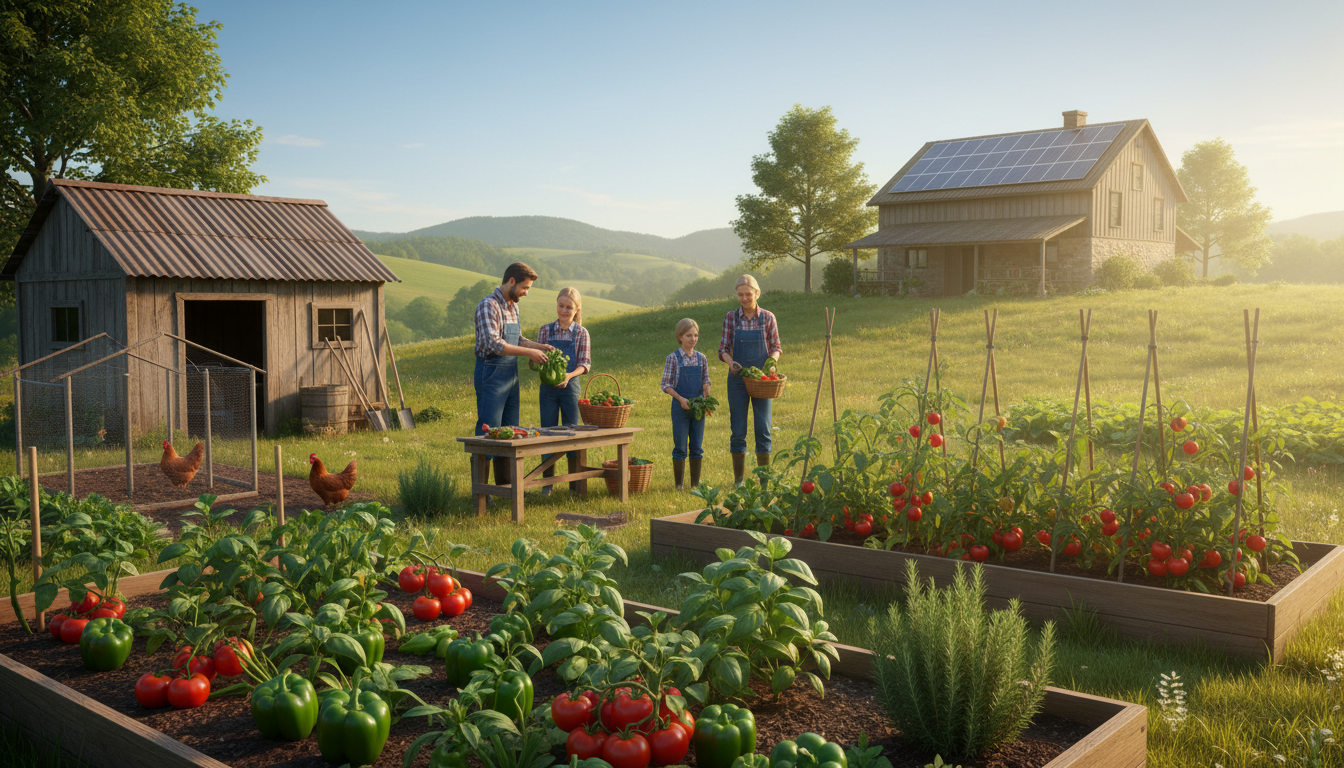
Agricultural preparedness shines with land. Rural areas let you grow food year-round in survival gardens. Even small spaces can have vegetable gardens and fruit trees.
Here are some food production options:
- Vegetable gardens in raised beds or containers
- Fruit trees and berry bushes
- Chickens for eggs and pest control
- Goats for milk and meat
- Root cellars for food storage
Canning, freezing, and traditional preservation methods are practical with your own produce. Container gardening works indoors near sunny windows if outdoor space is limited. Rural land makes food independence a reality.
Energy Independence Through Alternative Power Solutions
Power outages hit rural areas longer and more often than cities. This is an advantage for land-based prepping strategies that provide energy independence.
| Energy Solution | Rural Advantage | Best Use |
|---|---|---|
| Solar Panels | No HOA restrictions, full roof access | Daily power generation |
| Wind Turbines | Open space and strong wind patterns | Consistent power in windy areas |
| Wood Stoves | Space for storage and installation | Heating and cooking backup |
| Backup Generators | Distance from neighbors, fuel storage | Emergency power supply |
Off-grid survival benefits grow with multiple energy sources. Solar panels use free sunshine without interference. Wood stoves provide warmth and cooking during outages. Backup generators offer reliable power when solar production is limited. Rural properties allow for these systems legally and safely.
Your rural location turns vulnerability into strength with thoughtful energy planning.
Challenges of Prepping in Remote Locations
Rural living has many benefits, but it also has challenges for preppers. Knowing these challenges helps you make a better plan. While remote areas offer security benefits, distance and isolation are big hurdles. But, with the right planning, you can overcome these obstacles.
One big challenge is geographical isolation. Emergency help might be 30 to 60 minutes away. Fire and police can take an hour or more to arrive. Medical help is even harder to get when hospitals are far.
Communication in rural areas can fail when you need it most. Cell phones and internet might not work well. During storms or disasters, you can lose all communication. Understanding how sparse infrastructure affects rural areas shows why backup communication tools are key. Tools like satellite phones, ham radios, and two-way radios are vital for rural families.
Rural areas also face infrastructure challenges. Roads may be bad, and bridges could be old. Power lines are exposed to weather damage. Natural disasters hit harder, causing long power outages and blocking access.
Getting to supplies is hard. The nearest grocery store might be an hour away. You can’t quickly get emergency items.
- Keep extra food and water stored year-round
- Stock medical supplies beyond basic first aid
- Maintain fuel reserves for generators and vehicles
- Store medications with several months’ supply
- Keep backup power systems ready
Security is also a concern. While remote areas offer privacy, law enforcement takes longer to arrive. Building self-reliance for home security is part of your strategy. Strong locks, security cameras, and backup lighting protect your property when police can’t get there fast.
Essential Strategies for Countryside Survival Planning
Rural living means relying less on outside systems and more on your community and skills. True homesteading is about more than just stockpiling. It’s about making strong connections with neighbors and learning skills for when modern comforts fail. This section shows how to make your rural area strong and ready for emergencies.
Building Community Networks for Emergency Response
Your neighbors are key in an emergency. When roads are out or power lines down, they’re more important than delivery services. Building strong community ties makes everyone better equipped to face disruptions.
Community Emergency Response Teams (CERT) offer free training. They teach first aid, search and rescue, and damage assessment. Joining CERT boosts your confidence and connects you with trained neighbors ready to help.
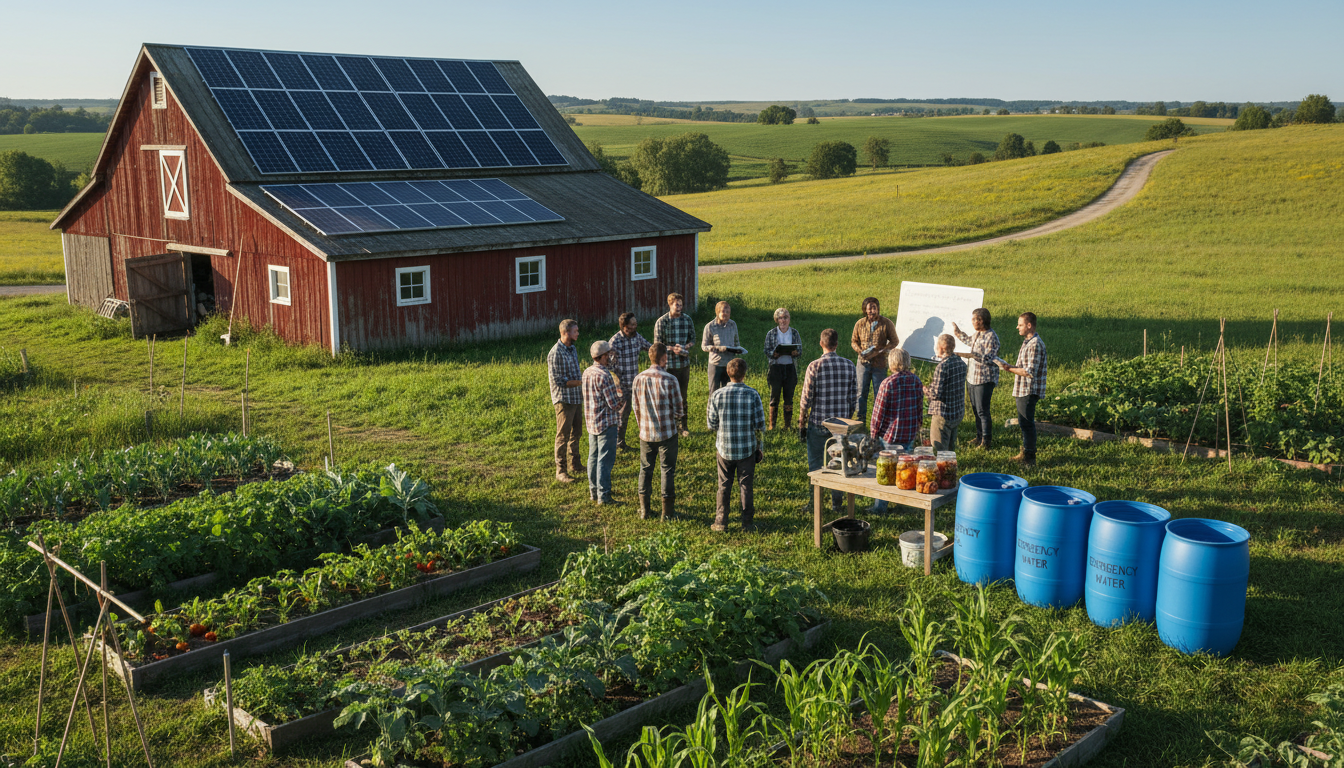
Start by organizing skill-sharing sessions. One neighbor might teach food preservation, while another shares repair tips. These gatherings build trust and spread essential skills across your community.
- Create a communication plan using group messaging apps and local radio frequencies
- Establish mutual aid agreements for shared equipment like generators or tractors
- Organize quarterly meetings to discuss preparedness goals and challenges
- Set up a community resource list showing who has specific skills and equipment
- Share contact information and designated meeting points for emergencies
Developing Critical Homesteading Skills
Skills are more important than supplies in emergencies. Unlike equipment, knowledge never runs out. Learning practical skills turns you from a consumer to a producer.
Cooking from scratch is key when power fails. A cast iron skillet works over fires or stoves. Learning to cook without electricity keeps your family fed during outages. Adaptability is also vital. Our world offers constant comfort, but when it’s gone, many struggle. Training your mind to see opportunities in challenges helps you stay calm under stress.
Begin building essential homesteading skills by focusing on one area at a time. You don’t need to become an expert right away.
| Skill Category | Why It Matters | Getting Started |
|---|---|---|
| Food Preservation | Extends harvest season and reduces food waste | Learn basic canning or fermentation from YouTube or local extension offices |
| Gardening | Produces fresh vegetables year-round with planning | Start small with raised beds or containers; grow herbs and greens first |
| Animal Husbandry | Provides eggs, meat, milk, and fertilizer for gardens | Begin with chickens or rabbits; consult experienced neighbors for guidance |
| Water Management | Ensures clean water access when systems fail | Install rainwater collection systems and learn basic filtration methods |
| Equipment Repair | Keeps tools and machinery functioning independently | Watch repair videos and practice on broken items before they’re needed |
| Basic Carpentry | Enables fence repair, shelter improvements, and tool building | Take community college classes or learn from experienced craftspeople |
Mental and physical wellness are key for handling emergencies. Daily exercise strengthens your body and clears your mind. Meditation and breathing calm your nerves when things get tough. Practice “what if” scenarios to mentally prepare for real challenges.
Free or low-cost emergency preparedness workshops are available for rural areas. Online courses offer flexibility. Local neighbors often share their knowledge informally. Take every chance to learn and build community bonds that support you through tough times.
Conclusion
Rural living offers big advantages for getting ready for emergencies. You can grow your own food and raise animals. You also have access to natural water and can use solar or wind power for energy.
But, rural prepping also has its challenges. You might be far from help, and getting supplies takes longer. Medical care could be far away too. Building strong community ties is key.
Morgan Rogue says, “The key to becoming prepared is to just start.” Start with small steps like buying canned foods or learning a new skill. Every action you take brings you closer to your prepping goals.
Rural preparedness is about feeling safe and secure. It’s about using common sense to protect what’s important. By working together with your community, you can create real security.
FAQ
What exactly is rural prepping, and is it just for doomsday preppers?
Rural prepping is about being ready for emergencies and being self-sufficient. It’s not just for doomsday preppers. It’s about being practical for rural living, where help might take longer to arrive. Governments worldwide recommend being prepared.
Rural prepping focuses on using the land for gardening, water, and energy. It helps you stay independent and feel secure, whether you live in the country or are moving there.
How much space do I actually need for rural food production?
You don’t need a lot of space to grow food in the country. A small garden, like 100-200 square feet, can produce a lot. You can also have fruit trees, berry bushes, and container gardens.
If you have more land, you might add chickens or goats. These animals need little space and can help with food and brush control. Start small and grow as you learn more.
What’s the minimum amount of water I should store for emergencies?
The rule is 1 gallon per person per day for drinking and sanitation. For a family of four, aim for 14 gallons as a basic backup. But, rural areas often have natural water sources like wells and springs.
Focus on water purification, like using Berkey systems or boiling. Rain barrels can also collect water for irrigation and emergencies. Having multiple water solutions is key.
How does rural emergency readiness differ from urban prepping strategies?
Urban preppers often plan to leave their area during emergencies. But, rural areas are better for staying put. They offer privacy, space, and resources.
Rural areas face unique challenges like long response times and poor communication. So, focus on medical supplies, communication backup, and energy independence. Leverage your environment to stay safe.
What are the best alternative power solutions for rural properties?
Rural areas are great for alternative power because of the space. Solar panels are popular for their efficiency and quiet operation. Wind turbines work well in open areas with wind.
Wood stoves are good for heating and cooking when power is out. Generators are useful for emergencies. A mix of systems can make your property energy-independent.
How can I improve communication in areas with poor cell coverage?
Poor cell coverage is a big challenge in rural areas. Invest in a satellite phone for reliable communication. Ham radios and walkie-talkies are also good for local communication.
Weather alert radios are essential for staying informed during outages. Create a communication plan with neighbors. Use technology wisely to stay connected.
What homesteading skills should I prioritize learning first?
Start with cooking from scratch, as Morgan Rogue suggests. This skill is foundational for preparedness. Next, learn about water management and basic gardening.
Food preservation skills come next. Basic first aid and medical knowledge are also important. Start with one skill and build gradually.
How do I build a supportive community network for preparedness?
Start by getting to know your neighbors. Attend local events and share skills. Organize workshops and join Community Emergency Response Teams (CERT).
Establish communication plans and share resources. Use technology to stay connected. Mutual aid agreements formalize these relationships.
Why is isolation such a concern for rural preppers, and how can I address it?
Isolation is a big challenge in rural areas. Emergency services are far away, and severe weather can cut you off. Develop medical and mechanical skills.
Learn to fix problems and have backup systems for utilities. Build community networks for support. Mental preparedness is also key.
Can I start rural prepping on a limited budget?
Yes, you can start rural prepping on a budget. Morgan Rogue started with a simple power outage. Focus on skills like gardening and food preservation.
Start small with a garden or chickens. Buy used equipment and borrow tools. Consistent efforts will add up over time.
What’s the realistic timeline for becoming truly self-sufficient rurally?
Becoming self-sufficient is a journey, not a destination. Start with basic preparedness in 3-6 months. Learning to garden and preserve food takes 1-2 years.
Building community relationships and skills takes time. Focus on progress, not perfection. Each step makes you more secure.
How do I evaluate my property’s preparedness level?
Document your access to natural resources and water sources. Assess your soil, sunlight, and growing season for gardening. Consider alternative power options like solar and wind.
Look at your infrastructure vulnerabilities and geographical isolation. Evaluate your property’s natural defenses and community resources. Tailor your plan to your specific situation.
What’s the relationship between rural prepping and environmental sustainability?
Rural prepping and sustainability go hand in hand. Growing your own food and using alternative energy reduces your environmental impact. It also builds food security.
Preserving food locally and seasonally reduces transportation impacts. Building durable skills and equipment is sustainable. Preparedness and sustainability are intertwined.
How do I handle medical emergencies when I’m far from hospitals?
Medical preparedness is critical in rural areas. Take first aid and CPR courses. Stock medical supplies and learn to manage common emergencies.
Research your nearest hospital and establish relationships with local medical providers. Keep a medical information document for your family. Use telemedicine for remote consultations. These steps improve your ability to manage medical situations until help arrives.