Clean drinking water is something most Americans take for granted. Your tap water comes treated and safe every single day. But emergencies can change things fast. Natural disasters, water main breaks, and infrastructure failures happen without warning. When they do, knowing how to purify water becomes critical.
Boil water notices arrive suddenly in many communities across the United States. Floods wash away water treatment plants. Earthquakes crack underground pipes. Private well owners discover contamination. Travelers head to places where tap water is not safe to drink. In all these situations, emergency water purification saves lives.
Water from lakes, rivers, and streams contains germs you cannot see. Bacteria like Campylobacter and Salmonella hide in natural water sources. Viruses and parasites such as Giardia and Cryptosporidium pose real health threats. These microscopic threats can make you very sick.
The good news is that purifying water with bleach works extremely well. Household bleach is something almost everyone has under their sink. It costs very little money. When you use it correctly, bleach kills dangerous germs and makes water safe to drink. Emergency water purification does not need to be complicated or expensive.
This guide teaches you everything you need to know about using bleach for water treatment. You will learn when water purification becomes necessary. You will discover the exact steps for purifying water with bleach. You will understand the right ratios, the mixing process, and how long to wait. You will see other methods that work in different situations.
Being ready for water emergencies gives you peace of mind. You protect your family. You take control of your safety. Let’s start this important journey together.
Table of Contents
Why Disinfecting Your Drinking Water Matters
Clean drinking water is key for your family’s health. Contaminated water can hide threats that cause serious illness. Knowing these risks helps you choose safer water.
Many people don’t know tap water isn’t always safe. Learning about chlorine bleach water disinfection helps protect you and your loved ones.
Understanding Waterborne Pathogens and Health Risks
Waterborne pathogens are tiny organisms in contaminated water. These include bacteria, viruses, and parasites that can make you very sick. When animal or human feces get into drinking water, these dangerous germs spread rapidly.
Common waterborne pathogens include:
- Campylobacter bacteria that cause severe stomach pain
- Salmonella leading to food poisoning symptoms
- Giardia parasites causing long-term digestive problems
- Cryptosporidium affecting the intestines
These microorganisms cause symptoms from mild upset stomach to severe dehydration. Children, elderly people, and those with weak immune systems face the greatest danger. In serious cases, waterborne illnesses can lead to life-threatening complications. Using household bleach for water treatment is one way to eliminate these pathogens before they harm your health.
When You Need to Treat Your Water Supply
Knowing when to treat your water prevents illness before it starts. Several situations call for immediate water treatment:
| Situation | Action Required |
|---|---|
| Boil water notice from your city | Treat water immediately with chlorine bleach water disinfection |
| Private well contamination detected | Use household bleach for water treatment until fixed |
| Natural disaster disrupting water supply | Begin treating water right away |
| Travel to areas with unsafe water | Treat all drinking and cooking water |
| Weakened immune system | Consider preventive water treatment |
| E. coli or fecal coliform in water tests | Treat water until bacteria levels drop |
Official boil water notices from municipal authorities signal danger. Private well owners should test their water regularly for contamination. Emergencies like floods or pipe breaks require immediate attention. When traveling internationally, treating your water prevents serious illness far from home. Being proactive about water safety protects your family’s wellbeing.
Preparing Water for Emergency Water Purification
Getting your water ready for treatment is key in bleach water treatment. Many skip this step, but it’s vital. Clear water lets bleach reach and kill harmful pathogens that cloudy water hides.
Cloudy or dirty water has particles that protect bacteria and viruses from bleach. These tiny materials block bleach’s cleaning power. Your first step is to remove all suspended debris before adding bleach.
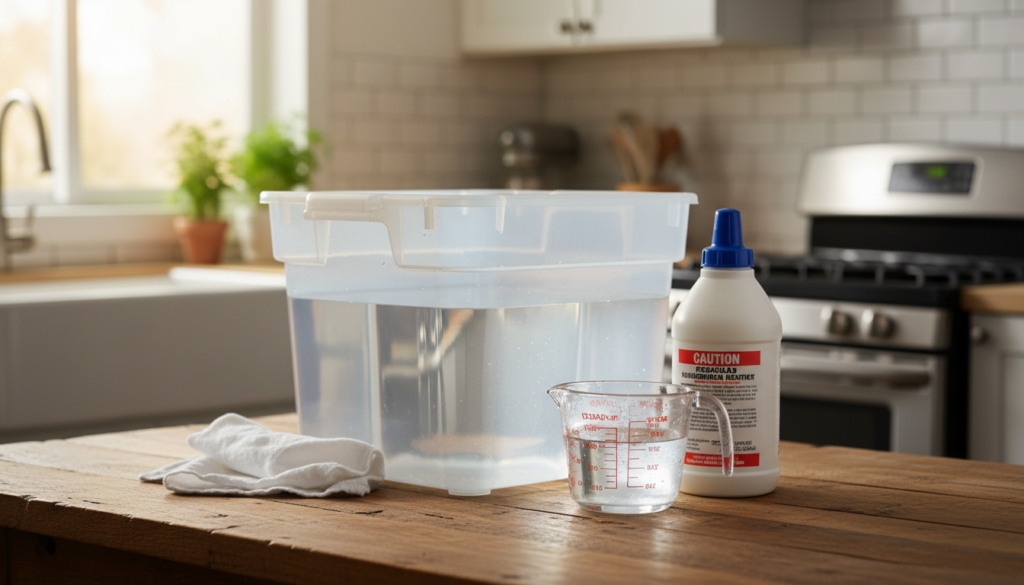
- Pour water through a clean cloth or kitchen towel
- Use a coffee filter for finer particles
- Let water sit in a container so dirt settles to the bottom
- Carefully pour the clear water into clean containers without disturbing the settled sediment
Save empty bottles from bottled water for emergency water storage. These containers are great for storing treated water. Make sure to wash them with soap and water first.
Before treating your water with bleach, check if your tap water is safe. Call your local water service provider or visit their website for updates on your water quality.
Label your containers with the date you treated the water. Keep treated water covered to avoid contamination from dust or insects. These steps take just minutes and greatly improve your water treatment plan.
Purifying Water With Bleach
Purifying water with bleach is a reliable and affordable way to make contaminated water safe. This method uses common household items. It kills harmful pathogens with chlorine, making water safe for drinking and hygiene.
Choosing the Right Household Bleach for Water Treatment
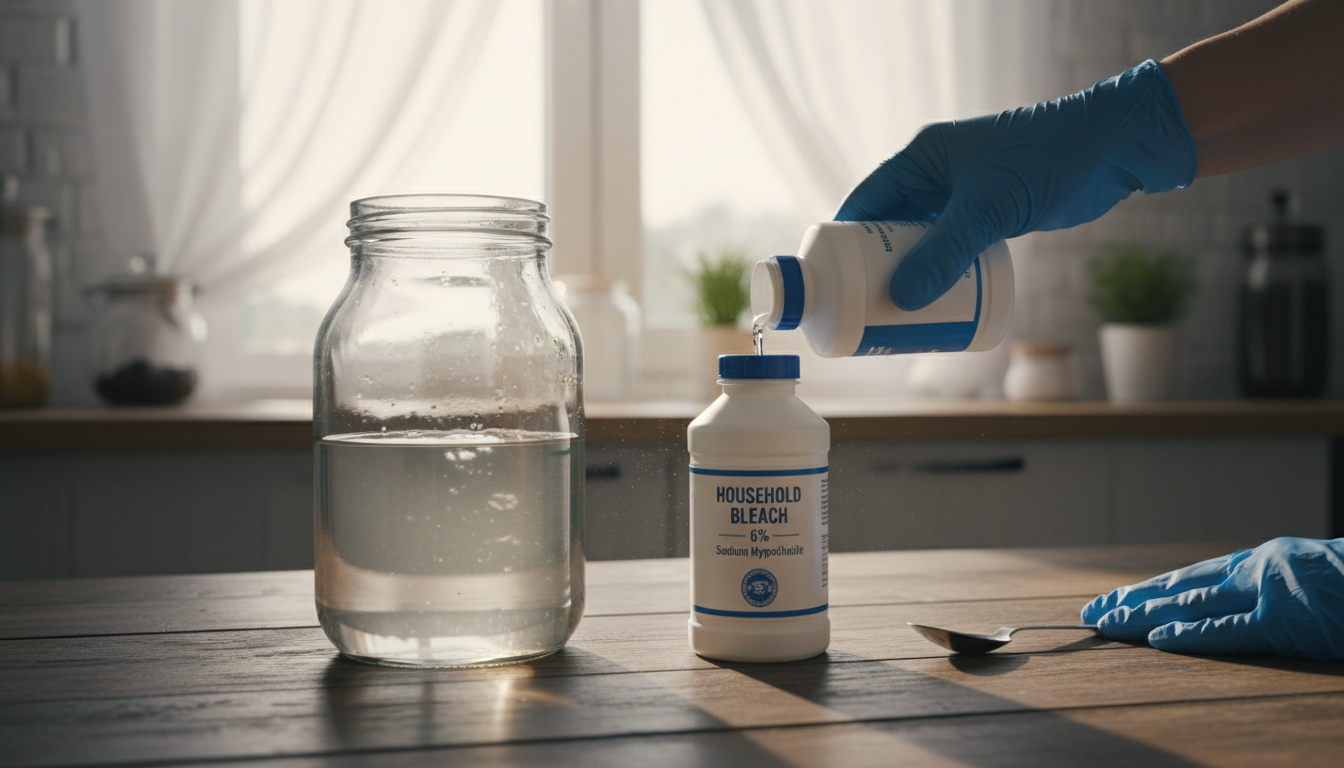
Choosing the right bleach is key. Use plain, unscented household chlorine bleach only. Avoid scented or color-safe varieties, as they are not safe for drinking.
Check the bleach label for a 5.25% chlorine concentration. This ensures the bleach works well. Different brands have similar concentrations, so any plain bleach will do.
- Look for “sodium hypochlorite” as the active ingredient
- Verify the concentration is around 5.25% chlorine
- Avoid any bleach with added dyes, perfumes, or surfactants
- Store bleach in a cool, dark place away from children
Safe Drinking Water Bleach Ratio and Mixing Instructions
The bleach ratio depends on your water’s condition and temperature. For clear water at 20°C (68°F), use 2 drops of bleach per liter. Add bleach to warm water for best results.
| Water Condition | Temperature | Bleach Amount per Liter | Waiting Time |
|---|---|---|---|
| Clear water | Around 20°C (68°F) | 2 drops (0.1 mL) | 30 minutes |
| Cold water | Below 10°C (50°F) | 4 drops (0.2 mL) | 1-2 hours |
| Cloudy water | Any temperature | 4 drops (0.2 mL) | 1-2 hours |
Follow these steps to treat your water properly:
- Add the appropriate number of bleach drops to your water container
- Stir the water thoroughly for about one minute
- Cover the container with a clean lid
- Let the water stand for the recommended time before drinking
If your water is cloudy, strain it first. Then, apply the bleach treatment to the clear water. For cold surfaces, double the bleach amount.
How Long to Wait Before Drinking Treated Water
Waiting is important when treating water with bleach. Chlorine needs time to kill harmful microorganisms. For clear, warm water, wait at least 30 minutes.
After 30 minutes, you should smell chlorine. This smell means your water is safe. If you don’t smell chlorine, add more bleach and wait 15 minutes more. For cold or cloudy water, wait 1 to 2 hours.
Many find the chlorine taste unpleasant. Let treated water stand uncovered for a few hours to reduce this taste. Pouring the water back and forth between containers also helps remove the taste while keeping it safe.
Use your treated water for drinking, cooking, and washing produce. It’s also safe for baby formula, brushing teeth, and washing dishes. For more on disinfecting drinking water, visit HealthLinkBC’s guide.
Alternative Water Purification Methods and When to Use Them
Water purification methods using bleach are quick and affordable. But, different water emergencies need different solutions. Knowing your options helps you pick the best tool for each situation. Bleach-based methods are just one part of your emergency plan. Other techniques can tackle specific contamination challenges better.
Boiling is the top choice for disinfecting water. It kills parasites like Giardia and Cryptosporidium that bleach can’t remove fully. Boil water for at least 1 minute at sea level. At higher elevations, boil for 2 minutes. This method is great for those with weak immune systems who need strong protection.
Iodine tablets are a portable, short-term fix. Use 6 drops of 2% iodine tincture per liter and wait 30 minutes before drinking. But, avoid iodine if you’re pregnant, nursing, or have thyroid issues. It’s best for camping trips and short emergencies, not long-term use.
| Purification Method | Best For | Time Required | Limitations |
|---|---|---|---|
| Boiling | Parasites and bacteria | 1-2 minutes | Doesn’t remove chemicals |
| Bleach | Bacteria and viruses | 30 minutes | Doesn’t remove parasites or chemicals |
| Iodine tablets | Short-term emergencies | 30 minutes | Not for long-term use |
| Certified filters (NSF) | Pathogens from unsafe water | Ongoing | Initial investment required |
Standard pitcher filters like Brita improve taste and odor. But, they don’t remove dangerous pathogens from contaminated water. Look for NSF-certified treatment devices that claim to remove pathogens. These systems offer reliable long-term solutions for homes with unsafe water.
Remember, each method has its limits. Boiling and bleach-based methods don’t remove chemical pollutants or heavy metals. For chemical contamination, bottled water is your safest bet. Always have a backup safe water source for severe contamination.
- Boiling kills parasites resistant to bleach
- Iodine works temporarily for short trips
- Certified filters address pathogens permanently
- Bottled water handles chemical contamination
Learning about different water purification methods, including bleach and alternatives, helps you handle various water emergencies. Each method meets specific needs in your emergency plan.
Conclusion
Purifying water with household bleach is a simple skill that could save your life during an emergency. Most homes already have plain, unscented bleach in their cleaning supplies. This makes it an easy and practical solution when your water supply becomes unsafe. You now know the key steps to treat your water effectively and safely.
Remember the critical details as you prepare for emergencies. Use only plain, unscented bleach without any additives. Follow the correct ratio of 2 drops per liter for clear, warm water. Double that amount if your water looks cloudy or feels cold. Wait the full 30 minutes after mixing before you drink the water. Check for a slight chlorine smell to confirm the treatment worked. Practice this skill before an emergency strikes. Treat a small batch of water at home to get familiar with the measurements, the mixing process, and what that chlorine smell should be like.
Store your treated water in clean, covered, food-grade containers to keep it safe. Use this purified water for drinking, preparing food, making ice cubes, washing dishes, brushing teeth, filling pet dishes, and bathing children. Adults can take baths in untreated water but should avoid swallowing it and wash their hands with treated water afterward. Proper storage and smart use extend the benefits of your purification efforts.
Share this knowledge with your family and neighbors. Having this practical skill provides real peace of mind and protection for those you care about. If you have specific questions about your local water supply, contact your local environmental health officers or health authorities for guidance. Being prepared means being ready, and this emergency water purification method puts that power in your hands.
FAQ
Can I really use regular household bleach to make contaminated water safe to drink?
Yes, you can! Plain, unscented household bleach with 5.25% sodium hypochlorite is effective and affordable. It kills most waterborne pathogens that cause serious illness. This method is recommended by public health authorities for emergency situations.
What exactly are waterborne pathogens, and why should I be concerned about them?
Waterborne pathogens are tiny organisms like Campylobacter and Salmonella. They live in contaminated water and can cause serious illness. These pathogens can lead to symptoms like diarrhea and dehydration, which can be dangerous, mainly for children, the elderly, and those with weak immune systems.
When should I start treating my water with bleach?
Treat your water with bleach when you get a boil water notice, your well is contaminated, or after natural disasters. It’s also important when traveling to areas with questionable water safety. These are times when bleach becomes a critical emergency tool.
Do I need to filter my water before adding bleach?
Yes, filtering your water first is essential. Bleach works best on clear water. Remove visible debris and sediment using clean towels, coffee filters, or letting it settle. This ensures the bleach can effectively disinfect your water.
What type of bleach should I use for water treatment?
Use only plain, unscented bleach with 5.25% sodium hypochlorite. Avoid scented varieties, color-safe formulas, and any other types. Always check the label to confirm it’s safe for water treatment.
What is the correct bleach-to-water ratio for safe drinking water?
For clear, warm water, use 2 drops of bleach per liter (or 8 drops per gallon). For cloudy or cold water, double it to 4 drops per liter (or 16 drops per gallon). These precise measurements are key for effective disinfection.
How long do I need to wait after adding bleach before the water is safe?
Wait at least 30 minutes after mixing the bleach into your water. This allows the bleach to kill pathogens. After 30 minutes, you should notice a chlorine smell, which means the water is safe.
Will my treated water taste like chlorine, and is that a problem?
Your water might taste slightly like chlorine, but that’s okay. It’s a sign the water is treated. If you don’t like the taste, you can reduce it by pouring the water back and forth or storing it in the fridge.
Can I use boiling as an alternative to bleach for water purification?
Yes, boiling is a great alternative. It’s effective against resistant parasites like Cryptosporidium. Boil water for 1 minute at sea level or 3 minutes at higher elevations.
Are standard water pitcher filters effective for emergency water purification?
No, pitcher filters improve taste but don’t remove pathogens. They’re designed for safe municipal water, not emergency situations. Stick with bleach, boiling, or certified filters for contaminated water.
What if my water is contaminated with chemicals or heavy metals?
Chlorine bleach and boiling don’t remove chemicals or heavy metals. In these cases, find an alternate safe water source or use bottled water. Bleach is great for biological contaminants but not for chemicals.
Should I store my treated water, and if so, how?
Yes, you can store treated water. Use clean, food-grade containers and seal them well. Label them with the treatment date. The chlorine will keep the water safe for a few days, but use it sooner if possible.
Can I use treated water for purposes beside drinking?
Absolutely! Treated water is safe for food prep, cooking, making ice, brushing teeth, and even pet care. The chlorine taste is not a problem for these uses.
Is it worth practicing this skill before an emergency actually occurs?
Definitely! Practice treating water with bleach before an emergency. This will make you confident and prepared when you really need to use this skill.
Who shouldn’t use bleach for water treatment?
People with severe chlorine sensitivities or certain medical conditions might prefer other methods. Pregnant women should talk to their doctor before using iodine. If you have concerns, discuss them with your doctor or local health department.
What’s the difference between chlorine bleach and other disinfection methods?
Chlorine bleach is fast, affordable, and easy to use. Boiling requires fuel and time. Iodine works quickly but has taste issues. UV treatment and certified filters offer permanent solutions but need equipment and electricity. Each method has its strengths, and having options is important for emergency situations.
Where can I get more information about my specific water situation?
Contact your local health department or water utility for specific questions. They can provide guidance tailored to your community and ensure you have accurate information about emergency water purification needs.
Can I share this knowledge with my family and neighbors?
Yes, please do! Teaching others about purifying water with bleach is a great way to help your community. The more people who know how to treat water, the better prepared everyone will be in emergencies.