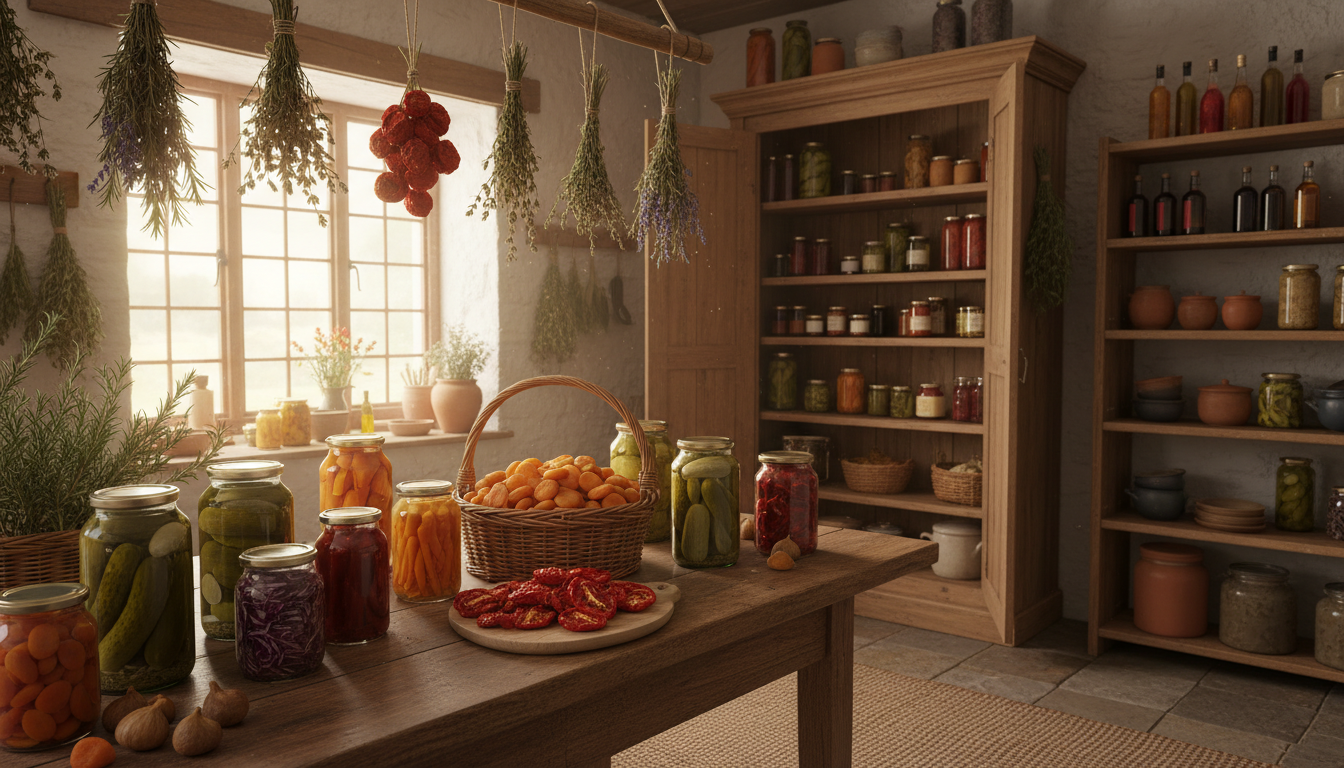
Keeping food fresh doesn’t always need electricity. Many families find that old ways work just as well as new gadgets. These methods boost your self-reliance and keep food on your table all year.
Preserving food at home saves money on electricity. Without refrigerators and freezers, your energy bills go down. Your pantry becomes a reliable backup when the power fails.
Less food waste is a natural result of proper preservation. Root cellars, fermentation, canning, and drying keep seasonal food good for months. You use what you grow, not throw it away.
Having a pantry that doesn’t rely on electricity brings peace of mind. You know your family can eat well, even when the power is out. Salt, vinegar, heat, and time do the job that electricity used to.
The University of Alaska Fairbanks offers detailed guidance on preserving food at home. They cover methods that have worked for generations. Whether it’s water bath canning for fruits or pressure canning for veggies, each method has clear rules and proven safety.
This guide covers every major preservation method. You’ll find options for every skill level and situation. Some need just a pot and vinegar. Others require a pressure canner. All free you from electricity dependence.
Table of Contents
Why Preserving Food Without Electricity Matters for Modern Homesteaders
Learning to preserve food without electricity is not about going back in time. It’s about moving forward to a future where you control your food. You save money and live more sustainably. These traditional skills give you freedom, peace of mind, and real financial benefits.
When you learn to preserve food, you gain independence from systems that can fail. This shift changes how you view your food. You become empowered, not dependent. You save money and waste less.
The Reality of Power Outages and Emergency Preparedness
Power outages happen. Storms strike. Weather events disrupt service for hours or even days. Without a backup plan, families lose groceries and face difficult decisions about feeding themselves.
Learning preservation techniques gives you genuine security. Your food stays safe whether the power is on or off. You sleep better knowing your family has reliable access to nutritious meals.
- Power outages typically last 4-24 hours during storms
- Extended outages can last several days in severe weather
- Preserved food stays safe indefinitely without refrigeration
- Traditional methods require no backup generators or fuel
- Your pantry becomes your insurance policy
Breaking Free from Refrigeration Dependency
We depend on electricity to keep food cold. This dependency costs money every single month. The average refrigerator consumes significant energy, adding to household bills constantly.
Imagine reducing that burden. Traditional preservation methods eliminate refrigeration needs entirely. You dry foods. You ferment vegetables. You cure meats with salt. These techniques have protected food supplies for thousands of years across every continent.
Breaking free from refrigeration means breaking free from constant energy costs. You stop paying for appliances that run 24/7. Your food storage becomes active. You engage with your preservation process, understanding exactly what you eat and why it stays fresh.
Cost Savings and Reduced Food Waste
Here’s a truth that surprises many people: the shocking statistic that over 50% of refrigerated food gets wasted. Households throw away food they paid for but never used. Traditional preservation methods dramatically reduce both electricity costs and food waste by changing how you store and manage your harvest.
Consider the numbers. The average household spends the $100-150 annual cost per appliance just running a refrigerator. Multiply that by multiple appliances, and families easily spend $300-500 yearly on cooling food. Traditional preservation eliminates these costs.
| Preservation Method | Annual Cost Per Appliance | Food Waste Reduction | Storage Duration |
|---|---|---|---|
| Refrigeration | $100-150 | Minimal (50%+ waste) | 2-4 weeks |
| Root Cellar Storage | $0 | 90% reduction | 3-6 months |
| Fermentation | $0 | 95% reduction | 6-12 months |
| Canning | $0 | 98% reduction | 1-5 years |
| Dehydration | $0 | 97% reduction | 6-24 months |
When you use traditional preservation methods, your food lasts longer. Fermented vegetables stay vibrant for months. Dried herbs retain flavor for a year. Canned goods last for years. You buy food when it’s abundant and affordable, then preserve it for when you need it most.
This approach saves money and reduces waste simultaneously. You stop throwing away spoiled produce. You stop buying expensive out-of-season groceries. Your budget stretches further. Your family eats better quality food stored with care.
The journey toward food preservation without electricity represents more than survival skills. It represents self-reliance, financial wisdom, and environmental responsibility. These are skills that provide security, savings, and sustainability for modern homesteaders who want to take control of their food future.
Traditional Smoking and Salt Curing Methods
Smoking and salt curing are ancient ways to keep food fresh. They change food’s structure, stopping harmful bacteria. These methods are key for homesteaders who want to preserve food without electricity.
Smoking has two styles. Cold smoking keeps temperatures below 100°F and slowly dries meat over 1-5 days. It makes food last months. Before cold smoking, meat should be cured with salt or fully cooked to prevent bacterial growth. A smokehouse is ideal for cold smoking to keep meat away from flames. You can make one from simple materials or adapt an existing structure.
Hot smoking keeps temperatures around 220°F and actually cooks the meat. This method adds flavor and tenderness. But, hot-smoked meat doesn’t last as long. The meat needs refrigeration afterward unless it’s dehydrated. It’s best for food you’ll eat in days, not months.
What Foods Can Be Smoked
Foods that can be smoked include meat, fish, avocados, pineapple, peaches, asparagus, and eggplant. People often think only of smoking fish and meat. But, fresh produce like fruits and vegetables also gain amazing flavors. Smoked fruits are great in desserts, and smoked vegetables enhance salads and sides.
| Smoking Method | Temperature Range | Duration | Storage Life |
|---|---|---|---|
| Cold Smoking | Below 100°F | 1-5 days | Months (shelf-stable) |
| Hot Smoking | Around 220°F | Hours to 1 day | Days to weeks (needs refrigeration) |
Salt Curing: Two Proven Approaches
For salting, there are two main methods: rubbing a thick layer of salt all over food and hanging it in a cold area for at least a month, or creating a salt brine by adding salt to water until it forms on the bottom, then submerging food for a week or more. Both methods work well, depending on space and the food you’re preserving.
Salt can preserve vegetables, fruits, meats, and eggs. It draws out moisture and stops bacteria. Dry salt curing is for larger items, while brining is better for smaller or delicate foods.
Brandon Sheard, the Farmstead Meatsmith, teaches about salt curing meat without refrigeration. He stresses the importance of using quality salt. Experts often recommend Redmond’s Real Salt for its mineral content and flavor preservation.
- Choose a cold, dark storage area for dry salt curing
- Ensure salt crystals fully coat the entire food surface
- Check salt brine regularly for proper saturation
- Rinse finished products before cooking to reduce saltiness
- Store salt-cured foods in cool, dry conditions away from pests
These ancient methods give homesteaders independence from modern refrigeration. Starting with smoking or salt curing leads to a healthier, more self-sufficient life. It’s also cheaper than other preservation methods.
Preserving Food Without Electricity Through Canning and Fermentation
Canning and fermentation are top ways to keep food fresh without electricity. They make foods last for months or years. These methods stop harmful bacteria and mold from growing. Plus, you can do them on a stovetop with fire, propane, or other heat sources.
Many homesteaders use both methods to stock up food for emergencies. They build big pantries with preserved foods ready to eat.
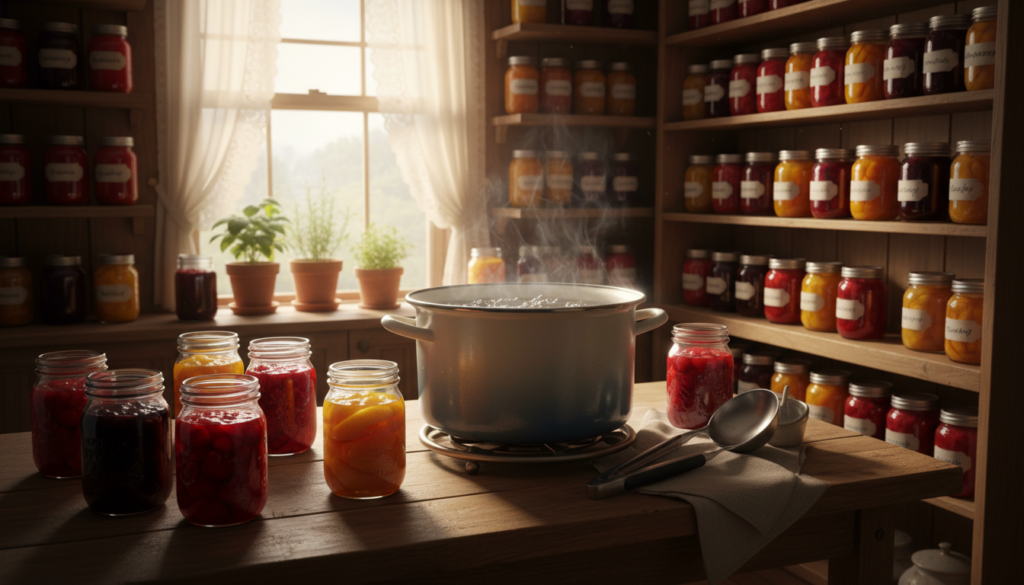
Water Bath Canning for Fruits and Pickled Vegetables
Water bath canning is great for beginners. It needs just a few things: Mason jars, lids, bands, and a big pot with a rack. It’s safe for foods with a pH of 4.6 or lower.
It’s perfect for:
- Most fruits
- Jams, jellies, and fruit butter
- Syrups and chutneys
- Marmalade
- Pickled vegetables
- Tomato sauce with added acid
- Tested salsa recipes
To can, fill jars with hot food, seal them, and boil them. The heat seals the jars as they cool. One homesteader stores 200 jars of fruit and chutney, 50 jars of pickles, and dozens of juice bottles each year. Good lids are key for a tight seal, so choose reliable brands.
Pressure Canning for Low-Acid Foods
Pressure canning is safe for non-acid foods like veggies, meat, soups, and mixes. It heats food to kill botulism bacteria. This heat is higher than boiling water.
Safe foods for pressure canning include:
- Fresh vegetables
- Meats and poultry
- Fish and seafood
- Soups and stews
- Bean and vegetable combinations
Home-canned food is fully cooked, shelf-stable, and ready to eat. It doesn’t need water to prepare. This makes it perfect for emergencies when you might not have electricity or running water. Your pantry becomes a meal source ready when you need it.
Fermentation as a Health-Boosting Preservation Method
Fermentation uses good bacteria in saltwater brine to keep veggies fresh. It also makes probiotics that help your gut. This old method boosts health while preserving food naturally.
Popular fermented foods include:
- Sauerkraut
- Pickles
- Kimchi
- Beet kvass
- Rosemary carrots
- Kombucha
- Clabbered milk
Fermentation needs cool storage after it’s done to slow down the process. Mix boiling water, vinegar, salt, and sugar for quick pickle brines. Fermented foods get better with time, getting tangier and more nutritious. You’ll enjoy how simple veggies turn into tasty, healthy foods that last months without refrigeration.
Dehydrating and Root Cellar Storage Solutions
After mastering canning and fermentation, many homesteaders find dehydration and cold storage simple ways to preserve food. These methods have protected harvests for thousands of years. They work with your climate and require minimal equipment or space. Whether you live in a small apartment or on a large homestead, these preservation techniques can fit your lifestyle. Visit resilient prepper resources to learn more practical food preservation strategies for your situation.
Solar Dehydration and Air Drying Techniques
Solar dehydration is an ancient and energy-free method of food preservation. It’s simple: place sliced food on clean screens in direct sunlight. Within days, many fruits and vegetables become shelf-stable foods. Summer months with longer daylight hours are ideal for dehydrating produce at peak ripeness.
Properly dehydrated food should feel crisp and snap when bent. This texture indicates that moisture has been removed, preventing bacterial growth. You can upgrade from simple sun-drying by building a solar dehydrator, which concentrates heat and protects food from insects. One experienced homesteader created a DIY version using reclaimed wood and clear plastic sheeting. Their solar dehydrator produced dozens of pounds of dried vegetables and fruits each summer.
The benefits of dehydration are substantial. Dried foods occupy minimal storage space compared to fresh produce. They weigh far less than canned goods, making them lightweight and portable—perfect for emergency situations when you need to evacuate quickly. Properly dehydrated items can last for months or even years when stored in cool, dry conditions.
Understanding which foods can be eaten ready-to-eat versus those requiring rehydration helps you plan meals effectively:
- Fruit leather and dried fruits can be eaten directly from storage
- Dried vegetables typically need rehydration with water before cooking
- Dried herbs are ready to use in soups and stews
- Dried mushrooms add flavor when rehydrated in warm water
- Dried berries work well as snacks or in baking
Summer’s abundance becomes winter’s nutrition through dehydration. This straightforward preservation method requires no special skills or expensive equipment.
Building an Underground Fridge or Root Cellar
Cold storage represents another essential approach to food preservation without electricity. An innovative solution gaining popularity is the “underground fridge”—literally burying an old refrigerator to create natural cooling storage. The refrigerator’s existing insulation, combined with the earth’s natural temperature regulation, creates perfect conditions. In most climates, burying the unit just one foot deep provides year-round cooling power.
Traditional root cellars offer equally effective storage. Many people assume these must be elaborate underground structures, but they do not need to be complicated. A simple hole with brick walls works beautifully. Even a cool interior closet without direct sunlight can serve as basic root cellar space. The key lies in achieving the right conditions: cool, damp, and dark.
Different crops thrive under slightly different conditions. Understanding these preferences helps you maximize your cold storage success:
| Crop Type | Ideal Temperature | Humidity Level | Storage Duration |
|---|---|---|---|
| Root Vegetables (carrots, beets, turnips) | 32-40°F | 95% humidity | 4-6 months |
| Cabbage | 32-40°F | 90-95% humidity | 3-6 months |
| Apples | 30-40°F | 90-95% humidity | 4-8 months |
| Winter Squash | 50-60°F | 80-90% humidity | 3-6 months |
| Pumpkins | 50-60°F | 80-90% humidity | 2-3 months |
Before placing crops into cold storage, cure them first. Curing hardens the skin and heals small cuts. Leave root vegetables in a warm, dry space for one to two weeks. This simple step dramatically extends storage life and prevents rot.
In milder climates, you can overwinter crops directly in the ground. Cover them with mulch, straw, or cloth to protect them from freeze damage. Pull vegetables as needed throughout winter. This technique reduces storage space demands and keeps food fresh at the source.
One inspiring example shows what’s possible: a hillside bomb shelter in the Northeast remains naturally cool year-round without any mechanical systems. The earth’s insulation maintains temperatures between 45-50°F throughout winter and summer. This real-world success demonstrates that cold storage works reliably when you understand natural temperature patterns.
Whether you choose dehydration or cold storage, these methods complement the canning and fermentation techniques covered earlier. Together, they create a complete food preservation system that keeps your family fed regardless of power availability. Start small, experiment with crops that grow well in your region, and gradually build skills that will serve you for decades.
Creative Off-Grid Preservation Techniques
Homesteaders can try cool preservation methods without electricity. These creative ways let you store food all year. They add variety to your food storage.
Preserving Food in Oil
Preserving in oil is tasty. Cook your food first. Then, fill a glass jar with it.
Cover it with oil, like olive oil. You can use herbs, vegetables, and tuna. Some think you need refrigeration, but it’s not always true.
Honey Preservation Method
Honey is great for preserving food. Put fruit or nuts in a jar. Then, cover them with honey.
Nuts and fruits work best. Honey keeps food fresh for a long time without refrigeration.
Alcohol Preservation and Extracts
Alcohol can preserve food too. Fill a jar with fruit and soak it in alcohol, like brandy. Add sugar, cover, and shake.
This keeps food fresh for months in a cool spot. You can also make extracts like lemon and mint by soaking them in alcohol.
The Zeer Pot System
The zeer pot is an interesting method. It uses two terracotta pots with sand in between. Keep the sand wet and cover it.
Place it in the shade. As water evaporates, it cools the inside. But, it needs constant care and only works for some foods.
Ancient Cooling Techniques
Your ancestors had clever ways to keep food cool:
- Using streams and lakes for cooling
- Building ice houses with blocks from winter and storing them in thick-walled buildings
- Using ice boxes with daily ice deliveries
Exploring these methods can help you with off-grid food storage.
Conclusion
Preserving food without electricity is not a step back. It’s a step towards true self-sufficiency and peace of mind. For centuries, people kept their families fed through the off-season using old methods. They didn’t need modern appliances to preserve food.
They used salt, smoke, fermentation, and root cellars. You can do the same today. Start by thinking about what supplies you already have. Do you have jars for canning? Can you gather salt for curing?
Consider keeping bees for honey, distilling vinegar for pickling, or growing olives for oil. These skills take time but offer real food security. Your family will enjoy eating what’s in season. You’ll know when to eat fresh peas and tomatoes.
Don’t forget the importance of printed recipe books and canning guides. When the power goes out, your phone won’t help. A physical cookbook will be your best friend. Write down your favorite recipes and keep trusted guides nearby.
Learning to preserve food without electricity has many rewards. You’ll gain food security for your family. You’ll save money each month and feel proud of feeding your loved ones with your own hands.
Your ancestors successfully preserved food for centuries. You can too. Start small, learn one method at a time, and build your skills with confidence. This is the path to true homestead living.
FAQ
What are the best non-electric food storage methods for off-grid living?
For off-grid living, try root cellar storage, water bath canning, and fermentation. Solar dehydration, salt curing, and smoking are also great. The best method depends on your climate, space, and food preferences.
How does emergency food preservation help during power outages?
During power outages, preserving food without electricity is key. Methods like root cellars, canning, and fermentation keep food safe. These techniques work at room temperature or in cool spaces, lasting weeks or months.
What’s the difference between water bath canning and pressure canning for food preservation?
Water bath canning is for high-acid foods like fruits and jams. It uses boiling water to kill bacteria. Pressure canning, at 240°F, is needed for low-acid foods like vegetables and meats. You can use a wood stove or gas range for canning without power.
How does fermentation work as a food preservation method?
Fermentation uses beneficial bacteria to create lactic acid, making food safe. It’s simple, needing only salt, vegetables, and time. Fermented foods like sauerkraut and pickles are nutritious and delicious.
What is a root cellar, and how does it function as an underground fridge?
A root cellar is an underground space that keeps food cool and humid. It’s like an underground fridge without electricity. Root cellars keep vegetables fresh for months, making them ideal for off-grid living.
How can I dehydrate food without modern electric dehydrators?
You can dry food naturally using air or sunlight. Air drying hangs herbs and meat in a dry space. Solar dehydration uses a wooden box with a clear top. You can also use your oven or wood stove for drying.
What are the advantages of salt curing meat compared to modern preservation?
Salt curing is a traditional method that improves meat flavor and keeps it fresh. It uses salt to draw moisture and prevent bacteria. This method is reliable without electricity, lasting months or years.
How does smoking preserve fish and game effectively?
Smoking uses heat and smoke to preserve food, adding flavor. Cold smoking preserves without cooking, while hot smoking cooks and preserves. Smoked foods like salmon and game birds last weeks in cool storage.
Can I preserve fresh vegetables without canning or electricity?
Yes, fermentation is great for vegetables without electricity. It uses salt and time to preserve. Root cellar storage and air drying also work well for vegetables. These methods are flexible and nutritious.
What’s the best way to start implementing off-grid food preservation on my homestead?
Start by assessing your climate and resources. Try air drying and fermentation first. If you have a basement, build a root cellar. Learn canning and smoking from experts. Keep records and join homesteading communities for support.
How do I ensure food safety when using non-electric preservation methods?
Follow tested recipes from trusted sources. Understand each method’s requirements for safety. Keep detailed notes and research from academic sources. Proper technique is safer than many old canning practices.
What foods are easiest to preserve without electricity for beginners?
Start with fermentation for vegetables and herbs. Air drying is simple for herbs. Canning high-acid fruits and storing root cellar items are also easy. Success with these builds confidence for more methods.
How much space do I need for effective off-grid food preservation?
Space needs vary by method. Root cellars need 100-200 square feet. Solar dehydration boxes are smaller. Fermentation uses little space. Start with what you have and expand as needed.
What’s the best climate for maintaining off-grid food preservation year-round?
Cool climates are best for off-grid food preservation. Basements are ideal. Adapt your methods for your climate. Many homesteaders in challenging climates develop creative solutions.
Can I combine multiple preservation methods for the same food?
Yes, combining methods is beneficial. Ferment, then dry vegetables. Smoke and store meat in a cellar. This approach increases safety and shelf life, and adds flavor variety.
How do I store preserved foods properly after preparation?
Store canned goods in cool, dark places. Check jars monthly. Fermented foods need cool temperatures. Root cellar items should be humid. Smoked meats need dry conditions. Keep detailed inventory systems for quality control.