
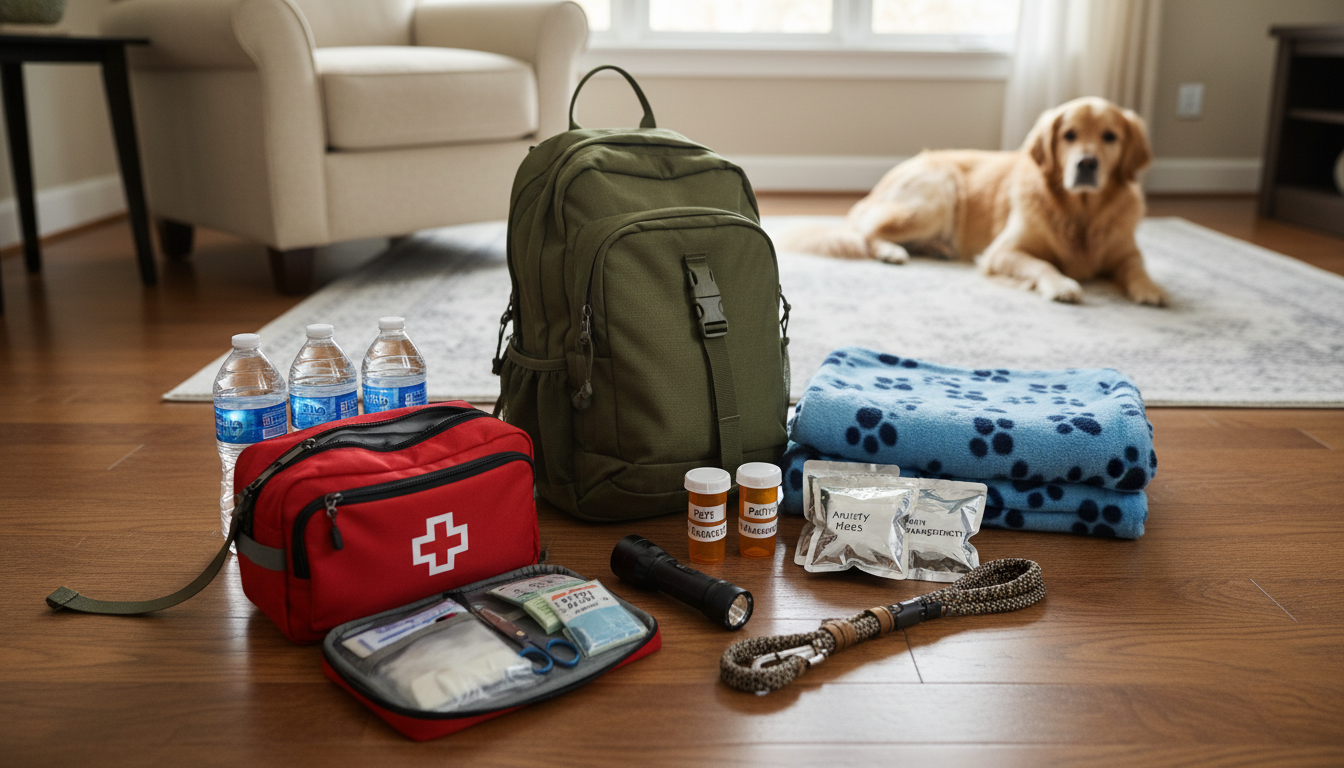
When disaster hits, your pets count on you for their safety. Most people focus on food and water for emergencies. But, your pets need more to stay healthy and calm.
Preparing for pets means planning with supplies, medical care, and training. Dogs and cats face stress from disasters like fires and floods. Good planning keeps them safe and with your family.
Many pet owners miss key steps in their disaster plans. They forget about vaccinations, medications, and ID tools. Learning how to prep pets for emergencies is key to saving lives.
This guide covers what your pets need to survive and thrive in emergencies. You’ll learn about first aid kits, training, and legal pet evacuation rules. Your pets deserve the same care as your family.
Table of Contents
Understanding Emergency Pet Preparedness in a Changing Climate
Pet owners face new challenges today. Weather patterns are changing, putting pets at risk. Climate change is a real danger for pets in the United States. Being ready for emergencies keeps your pets safe when disasters happen.
Creating an emergency plan for your pet starts with knowing the risks in your area. Different places face different dangers. Coastal areas worry about hurricanes and flooding. Western states face wildfires and droughts. Your plan should fit the dangers in your neighborhood.
How Climate Change Impacts Your Pet’s Safety
Warmer temperatures stress pets quickly. Heatwaves can kill pets faster than humans. Pets can’t cool down like humans do. They rely on panting and sweating through their paw pads.
Extreme weather can separate pets from their families. Flooding and wildfires are big threats. Severe storms can leave pets without power and climate control.
- Heat exhaustion can develop in just 15 minutes
- Flooding traps pets in crates or carriers during evacuations
- Smoke from wildfires causes breathing problems
- Power outages affect pet medications and oxygen supplies
- Extreme cold threatens outdoor and indoor pets
The Importance of Starting Your Pet Emergency Plan Today
Don’t wait until disaster strikes. Emergency plans take time. You need to gather supplies, organize documents, and practice evacuation routes with your pets.
Starting now helps you prepare without stress. You can shop gradually and spread costs over weeks. Practicing with your pets helps them stay calm during emergencies.
| Planning Step | Timeline | What You’ll Accomplish |
|---|---|---|
| Assess Your Risks | Week 1 | Identify climate threats in your area |
| Gather Supplies | Weeks 2-4 | Collect food, water, and medical items |
| Organize Documents | Week 3 | Copy vet records and vaccination papers |
| Create Contact List | Week 2 | List vets, shelters, and family members |
| Practice Evacuation | Monthly | Test routes and carrier training |
Your pets depend on you to keep them safe. Starting your emergency plan today means your animals have protection when climate change brings its next challenge. Every step you take now increases the chances your pets survive and stay with your family through any disaster.
Building Your Pet Disaster Kit: Essential Supplies Beyond the Basics
Creating a pet disaster kit can seem daunting at first. But, you don’t have to buy everything at once. Start by adding items a little at a time. Begin with what you use every day and then add more.
This way, building your kit is easier and more affordable. It’s a smart move for any pet owner.
Think of your disaster kit as insurance for your pets. A well-stocked kit keeps your pets safe and healthy during emergencies. Let’s look at the key items you’ll need beyond basic food and water.
Transportation and Safety Gear
You’ll need multiple leashes and collars, in case one breaks. Keep at least two backup leashes for each pet in different spots. Harnesses are better than collars for pets that pull or slip out easily.
It’s important to have carriers that fit each pet properly. Practice time in the carriers is key. This helps your pets get used to them, reducing stress during evacuations.
- Two backup leashes per pet
- Harnesses as alternatives to collars
- Carriers sized appropriately for each animal
- Crates with secure latches
- Pet seat belt restraints for vehicles
Medical Supplies and Documentation
Keep a 30-day supply of all prescription medications with dosing instructions. Store them in a waterproof container and rotate them regularly. Also, keep copies of all medical records and vaccination certificates in a sealed folder.
Basic first aid items are lifesavers during disasters. Your kit should include gauze, antiseptic, tweezers, and a pet thermometer. Add any specialized items your vet recommends for your pet’s health.
| Medical Supply Item | Quantity | Replacement Schedule | Storage Location |
|---|---|---|---|
| Prescription medications | 30-day minimum supply | Monthly rotation | Waterproof container |
| Gauze pads | One box | Check annually | First aid kit |
| Antiseptic solution | One bottle | Check expiration yearly | Cool, dry area |
| Pet thermometer | One digital thermometer | Test quarterly | First aid kit |
| Tweezers | One pair | Never needs replacement | First aid kit |
| Medical records copies | Complete set | Update annually | Waterproof folder |
| Vaccination certificates | Copies for each pet | Update after vet visits | Waterproof folder |
Food Storage and Rotation
Properly storing emergency pet food is key. Dry kibble lasts longer than wet food, up to a year when stored right. Use older stock first and add new supplies to the back of your storage area to keep food fresh.
Use airtight containers to protect food from pests and moisture. Gallon-sized plastic buckets with lids are great for dry food storage. Keep bags off the floor and away from walls to prevent moisture damage and pest access. Store food in a cool, dry place, away from sunlight.
- Choose dry kibble as your primary storage food
- Purchase airtight containers for storage
- Keep a one-month supply minimum on hand
- Mark containers with purchase dates
- Rotate stock every three months
- Store in a cool location below 70 degrees
- Keep extra canned food for variety
Waste Management Solutions
Don’t forget waste management supplies. Store extra litter in gallon-sized bags for quick access during evacuations. Fill several bags and seal them tightly to prevent odors and spillage in your car or shelter.
Use disposable trays or cake pans as makeshift litter boxes when you can’t find traditional ones. These lightweight options save space in your kit. Bring multiple options, as pets may refuse unfamiliar litter setups during stressful times.
- Extra litter stored in gallon-sized bags
- Disposable aluminum cake pans for makeshift boxes
- Plastic litter box liners
- Waste bags or scoops
- Enzyme cleaner for accidents
- Paper towels or cleaning wipes
Comfort Items for Anxiety Relief
Comfort items like favorite toys, blankets, and beds are essential, not luxuries. They help reduce pet anxiety by providing familiar smells and textures. A stressed pet won’t eat, won’t listen, and may become ill from the experience.
Pack your pet’s favorite toy and a blanket or bed with your scent. Include treats they love for positive reinforcement during evacuation. A worn t-shirt of yours can provide comfort when you’re separated from your pet.
- Favorite toys and chew items
- Blanket with familiar family scents
- Comfortable pet bed or mat
- Special treats for positive reinforcement
- Photos of your pet for identification
- Worn clothing with your scent
Store your complete disaster kit in an easily accessible spot. Make sure everyone in your household knows where it is. Label everything clearly and keep a checklist nearby. Review and refresh your kit twice yearly—after spring and fall season changes—to ensure all supplies remain fresh and medications are current. Your pets depend on your preparation to keep them safe during life’s unpredictable moments.
Prepping for Pets During Natural Disasters and Extreme Weather
Natural disasters can happen without warning. Your pet relies on you to keep them safe. Learning how to protect them during fires, floods, and earthquakes is key. This section will guide you on how to keep your pets safe when nature gets dangerous.
Fire Emergency Protocols for Pet Owners
Fires spread quickly. You need a plan to get your pets to safety fast. Make a fire safety checklist for your pets.
- Keep pet carriers near exits
- Practice escape routes with your pets every month
- Install pet rescue stickers on windows
- Have leashes and harnesses in your emergency kit
- Find pet-friendly shelters in your area
Train your pets to come when called. In a fire, they might panic. A well-trained pet is more likely to follow commands.
Keep photos of each pet with you. This is important in case you get separated.
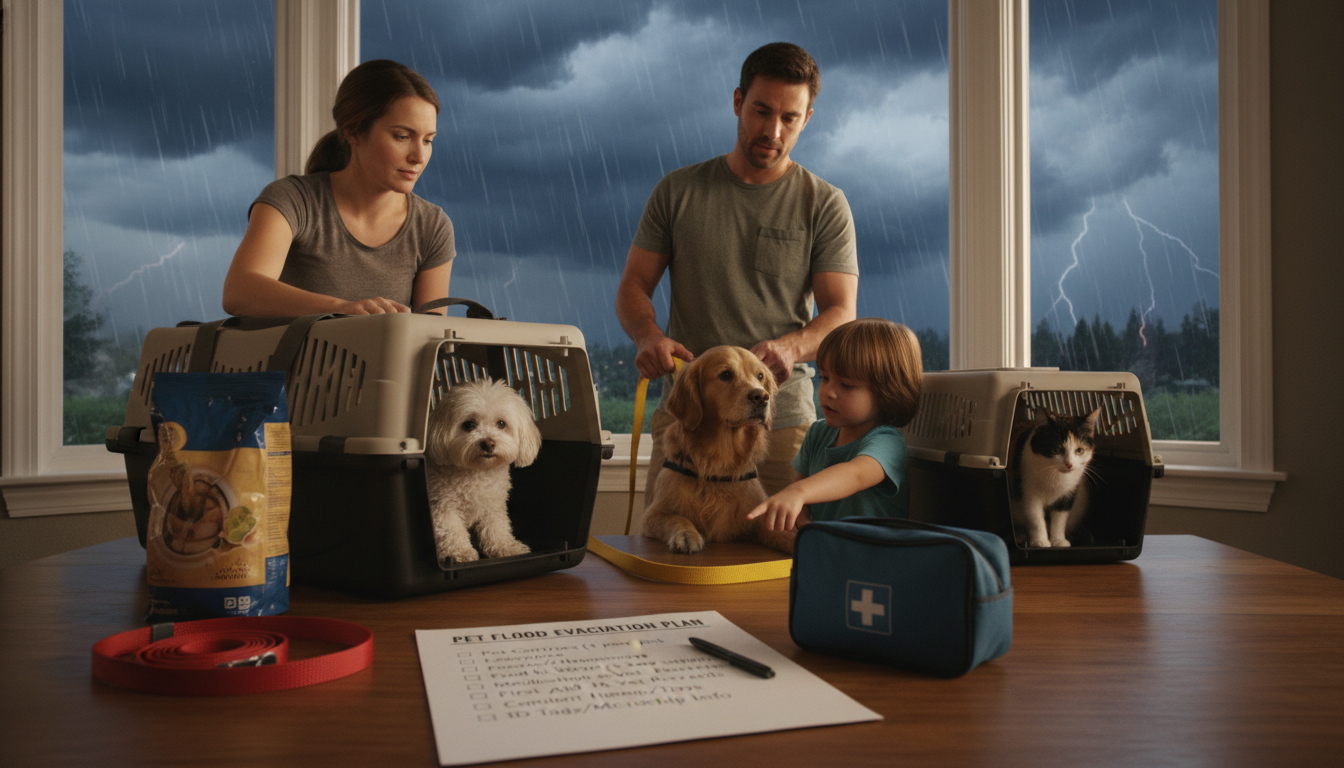
Flood Zone Safety and Evacuation Strategies
Flooding is dangerous for pets. It’s safer for them to run away than drown if your house floods. Never leave pets tied up during flood warnings.
| Flood Risk Level | Pet Action Required | Timeline |
|---|---|---|
| Watch Issued | Gather supplies and prepare carriers | Immediately |
| Warning Issued | Load pets into vehicle | Within 30 minutes |
| Evacuation Order | Leave area with pets | As directed |
| Post-Flood | Check for injuries and clean paws | Upon return home |
Make sure your pet wears identification tags. Free-roaming pets have a better chance of survival. Keep pet carriers ready in flood zones. Pack extra food, water, and medications in waterproof containers.
Earthquake Preparedness and Post-Disaster Pet Recovery
Earthquakes give no warning. Your pet needs quick protection when the ground shakes. Create a safe room with blankets, water bowls, and supplies.
- Secure heavy furniture to walls before earthquakes strike
- Keep carriers in your safe room at all times
- Train pets to respond to earthquake drills
- Store extra food for 30 days minimum
- Document your pet’s health status before disaster season
After an earthquake, check your pet for injuries right away. Frightened animals may hide or act aggressively. Move slowly and speak softly.
Search your property carefully before assuming your pet escaped. Stay calm during post-disaster searches.
Update identification tags with current contact information every six months. Microchip your pets and register them with national databases. Join local pet recovery groups on social media. These groups help reunite lost animals with their owners.
Long-Term Survival Planning: When Regular Resources Run Out
Planning for your pet’s long-term survival is more than just the first few days. When power outages last weeks or supply chains break down, your pet needs reliable backup resources. This means creating a sustainable system that keeps your furry friend safe and healthy during extended emergencies.
Store enough pet food and water for at least two weeks. Most pet owners only keep a few days of supplies on hand. Extended disasters can leave store shelves empty for much longer. Rotate your stockpile every three months to keep food fresh. Use the oldest supplies first, then replace them with new stock.
Water storage is critical for long-term pet emergencies. Your pet needs fresh water daily. Store one gallon per pet per day for at least two weeks. Include water for cooking pet food and cleaning water bowls.
Building Your Long-Term Pet Supply Reserves
Create a rotation schedule for your emergency pet supplies. Keep supplies in a cool, dry place away from direct sunlight. Check expiration dates monthly.
- Store dry kibble in airtight containers
- Keep canned food in a dark storage area
- Maintain backup medications for chronic conditions
- Store pet supplements and vitamins
- Keep litter and sanitation supplies in bulk
Pet medications need special attention during extended emergencies. Request extra prescriptions from your veterinarian well in advance. Store medications in cool conditions. Keep a detailed list of all medicines your pet takes, including dosages and frequency. This information becomes vital if you need emergency veterinary care.
Identification, Medical Records, and Communication Strategies
Your pet’s identity and medical history are key during emergencies. Pets can get lost quickly when disasters hit. Keeping identification and medical records ready helps keep them safe.
Preparation is key. You need physical ID, digital backups, and medical records ready at all times. This helps reunite pets with their families.
Microchipping and Updated Contact Information
A microchip is like a permanent ID for your pet. It’s under their skin and linked to your contact info. Shelters and vets can scan it to find lost pets.
Microchipping gives you peace of mind. It doesn’t fall off like collars or tags. Your pet always has their ID.
- Visit your veterinarian to get your pet microchipped
- Register the chip with the manufacturer using current contact details
- Update your information whenever you move or change phone numbers
- Keep backup microchip registration numbers in your emergency kit
Physical ID tags are also important. They should have your phone number, pet’s name, and a secondary contact. This helps if someone finds your pet before they reach a shelter.
Vaccination Records and Medical Documentation
Some shelters need proof of vaccines to let pets in. Keep your pet’s medical files handy. Vaccines protect your pet’s health and let shelters accept them during evacuations.
I think the bigger concern is if they’re not up-to-date on vaccines. We don’t know if that animal might have parvo, distemper, or anything else. Facilities must verify vaccination status to prevent disease spread among shelter animals. Your pet’s protected status opens doors to safety during crises.
Save photos of vaccine records on phones and keep printed copies in emergency kits. Having multiple backup copies ensures you always have access to this critical information.
| Document Type | Storage Method | Update Frequency | Why It Matters |
|---|---|---|---|
| Vaccination Records | Digital photos, printed copies, veterinary file | After each vet visit | Shelter entry requirement, disease prevention |
| Microchip Registration | Online account, printed confirmation, emergency kit | When contact info changes | Reunites lost pets with owners |
| Medical History | Printed summary, digital files, cloud storage | Annually or after diagnosis | Guides emergency veterinary care |
| Current Photos | Phone, printed copies, social media | Every 3-6 months | Helps locate missing pets |
| Prescription Information | Printed list, medication bottles, digital copy | When prescriptions change | Ensures continuity of essential treatment |
Create a complete medical file for each pet. Include vaccination dates, surgery records, allergy information, chronic illness details, and current medication lists. Emergency vets need this to make quick decisions about your pet’s care.
Organize documents in a waterproof folder in your emergency kit. Keep a second set at a trusted family member’s home. Digital backups in cloud storage like Google Drive or Dropbox provide access from anywhere during displacement.
Current photos of your pet serve as visual identification if they get lost. Take clear pictures showing identifying marks, colors, and distinctive features. These photos help rescue workers and the public recognize and locate your missing pet quickly.
Communication strategies matter during separation. Set a family meeting point before disasters. Create a pet information sheet listing your pet’s name, age, size, special needs, and your contact information. Share this sheet with friends, family, and neighbors who might help search for your pet.
Conclusion
You now have the tools to protect your pets in emergencies. The steps you take today are key when disaster hits. Dr. Sarah DeYoung says, “this is a very stressful time. Anything that they can do in advance will help them during that emergency.”
Pet emergencies need quick action and clear thinking. Your preparation gives you both. Start small if the task feels big. Microchipping and identification take just a few hours but could reunite you with a lost pet.
Assembling basic supplies like food, water, medications, and carriers builds your safety net. Identifying evacuation destinations ahead of time means you won’t waste precious moments searching for pet-friendly hotels during a crisis. Experts agree that hurricane season and disaster risks don’t wait. Pet owners should begin preparation immediately.
Your pets depend on you completely. They cannot make their own escape plans or gather their own supplies. Emergency preparedness is love in action. It shows your animals that you will fight to keep them safe.
Dr. Sarah DeYoung encourages community-level support: “You can help each other as community members. That’s something we can do at the individual level.” Talk with neighbors about their pet plans. Help elderly relatives prepare their animals for disaster. Share microchipping information and vaccination records with friends.
Pick one task today and do it. Photograph your pet’s vaccination records. Buy a carrier or go-kit supplies. Search online for the nearest pet-friendly shelter in your area. These small steps build confidence and readiness.
Emergency pet preparedness is not about fear. It is about loving responsibly and being ready to protect the animals who bring joy to your life. You have the knowledge. You have the resources. Your pets are counting on you to act.
FAQ
What are the most essential items to include in a pet emergency supplies kit?
A good pet survival kit has non-perishable food for two weeks, fresh water, and medications. It also needs medical records, a first aid kit, and ID tags. Don’t forget collars, a microchip scanner, blankets, and litter box supplies.
Comfort items like toys are important too. Include flashlights, batteries, a radio, and copies of vaccination records in a waterproof container. The American Red Cross suggests keeping these in a clear, labeled container you can grab quickly.
How does climate change affect my pet’s emergency preparedness needs?
Climate change means more heat, power outages, and extreme weather. Your plan must account for these changes. Update your kit yearly with cooling products, extra water, and heat-sensitive medications.
Consult your vet about how climate changes affect your pet’s health. This will help you prepare better.
What should I do to create an effective pet evacuation plan?
Your plan should list pet-friendly shelters and hotels. Have carriers ready with your pets’ names and contact info. Practice drills to reduce stress.
Know multiple routes out of your area. Make sure everyone knows the plan. Keep a recent photo of each pet in your phone and kit.
Register with local animal control and microchip your pets. This helps you find them if you get separated.
How much pet emergency food storage should I maintain?
FEMA recommends two weeks of non-perishable food per pet. But a month’s supply is safer. Store food in airtight containers in a cool, dry place.
Rotate your stock every six months. Keep detailed records of expiration dates. Larger pets need more food, and special diets require vet help.
What fire safety precautions should pet owners take?
Install pet alert stickers on windows and doors. Keep carriers and leashes near exits. Designate a safe meeting spot outside.
Practice fire drills with your pets. Use battery-operated smoke detectors and carbon monoxide detectors. If you can’t evacuate, secure pets in a room with ventilation.
How should I prepare for flood evacuation with my pets?
Know multiple routes out of your area for flood evacuations. Keep waterproof carriers and a go-bag with leashes, photos, and medical records.
Move to higher ground immediately. Keep vaccination records handy for shelters. If sheltering in place, keep pets on the highest level and avoid contaminated water.
What steps should I take to prepare for earthquakes and post-disaster pet recovery?
Secure furniture and habitats to walls to prevent injury. Keep carriers and your kit accessible. Practice drills to reduce stress.
During an earthquake, keep pets with you if safe. After, inspect your home for hazards. Have a first aid kit ready for injuries.
Update microchip information after disasters. Contact local shelters and post photos on social media to find lost pets.
How do I maintain pet medical supplies during long-term survival situations?
Build relationships with vets and pharmacies for long-term needs. Request emergency refills and keep a 90-day medication supply. Store medications in a cool, dry place.
Keep detailed medical records and a first aid kit. Learn basic first aid from the Red Cross. For special diets, find multiple suppliers.
Why is microchipping essential for pet emergency preparedness?
Microchipping is permanent and can’t be lost like collars. It’s the most reliable way to identify your pet. Register your pet’s microchip with current contact info.
Pair microchipping with a collar with updated contact info. Share your microchip registry info with trusted contacts to help find your pet.
What vaccination records and medical documentation should I keep accessible?
Keep vaccination records and medical documents in waterproof containers. Include current rabies vaccination certificates and medical history. Store physical copies in your go-bag and digital copies on your phone or cloud storage.
Many shelters require proof of rabies vaccination. This is critical for pet emergency preparedness.
How do I choose pet-friendly evacuation destinations during disasters?
Research pet-friendly hotels and shelters before disasters. The American Red Cross and Humane Society have lists. Contact them in advance to understand their policies.
Identify multiple options in different areas. Keep reservation info and contact numbers in your kit. Consider staying with family or friends outside disaster zones.
What should I include in a pet first aid kit for emergency situations?
Your kit should have sterile gauze, antibiotic ointment, and elastic bandages. Include tweezers, hydrogen peroxide, antiseptic wipes, and pain relief medication.
Add a thermometer, saline solution, and any prescription medications. Include comfort items like favorite treats. Store everything in a waterproof container.
Take a certified pet first aid course to learn how to treat common injuries and illnesses.
How can I prepare senior pets or those with chronic conditions for emergencies?
Keep a 90-day supply of medications with clear dosage instructions. Store them in a temperature-controlled environment. Identify mobility aids your pet may need.
Keep detailed medical records noting any dietary restrictions or special care requirements. Discuss disaster scenarios with your vet to develop a specific plan for your pet’s unique health needs.
What’s the best way to transport multiple pets during evacuation?
Prepare individual carriers or crates for each pet with their name and your contact information. Use secure latches and never put multiple unfamiliar animals in one container.
Keep carriers accessible year-round with practice sessions. For multiple cats, provide separate litter boxes and water sources during transport. Play calming music or use pet-approved anxiety supplements to reduce stress during transportation.
How do I help my pets adjust to evacuation shelters and temporary housing?
Bring comfort items like favorite toys, bedding with familiar scents, and treats. Maintain consistent feeding schedules and routines to reduce stress.
Keep updated contact information on your pet’s collar and microchip registration in case of separation. Create a small familiar space within the shelter. Exercise dogs regularly to manage anxiety and maintain health.
Patience is essential—pets experiencing displacement often exhibit behavioral changes. Keep detailed notes about your pet’s eating, bathroom habits, and emotional state. Consult with veterinarians at shelters if you notice signs of stress-related illness or behavioral problems.
Should I include pet insurance information in my emergency preparedness plan?
Yes, include your pet insurance policy information in your disaster kit. Keep policy numbers, coverage details, and customer service contact information readily available. Document your pets’ health status with recent veterinary reports and photos for insurance claims.
Understand your policy’s coverage for emergency veterinary care, including disaster-related injuries or illnesses. Some policies cover temporary housing and transportation costs during evacuations. Contact your insurance provider to discuss how coverage applies during disasters and what documentation they require for claims.
What role does the microchip registry play in post-disaster pet recovery?
Microchip registries like HomeAgain, AKC Reunite, and Petco Love help find pets after disasters. They connect microchip numbers to owner information. Register your pet’s microchip immediately after implantation and update contact information annually or whenever you move.
Many registries offer free services, making microchipping a cost-effective way to recover pets. Include your microchip registry account information in your pet emergency supplies kit and share it with family members and emergency contacts who may help locate your pet.
How can I prepare my pet’s identification information for disaster situations?
Create a detailed identification file for each pet with a recent photo, physical description, microchip number, and collar info. Include this information in your pet disaster kit in both printed and digital formats. Maintain current photos on your phone for sharing on social media and lost-pet websites.
Update ID tags regularly with current phone numbers, including your cell phone and an emergency contact outside your area. Train your pet to respond to their name and basic commands, which assists in locating them after evacuations. Register your pet with local animal control and microchip registries to establish official records.
