Civil unrest can make you feel anxious and unsure. Even if protests aren’t near, you might worry. But, there are steps you can take to keep yourself and your family safe.
Being informed and ready helps you feel more in control. Knowing what’s happening and having a plan can give you confidence. Personal safety means understanding your surroundings and making smart choices.
Civil unrest is unpredictable. Events can change or grow quickly. It’s best to stay away from areas where protests might happen. Staying calm and informed helps you make safe choices for your loved ones.
This guide offers practical tips for staying safe during unrest. You’ll learn to spot warning signs and create an emergency plan. You’ll also find ways to keep your physical and mental health safe. Most importantly, you’ll see that you can take charge of your safety.
Studies by ComPsych and TELUS Health show that preparation reduces stress and anxiety. People who plan ahead sleep better and worry less about their families. Having a plan turns fear into action. Learn how to create proper shelter and safety plans for your family’s needs.
Feeling scared, angry, or confused during social disruption is normal. This article will help you turn those feelings into strength. You deserve to feel safe in your community.
Table of Contents
Understanding Civil Unrest and Its Impact on Personal Safety
Civil unrest can start suddenly or build up over time. Knowing what causes demonstrations and how they affect you helps you stay safe. By understanding what to expect, you can make better choices and protect yourself and your family.
Recognizing the Signs of Escalating Demonstrations
Most big demonstrations are announced days or weeks before. This gives you time to plan and stay safe. Keep an eye on local news and social media to catch these announcements early.
Some demonstrations come without warning. So, it’s important to stay alert. Look out for signs that a peaceful gathering might turn tense:
- Sudden shifts in crowd mood or energy
- Appearance of agitators or confrontational groups
- Heavy police presence or barricades
- Property damage or broken windows
- Loud confrontations between groups
- Unusual traffic patterns or road closures
Learning how to stay safe during protests means recognizing these warning signs. This way, you can leave the area quickly if needed.
How Political Discord Affects Your Daily Life
Political tension affects your life in many ways. It can strain relationships with friends and family who have different views. Simple conversations can become hard and tense.
Workplaces also feel the impact. Employees may struggle to focus, leading to lower productivity. The stress of current events can affect your health:
- Sleep problems and insomnia
- Headaches that come and go
- Digestive issues
- Muscle tension and body aches
- Weakened immune system
These physical effects are real. They show your body’s natural response to stress and uncertainty.
Common Emotional and Physical Responses to Social Upheaval
When civil unrest hits, your mind and body react in specific ways. Knowing these reactions helps you recognize them in yourself and others.
| Emotional Responses | Physical Responses | Behavioral Changes |
|---|---|---|
| Fear and anxiety | Fatigue and exhaustion | Withdrawing from friends and family |
| Anger and irritability | Chest pain or tightness | Changes in eating habits |
| Guilt and sadness | Elevated blood pressure | Sleep disruptions and nightmares |
| Denial and confusion | Rapid heartbeat and tremors | Increased alcohol or substance use |
| Depression and grief | Sweating and dizziness | Difficulty concentrating at work or school |
Stress can make problem-solving hard. You might feel confused or disoriented. Some people withdraw emotionally or stop enjoying activities they love. Others notice changes in how they speak or act around people.
Understanding these responses is key for your well-being. These reactions are normal responses to abnormal situations. You’re not alone in what you’re feeling. Many people around you face the same struggles. Recognizing these signs early helps you protect your mental and physical health.
Personal Safety During Civil Unrest: Essential Strategies and Precautions
To stay safe during civil unrest, avoid areas where trouble is likely. Keep an eye on local news and your surroundings. Sometimes, you might find yourself in danger without warning. A peaceful event can quickly turn dangerous.
If you’re caught in a crowd, stay calm. Panic can lead to bad choices. Move with the crowd to avoid getting hurt. Keep your head down and avoid eye contact with troublemakers.
Stay connected to your group in a crisis. Hold hands or lock elbows with loved ones. Pick up small children immediately to keep them safe. Your main goal is to stay together.
Working Toward Safety
Look for a way out of the crowd. Find:
- Side streets or alleys
- Doorways or building entrances
- Enclosed spaces away from windows and doors
- Safe sheltered areas where you can wait out the situation
Walk calmly away from the area. Running or panicking can attract unwanted attention. Exit by moving in the opposite direction once the crowd passes.
Practical Protection Measures
Trust your instincts. If something feels off, leave right away. Keep your phone charged and carry a portable charger. Stay updated on road closures and public transport changes through local news and alerts.
Your safety depends on quick thinking and smart decisions. Use these strategies to protect yourself, stay aware, and get home safely.
Creating Your Emergency Preparedness Plan for Protests and Demonstrations
Creating a solid emergency plan gives you peace of mind. It’s key during uncertain times. If big demonstrations are coming, it’s best to stay home. But if you must go out, planning is essential.
Think of different ways to get home, stay in touch with family, and carry important supplies. These steps turn worry into action.
Mapping Multiple Evacuation Routes
Don’t rely on just one way home. Streets can change fast during protests, and buses might stop running. What’s safe in the morning might not be by evening.
Walk or drive different routes when it’s calm. Know where exits are in buildings. Talk about evacuation plans at schools and work with your family.
Use maps to avoid protest zones. Know which streets are often blocked. Keep this info in your phone or write it down.
Building Your Safety Communication Network
Staying connected is key when things get chaotic. Create a family plan that includes:
- A trusted contact outside the area for messages
- Set times to check in with each other
- Backup ways to communicate if phones fail
- A shared document with safety locations
Always tell someone where you’re going and when you’ll be back. Know safe places nearby, like a friend’s house or community center. This saves time if you need to leave quickly.
Essential Items to Keep With You During Uncertain Times
Pack these items before you need them:
| Item | Why You Need It |
|---|---|
| Fully charged phone and portable charger | Keeps you connected to loved ones and emergency services |
| Identification documents | Proves who you are if you need help from authorities |
| Small amount of cash | ATMs may be inaccessible or unable to work |
| Necessary medications | Don’t risk running out of prescriptions you depend on |
| Bottle of water | Keeps you hydrated during stressful situations |
| Comfortable walking shoes | You might need to walk home if transportation fails |
| Small first aid kit | Treats minor injuries if you can’t reach medical help quickly |
Stay informed with local news and emergency alerts. Sign up for alerts in your area. Social media can spread false info fast. Trust news outlets over unverified posts for safety decisions.
Managing Stress, Anxiety, and Emotional Well-Being During Social Disruption
Living through times of civil unrest can be emotionally tough. Everyone feels stressed and anxious, no matter their political views. These feelings are normal in abnormal times. They don’t mean you’re weak or can’t handle it.
Political disagreements affect your daily life in many ways. You might worry about safety, feel uncertain about the future, and see disturbing news. This makes you feel on edge. Breaking this cycle needs intentional actions and knowing what you can control.
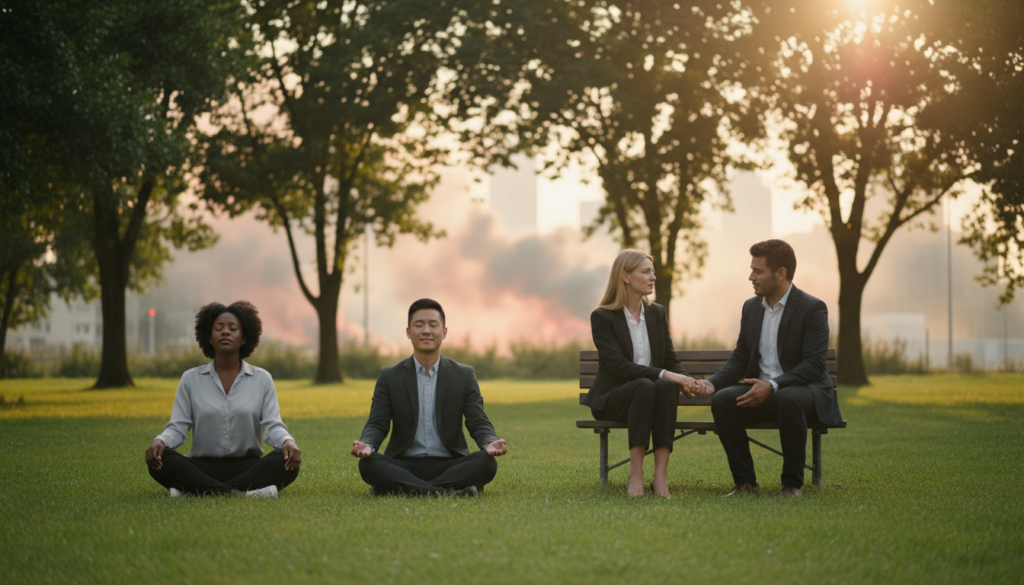
Finding a healthy balance is key to better emotional health. Constantly checking news and crisis situations drains you. Set specific times to check news instead of scrolling all the time. Limit kids’ exposure to disturbing images and info to protect their emotional well-being.
Self-care is the base of emotional resilience during tough times:
- Get enough sleep each night to clear your mind
- Eat nutritious meals to fuel your body and brain
- Exercise regularly to release stress and improve mood
- Do things that bring you joy and relaxation
- Keep daily routines to create stability and predictability
Physical health and emotional health are closely linked. Skipping sleep, eating poorly, or stopping exercise makes anxiety and stress worse. Your body needs fuel and rest to handle emotional demands. Going back to your usual exercise routine improves sleep and emotional stability.
Stress-management techniques calm your nervous system when anxiety rises. Try these proven approaches:
- Practice deep breathing by inhaling for four counts and exhaling for four counts
- Count slowly to ten while focusing on each number
- Try meditation or mindfulness to quiet racing thoughts
- Practice yoga to release physical tension
- Use progressive muscle relaxation to relax tight muscles
These techniques work best when practiced regularly, not just during crisis moments. Building these habits now strengthens your ability to stay calm when civil disturbance survival strategies become necessary in your community.
| Coping Strategy | How It Helps | Time Needed Daily |
|---|---|---|
| Deep Breathing | Lowers heart rate and blood pressure immediately | 5-10 minutes |
| Exercise | Releases endorphins and reduces anxiety naturally | 30 minutes |
| Meditation | Calms the mind and improves emotional control | 10-20 minutes |
| Social Connection | Provides perspective and emotional support | 30-60 minutes |
| Sleep | Restores mental clarity and emotional resilience | 7-9 hours |
Talking about your feelings with trusted friends, family, or professionals can help. Isolation makes anxiety worse. Connection gives you perspective, support, and comfort. Sharing your thoughts makes challenges feel more manageable.
Practice positive thinking during uncertain times. You can’t control external events, but you can control how you respond. Look for the good in difficult situations. Use positive self-affirmations to change your outlook. Remind yourself of times you overcame challenges before. This mental shift changes your mood and builds confidence.
Taking constructive action counters feelings of helplessness. Volunteer your time to help others in your community. Donate to charities supporting causes you believe in. These actions create purpose and meaning when the world feels chaotic. Helping others reminds you that positive change is possible.
Schedule your day realistically. Avoid overpacking your calendar with tasks that drain your energy. Learn to say no to commitments you cannot manage. Write down important information instead of relying on memory when stress affects concentration. Be patient with yourself and lower your standards when appropriate. This flexibility prevents burnout.
Reestablish normal routines as much as possible. Structure and predictability provide stability when the outside world feels chaotic. Routine activities ground you in the present moment and away from constant worry. Return to hobbies and projects that bring fulfillment. These positive activities rebuild joy and hope.
Professional support through reliable resources and guidance becomes important if stress and anxiety interfere with daily functioning. Many employers offer Employee Assistance Programs providing free counseling sessions. Contact a licensed therapist or counselor if you need additional support. Seeking professional help shows strength, not weakness. Mental health professionals provide tools and perspectives that help you navigate crisis periods more effectively.
Your emotional well-being matters. You cannot help others or manage civil disturbance survival strategies effectively when your own perspective is unbalanced. Prioritize stress management, maintain connections, practice self-care, and seek help when needed. Building emotional resilience now prepares you for challenges ahead.
Conclusion
Personal safety during civil unrest begins with knowledge and planning. You’ve learned to spot signs of unrest and understand its impact on daily life. You’ve also learned how to protect yourself and manage stress.
Creating an emergency plan with evacuation routes and supplies is key. This plan helps you stay safe and in control. It’s about being prepared, not living in fear.
Staying calm and informed is vital during unrest. The official civil unrest safety recommendations guide you. They show that preparation is about confidence, not fear.
If you’re feeling overwhelmed, know you’re not alone. Healing from trauma takes time. Seek help from mental health professionals or crisis hotlines.
Sharing what you’ve learned with others strengthens your community. When everyone is prepared, everyone is safer. You have the power to protect yourself and your loved ones.
Remember, your well-being is important. Stay informed, stay calm, and stay safe. You have the tools to navigate uncertain times.
FAQ
What are the most important warning signs that a peaceful protest might turn dangerous?
Watch for signs of a protest turning dangerous. Look for a change in crowd mood and increased agitation. See if people are trying to cause trouble or damage property.
Check if police are getting ready with riot gear. Look for broken windows or fires. If people are throwing things or streets are blocked, it’s getting bad.
Pay attention to who’s in the crowd. Masked people in dark clothes might mean trouble. Trust your gut; if it feels off, it probably is.
Keep up with local news and social media for updates on protests. This way, you can plan your day or avoid trouble spots.
How can I stay safe if I’m unexpectedly caught in a crowd during civil unrest?
Stay calm if you’re caught in a crowd. Panic can lead to bad choices. Move with the crowd to avoid getting hurt.
Keep a low profile and don’t take photos that might attract trouble. If you’re with family, stay close to keep everyone safe. Look for a way out by moving diagonally.
Know your escape routes, like side streets or alleys. If there’s a riot, find a safe place away from windows. Always have a backup exit plan.
Trust your instincts. If something feels wrong, it probably is. Seek shelter right away if you feel unsafe.
Why is having multiple evacuation routes so important during times of civil unrest?
Having many ways to leave is key during unrest. Protests can block roads and disrupt public transport. This can trap you or force you into danger.
If you only know one way home, a protest could block it. Practice different routes when it’s calm. This way, you’ll know them when you need to.
Know how to leave buildings safely, including where the exits are. This helps you make quick, safe choices when needed.
What should I include in my family communication plan for civil unrest situations?
Create a plan for checking in with your family. Pick specific times each day. Choose a contact person outside your area for messages.
Have backup ways to communicate, like email or two-way radios. Make sure everyone knows where to meet if separated. Keep a list of safe places to go.
Write down important info and keep it handy. Teach kids about safe adults and places if they get lost. This helps them stay safe.
How do I recognize signs of stress and anxiety related to civil unrest in myself and loved ones?
Look for signs of stress and anxiety in yourself and others. These can include fear, anxiety, and physical symptoms like headaches or fatigue.
Behavioral changes, like withdrawal or mood swings, are also signs. These reactions are normal, not a sign of weakness. If anxiety lasts a long time or interferes with daily life, seek help.
Professional support can help manage these feelings. Organizations like ComPsych offer mental health resources during stressful times.
What essential items should I carry or keep accessible during periods of civil unrest?
Carry important items during unrest. Keep your phone charged and have a portable charger. Carry ID and some cash, as ATMs might be out of order.
If you take medication, bring enough. A bottle of water helps stay hydrated. Wear comfy shoes for walking.
Keep a small first aid kit handy. These items help you stay comfortable and safe if you’re stuck or separated.
How can I manage news consumption without becoming overwhelmed during times of civil unrest?
Limit your news intake to avoid anxiety. Check reliable sources like NPR or your local news at set times. Avoid constant social media scrolling.
Limit kids’ exposure to disturbing images. Focus on verified information from trusted sources. Create “news-free” times to rest your mind.
If news makes you anxious, reduce your exposure. Being informed is important, but constant worry is harmful to your mental health.
What self-care practices are most important for maintaining resilience during civil unrest?
Take care of your physical health to boost your mental resilience. Get enough sleep and eat well to manage stress. Regular exercise helps too.
Do things that bring you joy and relaxation. Maintain routines and normal activities for stability. Practice stress-management techniques like deep breathing or meditation.
Stay connected with others and express your feelings. Model healthy coping by taking care of yourself. This helps you and your family stay strong.
When should I seek professional mental health support during periods of civil unrest?
Seek help if stress and anxiety are overwhelming or affect your daily life. Look for signs like sleep problems, trouble concentrating, or feeling hopeless.
Many employers offer free counseling through EAPs. Crisis hotlines and teletherapy services are also available. Getting help is a sign of strength, not weakness.
Most people recover with self-care and support. If you’re struggling, don’t hesitate to seek help.
How can I help my children understand and cope with civil unrest without traumatizing them?
Explain civil unrest in a way that’s easy for kids to understand. Young children need simple reassurance. Older kids can understand more about protests and safety plans.
Limit their exposure to disturbing news. Maintain routines and normal activities for stability. Encourage them to express their feelings and validate their concerns.
Practice stress-management techniques together. This helps them feel more secure. Model healthy coping by taking care of yourself.
What should I do if my workplace is located in or near an area affected by civil unrest?
Talk to your employer about emergency procedures. Know where exits are and have a plan to leave. Keep essential items at your desk.
Stay informed about local news and disruptions. Ask to leave early or work remotely if unrest is near. If told to shelter in place, move to a safe room and wait for the all-clear.
Keep your phone charged and stay in touch with family. If you feel unsafe, leave and find a safe place. After incidents, talk to a mental health professional if needed.
How do I distinguish between reliable news sources and misinformation during civil unrest?
Trust established news organizations like AP or NPR. They fact-check and correct errors. Misinformation often comes from social media or unverified sources.
Be skeptical of extreme language or unverified claims. Check information through multiple sources. Official updates from government agencies or police are reliable.
Ask yourself if the source has a reputation to protect. If not, be cautious. Use fact-checking websites like Snopes to verify information.
What physical health problems can civil unrest and stress cause?
Stress can lead to headaches, digestive issues, and high blood pressure. It can also cause rapid heart rate, chest pain, and muscle tension.
It can weaken your immune system, leading to frequent illnesses. If you experience severe symptoms, see a doctor. They can help you manage stress-related health issues.
How long does it typically take to recover emotionally from experiencing civil unrest?
Recovery time varies. It depends on the severity of the experience, your resilience, and support. Some people recover quickly, while others take months.
Expect emotional responses like flashbacks or difficulty concentrating. These are normal. Factors like self-care and support can help you recover faster.