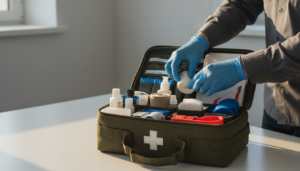
It’s key for preppers to have the right over-the-counter medications ready. This helps with common health problems during emergencies. A good stock can also stop infections and manage long-term health issues.
When crises hit, getting to doctors might be hard. So, having a prepper pharmacy is vital. It should include pain relievers, cold and flu meds, and stuff for wounds. For tips on setting up your prepper pharmacy, check out our guide on prepper pharmacy.
Key Takeaways
- Stock up on pain relievers, including adult and children’s dosages.
- Include supplements and vitamins, such as multivitamins and Vitamin C.
- Prepare for cold, flu, and allergy season with day/night remedies and antihistamines.
- Have stomach medications, like anti-nausea and anti-diarrheal meds, on hand.
- Include minor wound care supplies, such as antibiotic ointment and bandages.
Table of Contents
Why OTC Medications Are Critical for Preppers
When disaster hits, preppers rely on their medical supplies, like OTC meds. Without quick access to doctors, having a survival kit is key. It helps them stay healthy until help arrives.
Self-care is very important in emergencies. Preppers need to handle their health on their own. OTC meds help them treat small problems before they get worse.
The Role of Self-Care in Emergency Situations
In emergencies, preppers must care for themselves and their families. They need to manage pain, fix stomach issues, and handle other health problems. A good survival kit is essential for their health.
- Managing pain with pain relievers
- Treating digestive issues with antacids and anti-diarrheal medications
- Addressing allergic reactions with antihistamines
When Professional Medical Help May Be Unavailable
During disasters, doctors might be hard to find. Having OTC meds can save lives. Preppers can use them for many health issues, from small injuries to allergies.
Essential Pain Relievers and Fever Reducers
Pain management is key in emergencies. That’s why pain relievers and fever reducers are vital for any emergency medicine list. They help ease pain and lower fever, which is important for treating illnesses and injuries.
Acetaminophen (Tylenol)
Acetaminophen is a common pain and fever reducer. It works for mild to moderate pain, like headaches and muscle aches. Always take it as directed to avoid liver damage.
NSAIDs: Ibuprofen (Advil, Motrin) and Naproxen (Aleve)
NSAIDs, like ibuprofen and naproxen, relieve pain and reduce inflammation. They help with menstrual cramps, arthritis, and sprains. But, they can upset your stomach, so eat food with them. Also, they might interact with other medicines, so check with a doctor first.
Ibuprofen is great for its anti-inflammatory effects. Naproxen, though, lasts longer, making it good for ongoing pain.
Aspirin and Its Dual Uses
Aspirin is a salicylate that relieves pain and fever and fights inflammation. It’s good for arthritis and minor aches. It also prevents blood clots. But, use it carefully, as it can cause problems in kids and people with certain health issues.
Digestive and Gastrointestinal Medications
Digestive and gastrointestinal medications are key for preppers in emergencies. Emergencies can upset our routine, causing digestive problems. The right meds can ease discomfort and stop serious health issues.

Antacids and Acid Reducers
Antacids and acid reducers help with heartburn, indigestion, and acid reflux. Tums, Rolaids, and Zantac are good choices. They either neutralize stomach acid or cut its production.
- Tums: Fast-acting antacid for heartburn relief
- Zantac: Acid reducer that provides longer-lasting relief
Anti-Diarrheal Medications
Medicines like Imodium control diarrhea from bad food or water. They slow down bowel movements. This lets the body absorb more water and salts.
- Imodium: Effective for controlling diarrhea
- Pepto-Bismol: Can help with both diarrhea and indigestion
Laxatives and Stool Softeners
Laxatives and stool softeners help with constipation. Dulcolax and Colace are good choices. They help when diet or activity changes.
Anti-Nausea Medications
Dramamine helps with nausea and vomiting. It’s good for stress, motion sickness, or food poisoning in emergencies.
In short, preppers need a good stock of digestive and gastrointestinal meds. They help with many symptoms like heartburn, diarrhea, constipation, and nausea. This keeps us comfortable and healthy in tough times.
OTC Medications Every Prepper Should Stock for Respiratory Issues
Respiratory problems can get worse fast in emergencies. It’s key to have the right OTC meds ready. Issues like dust and mold can cause trouble. Keeping a stock of OTC meds can really help.
Antihistamines for Allergies
Antihistamines are a must for breathing issues from allergies. Diphenhydramine (Benadryl) and loratadine (Claritin) can ease symptoms. They’re great for when emergencies make allergens worse.
Decongestants and Expectorants
Decongestants clear your nose, making breathing easier. Pseudoephedrine (Sudafed) and phenylephrine (Sudafed PE) are good choices. Expectorants like guaifenesin (Mucinex) thin mucus, helping you cough it up. These are key for colds and infections in emergencies.
Cough Suppressants
Cough suppressants are a must for long coughs. Dextromethorphan (Robitussin) can cut down on coughing. It helps you rest better.
Throat Lozenges and Sprays
Throat lozenges and sprays ease sore throats. Menthol or eucalyptus in these products soothe your throat. They make you feel better fast.
| Medication Type | Examples | Use |
|---|---|---|
| Antihistamines | Diphenhydramine (Benadryl), Loratadine (Claritin) | Allergic reactions |
| Decongestants | Pseudoephedrine (Sudafed), Phenylephrine (Sudafed PE) | Nasal congestion |
| Expectorants | Guaifenesin (Mucinex) | Thinning mucus |
| Cough Suppressants | Dextromethorphan (Robitussin) | Reducing cough |
Topical Treatments and First Aid Medications
Preppers should stock up on topical treatments and first aid medications. These are key for handling minor injuries and stopping infections. They are vital when medical help is not available.

Antibiotic Ointments and Creams
Antibiotic ointments and creams prevent infection in small cuts and scrapes. Neosporin and Bacitracin kill bacteria. This helps wounds heal clean.
Anti-Fungal Treatments
Anti-fungal treatments fight fungal infections in damp places or bad wound care. Clotrimazole and terbinafine are in creams and sprays. They fight these infections.
Hydrocortisone and Anti-Itch Creams
Hydrocortisone cream eases itching and swelling from skin allergies or irritations. It’s great for skin reactions in emergencies.
Burn Treatments and Pain-Relieving Gels
Burn treatments and pain gels are key for burns, common in disasters. Gels with lidocaine or benzocaine numb pain. Burn creams help wounds heal.
| Medication Type | Common Brands | Use |
|---|---|---|
| Antibiotic Ointments | Neosporin, Bacitracin | Preventing infection in minor cuts and scrapes |
| Anti-Fungal Treatments | Clotrimazole, Terbinafine | Treating fungal infections |
| Hydrocortisone Creams | Cortizone-10 | Relieving itching and inflammation |
| Burn Treatments | Lidocaine, Benzocaine gels | Managing pain and aiding healing in burns |
Having these treatments and medications ready can greatly help in emergencies. It ensures small injuries don’t turn into big health problems.
Proper Storage and Rotation of Your OTC Medication Stockpile
Keeping your OTC medication stockpile in good shape is key. It makes sure your meds stay strong and safe to use when you need them.
Temperature and Humidity Considerations
Store OTC meds in a cool, dry spot. Keep them away from sunlight and moisture. Changes in temperature and humidity can harm the meds. A climate-controlled area is best for storage.
Understanding Expiration Dates
Expiration dates show when the meds are good and safe. Check these dates often and use the oldest meds first. This keeps your stockpile fresh.
Inventory Management Systems
An inventory system tracks your meds’ levels, expiration, and storage. Use a ‘first-in, first-out’ rule to use older meds before new ones. This keeps your stockpile effective.
- Regularly check your stockpile for expired or bad meds.
- Keep a log of where and when you store your meds.
- Rotate your stock to use the oldest meds first.
Conclusion
A well-stocked supply of prepper first aid essentials is key for health in crisis. OTC medications are vital for managing health issues without a doctor. They help keep you safe when medical help is not there.
Having the right OTC medications is important. This includes pain relievers, digestive aids, and creams. Adding survival kit antibiotics to your kit can save lives during infections. It’s also important to know how to store and use these medicines to keep them effective.
In short, the right medicine and first aid can be a game-changer in survival situations. Preppers should focus on creating a detailed medicine kit. This kit should include OTC medications and antibiotics, making sure they’re ready for anything.
FAQ
What are the most essential OTC medications that every prepper should stock?
Preppers should have pain relievers like Tylenol and NSAIDs. They should also have digestive meds, like antacids and anti-diarrheal meds. Respiratory meds, such as antihistamines and decongestants, are also key. Don’t forget topical treatments like antibiotic ointments and hydrocortisone creams.
How should I store my OTC medication stockpile to maintain their effectiveness?
Keep your OTC meds in a cool, dry spot. Stay away from sunlight and moisture. Always check expiration dates and use older meds first.
Can I use OTC medications beyond their expiration dates?
It’s best not to use OTC meds after they expire. Their strength and effectiveness may drop. Always replace expired meds with new ones.
What are some common mistakes to avoid when stockpiling OTC medications?
Avoid storing meds in humid or extreme temps. Don’t forget to check expiration dates. Make sure to use older meds before they expire.
How can I manage my OTC medication stockpile effectively?
Use an inventory system to track your meds. Include quantities, expiration dates, and where you store them. This keeps your stockpile organized and effective.
Are there any specific OTC medications that are critical for managing chronic conditions during emergency situations?
Yes, people with chronic conditions should have specific OTC meds. For example, pain relievers for arthritis or antihistamines for allergies.
Can OTC medications help prevent minor health issues from becoming severe during crisis situations?
Yes, a good stock of OTC meds can help manage minor issues. This is important when you can’t get to a doctor.
How can I ensure that my OTC medication stockpile is tailored to my family’s specific needs?
Think about your family’s health history, allergies, and needs. Stock meds that are right for your family, like meds for chronic conditions.