Natural disasters hit the United States often. In 2024, 27 major weather and climate disasters caused over $1 billion in damages each. Between 2013 and 2017, U.S. fire departments responded to an average of 354,400 home fires yearly. These fires killed or injured nearly 14,000 people and destroyed $6.9 billion in property. Between 1996 and 2019, 99% of U.S. counties experienced at least one flooding event.
These numbers show emergencies are common. They affect property owners, landlords, and tenants. When disaster strikes, confusion and chaos spread fast. People need to get out. First responders need to get in. Tenants need help. Property damage spreads quickly.
Managing property access in emergencies is key. You need a plan before disaster strikes. Waiting until a hurricane hits or a fire breaks out is too late. Emergency property access protocols protect lives and reduce damage. They keep people safe. They guide first responders to where they need to go. They prevent panic and confusion when minutes count.
You can prepare now. This article guides you through setting up emergency property access protocols. You’ll learn about key control systems and coordinating with fire departments and police. You’ll see how to keep escape routes clear and accessible. You’ll discover how to communicate with tenants and staff before danger arrives.
Property owners and managers have two big responsibilities. You must protect the people living and working on your property. You must also protect your investment. The right emergency access management system does both. It saves lives. It reduces property loss. Smart planning today makes all the difference when emergencies come tomorrow.
Table of Contents
Understanding the Critical Importance of Emergency Property Access Protocols
Emergency property access protocols are key to disaster preparedness for rental properties. When disasters hit, every second is critical. Clear, tested procedures help keep tenants safe and let first responders reach those in need. This section looks at why these protocols are vital and what landlords must do in emergencies.
The core of any good emergency response is simple: people matter more than things. Fires, storms, or accidents mean saving lives is the top priority. A focus on tenant safety is at the heart of every decision.
Why People Always Come Before Property
In emergencies, tenants must leave quickly. Blocked hallways or locked exits can turn a bad situation worse. First responders need quick access to rescue or give medical help.
Without clear access, response times get longer, putting lives at risk. This is not just about morals; it’s also about the law. If emergency systems fail or access is blocked, landlords could face big legal issues.
For example, during Hurricane Ike in Houston, properties needed immediate help. Without the right access, teams couldn’t reach residents or stabilize homes before damage got worse.
- Quick evacuation saves lives during fires and immediate threats
- First responder access enables faster rescue operations
- Proper planning reduces injury risks for tenants
- Legal compliance protects landlords from liability claims
The Landlord’s Responsibility for Tenant Safety During Disasters
Landlords have legal and moral duties to keep properties safe. This includes making sure emergency exits and facilities are accessible. When emergencies happen, this duty grows bigger. You must ensure crisis access systems work, exit routes are clear, and communication is good.
Building codes require emergency systems to meet safety standards. If your systems don’t meet these or fail when needed, you could be held liable for injuries or deaths. Tenants rely on you to keep these safety measures in place before disasters hit. Your emergency response plans should be tested often and clearly shared with all residents.
Real-world examples show how urgent this is. Hurricane Ike devastated Houston properties, causing delays in emergency response for those without clear access protocols. Rain poured into homes, damage spread, and tenants suffered harm. Landlords who had dealt with emergencies with clear access procedures recovered faster and kept their tenants safer.
| Responsibility Area | Before Emergency | During Emergency | After Emergency |
|---|---|---|---|
| Access Systems | Inspect and maintain all entry systems | Ensure emergency entry works properly | Document system performance and repairs |
| Communication | Establish notification procedures | Notify tenants and first responders immediately | Track all communications for records |
| Exit Routes | Keep all exits clear and marked | Verify tenants can evacuate safely | Assess damage to exit pathways |
| First Responder Access | Coordinate with local emergency services | Provide immediate property access | Support investigations and repairs |
Your role is more than just maintaining the building. You must teach tenants about emergencies and how access will be managed. Inform them about temporary relocation if the property is not safe. Clear communication through various channels ensures everyone knows the plan before disaster strikes.
Understanding these responsibilities empowers you. By building strong crisis access management systems into your routine, you protect everyone. Tenants feel safe, first responders can do their jobs well, and you reduce legal risks.
Managing Property Access in Emergencies
When disaster hits, things get chaotic fast. Clear thinking is key to avoid confusion and danger. You must have a plan for who gets in and out before trouble comes.
You need to decide who makes the rules, who lets people in, and how things change with different emergencies. It’s a tough job to keep your place safe but also let in those who need to be there.
- Physical systems like keys, locks, and codes
- Communication plans for who gets called and when
- Records of who came in, when, and why
First, pick your leader and share tasks with your team. Good security plans mean talking a lot with everyone involved. This includes lenders, government, first responders, insurance, and local officials.
Teach your team about disaster plans and their roles. When everyone knows what to do, things go better. This turns a stressful task into a manageable one.
Establishing Crisis Access Management Systems and Building Lockdown Procedures
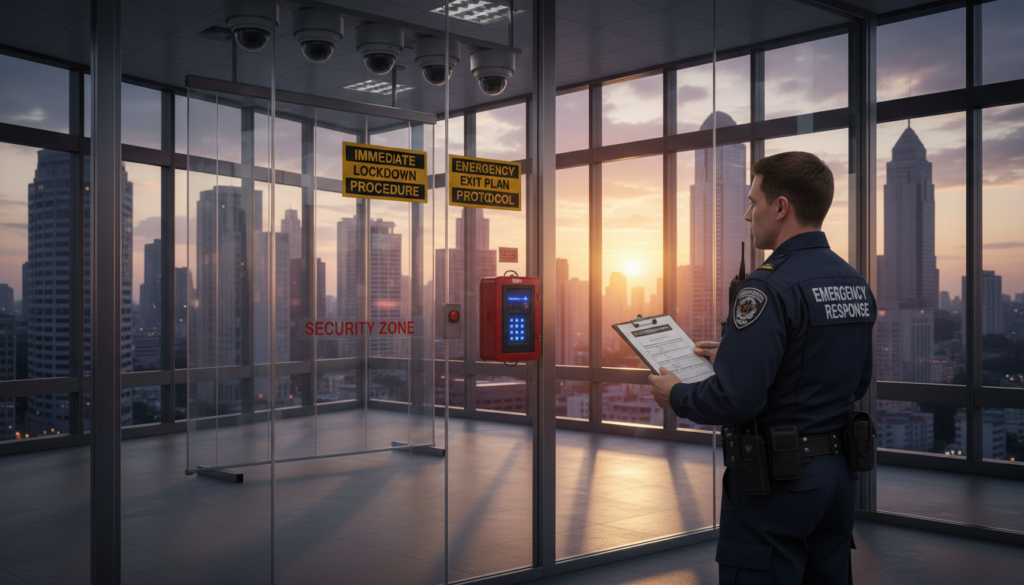
Creating effective crisis access management needs careful planning. Your property must have systems that balance security and quick access for emergency responders. This includes reliable emergency key control, secure lockboxes, and building lockdown procedures. Working with first responder teams is also key.
When disaster hits, these systems are critical. They can mean the difference between safe evacuations and dangerous delays.
The right approach combines physical security with clear communication. Work with your local fire and police to understand their needs. Also, make sure tenants know how emergency procedures work. This preparation reduces confusion when every second counts.
Implementing Emergency Key Control and Lockbox Management
Emergency key control starts with safe key storage. Knox Boxes are a standard for fire departments to access keys right away. These metal boxes bolt to your building and hold master keys and emergency information.
Consider these key control elements:
- Maintain detailed logs of who receives keys and when
- Change locks after staff departures or security breaches
- Create backup access methods in case primary systems fail
- Use digital access codes that you can update remotely
- Store master keys in approved secure locations
Emergency lockbox management is more than just storing keys. Place lockboxes at main entrances and mark them clearly. Inside, include emergency contact numbers, utility shut-off instructions, and detailed property layouts. This helps responders navigate your building quickly.
Balance security with accessibility. Your lockbox system should prevent unauthorized access while allowing emergency personnel to retrieve information rapidly. Update lockbox contents annually and after any security changes.
Coordinating First Responder Property Access
First responder property access requires partnership with local fire and police departments. Register your property with these agencies and provide current building information. When emergency personnel know your property beforehand, response times improve significantly.
Work with responders to address your specific access challenges:
- Identify any locked gates or security barriers
- Explain unique features like alarm systems or special locks
- Provide building layouts showing utility locations
- Mark emergency exits clearly on all plans
- Share information about roof access or multiple entry points
Building lockdown procedures vary based on your emergency scenario. Sometimes you need to prevent unauthorized entry. Other times you must ensure rapid evacuation access. Electronic access control systems offer flexibility to manage both situations. Advanced lockdown systems can automatically trigger during, while also allowing first responders to override locks with proper credentials.
Create clear documentation for responders including building layouts, utility shut-off locations, and any access challenges. Update this information whenever your property changes. Building relationships with emergency services before a crisis occurs ensures they understand your property and can respond effectively when lives are at stake.
Maintaining Clear Escape Routes and Emergency Access Points
Blocked escape routes can be deadly in emergencies. What seems harmless can turn into a danger zone during fires, floods, or disasters. Keeping paths clear helps save lives and lets emergency teams get to your property fast.
Your property’s layout affects how quickly people can leave and how emergency teams can enter. Regular checks can spot problems early. It’s important to remember that keeping access clear is an ongoing task. It needs constant effort and clear talks with everyone in your space.
Clearing Common Access Barriers
Different properties face unique challenges. For example, multifamily housing often deals with tenants storing things in hallways. Single-family homes might have landscaping or construction materials blocking doors and windows. Security features like bars can also block exits.
Regular property checks can find solutions. Use checklists for access and egress points. Remind tenants seasonally to keep routes clear. Test doors, windows, and locks regularly.
- Remove storage from hallways and stairwells immediately
- Trim landscaping away from all windows and doors
- Keep fire escapes clear of furniture and personal items
- Ensure all doors and windows operate properly
- Install removable security screens and bars from the inside
- Document that exterior walkways remain unblocked
Emergency Access Authorization and Disaster Response Procedures
It’s key to document emergency access authorization for safety and security. Property managers must tell who can enter in emergencies. Tenants should know who might enter their space.
Planning for disaster response is vital. Do safety checks after disasters to find damage. Decide who should do initial inspections. Document damage while keeping your property safe.
| Property Type | Priority Maintenance Tasks | Inspection Frequency |
|---|---|---|
| Multifamily Housing | Clear hallways, test exit doors, maintain fire escapes, post exit maps | Monthly |
| Single-Family Homes | Trim landscaping, test windows, check door locks, clear pathways | Quarterly |
| Apartment Complexes | Enforce storage policies, maintain lighting, test emergency systems, clear stairs | Monthly |
Include access rules in your lease agreements. Use clear language that explains why these rules are important. Hold tenants accountable but offer support. Make it easy for residents to understand the reasons behind these policies.
Keeping escape routes clear protects your property and its residents. This effort needs regular attention, clear communication, and strict enforcement of safety rules.
Creating Emergency Authorization Protocols and Communication Plans
Clear communication is key to strong emergency property access protocols. Your team and tenants must know how to reach you in a crisis. Building reliable communication channels requires planning and practice.
This section will guide you on creating notification systems for emergencies. It also covers how to test and improve your crisis access management systems.
Developing Staff and Tenant Notification Systems
Emergencies don’t wait for perfect conditions. Phone lines jam, internet fails, and power goes out. Your notification approach needs backup plans for these situations.
Start by collecting accurate contact information from every tenant and staff member during move-in and lease renewal.
Create communication layers that work in different situations:
- Primary methods: text messages, email, and phone calls
- Secondary methods: social media and property management apps
- Backup methods: door-to-door contact, posted notices, and community emergency radio
Tell your tenants about FEMA’s mobile app and encourage them to download it. Share information about registering as safe on the Red Cross website during natural disasters. Keep these messages simple.
Explain where to find your emergency plans, what to do during different emergencies, and how to request property access when needed.
Your emergency property access protocols should be written in plain language. Avoid complex terms. Tell people what they need to know in clear steps.
Testing Your Emergency Access Plans Through Simulations
Written plans mean nothing if they don’t work in real situations. Testing reveals problems before actual emergencies occur. Run regular drills to check your crisis access management systems.
Use these testing approaches:
| Testing Type | What It Checks | Frequency |
|---|---|---|
| Contact List Tests | Verify all phone numbers and email addresses work | Quarterly |
| Notification System Tests | Confirm messages reach all staff and tenants quickly | Quarterly |
| Fire Evacuation Drills | Check exit accessibility and resident awareness | Twice yearly |
| Power Outage Simulations | Test property access without electricity | Annually |
| Hurricane Preparation Drills | Practice property securing and damage assessment | Annually |
Don’t treat drills as checkbox exercises. View mistakes as gifts. Problems discovered during practice never happen during real emergencies.
After each test, meet with your team. Discuss what worked and what needs improvement. Update your emergency property access protocols based on what you learn.
Run these tests regularly. Over-communicate with everyone involved. Keep practicing until your procedures feel natural. Emergency preparedness isn’t a one-time project. It’s a continuous cycle of planning, testing, learning, and improving your crisis access management systems.
Conclusion
Managing property access in emergencies is a big responsibility for everyone, not just experts. It’s good to know that setting up a solid emergency access system is possible with the right planning. You’ve learned how to keep people and property safe during emergencies.
Creating a strong emergency access system starts with a few key steps. First, remember that people are more important than buildings and things. Next, set up physical systems like key control logs and clear escape routes. Also, make sure you have good communication with local first responders.
Testing your plans regularly is also important. This helps make your property management system strong. Being resilient is not just for big companies; it’s for everyone, no matter the size or location of your property.
Emergency preparedness is an ongoing effort, not a one-time task. After each test or real emergency, review what worked and what didn’t. Use these lessons to improve your team’s and properties’ readiness. Regular updates to your plans are key as your property and threats change.
Start small with your emergency plan, even if it’s just a basic key control log. Simple steps like walking your property to find clear evacuation routes are a good start. Use resources from FEMA and local agencies to help you. While you can’t control emergencies, you can control how ready you are for them.
By following the emergency property access protocols from this article, you can feel more confident. You’ll know you’ve done everything you can to protect people and your property. This is a big step towards safety and security.
FAQ
Why is having an emergency property access protocol so important for property owners and landlords?
Emergency access protocols are key for safety and protecting your property. They’re vital in the U.S. due to rising natural disasters. Quick access can save lives during emergencies.
Delays can block evacuations and rescue efforts. Property owners must balance safety and property protection. Clear systems prevent chaos and reduce liability.
What is the fundamental principle that should guide all emergency access decisions?
Human safety must always come first. This is morally right and legally sound. It protects owners from big liability risks.
It ensures tenants can evacuate quickly and responders can enter. This shows you care about tenant safety and can help in legal issues.
What legal and ethical responsibilities do landlords have for tenant safety during disasters?
Landlords must follow building codes and ensure safety. They can face liability if access systems fail. Ethically, they must inform tenants about evacuation procedures and maintain properties.
Regular updates and testing of protocols are essential. The aftermath of Hurricane Ike showed the importance of access protocols.
What does “controlled access” mean during emergencies, and why is it important?
Controlled access means only authorized people can enter during emergencies. It balances safety with preventing unauthorized entry. This is critical for emergency responders and property managers.
It requires physical systems, communication protocols, and documentation. This ensures access is managed effectively.
What are Knox Boxes, and how do they help with emergency property access?
Knox Boxes are secure key storage systems for emergencies. They’re approved by fire departments across the U.S. They allow firefighters to enter quickly without forcing entry.
They ensure safety while maintaining security. Registering your property with the fire department and installing a Knox Box is essential.
What information should be included in an emergency lockbox beside keys?
A good emergency lockbox should include utility shut-off instructions and property layouts. It should also have emergency contact numbers and tenant information.
Include special security system information. Detailed property diagrams help responders quickly understand the building layout.
How should property owners work with local fire departments and police to establish emergency access coordination?
Start by contacting your local fire and police departments. Ask about their emergency access programs. Provide them with detailed building information and contact details.
Discuss any security features that might affect entry. Consider joining Knox Box networks or digital access systems. This builds relationships and ensures accurate information.
What are common mistakes that block evacuation routes, and how can property owners prevent them?
Blocked evacuation routes are deadly. They’re preventable by regular inspections and clear communication. Ensure exit routes are clear and well-marked.
Send reminders to tenants about keeping routes clear. For single-family rentals, ensure landscaping doesn’t block doors or windows.
How should property owners document and communicate emergency access authorization?
Create clear documentation of who can access your property in emergencies. Include a list of authorized staff and emergency contacts. Distribute simplified versions to staff and tenants.
Communicate re-entry plans through multiple channels. Document the entire process for safety and accountability.
What should be included in staff and tenant notification systems for emergencies?
Effective notification systems require multiple channels. Include primary, secondary, and backup methods. Develop message templates for different scenarios.
Update contact information regularly. Test your system to ensure messages reach people in time.
How can property owners test their emergency access plans effectively?
Testing is essential to identify plan gaps. Start with simple tests like call tree exercises. Progress to more complex simulations like fire drills.
After each test, conduct after-action reviews. Use problems found during drills as learning opportunities. Schedule regular testing to build familiarity with procedures.
What specific steps should property owners take to prepare properties for re-entry after disasters?
Follow a planned sequence for re-entry. Conduct an initial safety assessment before allowing re-entry. Document all damage thoroughly.
Assess utilities carefully. Once safe, authorize phased re-entry. Communicate clearly about safe areas and hazards.
Why is maintaining current contact information so critical for emergency communications?
Current contact information is key for effective emergency notifications. Outdated information means messages won’t reach people. Establish processes for updating information regularly.
Test your system to ensure messages reach people in time. Consider creating a communication tree for backup contact information.
What role does regular maintenance play in emergency property access?
Regular maintenance ensures access systems work in emergencies. Test all doors and windows monthly. Replace electronic lock batteries quarterly.
Include access system testing in regular inspections. Assign clear maintenance responsibilities and ensure work is done on schedule.
How should property owners handle security during emergencies while maintaining necessary access?
Balance security with access during emergencies. Designate authorized personnel for access decisions. Provide them with necessary information and protocols.
Implement digital access systems for remote authorization. Ensure staff can act decisively in emergencies. Regular training is essential.
What differences exist in emergency access management for different property types?
Emergency access protocols vary by property type. Multi-family housing requires sophisticated systems for unit and common area access. Commercial properties need protocols for after-hours access and server room protection.
Industrial properties must account for hazardous materials and specialized safety systems. Single-family homes focus on perimeter security. Each property type needs customized protocols.
How often should emergency access plans be reviewed and updated?
Review emergency access plans annually, or more often with significant changes. Schedule reviews in seasons with high emergency risk. Update protocols for property modifications, staff turnover, and tenant changes.
Technology changes require updates to access systems and communication platforms.