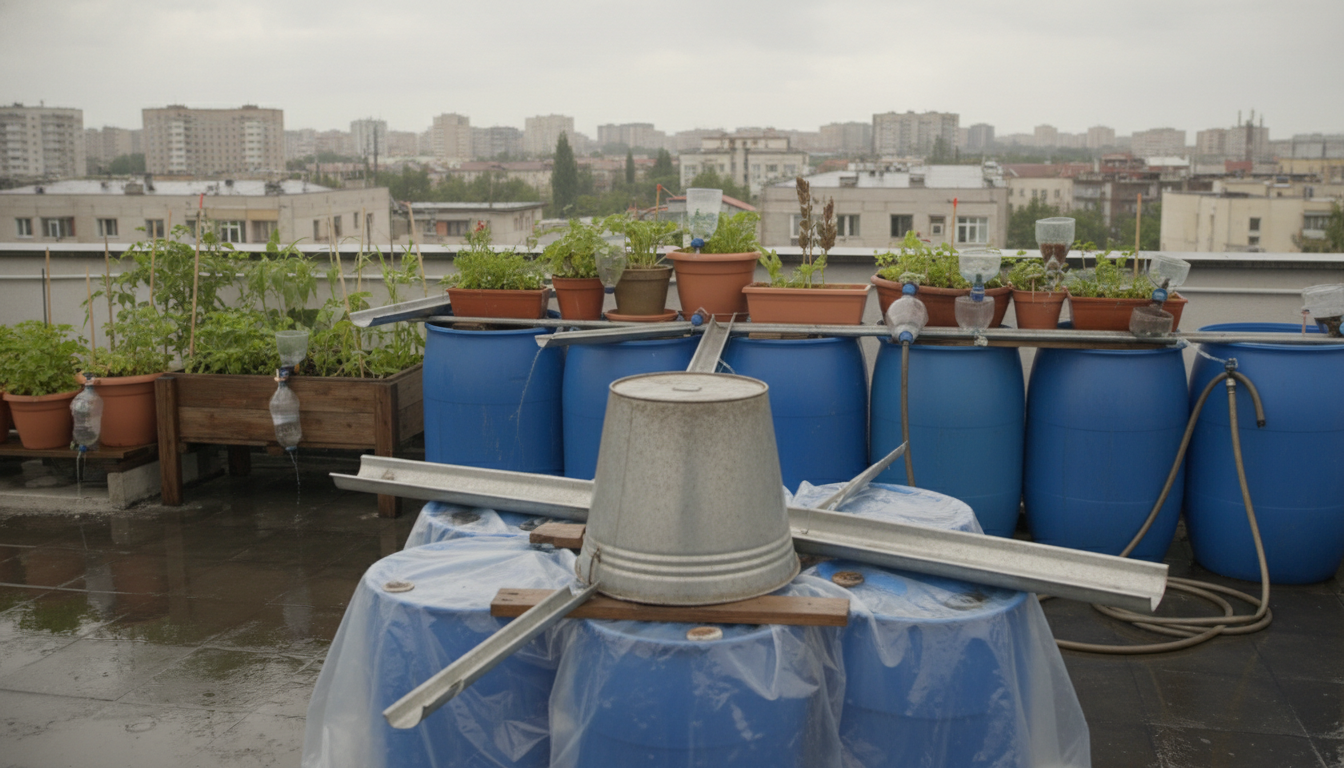
When emergencies happen, finding clean water is key. Disasters, power outages, and surprises can stop your water fast. But, you can collect water using things you already have at home or in your yard.
Did you know a small roof can catch a lot of water? A 1,000 square foot roof can gather about 600 gallons from just one inch of rain. So, your roof is a great place to start. Just multiply your roof size by the rain depth, then use a simple formula to find out how much water you can collect.
You don’t need fancy tools or expert training to collect water. You can use things like trash cans, storage bins, tarps, and gutters. These items are probably in your home already. With a little knowledge, setting up a water catchment system is easy.
This article will show you how to gather water in emergencies. You’ll learn about rain barrel setups and more complex systems. These methods are affordable and work for any home or property.
Learning to collect water on your own makes you more self-sufficient. It gives you confidence that you can provide for your family’s needs. Let’s see how you can turn everyday items into a reliable source of water for survival.
Table of Contents
Understanding Rainwater Harvesting Fundamentals for Emergency Situations
In emergencies or when power is out, getting water is key. Learning to collect rainwater is a smart move. It uses resources you already have. Rainwater harvesting is easy, affordable, and helps families prepare for the unexpected.
Most homes can collect rainwater. Your roof, garage, shed, or even a tarp can help. Knowing the basics lets you figure out how much water you can get and what materials to use.
Calculating Your Water Collection Capacity from Available Surfaces
Figuring out how much water you can collect is simple. The formula is straightforward:
- Harvested rainwater (gallons) = catchment area (ft²) × rainfall depth (inches) × 0.62
- This conversion factor means roughly 0.62 gallons per square foot per 1 inch of rain
For example, a coastal area with 100 inches of rain a year can collect about 62 gallons per square foot. With 75% collection efficiency, that’s around 47 gallons yearly per square foot.
Think about the sizes of surfaces you might have around your home:
| Surface Type | Typical Size (sq ft) | Annual Collection (gallons) | Use Case |
|---|---|---|---|
| Small shed roof | 200 | 5,890 | Emergency backup supply |
| Garage roof | 400 | 11,780 | Garden and cleaning water |
| Average home roof | 1,500 | 44,175 | Household and emergency use |
| Large home roof | 2,500 | 73,625 | Extended family supplies |
These numbers assume 100 inches of rain a year and 75% collection efficiency. Your actual numbers will vary based on your local rain and roof slope.
Why Common Roofing Materials Work for Emergency Water Gathering
Many worry about using roofs for water collection. But, almost all roof types work well. Different materials collect water at different rates.
Metal roofs like Galvalume steel are the best. They shed water fast and collect more. Water flows off quickly without getting stuck.
Asphalt shingle roofs are common and work well too. They lose about 10% of water compared to metal roofs. They’re good for non-drinking uses like watering plants or washing cars.
Composite and clay tiles also collect water well. They lose about 10% of water due to their texture. These materials may hold water for a bit before releasing it.
The slope of your roof affects how well it works. Steeper roofs shed water faster and clear debris. Flatter roofs might hold debris but also collect water. Both are good for emergency water systems.
- Metal roofs: Best efficiency, fewer contaminants
- Asphalt shingles: 10% less efficient, safe for irrigation
- Clay and composite tiles: Reliable collection with minor losses
- All roofs: Suitable for emergency water gathering with proper filtration
Your roof, no matter the material, can help in emergencies. Just add the right filters and storage to make the water safe and ready when you need it.
Building Your Catchment System with Everyday Household Items
You don’t need to spend a lot of money to make a rain catchment. You can use things you already have at home or find at a hardware store. The main parts are a surface to catch rain, a way to move water, and places to store it.
First, find a surface to catch rain. Your roof is best, but tarps, clean car covers, or shed roofs work too. The goal is to catch rain and let it flow down.
Then, set up a way to move water. Use 5-inch residential gutters for a permanent setup. If you don’t have gutters, cut PVC pipes in half or use vinyl tubing. For downspouts, remember: use 1 square inch of downspout area for every 100 square feet of roof.
| Roof Size (sq ft) | Downspout Size | Collection Capacity |
|---|---|---|
| 600 | 2″ x 3″ | 300+ gallons per inch of rain |
| 1,000 | 3″ x 3″ | 500+ gallons per inch of rain |
| 1,200 | 3″ x 4″ | 600+ gallons per inch of rain |
It’s important to have the right slope. Gutters should slope at 1/16-inch per foot to prevent water pooling. Use gutter hangers every 3 feet to handle water and debris.
In the wild or for emergencies, tarps are great. Stretch a tarp at an angle and let water flow into containers. This is useful for camping or quick water needs.
For storing water, use food-grade plastic barrels, large trash cans, or dedicated rain collection tanks. Keep them covered to stop mosquitoes and debris. Start small and grow your system as you get more confident.
Improvised Water Collection Using Trash Cans and Storage Containers
Turning everyday containers into reliable water collection vessels is key for emergency preparedness. Trash cans, food-grade barrels, and storage totes are great for catching rainwater. They make your home a self-sufficient water collection system without needing expensive gear.
50-gallon or 75-gallon food-grade plastic barrels are affordable and often free. They’re durable, stackable, and easy to modify. For smaller needs, 32-gallon or 44-gallon trash cans from hardware stores are budget-friendly.
When choosing containers, safety is important. Avoid barrels or cans that held chemicals or toxins. Opt for food-grade plastic marked with recycling codes 1, 2, 4, or 5. Opaque containers block sunlight to prevent algae, while clear ones need dark wrapping.
- Position containers on stable, level ground away from contamination sources
- Cover openings with screens to prevent insect and frog entry
- Install vented lids with mesh screening for air circulation
- Keep containers accessible for regular cleaning and maintenance
- Connect multiple barrels using adapters and overflow fittings
Creating Effective Debris Filters from Common Materials
Debris in your water supply lowers quality and increases maintenance. Simple filtration systems from household items can help. Use window screen, cheesecloth, coffee filters, or clean cotton T-shirt fabric to block debris.
Multi-layer filters offer better protection. Stack these materials in order:
- 1/4-inch hardware cloth to catch large debris like twigs and leaves
- Standard window screen mesh for medium-sized particles
- Landscape fabric or filter foam as the final protective barrier
This layered approach keeps leaves, insects, pollen, and contaminants out. Regularly check and replace filter layers for consistent performance. Learn more about water filtration systems for emergency preparedness here.
Setting Up First Flush Diverters with PVC Pipes
The first water from your roof has the most contaminants. First flush diverters route this water away from your main tank. This improves water quality for irrigation and emergencies.
A simple PVC standpipe diverter works through physics. It uses a 4-inch PVC pipe before your main tank. The pipe fills with contaminated water first. Once full, clean water flows into your tank.
Size your diverter correctly for effectiveness. Use this guideline: divert a minimum of 10 gallons for every 1,000 square feet of collection surface per inch of rainfall. A 1,500 square foot roof needs a 4-inch by 4-foot PVC pipe holding about 2.6 gallons. Larger roofs may need more diverters or bigger pipes.
| Roof Area (Square Feet) | Rainfall (Inches) | Recommended First Flush Diversion (Gallons) | PVC Pipe Size |
|---|---|---|---|
| 1,000 | 1 | 10 | 3-inch diameter, 3 feet tall |
| 1,500 | 1 | 15 | 4-inch diameter, 3-4 feet tall |
| 2,000 | 1 | 20 | 4-inch diameter, 4-5 feet tall |
| 2,500 | 1 | 25 | 6-inch diameter, 3-4 feet tall |
Installation needs basic tools and materials from the hardware store. Place the PVC standpipe vertically before your main tank. Secure it with brackets or straps. Drill a small hole in the bottom cap for drainage, or leave the cap loose for gradual water release. Use leaf screens along gutter lengths to remove debris before water reaches downspouts.
Field expedient water sources become reliable and safe with proper containers, debris filtering, and first flush diversion systems. These components transform rainwater into usable water for emergencies and long-term planning.
Gravity-Fed and Makeshift Pump Systems for Water Delivery
Getting water from your collection system to where you need it requires smart thinking about gravity and pressure. The good news is that you can move water without electricity. Knowing your options helps you build a system that fits your situation and budget.
How Gravity-Fed Systems Work for Off-Grid Water Collection
Gravity is the key in the simplest water delivery setup. Water flows downhill naturally. The higher your storage tank sits above your garden or usage point, the more pressure builds up.
Every 2.31 feet of vertical elevation creates 1 pound per square inch (psi) of water pressure. This matters because different uses need different pressure levels. A gentle garden hose works fine with just 2 to 4 psi. Sprinkler systems demand about 20 psi, which means you need roughly 43 feet of elevation drop.
Most people cannot achieve this height. So, understanding pressure helps you choose the right delivery method. Off-grid water collection systems benefit greatly from elevated storage. You can raise tanks using sturdy platforms built from cinder blocks and lumber, position barrels on deck railings, or use natural hillside terrain. Even 10 feet of height gives you enough pressure for basic watering tasks without any pumps.
Simple Siphon Methods Using Primitive Water Gathering Skills
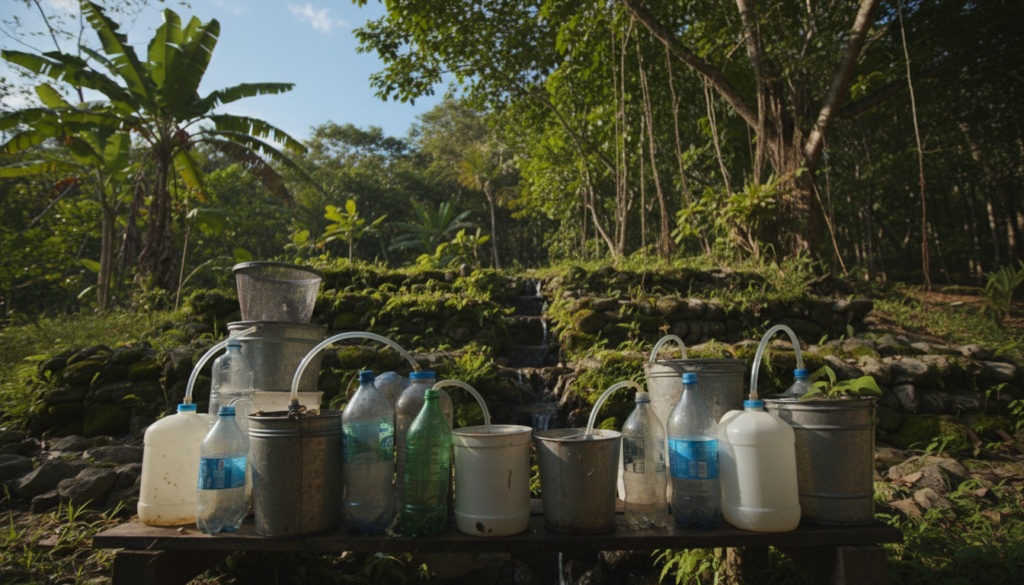
Before electric pumps existed, people moved water using siphons. A garden hose can become your siphon system with almost zero cost. Fill the hose with water, pinch one end, place it in your source tank, and run the other end to where you want water to go. Once started, gravity keeps water flowing as long as the outflow end stays lower than the source.
Siphons work best for moving water between containers when elevation changes are small. They require no power and work in emergencies when electricity is unavailable. This method proves reliable for many homesteading situations.
Pump Solutions When Gravity Is Not Enough
Not every property has elevation advantages. When your storage tank sits level with or below your usage area, pumps become necessary for effective water delivery. Manual hand pumps offer the simplest mechanical solution.
- Hand pumps cost between $30 and $100
- No electricity required
- Perfect for emergencies
- Allow filling watering cans and buckets
- Reliable for decades with minimal maintenance
Electric pumps work better for larger-scale off-grid water collection needs. Twelve-volt DC pumps designed for RVs and boats can run from car batteries or solar panels. A basic solar pump setup costs $300 to $500 and includes a solar panel, deep cycle battery, charge controller, and pump.
| System Component | Purpose | Typical Cost | Power Source |
|---|---|---|---|
| Solar Panel (50-100W) | Generates electricity from sunlight | $100-$200 | Solar energy |
| 12-Volt Deep Cycle Battery | Stores solar energy for use | $100-$150 | Stored solar power |
| Charge Controller | Regulates power flow to battery | $30-$50 | Manages solar input |
| 12-Volt Water Pump | Moves water through system | $80-$150 | Battery power |
| Fine Sediment Filter (3-5 Micron) | Prevents pump clogging | $20-$40 | N/A |
Protecting Your Pump Investment With Proper Filtration
Fine filters save pumps from damage caused by sediment and debris. A 3 to 5 micron filter catches particles that would clog irrigation emitters and damage pump components. Install filters before your pump to catch problems early.
DIY filter housings can be built using PVC pipe and layered coffee filters. Commercial sediment filter cartridges work better for permanent installations. Either way, replacing filters regularly keeps your system running smoothly.
Building off-grid water collection systems using gravity and pumps puts water management entirely in your hands. Start simple with gravity-fed setups using elevated storage. Upgrade to manual pumps as needed. Solar-powered pump systems offer the ultimate independence from municipal water supplies and power grids. These proven methods combining primitive water gathering skills with accessible technology create reliable water delivery for homes, gardens, and emergency preparedness.
Conclusion
You now know how to make your own water collection system using items from home. You can figure out how much water your roof can hold and set up filters with everyday stuff. Each step gets you closer to not needing city water.
Rainwater is great for more than just emergencies. It’s free, soft, and good for plants. You just need to filter it a bit before using it on your lawn or plants. Plus, it helps keep your property clean and saves you money on water bills.
Starting your water collection project is easy and cheap. Just use a 50-gallon trash can and a downspout. You can start small and grow your system as you learn more. First, measure how much water you can collect. Then, set up gutters and containers. Next, add filters and diverters for better water quality. Lastly, pick a way to get the water to where you need it.
These simple steps help you control your water and feel secure in emergencies. They’re perfect for when you face water problems, want to be ready for disasters, or want to use less city water. Start your water collection project today with what you have. Your future self will thank you for being prepared and self-sufficient.
FAQ
How much water can I realistically collect from my home’s roof during a rainfall event?
The amount depends on your roof size and how much rain falls. A 1,000 square foot roof can collect about 600 gallons from just one inch of rain. For a typical American home with a 1,500 square foot roof, you could collect thousands of gallons each year.
Use this formula: roof area (sq ft) × rainfall (inches) × 0.623 = gallons collected. For example, a 200 square foot shed collects about 125 gallons per inch of rain. A 2,500 square foot roof collects around 1,550 gallons per inch.
Can I use my asphalt shingle roof for emergency water gathering, or do I need a metal roof?
Asphalt shingle roofs work well for collecting water. While metal roofs are better because they shed water quickly, asphalt roofs are fine for most homes. Asphalt roofs are best for non-drinking water uses like watering plants or cleaning.
What’s the simplest way to set up a makeshift rain catchment system without buying expensive equipment?
You don’t need special equipment. A basic system needs a roof, gutters, and storage containers. Use 5-inch residential gutters, which cost
FAQ
How much water can I realistically collect from my home’s roof during a rainfall event?
The amount depends on your roof size and how much rain falls. A 1,000 square foot roof can collect about 600 gallons from just one inch of rain. For a typical American home with a 1,500 square foot roof, you could collect thousands of gallons each year.
Use this formula: roof area (sq ft) × rainfall (inches) × 0.623 = gallons collected. For example, a 200 square foot shed collects about 125 gallons per inch of rain. A 2,500 square foot roof collects around 1,550 gallons per inch.
Can I use my asphalt shingle roof for emergency water gathering, or do I need a metal roof?
Asphalt shingle roofs work well for collecting water. While metal roofs are better because they shed water quickly, asphalt roofs are fine for most homes. Asphalt roofs are best for non-drinking water uses like watering plants or cleaning.
What’s the simplest way to set up a makeshift rain catchment system without buying expensive equipment?
You don’t need special equipment. A basic system needs a roof, gutters, and storage containers. Use 5-inch residential gutters, which cost $1-3 per foot.
Improvise gutters with PVC pipes or vinyl tubing. Connect downspouts to food-grade containers like 55-gallon barrels. Use the rule of thumb for downspout sizing: 1 square inch for every 100 square feet of roof.
How do I know if a container is safe for storing drinking water?
Look for food-grade plastic marked with recycling codes 1, 2, 4, or 5. Never use containers that held chemicals. Opaque containers prevent algae growth.
A 55-gallon barrel weighs over 440 pounds when full. Ensure it’s on a sturdy base. Ask restaurants or food processors about free barrels.
Why do I need a first flush diverter, and how difficult is it to build one?
The first water off the roof has the most contaminants. A first flush diverter keeps your water clean. Building one is simple: use a 4-inch PVC pipe with a screw-cap bottom.
The standpipe fills first with contaminated water, then clean water flows to the main tank. Use the 10-gallon per 1,000 square feet per inch of rain rule to determine diverter size.
What materials can I use to make an effective debris filter for my collection system?
Use everyday materials for a good filter. Options include window screen, cheesecloth, or a clean T-shirt. For a more advanced filter, use 1/4-inch hardware cloth, window screen mesh, and landscape fabric.
These filters catch leaves, twigs, and insects, keeping your water clean. The multi-layer approach removes smaller particles.
How do I deliver water from my collection system without electricity or pumps?
Gravity-fed systems work well. Water flows downhill naturally. Elevate your tank 10 feet above your point of use for gentle watering.
Use platforms or hillside terrain for elevation. You can also use siphon systems with garden hoses to move water without pumps.
What are my options if gravity alone can’t provide adequate water pressure?
Start with hand pumps for off-grid situations. For more needs, consider small electric pumps. A basic solar pump setup costs $300-500.
Use fine filters before any pump to prevent damage. These systems work during power outages.
What should I consider regarding gutter installation and slope for proper water flow?
Proper slope is key. Install gutters with a 1/16-inch drop per foot. Use gutter hangers every 3 feet to prevent sagging.
Roof slope affects collection efficiency. Steeper roofs shed water quickly, while flatter roofs may retain more debris. Even small slope improvements help.
Can I create a wilderness water collection system at a temporary camp or during an emergency evacuation?
Yes, the same principles apply. Use tarps, existing structures, or your tent’s rain fly as collection surfaces. You’ll need rope, containers, and a simple cloth filter.
Even a single 50-gallon trash can connected to a downspout is a good start for emergency preparedness.
How do different rainfall amounts in my region affect my water collection?
Rainfall varies by state, affecting collection. A typical American home in a moderate area collects thousands of gallons annually. Areas with more rainfall collect more, while drier areas collect less.
Research your area’s rainfall to understand your collection capabilities. Even small collections add up over time.
What’s the difference between potable and non-potable water from my rain collection system?
Rainwater is naturally soft and pH-neutral, great for non-drinking uses. For drinking water, you need additional treatment like boiling or UV treatment. Use basic filtration for non-potable uses.
Asphalt shingle roofs are best for non-potable uses. Metal roofs are better for drinking water, with proper filtration and treatment.
How much does it cost to set up a basic improvised water collection system?
Starting costs are low. A basic system with one 50-gallon barrel costs $0-100. Guttering adds $30-100, and filters cost nothing to $15.
Many people can start with materials at home. Upgrading to more components might cost $200-500. A complete system with elevation platforms costs $300-800. Solar pump systems are the most expensive option at $300-500.
How do I maintain my improvised water collection system throughout the year?
Regular maintenance keeps your water clean and system working. Clean gutters and downspouts quarterly. Check and replace debris filters monthly or after heavy rain.
Clean the exterior of containers to prevent algae. Inspect containers for cracks or leaks. For first flush diverters, flush accumulated water periodically. In winter, drain systems to prevent ice damage.
What backup systems should I have if my primary water collection fails?
Have redundancy for emergency water gathering. Maintain multiple containers and separate downspouts. Keep manual hand pumps as a backup.
Store commercially bottled water for emergencies. Know alternative water sources like wells or streams. Use portable filtration systems as a backup. In urban areas, identify nearby water sources.
-3 per foot.
Improvise gutters with PVC pipes or vinyl tubing. Connect downspouts to food-grade containers like 55-gallon barrels. Use the rule of thumb for downspout sizing: 1 square inch for every 100 square feet of roof.
How do I know if a container is safe for storing drinking water?
Look for food-grade plastic marked with recycling codes 1, 2, 4, or 5. Never use containers that held chemicals. Opaque containers prevent algae growth.
A 55-gallon barrel weighs over 440 pounds when full. Ensure it’s on a sturdy base. Ask restaurants or food processors about free barrels.
Why do I need a first flush diverter, and how difficult is it to build one?
The first water off the roof has the most contaminants. A first flush diverter keeps your water clean. Building one is simple: use a 4-inch PVC pipe with a screw-cap bottom.
The standpipe fills first with contaminated water, then clean water flows to the main tank. Use the 10-gallon per 1,000 square feet per inch of rain rule to determine diverter size.
What materials can I use to make an effective debris filter for my collection system?
Use everyday materials for a good filter. Options include window screen, cheesecloth, or a clean T-shirt. For a more advanced filter, use 1/4-inch hardware cloth, window screen mesh, and landscape fabric.
These filters catch leaves, twigs, and insects, keeping your water clean. The multi-layer approach removes smaller particles.
How do I deliver water from my collection system without electricity or pumps?
Gravity-fed systems work well. Water flows downhill naturally. Elevate your tank 10 feet above your point of use for gentle watering.
Use platforms or hillside terrain for elevation. You can also use siphon systems with garden hoses to move water without pumps.
What are my options if gravity alone can’t provide adequate water pressure?
Start with hand pumps for off-grid situations. For more needs, consider small electric pumps. A basic solar pump setup costs 0-500.
Use fine filters before any pump to prevent damage. These systems work during power outages.
What should I consider regarding gutter installation and slope for proper water flow?
Proper slope is key. Install gutters with a 1/16-inch drop per foot. Use gutter hangers every 3 feet to prevent sagging.
Roof slope affects collection efficiency. Steeper roofs shed water quickly, while flatter roofs may retain more debris. Even small slope improvements help.
Can I create a wilderness water collection system at a temporary camp or during an emergency evacuation?
Yes, the same principles apply. Use tarps, existing structures, or your tent’s rain fly as collection surfaces. You’ll need rope, containers, and a simple cloth filter.
Even a single 50-gallon trash can connected to a downspout is a good start for emergency preparedness.
How do different rainfall amounts in my region affect my water collection?
Rainfall varies by state, affecting collection. A typical American home in a moderate area collects thousands of gallons annually. Areas with more rainfall collect more, while drier areas collect less.
Research your area’s rainfall to understand your collection capabilities. Even small collections add up over time.
What’s the difference between potable and non-potable water from my rain collection system?
Rainwater is naturally soft and pH-neutral, great for non-drinking uses. For drinking water, you need additional treatment like boiling or UV treatment. Use basic filtration for non-potable uses.
Asphalt shingle roofs are best for non-potable uses. Metal roofs are better for drinking water, with proper filtration and treatment.
How much does it cost to set up a basic improvised water collection system?
Starting costs are low. A basic system with one 50-gallon barrel costs
FAQ
How much water can I realistically collect from my home’s roof during a rainfall event?
The amount depends on your roof size and how much rain falls. A 1,000 square foot roof can collect about 600 gallons from just one inch of rain. For a typical American home with a 1,500 square foot roof, you could collect thousands of gallons each year.
Use this formula: roof area (sq ft) × rainfall (inches) × 0.623 = gallons collected. For example, a 200 square foot shed collects about 125 gallons per inch of rain. A 2,500 square foot roof collects around 1,550 gallons per inch.
Can I use my asphalt shingle roof for emergency water gathering, or do I need a metal roof?
Asphalt shingle roofs work well for collecting water. While metal roofs are better because they shed water quickly, asphalt roofs are fine for most homes. Asphalt roofs are best for non-drinking water uses like watering plants or cleaning.
What’s the simplest way to set up a makeshift rain catchment system without buying expensive equipment?
You don’t need special equipment. A basic system needs a roof, gutters, and storage containers. Use 5-inch residential gutters, which cost $1-3 per foot.
Improvise gutters with PVC pipes or vinyl tubing. Connect downspouts to food-grade containers like 55-gallon barrels. Use the rule of thumb for downspout sizing: 1 square inch for every 100 square feet of roof.
How do I know if a container is safe for storing drinking water?
Look for food-grade plastic marked with recycling codes 1, 2, 4, or 5. Never use containers that held chemicals. Opaque containers prevent algae growth.
A 55-gallon barrel weighs over 440 pounds when full. Ensure it’s on a sturdy base. Ask restaurants or food processors about free barrels.
Why do I need a first flush diverter, and how difficult is it to build one?
The first water off the roof has the most contaminants. A first flush diverter keeps your water clean. Building one is simple: use a 4-inch PVC pipe with a screw-cap bottom.
The standpipe fills first with contaminated water, then clean water flows to the main tank. Use the 10-gallon per 1,000 square feet per inch of rain rule to determine diverter size.
What materials can I use to make an effective debris filter for my collection system?
Use everyday materials for a good filter. Options include window screen, cheesecloth, or a clean T-shirt. For a more advanced filter, use 1/4-inch hardware cloth, window screen mesh, and landscape fabric.
These filters catch leaves, twigs, and insects, keeping your water clean. The multi-layer approach removes smaller particles.
How do I deliver water from my collection system without electricity or pumps?
Gravity-fed systems work well. Water flows downhill naturally. Elevate your tank 10 feet above your point of use for gentle watering.
Use platforms or hillside terrain for elevation. You can also use siphon systems with garden hoses to move water without pumps.
What are my options if gravity alone can’t provide adequate water pressure?
Start with hand pumps for off-grid situations. For more needs, consider small electric pumps. A basic solar pump setup costs $300-500.
Use fine filters before any pump to prevent damage. These systems work during power outages.
What should I consider regarding gutter installation and slope for proper water flow?
Proper slope is key. Install gutters with a 1/16-inch drop per foot. Use gutter hangers every 3 feet to prevent sagging.
Roof slope affects collection efficiency. Steeper roofs shed water quickly, while flatter roofs may retain more debris. Even small slope improvements help.
Can I create a wilderness water collection system at a temporary camp or during an emergency evacuation?
Yes, the same principles apply. Use tarps, existing structures, or your tent’s rain fly as collection surfaces. You’ll need rope, containers, and a simple cloth filter.
Even a single 50-gallon trash can connected to a downspout is a good start for emergency preparedness.
How do different rainfall amounts in my region affect my water collection?
Rainfall varies by state, affecting collection. A typical American home in a moderate area collects thousands of gallons annually. Areas with more rainfall collect more, while drier areas collect less.
Research your area’s rainfall to understand your collection capabilities. Even small collections add up over time.
What’s the difference between potable and non-potable water from my rain collection system?
Rainwater is naturally soft and pH-neutral, great for non-drinking uses. For drinking water, you need additional treatment like boiling or UV treatment. Use basic filtration for non-potable uses.
Asphalt shingle roofs are best for non-potable uses. Metal roofs are better for drinking water, with proper filtration and treatment.
How much does it cost to set up a basic improvised water collection system?
Starting costs are low. A basic system with one 50-gallon barrel costs $0-100. Guttering adds $30-100, and filters cost nothing to $15.
Many people can start with materials at home. Upgrading to more components might cost $200-500. A complete system with elevation platforms costs $300-800. Solar pump systems are the most expensive option at $300-500.
How do I maintain my improvised water collection system throughout the year?
Regular maintenance keeps your water clean and system working. Clean gutters and downspouts quarterly. Check and replace debris filters monthly or after heavy rain.
Clean the exterior of containers to prevent algae. Inspect containers for cracks or leaks. For first flush diverters, flush accumulated water periodically. In winter, drain systems to prevent ice damage.
What backup systems should I have if my primary water collection fails?
Have redundancy for emergency water gathering. Maintain multiple containers and separate downspouts. Keep manual hand pumps as a backup.
Store commercially bottled water for emergencies. Know alternative water sources like wells or streams. Use portable filtration systems as a backup. In urban areas, identify nearby water sources.
-100. Guttering adds -100, and filters cost nothing to .
Many people can start with materials at home. Upgrading to more components might cost 0-500. A complete system with elevation platforms costs 0-800. Solar pump systems are the most expensive option at 0-500.
How do I maintain my improvised water collection system throughout the year?
Regular maintenance keeps your water clean and system working. Clean gutters and downspouts quarterly. Check and replace debris filters monthly or after heavy rain.
Clean the exterior of containers to prevent algae. Inspect containers for cracks or leaks. For first flush diverters, flush accumulated water periodically. In winter, drain systems to prevent ice damage.
What backup systems should I have if my primary water collection fails?
Have redundancy for emergency water gathering. Maintain multiple containers and separate downspouts. Keep manual hand pumps as a backup.
Store commercially bottled water for emergencies. Know alternative water sources like wells or streams. Use portable filtration systems as a backup. In urban areas, identify nearby water sources.