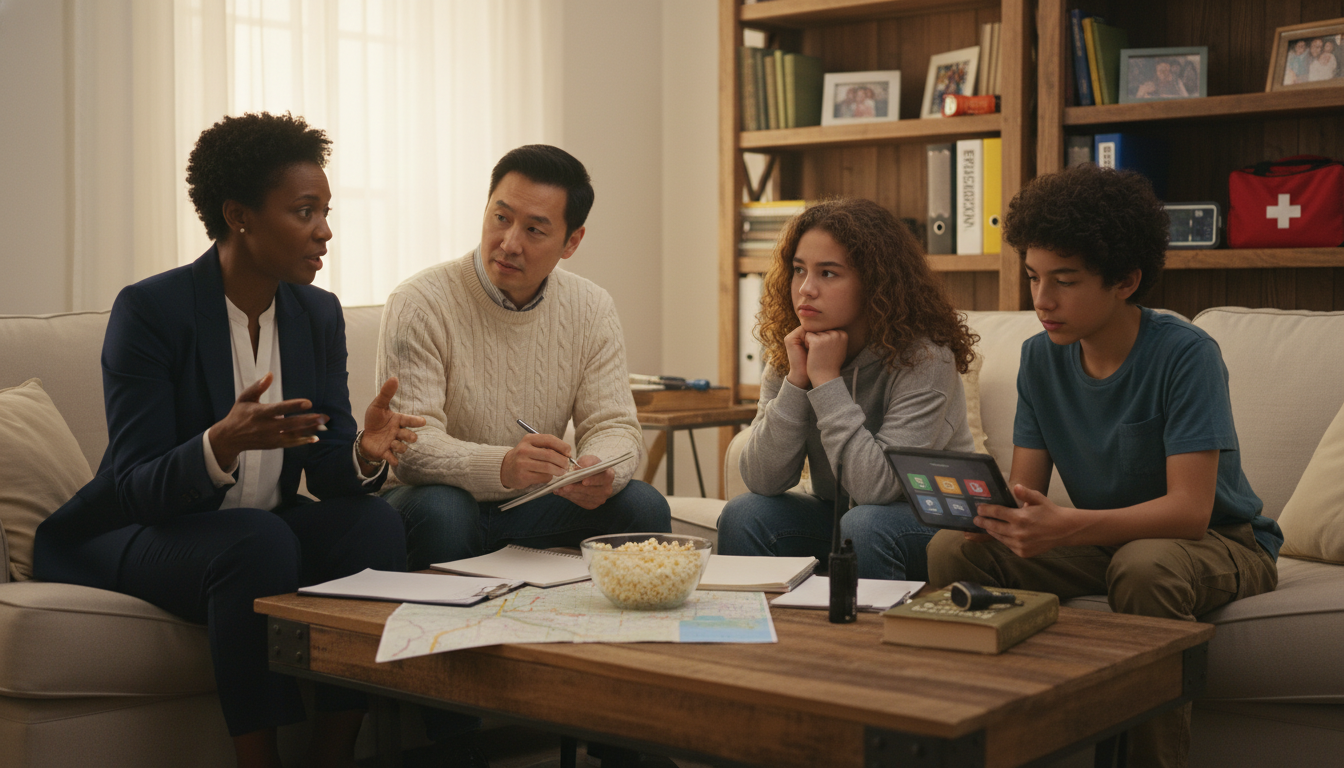
You want your family to be ready for emergencies. But when you bring it up, they just roll their eyes. This is a common problem many families face.
Studies show that only about half of American households have emergency plans. This means millions of families are in the same boat as you. But you’re taking steps to change that.
Talking about emergency preparedness doesn’t have to be scary. It’s not about being paranoid or obsessed with bad scenarios. It’s about showing you care about your loved ones’ safety.
The hard part is getting skeptical family members to listen. Figuring out how to talk about emergency preparedness without sounding too worried is key. You need the right words, timing, and approach.
This article offers practical tips that real families have found helpful. You’ll learn why your family might resist these talks. You’ll see how to present preparedness as smart planning, not just fear. And you’ll find easy ways to get your family ready without causing stress or fights.
When you talk about emergency preparedness the right way, it can actually bring your family closer together. Your goal is to help your loved ones feel safe. And the good news is, most families come to see the value once they understand it.
Table of Contents
Understanding Why Family Members Resist Emergency Preparedness Conversations
When you talk about emergency plans with family, it might seem like they’re not listening. But, they’re not being stubborn on purpose. They’re dealing with deep-seated thoughts and cultural values that affect how they see disaster planning. Knowing these reasons helps you talk about emergency plans with your family in a kind way, not with anger.
Common Psychological Barriers to Disaster Planning
Family members face mental hurdles when thinking about emergencies. These are normal reactions, not signs of weakness.
- Normalcy bias makes people think disasters won’t happen to them. This false sense of safety stops them from taking action.
- Cognitive dissonance causes discomfort when holding two opposing ideas. For example, believing emergencies are unlikely while watching news about disasters.
- Anxiety avoidance means people avoid thinking about scary scenarios. Imagining crisis situations feels too stressful, so they ignore the topic.
Cultural Values That Shape Crisis Response Attitudes
Research by Daniel Aldrich shows that culture greatly affects how families prepare for disasters. Different communities see emergencies in different ways.
| Cultural Perspective | View of Disaster Preparedness | Impact on Family Planning |
|---|---|---|
| Fatalistic worldview | Disasters are predetermined fate | Reduces motivation for active planning |
| Nature as harmonious | Disasters are rare disruptions | Lowers urgency for emergency planning conversations |
| Self-reliant individualism | Preparedness shows personal responsibility | Encourages active disaster readiness efforts |
| Community-focused approach | Collective survival matters most | Emphasizes family and neighborhood networks |
Some families see emergency planning as wise. Others think it shows lack of faith or invites bad luck. These beliefs affect how open people are to talking about disaster readiness.
The Head-in-the-Sand Approach to Future Threats
Many people avoid talking about emergencies. Instead of planning, they say, “Do what you want, as long as I don’t have to deal with it.” This way, they avoid anxiety but face real dangers later.
This isn’t just one family or culture. People from all walks of life use this strategy to avoid uncomfortable truths. By understanding this, you can make emergency planning talks less scary and more doable for everyone.
How to Talk About Emergency Preparedness Without Causing Conflict
Getting family to care about emergency prep can be tough. The trick is to show, not tell. Instead of scaring them with stats, share how prep helps in everyday life. For example, when the power goes out, show how your prep made things easier.
Start by asking questions, not making statements. Ask “What if the power went out for three days?” instead of saying “We need a generator.” This way, people think for themselves and find solutions.
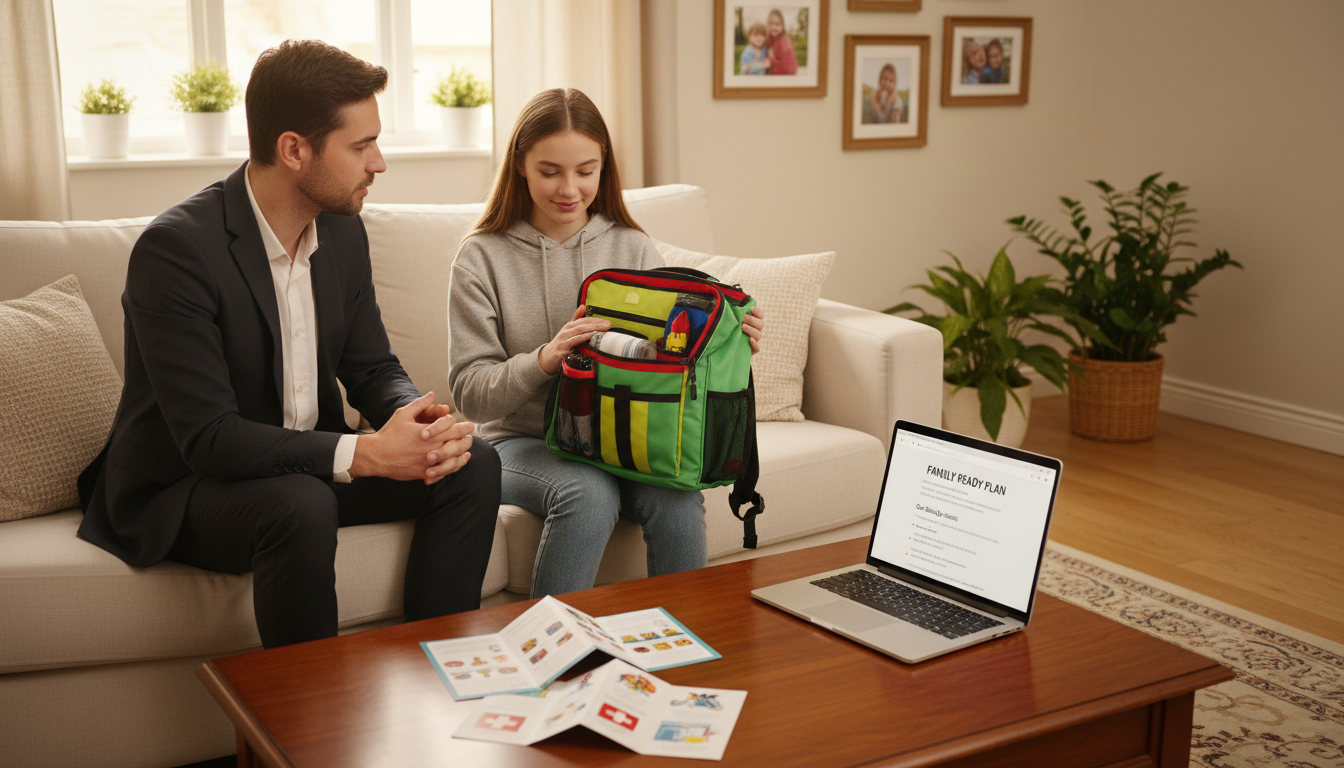
When to talk about prep is key. Bring it up after a weather event or during calm times. Connect it to values like protecting kids and saving money. This makes it more relatable.
Talking to kids about emergencies needs a special touch. For little ones, make it a game or adventure. Teenagers do better with real choices and responsibility in planning.
| Age Group | Conversation Approach | Focus Area | Expected Outcome |
|---|---|---|---|
| Young Children (5-8) | Frame as adventure or game | Simple safety rules and comfort items | Building confidence through play |
| Tweens (9-12) | Explain practical steps they can help with | Age-appropriate responsibilities | Understanding and active participation |
| Teenagers (13+) | Give real agency and decision-making power | Problem-solving and leadership roles | Ownership of family preparedness plans |
| Adults | Focus on practical benefits and shared values | Financial savings and family protection | Voluntary commitment to planning |
Avoid using ultimatums or fear when talking about prep. Don’t say “I told you so” during emergencies. Skip the scary scenarios that make people defensive. These methods push people away.
When talking about sheltering in place, explain the benefits. Discuss comfort features like backup heating and water storage. These details are more relatable than scary scenarios.
- Start with small, visible wins from your own preparedness
- Ask questions that help others discover problems themselves
- Connect preparedness to family values like protection and self-reliance
- Adjust your message based on each person’s concerns
- Be patient and celebrate small progress together
This journey takes time. Be patient and persistent. Small, consistent efforts often succeed where big confrontations fail. Your family’s safety is worth it, and careful communication can open doors.
Building Your Family’s Preparedness Through Small, Practical Steps
Starting small is the key to winning over skeptical family members. You don’t have to convince everyone at once. Focus on small steps you can take today. These steps show their value quickly and can save money too.
When your family sees these benefits, they’ll be more open to bigger plans. A family emergency communication plan becomes more appealing.
These strategies work whether your spouse agrees or not. You build security gradually, fitting your budget and lifestyle.
Starting With Your Purse and Vehicle Emergency Kits
Your everyday bag and car are your first defense. Keep $100 in small bills in your purse for emergencies. Also, keep at least a half-tank of gas in your vehicle. This prevents being stranded during power outages.
Build a mobile emergency kit for your vehicle trunk:
- First aid kit with bandages and pain relievers
- Change of clothes and sturdy hiking boots
- Bottled water and non-perishable snacks
- Blankets or emergency survival blanket
- Basic tools and jumper cables
- Flashlight with extra batteries
A well-prepared purse and car seem like common sense. They won’t raise questions from skeptical family members.
Financial Preparedness Strategies That Save Money
Showing how planning saves money makes emergency preparedness easier. Use these budget-friendly approaches:
| Strategy | How It Works | Monthly Impact |
|---|---|---|
| Cash-Back Savings | Request $5-10 cash back with each debit card purchase | Build $100-200 in emergency funds invisibly |
| Coupon Stockpiling | Use coupons to buy free or deeply discounted items | Acquire supplies like toothpaste and cereal for pennies |
| 52-Week Challenge | Save increasing amounts weekly ($1 week one, $2 week two, etc.) | Accumulate $1,378 in one year painlessly |
| Silver Coin Investment | Buy one or two coins monthly instead of traditional savings | Build tangible assets protected from market crashes |
These approaches appeal to budget-conscious family members. They show financial wisdom. Who doesn’t love free toothpaste and affordable cereal?
Food Storage Solutions That Don’t Raise Red Flags
Building food supplies doesn’t require a bunker mentality. Integrate storage into your normal routine:
- Buy an extra bag of beans and rice each grocery trip
- Visit pick-your-own farms with kids and preserve the harvest through canning or dehydrating
- Create unique canned goods unavailable in stores (mango salsa, mint jelly)
- Purchase children’s clothing one size up and store for future use
- Shop year-round for holiday items during sales
These activities serve everyday purposes while building emergency reserves. Your family gets fresh outdoor time and homemade goods. You gain food security without anyone noticing a “prepper” mindset.
One essential element costs absolutely nothing: establishing a family emergency communication plan. Decide how members will contact each other during crises. Share phone numbers, meeting locations, and out-of-state contact points. This foundation makes all other preparedness efforts more effective because everyone knows the plan.
Start with what you control personally. Prove that preparedness works. Your family will follow naturally.
The Power of Social Connections in Emergency Survival
When disaster hits, many think government aid will save the day. But Purdue University research shows social ties are key. Neighbors and family members become the lifeline in crises.
This new view helps when talking about disaster readiness. It shows that building strong networks is more important than stockpiling supplies.
Why Neighbors Matter More Than Government Aid
Emergency responders can’t reach everyone fast. Major disasters show that ambulances and aid often arrive too late. Government help can clear water and restore power, but it can’t rebuild community bonds.
In the 2004 Indian Ocean tsunami, the socially connected survived best. They had access to help and resources. In Kobe, Japan, knowing where neighbors slept saved lives during an earthquake.
During the 2011 Japan earthquake, Michinori Watanabe saved his paralyzed father. He ran through the neighborhood for a generator when no services arrived for days.
Community communication strategies work best when neighbors know each other. After Hurricane Katrina, a neighbor’s warning saved a family. This personal connection was key.
Building these bonds takes time, but the benefits are huge. Families involved in local events create networks that activate in crises.
Leveraging Family Networks During Disasters
Extended family networks offer resources beyond individual prep. Regular discussions about disaster readiness strengthen family plans. This collective strength is invaluable.
Strong family networks include:
- Clear communication plans that don’t rely on cell service
- Designated meeting places if family members scatter
- Shared resources stored at multiple family homes
- Regular check-ins during non-crisis times
- Roles assigned based on each person’s skills and abilities
The Mary Queen of Vietnam community in New Orleans recovered quickly after Katrina. Their tight bonds supported each other in cleanup and rebuilding. This cultural strength was more effective than government programs.
Strengthening family disaster networks is practical. Host family gatherings, teach younger family members about emergency plans, and stay in touch with relatives. These relationships build mutual aid systems.
Neighborhood associations, block parties, and community groups serve the same purpose. Joining these activities feels like building friendships. The Japanese government funds neighborhood block parties to build resilient communities.
When skeptical family members hear about strengthening connections, they often respond positively. This approach makes emergency planning feel warm and social, not paranoid or isolating.
Conclusion
Getting your family to agree on emergency plans takes time and patience. Only 44% of households have plans, so you’re not alone. A woman’s story shows how to win over a skeptical husband.
She started small, with her purse, car, and basic supplies. She didn’t push hard. Instead, she let the benefits show themselves. When small emergencies came up, her family saw the value.
Her husband’s doubts turned to pride. He even wondered why others didn’t have bottled water in their cars. The key is to take small steps and show the benefits.
Start with what you control and show the benefits through action. Emergency planning works best when you lead by example. Practice drills, keep supplies ready, and learn first aid and CPR. Use resources to make a clear plan.
These conversations are important for your family’s safety. Even if some aren’t convinced, you can protect them. Learn from real strategies and build resilience. Being ready for small emergencies is the best proof.
You now have the tools to handle these conversations. Take it one step at a time. Build your family’s resilience. Change is possible, and you have what it takes.
FAQ
What is normalcy bias and how does it affect my family’s willingness to prepare for emergencies?
Normalcy bias makes people think disasters won’t happen to them. It’s a big reason why families don’t prepare for emergencies. When family members show normalcy bias, they think disasters are unlikely and they can handle them easily.
Understanding this bias helps you talk to your family with kindness. It’s not that they’re being stubborn. They’re just following a common human thought pattern. Instead of trying to convince them, show them how preparedness helps in everyday life.
How do cultural values influence my family’s attitudes toward disaster readiness?
Cultural background shapes how people view emergency planning. Some cultures value personal responsibility, making preparedness seem smart. Others might see it as showing lack of faith.
When talking to family members from different cultures, respect their values. Emphasize community and mutual aid. Focus on protecting children, a value most cultures share.
What should I do if my spouse actively avoids thinking about emergency scenarios?
Some people avoid thinking about scary scenarios because it’s too uncomfortable. Pushing them harder can make them more defensive. Instead, accept that they might not want to talk about it.
Start preparing on your own and show them the benefits. Mention how your preparations helped in small ways. Seeing these benefits can change their mind over time.
How can I talk to my kids about emergencies without creating fear or anxiety?
Talk to kids about emergencies in a way that builds confidence, not fear. For younger kids, make it an adventure or game. For teenagers, give them a role in planning.
Don’t scare them with graphic descriptions. Focus on solving problems together. Role-playing and drills can help them feel prepared and confident.
What’s the best way to bring up emergency preparedness without triggering defensiveness?
Ask questions instead of making statements. Ask what you would do in an emergency. This encourages problem-solving and avoids resistance.
Frame preparedness in terms of shared values. Timing is important—avoid when family members are stressed or defensive. Show them the benefits by preparing for small emergencies yourself.
Can emergency preparedness actually save my family money?
Yes, it can. Many emergency preparedness strategies also save money. Buying groceries on sale and stockpiling non-perishables saves money and builds food security.
Using cash-back rewards for an emergency fund is easy and doesn’t require lifestyle changes. These strategies show that being prepared doesn’t have to cost extra.
What should I keep in my purse and car for emergency preparedness when my spouse isn’t on board?
You can start preparing on your own. Keep 0 in small bills, a first aid kit, and important documents copies in your purse. Your car should have bottled water, a blanket, and basic tools.
These supplies prove their value in small ways. Each time they help, you’re building a case for broader family preparedness.
How do I store food for emergencies without my family thinking I’m a “prepper”?
Store food in a way that doesn’t raise suspicions. Buy extra beans and rice gradually. Try home canning and preserve unique items like mango salsa.
Visit pick-your-own farms with kids and can or freeze the harvest. Frame deliveries of freeze-dried food as “recipes I found from a friend.” This approach builds supplies without announcing your emergency plans.
Why do neighbors matter more than government aid during actual emergencies?
Government services can’t reach everyone quickly enough during emergencies. The first 72 hours are usually managed by the community. Research shows that social connections predict survival better than wealth or government resources.
In disasters, knowing your neighbors can be a lifesaver. They provide resources and support that no amount of stockpiling can match.
How do I build community connections that actually help during emergencies?
Start with practical community engagement. Join neighborhood associations and attend community events. These activities build relationships that matter during crises.
The Japanese government funds neighborhood block parties because they improve disaster outcomes. Frame preparedness as building community connections, not just stockpiling supplies.
How long does it typically take to bring a skeptical spouse or family member on board with emergency preparedness?
It can take one to two years for a resistant spouse to become supportive. But don’t give up. Focus on small, concrete ways to show the benefits of preparedness.
Every small success builds a case for emergency planning. Persistence and patience are key. You can protect your family even without complete buy-in.
Can I use these emergency preparedness communication strategies at work?
Absolutely. The same strategies work for workplace emergency planning discussions. Understand why people resist, communicate without defensiveness, and show the benefits through action.
Emphasize how preparedness protects colleagues and maintains business continuity. Use the “show, don’t tell” approach by maintaining personal emergency supplies and participating in drills.
What’s more important—individual emergency supplies or building community connections?
Both are important, but research suggests community connections matter more during disasters. The ideal approach combines personal preparedness with strong community bonds.
Start with personal preparedness to build your confidence. Then, invest in community connections. This way, you’re more useful to your community during crises.
How do I approach talking about emergency preparedness if I’m a single parent?
Single parents should focus on personal preparedness and community connections. You can’t share the responsibility with a spouse. Start with what you control, like your purse and vehicle supplies.
Invest in community relationships and involve your children in preparedness activities. This builds family security and confidence. Community connections are your greatest resource during emergencies.
What’s the difference between healthy emergency preparedness and anxiety-driven prepping?
Healthy preparedness is practical, proportional, and life-enhancing. It involves reasonable supplies and open communication. It doesn’t create financial stress or conflict.
Anxiety-driven prepping is excessive, secretive, and financially burdensome. It serves no everyday purpose. Focus on building a case through quiet demonstration, not through arguments.
How do I know if my family’s emergency planning conversation approach is working?
Look for small signs of progress. If family members ask practical questions or mention using your preparedness, it’s working. Small successes are important.
Watch for their own preparedness actions. If they start to help or mention supplies, it’s a sign of changing attitudes. Be patient and show them the benefits through your actions.
What role does family emergency communication plan play in emergency preparedness discussions?
A communication plan is less threatening than other preparedness discussions. It focuses on information and connection, not supplies. Create a simple plan that includes how to contact each other and where to meet.
This plan costs nothing and provides immense value during emergencies. It can help bring reluctant family members into broader emergency planning conversations.
How do I handle the “I told you so” temptation when my preparedness actually helps?
Resist the urge to say “I told you so.” Instead, mention it casually and factually. Let family members draw their own conclusions about the value of being prepared.
Being patient and showing them the benefits through your actions is more important than being right. This approach builds trust and confidence in your preparedness efforts.