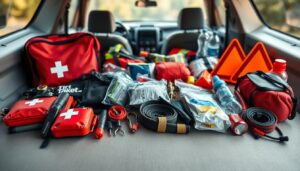
In an emergency, every second is key. A good emergency gear storage plan can save lives. It makes sure you can leave quickly.
A messy storage system can cause confusion. This makes it hard to find what you need fast. But, a well-organized system keeps your emergency gear ready.
Experts, like “The Survival Mom,” say making a checklist is important. They also suggest organizing your emergency supplies. For more tips, check out this guide on making a simple emergency kit.
Key Takeaways
- Store emergency supplies in a reachable location near an exit.
- Use labeled totes for quick loading during evacuation.
- Keep a grab-and-go bag ready with essentials.
- Store copies of important documents in a fireproof bag or lock box.
- Position the go-bag and a portable kit near the door or in the car.
Table of Contents
The Critical Importance of Emergency Preparedness
In an emergency, every second is key. A good emergency storage system can save lives. It’s vital for safety and less damage during unexpected events.
Why Quick Access Matters in Emergencies
Fast access to emergency gear is very important. Rapid retrieval of essential supplies helps people act quickly. This can save lives and lessen the emergency’s impact.
The Cost of Disorganization During a Crisis
Disorganization means slower access to important supplies. This makes things worse. It can put lives and property at greater risk.
Statistics on Emergency Response Times
Quick access to emergency supplies is key. For example, fire emergencies have a 5-7 minute average response time. Here are some average response times for different emergencies:
| Emergency Type | Average Response Time |
|---|---|
| Fire | 5-7 minutes |
| Medical | 3-5 minutes |
| Natural Disaster | varies |
Having quick access gear storage and emergency preparedness gear organization is very important. It can make a big difference in emergencies.
Assessing Your Emergency Needs
To be truly prepared, it’s key to check your emergency needs. This step is the base of a strong emergency plan. It makes sure you’re ready for different situations.
Common Types of Emergencies to Prepare For
Emergencies can be natural, like hurricanes and earthquakes, or man-made, like power outages. Knowing the emergencies likely in your area is very important.
- Natural disasters (e.g., floods, wildfires, tornadoes)
- Power outages and utility disruptions
- Medical emergencies
- Evacuations due to various causes
Creating a Personalized Emergency Plan
A personalized emergency plan fits your unique situation. It considers your location, family needs, and possible dangers. Find safe zones, escape routes, and ways to communicate as part of your plan.
- Look at your environment and possible dangers
- Find important emergency contacts
- Plan for different situations, like evacuation routes
Identifying Essential Gear for Different Scenarios
The gear you need changes a lot based on where you live.
Urban Emergency Essentials
- Portable water purification systems
- Compact first aid kits
- Multi-tools or pocket knives
Rural Emergency Considerations
- More food and water because of possible isolation
- Stuff for alternative heating or lighting
- Tools for being self-sufficient, like generators or farming gear
By checking your emergency needs and getting ready, you can be more resilient.
Principles of How to Store Gear for Fast Emergency Access
Being ready for emergencies means you can get to your gear fast. It’s key to store emergency supplies where they’re easy to find but safe from harm.
The Accessibility-Protection Balance
It’s important to find a balance. You want your emergency gear to be easy to get to but also safe from damage or theft. Use storage that’s both secure and simple to open.
Frequency of Use Organization Method
Organize your emergency gear by how often you use it. This way, the most important items are easy to find. Sort your supplies into levels based on how urgent they are and how often you need them.
Visual Organization Systems
Use clear labels and colors to organize your gear. This makes it quicker to find what you need. It helps you spot and grab the right supplies fast.
The 10-Second Rule for Critical Items
The 10-Second Rule says important items should be ready in 10 seconds. This rule means keeping vital supplies in a spot you can reach fast. Like in an emergency kit or near a door.
Following these tips helps you store your emergency gear right. This makes it easier to get to what you need quickly. It helps you respond better in emergencies.
Categorizing Your Emergency Supplies
Organizing emergency gear into categories makes it easier to find what you need. This way, you can quickly get to your supplies when emergencies happen.
First Aid and Medical Supplies
First aid kits should have bandages, antiseptic wipes, pain relievers, and any needed prescription meds. It’s key to check these items’ expiration dates often. This makes sure they’re good to use.
Food and Water
It’s important to have non-perishable food and enough clean water. Aim for at least one gallon of water per person per day. Also, think about getting a water purification system or filters.
Tools and Equipment
Basic tools like multi-tools, flashlights, and batteries are very useful in emergencies. Make sure everyone in your family knows how to use them.
Communication Devices
Having reliable ways to communicate is key. This includes cell phones with chargers and backup power. Also, think about having two-way radios or other ways to talk.
| Category | Essential Items |
|---|---|
| First Aid and Medical Supplies | Bandages, antiseptic wipes, pain relievers, prescription medications |
| Food and Water | Non-perishable food, clean water, water purification systems |
| Tools and Equipment | Multi-tools, flashlights, batteries |
| Communication Devices | Cell phones, chargers, backup power sources, two-way radios |
By sorting emergency supplies into these categories and keeping them up to date, you can make sure you have easy access to emergency gear. This leads to efficient emergency gear organization.
Storage Solutions for Quick Retrieval
Organizing emergency supplies for fast access is key. In emergencies, every second matters. The right storage can be a lifesaver.
Clear Containers and Labeling Systems
Clear containers let you see what’s inside. A good labeling system helps you find things fast. This combo works well for many emergency supplies.
Modular Storage Options
Modular storage is flexible and can be changed. It’s great for small spaces or when gear needs change.
Grab-and-Go Bags and Kits
Grab-and-go bags have everything you need for emergencies. They’re perfect for families or anyone needing to be ready for anything.
Wall-Mounted and Open Storage
Wall-mounted storage keeps gear organized and out of the way. Open bins or baskets work well for big items.
Vacuum-Sealed Storage for Space Efficiency
Vacuum-sealed storage saves space. It’s great for clothes, bedding, or other fabrics.
Waterproof Storage Considerations
Use waterproofing with vacuum-sealed storage. This keeps your gear dry. Use waterproof bags or containers inside.
Strategic Placement Throughout Your Home
Putting emergency supplies in key spots around your home helps a lot. It makes sure you can get to what you need fast when trouble hits. This way, you’re ready to act quickly.
Primary Emergency Station
Choose a main spot for emergency supplies, like the kitchen or living room. Make sure it’s easy for everyone to get to. Keep things like first aid kits, flashlights, and important phone numbers there.
Secondary Access Points
Also, set up extra spots for supplies in places like bedrooms or bathrooms. These should have things like more first aid kits or blankets. They help meet needs in different parts of the house.

Vehicle Emergency Kit Storage
Don’t forget about your car. Keep a kit there with things like jumper cables, a spare tire, and basic first aid. It’s a key resource when you’re out and about.
Workplace Considerations
If you can, have emergency supplies at work too. A desk drawer with basic first aid or a bigger kit in a special area is a good idea.
Outdoor and Garage Storage Options
For big or not-so-often-used items, think about the garage or sheds. Make sure they’re safe, dry, and easy to get to when you need them.
Using these smart storage ideas makes your home more ready for emergencies. You’ll be able to respond fast and well.
Organizing Gear by Emergency Type
When emergencies happen, having gear ready by emergency type is key. Each emergency needs different gear. Quick access to the right gear can greatly improve outcomes.
Natural Disaster Specific Storage
Natural disasters like hurricanes, earthquakes, and floods need special gear. Organizing supplies for each disaster boosts preparedness.
Hurricane and Flood Preparedness
For hurricanes and floods, waterproof containers and supplies are must-haves. Keep these items in easy-to-reach spots.
Earthquake Readiness
Earthquake prep means securing heavy items and having an evacuation plan. Store sturdy shoes, flashlights, and first aid kits for quick grabs.
Fire Emergency Access
In a fire, fast access to fire extinguishers and exit plans is key. Regular drills help everyone know what to do.
Power Outage Preparations
For power outages, keep flashlights, batteries, and backup power sources ready. Think about solar-powered lights or portable generators.
Medical Emergency Access
Medical emergencies need quick access to first aid kits and medications. Make sure family knows where these are.
Evacuation Readiness
For evacuations, a grab-and-go bag with essentials is vital. Regularly check and update these bags.
Organizing gear by emergency type boosts response speed. This can save lives and time during crises.
Technology and Tools for Emergency Organization
The right technology can make your emergency gear storage solutions better. It makes it easier to find what you need fast.
Adding tech to your emergency plan helps a lot. It makes organizing and getting your gear quicker. Apps for managing your supplies are a big help.
Inventory Management Apps
Apps let you list and keep track of your emergency stuff. They help you see what you have and what you need to get. They also remind you when things expire.
Smart Storage Solutions
Smart storage, like containers with sensors, is another great tool. It works with your apps to give you a full view of your supplies.
QR Codes and Digital Documentation
QR codes and digital files make getting to important info easy. They keep your documents safe and ready when you need them.
| Technology | Benefits |
|---|---|
| Inventory Management Apps | Tracks supplies, expiration dates, and sends notifications |
| Smart Storage Solutions | Monitors inventory levels, integrates with inventory apps |
| QR Codes and Digital Documentation | Provides easy access to critical information |
Emergency Alert Systems Integration
Linking your emergency plan with alert systems is smart. It makes sure you get alerts fast, helping you act quickly.
Backup Power for Electronic Organization Tools
Having a backup power source is key. It keeps your tools working when the power goes out. Use portable chargers or solar chargers.
Using these tech tools makes your easy access emergency gear storage better. It helps you get ready for emergencies faster.
Maintenance and Rotation Schedules
To keep your emergency supplies ready, you need a maintenance and rotation plan. This plan includes several important steps. It helps keep your emergency gear in good shape and easy to find.
Expiration Date Tracking
Tracking expiration dates is key for keeping your supplies fresh. This is very important for food, water, and medical items. By checking these dates often and replacing expired items, you make sure your supplies are good to use. For tips on managing emergency food, check out emergency food rotation.
Seasonal Gear Updates
Seasons change, and so do the emergencies you might face. It’s important to update your emergency gear with the seasons. Make sure you have the right clothes and tools for any weather.
Regular Drills and Access Testing
Doing drills and testing how fast you can get to your emergency supplies is vital. It helps you and your family know how to quickly find what you need. It also shows if there are any problems with how you store your supplies.
Creating a Maintenance Calendar
A maintenance calendar helps you remember when to check and update your emergency supplies. By setting regular check-ups, you keep your gear in top shape. This way, you’re always ready for emergencies.
Replacing Used Items Immediately
After using any emergency supplies, you should replace them right away. This makes sure you always have enough and are ready for the next emergency.
By following these maintenance and rotation tips, you keep your emergency gear organized and ready. This boosts your preparedness and gives you peace of mind. You’ll know you’re ready for any emergency.
Special Considerations for Families and Vulnerable Individuals
Being ready for emergencies is more than just having supplies. It’s about thinking carefully, even more so for families with special needs. This includes kids, older adults, people with disabilities, and pets.
Child-Accessible vs. Child-Proof Storage
It’s important to find a balance when storing emergency supplies. They should be easy for adults to get but hard for kids to reach. Use child-proof locks or high shelves to keep harmful items safe from little hands.
Accommodations for Elderly or Disabled Family Members
Emergency plans for families with older or disabled members need special thought. This might mean storing important medical gear where it’s easy to find. Make sure everyone knows how to use it.
Pet Emergency Supply Organization
Pets are part of the family and need to be included in emergency plans. Keep their food, water, and medicine in a special spot. The CDC’s emergency kit checklist can help with a pet emergency kit.
Communal Living and Apartment Considerations
If you live in a shared space or apartment, knowing the building’s emergency plans is key. Find safe ways out and pick a meeting spot outside.
Teaching Family Members About Your Storage System
It’s important to teach all family members how to use emergency supplies. Regular drills help everyone know what to do in an emergency.

Conclusion: Being Prepared When Seconds Count
Being ready for emergencies is key. Quick access to important gear can greatly improve response times and results. It’s important to have quick access gear storage for essential supplies.
Using strategies like sorting emergency supplies and choosing modular storage helps a lot. It makes it easier to find what you need fast. Organizing gear for quick retrieval means more than just storing things. It’s about making them easy to get to.
Being prepared is very important. Emergencies can happen anytime. Having a good storage system can mean the difference between a good response and a bad one. By following these tips, you can be ready when it matters most.
FAQ
What is the most important factor in storing emergency gear?
The most important thing is to have a good emergency storage system. This system should let you quickly find what you need.
How often should I check my emergency supplies?
You should check your emergency supplies every 6 months. This makes sure they are good to use and not expired.
What are some common types of emergencies that I should prepare for?
You should prepare for natural disasters like earthquakes, hurricanes, and floods. Also, be ready for power outages, medical emergencies, and evacuations.
How can I ensure that my emergency gear is easily accessible?
Use clear containers and labeling systems. Also, choose modular storage options. This makes your emergency gear easy to find and see.
What are some special considerations for storing emergency gear for families with children or elderly individuals?
Think about using storage that kids can’t get into but adults can. Also, make sure elderly or disabled family members can easily get to what they need.
How can I organize my emergency supplies for quick retrieval?
Group your emergency supplies by type, like first aid, food and water, and tools. Use grab-and-go bags and kits to help you find what you need fast.
What are some technology tools that can help with emergency organization?
Use apps for inventory management, smart storage solutions, and QR codes. These tools help you keep track of your emergency supplies and make them easy to find.
How can I maintain my emergency gear and ensure it remains effective?
Make a maintenance calendar and track expiration dates. Replace any used items right away. This keeps your emergency gear working well.
What are some strategic locations to store emergency supplies throughout my home?
Store emergency supplies in a main emergency station and in other places you can reach. Also, keep some in your vehicle, at work, and outside.
How can I prepare for different types of emergencies, such as natural disasters or power outages?
Organize your emergency gear by the type of emergency. Think about what you need for each situation. This includes special storage for natural disasters or power outages.