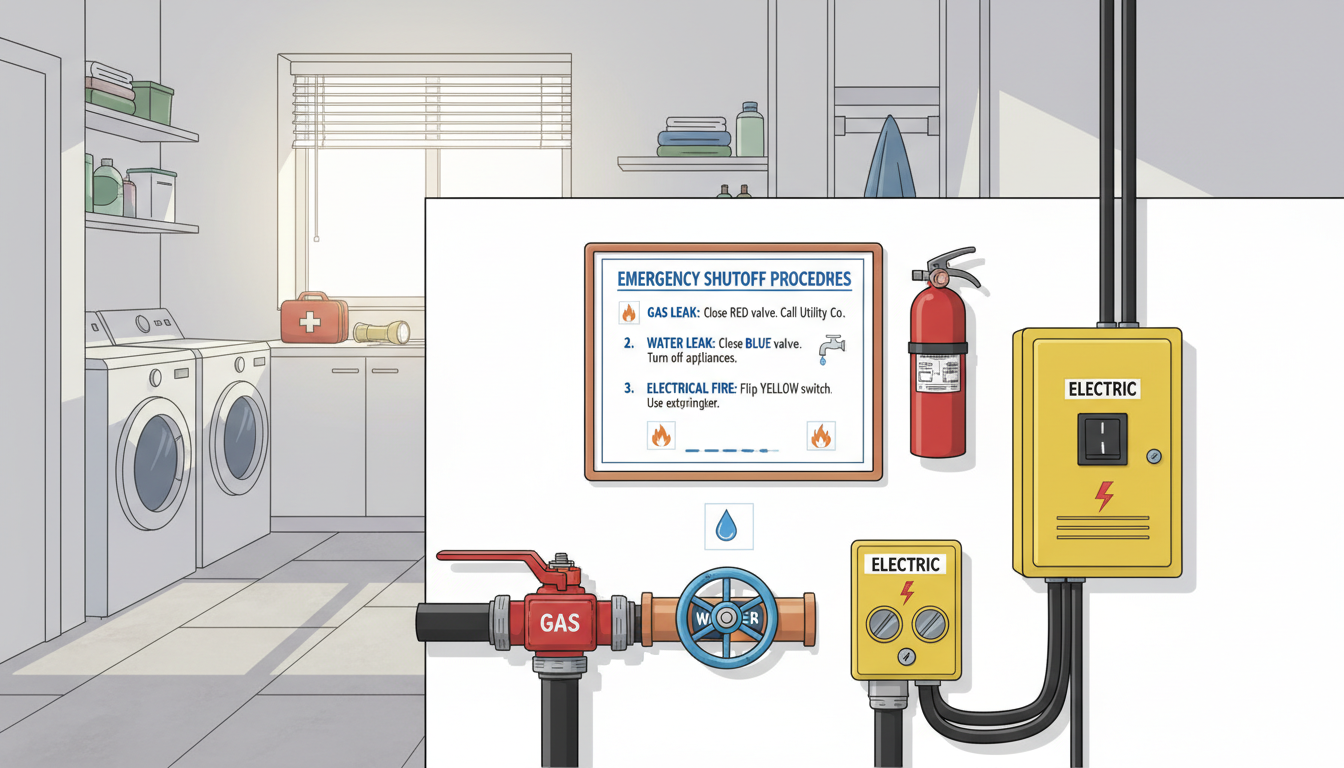
Emergencies can happen without warning. A burst pipe, a gas leak, or an electrical fire can be dangerous. Knowing how to shut off your home’s utilities is key to safety.
Most homeowners don’t know where their main shutoff valves are. When danger hits, there’s no time to search. You must act fast and know what to do.
This guide will teach you how to shut off gas, water, and electricity. You’ll learn where to find each shutoff, what tools you need, and how to do it safely. Being prepared can protect your family and home.
Learning these skills now brings peace of mind. You’ll feel confident in responding quickly to emergencies. Let’s start by understanding why this knowledge is so important for every homeowner.
Table of Contents
Why Every Homeowner Should Know How to Shut Off Utilities
Knowing how to shut off your home’s utilities is a key skill for homeowners. It’s not about being a handyman or having special skills. It’s about basic home safety that everyone can learn. Knowing what to do in emergencies can protect your family and home.
Many homeowners think they need special training to learn this. But that’s not true. Anyone can find and use their shutoffs. Learning this takes just a few minutes and could save your life.
The Risks of Not Knowing Your Utility Shutoffs
Not knowing your shutoffs can be very risky. In emergencies, every second is critical. A burst pipe, gas leak, or electrical problem won’t wait for you to find the shutoffs.
- Severe water damage to your property
- Gas poisoning or explosions
- Electrical fires or shock hazards
- Injury to yourself or family members
- Significant financial losses
The risks are too high to ignore. Learning about your utilities now can prevent disasters.
Statistics on Emergency Preparedness Among Homeowners
Recent surveys show a concerning lack of preparedness among homeowners. The data highlights gaps in basic home safety knowledge:
| Utility Type | Homeowners Who Know Location | Homeowners Unprepared |
|---|---|---|
| Electrical Panel Location | 91% | 9% |
| Water Shutoff Location | 50% | 50% |
| Gas Shutoff Location | 47% | 53% |
The electrical panel is the most known, with 91% aware of its location. This is good news. But, only 50% know where the water shutoff is, and 47% for gas.
These numbers show millions of homeowners lack safety knowledge. If you’re among them, you’re not alone. You’re about to change that. You’re taking the first step to becoming a prepared homeowner.
Join the growing community of homeowners who are taking charge of their safety. Learning these skills is simple, and the peace of mind is priceless. In the next sections, you’ll learn how to find and use each utility shutoff confidently.
Essential Tools and Safety Preparations Before an Emergency
Getting ready for a utility emergency means having the right tools and knowing where to find your shutoff valves. Just 30 minutes of preparation can save your home from damage. It’s all about having everything ready when you need it.
For your emergency kit, you’ll need a few key items. An adjustable wrench (10-12 inch) is essential for most home valves. It’s big enough to work well but small enough to fit in tight spots. A flashlight or headlamp is also vital, as valves are often in dark places. A headlamp is best because it lets you use both hands.
Work gloves are important for gripping valves, even if they’re stuck or corroded. You’ll also need a water meter key, costing about $15-25, to turn off your outdoor meter.
Keep all your tools in a waterproof container near your main water valve. Add a card with valve locations and emergency numbers. This keeps you organized and ready during emergencies.
Safety Preparations You Must Complete First
Before you start, make sure to follow these safety steps:
- Turn off power to water-connected appliances to avoid damage
- Let everyone in the house know what’s happening
- Clear the way to your shutoff points
- Make sure you have good lighting in dark areas
- Watch out for hazards like wet floors or exposed outlets
- Have your plumber’s contact info ready
| Safety Task | Why It Matters | Time Needed |
|---|---|---|
| Turn off water heater power | Prevents damage and burns from hot water | 5 minutes |
| Notify family members | Reduces panic and confusion | 5 minutes |
| Clear access paths | Allows quick access to shutoffs | 10 minutes |
| Test lighting setup | Ensures you can see clearly | 5 minutes |
| Document emergency contacts | Provides help info instantly | 5 minutes |
Creating an emergency kit takes little time but offers a lot of peace of mind. Your family and home deserve to be protected.
How to Shut Off Utilities: Gas Supply in Your Home
Gas emergencies need quick action and knowledge. Your home’s gas system is critical because gas leaks are dangerous. Knowing warning signs and where your shutoff valve is can save lives. This section guides you on recognizing gas problems and responding confidently.
Recognizing Signs of a Gas Leak
Natural gas smells like nothing on its own. Companies add a “rotten egg” sulfur smell to help you detect leaks early. This smell is there to warn you of danger.
Look out for these signs at home:
- A distinctive “rotten egg” sulfur smell near appliances or pipes
- A hissing or blowing sound near gas lines or appliances
- Dead vegetation over underground gas lines in healthy yards
- Physical symptoms like dizziness, nausea, or headaches near gas areas
- Bubbles in soapy water applied to gas connections
Strong warning signs demand immediate action. Don’t wait. Get out first, then ask questions.
Locating Your Main Gas Shutoff Valve
The main gas valve is usually next to your meter on the gas supply pipe. It’s often outside your home. If not outside, check your basement or garage.
The valve looks like a rectangular tab or nub on the pipe. When gas flows, this tab is parallel to the pipe. Find your valve during calm times, not emergencies.
Once you find your valve, take these steps:
- Mark the location with bright tape or paint
- Take clear photos showing the valve and area
- Store a crescent wrench in a labeled, waterproof bag nearby for quick access
- Test that the wrench fits before an emergency strikes
- Share this information with all household members
Knowing your valve’s location helps in emergencies. Preparation is better than panic.
Step-by-Step Process to Turn Off Gas Safely
Follow these steps if you suspect a gas leak:
- Strong gas smell or physical symptoms present: Evacuate immediately without using anything electrical. Do not flip light switches, use phones, or open garage door openers—any spark could ignite gas. Walk out and move away from your home.
- Call for help: Use a neighbor’s phone or move far from the property before calling 9-1-1 and your gas utility. Tell them you smell gas.
- Faint smell with no symptoms: Open windows and doors quickly to ventilate. Exit your home and call the utility company from outside.
- Shutoff instructions: Only shut off the main valve if your gas company or fire department instructs you to do so. Turning off gas is rarely necessary and should only happen when professionals direct you.
- Using the wrench: Turn the valve a quarter turn (90 degrees) using your crescent wrench. The tab will move from parallel to perpendicular to the pipe. A quarter turn is all you need.
- After shutdown: Do not attempt to turn gas back on yourself. Only a qualified technician should restore service and relight pilot lights. Wait for professionals.
Gas safety depends on staying calm and following the right steps. Your gas utility’s trained professionals handle restoration work—never try it yourself.
| Situation | Your Action | Valve Action |
|---|---|---|
| Strong gas smell or dizziness | Exit immediately—no electronics | Wait for professional instruction |
| Hissing sound near gas lines | Leave home and call 9-1-1 | Only turn if fire department directs |
| Dead vegetation over buried lines | Evacuate and call gas utility | Professional assessment required |
| Faint rotten egg smell indoors | Open windows, exit, call utility | Do not touch until company confirms |
| Valve located and marked | Keep wrench nearby during calm times | Ready for emergency if needed |
Your safety is the top priority. Trust your instincts about gas smells and physical symptoms like nausea or headaches. If unsure, get out and call professionals. They’d prefer to respond to a false alarm than deal with a preventable disaster.
Emergency Water Shutoff Procedures for Your Home
Water emergencies can happen without warning. You might face an overflowing toilet, a leaking sink, or a burst pipe. Knowing how to quickly shut off water can save your home from damage. It’s important to know where your water valves are and how to use them in an emergency.
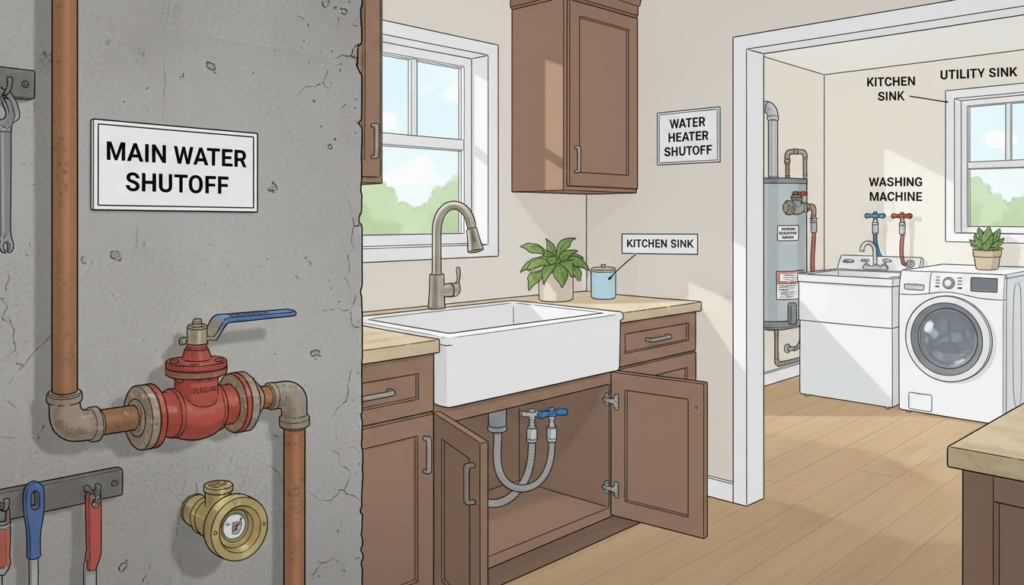
For local water problems, turn off the valve closest to the issue, not the main supply. This stops water flow right away without affecting other parts of your home. These valves are small oval handles that you turn clockwise to close.
Now is the time to find these valves in your home:
- Behind toilets near the wall
- Under sinks in the cabinet
- Behind washing machines
- Under the kitchen sink for dishwashers
- Behind or under refrigerators with ice makers
Turning these valves clockwise shuts off water to that fixture. Make sure to test them often to avoid any issues. This simple step can prevent major water damage.
Finding Your Main Water Shutoff Valve
For problems affecting your whole home, find the main water shutoff valve. Its location varies by climate. In warmer areas, it’s outside near the water meter. In colder areas, it’s inside, often in the basement or garage.
Main water valves are either ball valves or gate valves. Ball valves have lever handles that turn 90 degrees. Gate valves need multiple clockwise turns to close. Always turn them clockwise until fully closed but avoid over-tightening.
| Valve Type | Handle Style | How to Close | Common Location |
|---|---|---|---|
| Ball Valve | Lever handle | Turn 90 degrees | Basements, garages |
| Gate Valve | Round wheel handle | Multiple clockwise turns | Near water heater or meter |
City Water vs. Well Water Systems
Knowing your home’s water source is key for shutting off the main supply. For city water, the shutoff is at the meter pit. You might need a special key, available at hardware stores, to access it. For well water, the shutoff is near the pressure tank. After closing this valve, turn off the well pump at the electrical panel.
Preparation is your best defense, as detailed in how to shut off gas, water, and electricity in an emergency. Take photos of all valve locations and create a laminated reference card. Store it near your water heater or in an emergency kit.
Critical Safety Warnings
Never wade through standing water to reach a shutoff until electricity is turned off. Water and electricity together are a serious electrocution risk. Wait for the electrical panel to be shut down first if water is pooling near outlets or appliances.
If a water line has broken, don’t use water until your utility company confirms it’s safe. Broken lines can let dirt and bacteria into your system. Your local water department will test the system and notify you when it’s safe to use water again.
Regularly test your main water valve to ensure it works smoothly. A stuck valve in an emergency is worse than no valve at all. Simple maintenance today prevents panic and damage tomorrow. Your family’s safety and your home’s protection depend on this knowledge and preparation.
Turning Off Electricity During an Emergency Situation
Knowing how to shut off your home’s electrical power can save lives during emergencies. Whether it’s a fire risk, flooding, or damage from severe weather, understanding your electrical system is key. Your electrical panel is your control center for managing power in your home.
Before an emergency happens, find your panel and learn how it works. Most homeowners panic when they need this knowledge urgently. Preparing now means you’ll act confidently when seconds count.
Finding Your Electrical Panel and Main Breaker
Your electrical panel is usually in your basement, utility room, garage, or a closet. Look for a metal box with a door that opens to reveal rows of circuit breakers or fuses inside.
Before you open that panel, grab a flashlight or headlamp. When you flip your main breaker, your whole house will go dark. You don’t want to fumble around in complete darkness during an emergency.
Critical Safety Warning: If standing water floods the area beneath your electrical panel, do not touch anything. Water and electricity are a deadly mix. Call your utility company right away instead.
Proper Sequence for Shutting Down Power
Shutting off electricity needs a specific sequence for safety. Follow these steps carefully:
- Open the metal panel door
- Position your flashlight so it lights the breakers clearly
- Turn off each individual circuit breaker one by one by flipping them to the OFF position
- Turn off the main breaker (usually larger and located at the top or bottom of the panel)
Circuit breakers need more force than light switches. They feel stiff and resist your hand. Push firmly. Some breakers require pushing the lever past the OFF position before it will reset properly to ON later.
When you restore power, reverse the process carefully. To restore: turn on main breaker first, then individual circuits one at a time to prevent surge. A surge from all circuits turning on at once can damage your appliances and electronics.
| Shutting Down Power | Restoring Power |
|---|---|
| Turn off each individual circuit | Turn on main breaker first |
| Turn off main breaker last | Turn on individual circuits second |
| Work in steady, deliberate movements | Wait a few seconds between each circuit |
Labels on electrical panels aren’t always accurate, which is common in older homes or after renovations. Electrical contractors may have rewired your house, but nobody updated the labels. When in doubt, shut off all power instead of trusting outdated markings.
Common situations requiring power shutoff include DIY electrical work like replacing light fixtures or outlets, flooding that could expose outlets to water, burning smells from outlets or walls, and sparking from electrical components.
After any natural disaster like an earthquake or severe storm, don’t restore power until a utility worker confirms gas lines are undamaged. Gas leaks combined with electrical sparks create serious fire risk. Your utility company can verify safety before you flip that main breaker back on.
Unlike gas shutoffs, homeowners can safely turn power back on themselves by following the proper sequence. You have this capability within your hands.
Installing Leak Detection Sensors and Automatic Shutoff Systems
Knowing how to shut off your water manually is key. Smart leak detection systems add extra protection to your home. They work by placing sensors in high-risk areas like bathrooms and kitchens.
Water leak sensors detect moisture and send alerts. Basic sensors sound an alarm. More advanced systems notify your phone. The best options can automatically shut off your main water valve when a leak is detected.
Place sensors near washing machines and under sinks. Also, put them beside water heaters and in basements. These spots are where most leaks happen.
Understanding Gas and Propane Detector Placement
Gas and propane detectors are different from carbon monoxide detectors. They detect different dangers and need different placement strategies. Never assume one detector protects against all gas hazards. Your home needs both types for complete safety.
Natural gas rises because it’s lighter than air. Place natural gas detectors on the ceiling or high on walls near gas appliances. Propane is heavier and sinks toward the floor. Mount propane detectors 6 to 12 inches above ground level in areas where propane appliances operate. Follow manufacturer instructions for all sensors carefully. Improper placement means detectors won’t work when you need them most.
| System Type | Cost Range | Protection Level | Insurance Discount |
|---|---|---|---|
| Basic Water Sensors | $20–$50 per sensor | Alarm only, no automatic shutoff | Small discount (5–10%) |
| Whole-Home Automatic Shutoff | $500–$1,200 DIY; $900–$2,000+ professional | Monitors main line and shuts off automatically | Large discount (10–25%) |
| Smart Water Monitor | $200–$600 | Tracks usage and sends alerts | Medium discount (5–15%) |
| Gas Detectors | $30–$100 each | Detects leaks; no shutoff capability | Varies by provider; usually included in bundle discounts |
| Sensor Kit (condo/rental) | $400–$1,500 | Multiple sensors in targeted areas | Medium to large discount (8–20%) |
Installing these systems costs money upfront. Many homeowners find the investment worthwhile because insurance companies offer discounts. Basic sensor systems might earn a small discount. Self-monitored or professionally monitored systems earn larger discounts. Systems with automatic shutoff capability earn the biggest discounts. A complete buyer’s guide for leak detection can help you understand which option saves money over time.
Maintenance and Testing Your Protection Systems
Installing sensors is only the first step. Regular testing keeps systems working properly. Test your sensors every six months by placing a damp paper towel near the sensor. It should trigger an alert. Replace sensors according to manufacturer recommendations, typically every 5 to 7 years. Battery-powered sensors need battery checks quarterly. Check that all Wi-Fi connections stay stable and that your router reaches your sensors.
- Test water shutoff valves every six months by closing and reopening them
- Verify gas and propane detectors monthly by checking indicator lights
- Replace sensor batteries before they die
- Update phone numbers for alert notifications
- Retest after any plumbing or gas line work
- Keep manual shutoff procedures accessible to all household members
Technology is helpful but not foolproof. Batteries die. Wi-Fi connections drop. Power outages happen. Your knowledge of manual shutoff procedures remains your best backup. Keep knowing where your main water shutoff, gas shutoff, and electrical panel are located. These basics save lives and homes when automated systems fail.
When to Call Professional Help vs DIY Shutoffs
Knowing how to shut off your home’s utilities is useful. But not every situation is right for DIY. Knowing when to call professionals keeps you safe and avoids costly mistakes. Some emergencies need expert help from the start.
Choosing between DIY and professional help can be a big difference. It can mean the difference between a small fix and a big disaster. It shows good judgment, not weakness. Even experienced homeowners sometimes face situations they can’t handle.
Situations That Require Immediate Professional Assistance
Some emergencies are clear-cut and require no guessing. Your safety and your home’s safety depend on knowing when to call for help. Here are the key situations that need professional help:
- Stuck or corroded valves: If a valve won’t turn with reasonable force, don’t try to force it. Corroded valves can break off entirely, creating a much bigger emergency than you started with. Old gate valves that haven’t been operated in years are very problematic.
- Inaccessible shutoff locations: If you simply cannot locate the valve or it’s in a location you cannot safely reach—buried, blocked by permanent structures, or in a flooded area with electrical hazards—professionals have specialized tools and knowledge to help.
- Water continues flowing after shutoff: If you’ve successfully closed the valve but water keeps coming, there may be a broken valve, a secondary water source, or a more complex plumbing issue requiring diagnosis.
- Gas leak situations: Gas leaks should almost always involve professional utility company response. Only shut off gas yourself if you’re told to by the gas company or fire department.
- Electrical hazards combined with water: If water has reached electrical outlets, appliances, or the area around the electrical panel, this is an immediate call-the-professionals situation due to electrocution risk.
- Post-disaster situations: After earthquakes, floods, or other natural disasters, utility systems may have hidden damage that requires professional inspection before restoration.
- Legal concerns: Tampering with city-owned portions of utility systems, like the city-side valve on water meters, is illegal in most jurisdictions and can result in fines or service disconnection.
Understanding the Cost-Benefit of Professional Service
Emergency plumbing services can be pricey, but they’re worth it. The cost is much less than the average $10,000 water damage insurance claim, or the risk of injury from electrical hazards. Getting professional help now saves money and stress later.
| Emergency Scenario | DIY Risk Level | Typical Professional Cost | Average Damage If Wrong |
|---|---|---|---|
| Burst pipe with accessible shutoff | Low | $150–$300 | $2,000–$5,000 |
| Stuck or corroded valve | High | $200–$400 | $5,000–$15,000 |
| Gas smell in home | Critical | $100–$250 (utility company) | Explosion or injury |
| Water near electrical panel | Critical | $300–$600 | Electrocution or fire |
| Post-disaster utility damage | High | $400–$800 | $10,000+ |
Blue Collars: Your Charleston Emergency Service Partner
For Charleston, SC area residents, Blue Collars is a trusted emergency service. They’re available 24/7 with licensed technicians who know city and well water systems well. They have an EXCELLENT Google rating based on 174 reviews, with customers praising their fast service and skill.
Blue Collars does everything from emergency shutoffs to complex repairs and maintenance for homes and businesses. Their team comes ready with the right tools and knowledge to handle tough situations.
What Information to Have Ready
When you call for emergency service, being ready helps the dispatcher send the right technician. This makes fixing the problem faster. Have this information ready:
- Your complete home address
- Clear description of the emergency (burst pipe, gas smell, inaccessible valve, etc.)
- Location of your main shutoff valve if you know it
- Any steps you’ve already taken to address the situation
- Photos of the affected area if safe to take them
There’s no shame in calling professionals. Knowing when to ask for help is smart. Your DIY skills are great, but sometimes an expert is needed. Professional technicians deal with emergencies all the time. They have the right tools and training to protect your home and family.
Conclusion
Utility emergencies can happen anytime. A pipe might burst at 3 AM, or a gas leak could occur during dinner. Flooding can also threaten electrical systems during a storm. How fast you act can make a big difference. Preparation is key, not just during emergencies but always.
This weekend, start by finding all your utility shutoff points. Look for your main gas valve, main water valve, and electrical panel. Then, gather tools like an adjustable wrench, flashlight, gloves, and a water meter key. Keep them in a waterproof container near your main water valve.
Make a laminated card with all shutoff locations and emergency numbers. Show your family where these are and how to use them. This is vital for households with teenagers or elderly members who might be alone during emergencies. Remember to test each valve every 6 months and take photos of valve locations for quick reference.
If you’re moving, contact your utility companies to avoid extra charges. The steps for shutting off utilities are the same for emergencies or moving. Burst pipes can spill gallons per minute, gas leaks are dangerous, and electrical hazards are deadly. Speed is critical. While technology helps, knowing how to shut off utilities manually is essential.
For Charleston, SC residents, Blue Collars is ready 24/7 for any utility emergency. They can help with stuck valves or uncontrolled water flow.
By following this guide, you’ve made your home and family safer. You’re now prepared for utility emergencies. This skill can save your home and protect your loved ones. Share this knowledge with others to keep them safe too.
FAQ
Why is it important to know how to shut off utilities in my home?
Knowing how to shut off utilities can save lives in emergencies. It helps prevent injuries and damage. FEMA says knowing how to shut off utilities is key to keeping your family safe.
What are the risks of not knowing how to shut off my utilities?
Not knowing how to shut off utilities can be very dangerous. Gas leaks can cause explosions. Water leaks can damage your home and lead to mold.
Electrical hazards can lead to fires or electrocution. Emergency responders may take longer to arrive. It’s important to learn how to shut off utilities safely.
What tools do I need to shut off utilities before moving or during an emergency?
You’ll need an adjustable wrench, a flat-head screwdriver, and a flashlight. Keep these in an emergency kit. Some people use a utility shutoff key for water valves.
Label all shutoff locations and keep instructions nearby. Having these tools ready helps you shut off utilities quickly.
Where is my main water shutoff valve located, and how do I use it?
Your main water valve is near your home’s foundation. Look for a meter box or valve control. To shut off water, turn the valve clockwise until it stops.
If it’s hard to turn, use penetrating oil like WD-40. Test the shutoff by turning on a faucet. No water should flow. Practice using your shut off valve before an emergency.
How can I recognize a gas leak in my home?
Gas leaks smell like rotten eggs. Look for hissing sounds or dead plants. If you smell gas, get out and call 911 or your gas company.
Don’t use lighters or switches near the leak. Knowing how to turn off the gas valve is important, but only if you can do it safely.
Where is my main gas shutoff valve, and how do I identify it?
Your gas valve is where the gas line enters your home. It’s a lever or handle that turns perpendicular to the pipe. Label it clearly.
Turning off gas is a simple quarter-turn operation. Request a demonstration from your gas provider. Knowing how to turn off gas quickly is key.
What are the steps to turn off my home’s gas safely?
First, evacuate and call 911 if you smell gas. Then, locate your main gas valve. Turn the valve 90 degrees to close it.
Don’t relight appliances yourself. Wait for your utility company or a licensed technician. Post instructions near your gas meter and practice during non-emergency times.
How do I safely perform emergency water shutoff procedures?
To shut off water, find your meter and main valve. Turn the valve clockwise until it stops. If you can’t find your meter box, check inside your home.
After shutting off water, open all faucets to release pressure. This prevents vacuum conditions. Document your shutoff location and share it with family members.
Where is my electrical panel located, and how do I find the main breaker?
Your electrical panel is in a basement, garage, or utility room. Look for a metal box with a door marked “Electrical Panel.” Inside, find the main breaker at the top or bottom.
Before touching anything, ensure your hands are dry. Never touch exposed wiring. If unsure, consider consulting an electrician.
How do I turn off electricity safely during an emergency?
To disconnect electricity, locate your electrical panel and open the door. Dry your hands completely. Flip the main breaker switch to the “OFF” position.
Some panels require switching off individual breakers first. Once off, no electricity flows through your home. For electrical fires, call 911 immediately. Ensure all household members know how to operate the main breaker.
Should I install automatic shutoff systems or leak detection sensors in my home?
Leak detection sensors and automatic shutoff systems offer extra protection. Devices like Flo by Moen detect abnormal water flow and can automatically close your water supply. Smart home integration allows remote monitoring.
Gas leak detectors with alarm systems alert you to dangerous gas levels. These technologies complement manual shutoff knowledge. Installation varies by device and home setup, so consult professionals for optimal placement and configuration.
When should I call a professional instead of shutting off utilities myself?
Call professionals for active gas leaks, electrical fires, downed power lines, or if you can’t safely access shutoff locations. If you smell gas, evacuate and call your gas utility or emergency services.
For burst pipes with water spraying forcefully, electrical arcing, or any situation where emergency utility shutdown puts you at personal risk, prioritize safety over DIY action. If unsure about your home’s layout, cannot locate utilities, or have unfamiliar systems, contact licensed professionals. Many utility companies offer free inspections and training for utility disconnect process procedures.
What situations require immediate professional assistance instead of DIY shutoffs?
Several scenarios demand professional help: active gas leaks or strong odors, electrical fires or sparking, live downed power lines, burst pipes with explosive water pressure, or if you’re injured or unable to safely reach shutoff valves. Gas leaks require professional response—never attempt to investigate or repair.
For water damage affecting electrical systems, call professionals before attempting shutoff. If your utility shut off procedures seem dangerous or unclear, contact your utility company’s emergency line. They provide 24/7 assistance and can send technicians immediately. Never compromise safety for pride; professional help is available for emergencies.
How often should I practice locating and using my utility shutoffs?
Practice locating your utilities at least twice yearly—ideally before severe weather seasons. Conduct a family emergency drill where everyone practices finding the shut off water main, turn off gas valve, and disconnect electricity service locations.
Make this part of your annual home maintenance routine. Document shutoff locations with photos and keep instructions accessible to all household members. Update your emergency contacts annually and ensure babysitters and house guests know basic utility shut off procedures. This preparation dramatically reduces response time during actual emergencies and increases confidence in handling utility-related crises safely.
What should I include in an emergency utility shutoff kit?
Assemble a kit with an adjustable wrench, flat-head screwdriver, flashlight with extra batteries, utility shutoff keys for water valves, and labeled instruction cards for each shutoff. Include your utility company’s emergency numbers (check your bills for these).
Add a laminated diagram of your home showing all shutoff locations. Consider a first-aid kit nearby for minor injuries during emergencies. Store this kit accessibly but safely, perhaps on a shelf in your garage or basement near your utilities. Update contact information annually and review the kit contents seasonally. A well-prepared kit ensures you have necessary tools immediately when performing emergency utility shutdown procedures.
How do I properly close utility accounts when moving to a new home?
Close utility accounts by contacting each provider (electric, gas, water, internet, trash) at least two weeks before your move. Provide your move-out date and final address for billing. Most companies handle this over the phone or through their websites.
Schedule final meter readings and request written confirmations of disconnection. Verify billing is credited for any overpayments and understand any early termination fees. Retain copies of disconnection confirmations for your records. Some utility companies coordinate with your new service provider for seamless transfer. Never leave utilities connected after vacating, as you’ll remain financially responsible. This process is essential when learning how to turn off utilities before moving.
What’s the difference between shutting off utilities in an emergency versus for disconnection?
Emergency utility shutdown happens quickly during dangerous situations—gas leaks, fires, or water damage—where you manually close valves or switches to stop immediate hazards. This protects life and property. Utility disconnect process for moving or account closure involves contacting providers, scheduling appointments, and officially ending service.
This requires advance planning, documentation, and final readings. Emergency shutoffs are physical actions you perform immediately; disconnection is administrative and processed through utility companies. Knowing both skills is essential—emergency shutoffs keep your family safe during crises, while proper utility shut off procedures for moving prevent ongoing charges and service complications.
Are there regional differences in utility shutoff procedures I should know about?
While basic principles remain consistent, regional differences exist depending on your utility provider and local building codes. Water main locations vary by neighborhood—some areas use street-side meters while others place them indoors. Gas valve designs may differ by provider and installation year.
Electrical panels vary based on home age and building standards. Some regions require licensed electricians to work with electrical systems. Contact your local utility companies to understand your specific systems. Request on-site training for utility shut off procedures applicable to your home. Your homeowners insurance provider may offer additional resources on how to shut off utilities safely tailored to your region.