

Winter storms can cut off power without warning. Your family might spend hours or days in the cold and dark. But, you can prepare now to face this challenge.
Knowing how to prepare for power outages in winter is key. Planning ahead turns a scary situation into a manageable one. You’ll feel confident knowing your home and family are safe.
Preparing for winter power outages involves several steps. First, understand the risks in your area. Then, gather the right emergency supplies. Your home needs better insulation to stay warm.
A backup power source like a generator is also helpful. Your family needs a safety plan for blackout situations.
This article guides you through these steps. You’ll learn what agencies like the Federal Emergency Management Agency and your local utility companies suggest. These tips come from experts who help families prepare for winter emergencies.
Acting now is your best defense. Winter storms could hit any day. With the right preparation, you can keep your family safe and warm when the power goes out. Start preparing today.
Table of Contents
How to Prep for Power Outages in Winter
Winter brings unique challenges that make emergency preparedness for winter storms essential. When the power goes out during cold months, your safety depends on preparation done well before temperatures drop. Understanding the risks and taking action now means your family stays warm and protected when storms strike.
Understanding Winter Power Outage Risks
Winter power outages differ greatly from summer blackouts. Cold weather creates life-threatening situations that develop quickly. Ice accumulation on power lines causes equipment failure. Heavy snow brings tree branches down onto electrical infrastructure. During extreme cold, demand on the electrical grid peaks, straining the system.
When power fails in winter, pipes can freeze within hours. Limited daylight means you need reliable lighting from morning until evening. Road conditions become dangerous, delaying utility repair crews. Your heating system stops working without electricity. These combined dangers make cold weather power failure essentials truly vital for your household survival plan.
Essential Steps Before Winter Storms Strike
Start your emergency preparedness for winter storms by testing all flashlights and battery-powered radios. Stock extra batteries in multiple sizes. Radios provide critical weather updates when internet and cell service fail during storms.
Create a practical checklist of cold weather power failure essentials:
- Verify you have sufficient heating fuel or propane stored safely
- Learn where water shut-off valves are located in your home
- Fill bathtubs and containers with water for sanitation purposes
- Practice manually operating your electric garage door
- Consult your pharmacist about storing temperature-sensitive medications
- Develop a household communication plan for emergencies
Taking these steps brings real peace of mind. Your family gains practical protection when winter weather strikes.
Stockpiling Emergency Heating Solutions Without Electricity
Winter storms can cut off power, making staying warm a top priority. Having backup heating without electricity can save lives during blackouts. It’s important to have reliable heating methods ready for when the power goes out.
Plan ahead and gather the right equipment to keep your family safe from cold. This is key to protecting your loved ones from dangerous temperatures.
The best strategy is to create a warm room in your home. Michigan.gov suggests finding a room that can be heated with alternative sources. This room becomes your family’s safe space during power outages.
Here are some emergency heating without electricity options for your home:
- Gas fireplaces that operate without electricity
- Wood-burning stoves with proper chimney ventilation
- Traditional fireplaces with seasoned firewood
- Propane heaters designed for indoor use
Proper ventilation is absolutely critical when using emergency heating without electricity. Never use outdoor equipment like camping stoves or charcoal grills indoors. They can cause deadly carbon monoxide buildup.
Always ensure your heating room has enough air circulation. This is vital for safety.
Stock up on fuel before winter hits. Seasoned firewood, propane tanks, and other fuels might be hard to find during storms. Store fuels safely, following the manufacturer’s guidelines. Have a professional check your heating equipment before cold weather starts.
Close off unused rooms and keep everyone in your heated space. This helps keep warmth focused where your family is, making your emergency heating more effective.
Creating a Winter Blackout Survival Kit
A good winter blackout survival kit keeps your family safe and warm when the power goes out. Winter storms often hit during the darkest months, making it hard to see and stay warm. Building a kit ahead of time means you’re ready for anything. Winter blackout survival tips start with gathering the right supplies before bad weather arrives. Think of your kit as insurance for your home and family during emergencies.
Start gathering items now instead of waiting until a storm warning. Many families find it easier to build their kits slowly over time. You can make it a fun project with kids or tackle it yourself. The key is getting everything in one place so you know exactly what you have when you need it.
Flashlights and Battery-Powered Radios
Reliable lighting is absolutely critical during winter power outages. Place flashlights in bedrooms, bathrooms, the kitchen, and near exits. This way, family members won’t search around in the dark when the power fails. Test all flashlights before winter storm season starts to make sure they work properly.
Stock up on extra batteries in different sizes. Keep them in a cool, dry place near your flashlights. A hand-crank or battery-powered radio lets you hear emergency broadcasts and weather updates when cell service fails. NOAA Weather Radio models give you access to official emergency alerts. Fully charge all electronics like phones, tablets, and laptops when storms approach. Consider keeping portable battery packs nearby for recharging devices during long outages.
Emergency Water Storage and Sanitation Supplies
Many homes lose water pressure during winter power outages, specially those using well-water pump systems. Store drinking water separately in clean containers. Experts recommend keeping one gallon per person per day for at least three days. Label your containers clearly and keep them in a cool location.
For sanitation purposes, fill your bathtub with water when an outage threatens. You can use a bucket or pail to pour water from the tub directly into the toilet bowl for flushing. This technique saves your plumbing system from backing up. Never drink bathtub water.
Your winter blackout survival kit should also include:
- Extra blankets, coats, hats, and mittens for staying warm
- Non-perishable food that needs no cooking
- A manual can opener for accessing canned goods
- First aid supplies and prescription medications
- Supplies for infants, elderly family members, or pets
- Set your refrigerator and freezer to the coldest settings before storms arrive
Building your winter blackout survival kit gives you peace of mind. You’re taking control of your family’s safety instead of hoping for the best. Start preparing today so you’re ready when winter storms strike.
Winterizing Your Home to Retain Heat During Outages
A well-prepared home stays warm longer when the power goes out. To keep cold air out and heat in, take steps now. These steps protect your comfort and prevent costly pipe freezing.
First, make your home’s outer shell tight. Check attic and basement insulation, as heat escapes fastest here. Caulk gaps around windows and doors to block drafts. Apply weather-stripping for tight seals on doors and windows.
If you can, install storm windows or cover windows with plastic. These steps help during outages and lower heating bills all season.
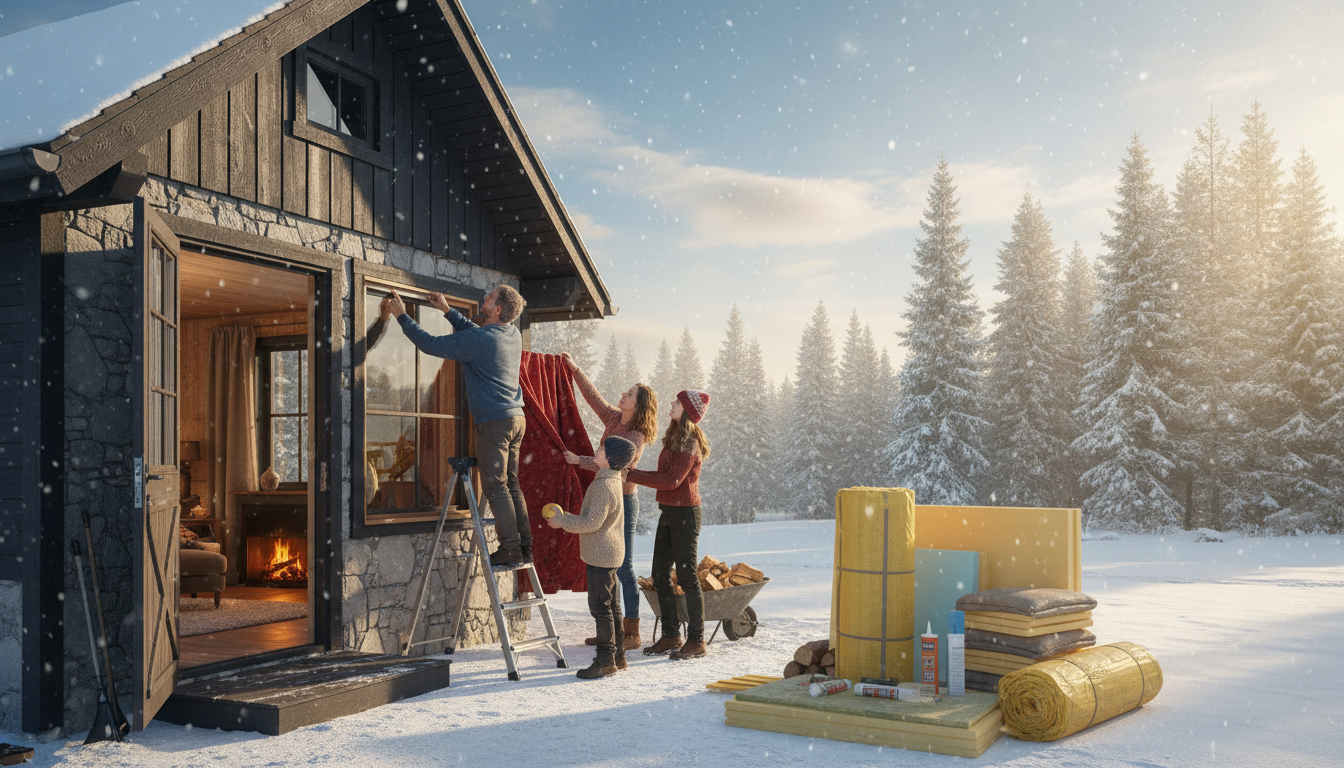
When the power goes out, your efforts pay off. Close unused room doors and place towels under doorways to trap warmth. Cover windows with blankets or thermal shades at night to prevent heat loss.
Keep your family together in one room to share body heat. This helps keep everyone warm.
Frozen pipes are a serious winter danger. Pipes in exterior walls or unheated spaces freeze first. Open cabinet doors under sinks to let warmer air circulate around plumbing.
During extreme cold, let faucets drip slowly to prevent ice blockages.
Safe Thawing Methods for Frozen Pipes
If a pipe freezes, use safe thawing methods. A hair dryer is good for gentle, controlled heat. Start warming the pipe closest to the faucet, working toward the frozen section.
Never use a torch, blowtorch, or open flame near pipes or your home. These create serious fire hazards.
| Winterization Task | Benefits | Difficulty Level | Cost Range |
|---|---|---|---|
| Caulk and weather-strip doors/windows | Stops drafts, reduces heat loss by up to 10% | Easy | $20-$50 |
| Apply plastic window insulation | Adds insulation layer, prevents frost buildup | Easy | $15-$30 |
| Add attic insulation | Prevents significant heat escape, long-term savings | Moderate | $200-$500 |
| Install storm windows | Professional insulation, improved appearance | Professional | $500-$2,000 |
| Insulate basement walls | Protects pipes, maintains warmth in foundation | Moderate | $300-$800 |
Quick Heat Retention Strategies During Outages
- Close interior doors to unused rooms immediately when power fails
- Roll towels or weatherstripping under door gaps to seal spaces
- Cover all windows at night with blankets, sheets, or heavy drapes
- Gather family members in one insulated room to conserve warmth
- Hang blankets on interior walls to add extra insulation
- Keep cabinet doors open under sinks in winter
- Open faucets slightly to prevent pipe freezing
Winterizing your home for outages requires planning and effort. Simple tasks like caulking and weather-stripping take just a weekend. Professional insulation upgrades require more investment but offer long-term benefits.
Your preparation ensures your family stays safe, warm, and comfortable during winter storms.
Generator Safety and Backup Power Solutions for Home
Generators are lifesavers during winter power outages. They keep your home warm and powered if used right. But, they can be dangerous if not used correctly. Knowing how to use them safely prevents harm from carbon monoxide and electrical issues.
The main rule is: never use a generator indoors. This includes garages, basements, and houses. Generators release deadly carbon monoxide gas that can kill without warning. They must be used outside with good air flow.
Portable Generator Precautions and Placement
Portable generators need careful setup and use. Place them at least 20 feet away from windows, doors, and vents. Make sure the exhaust points away from your home. Use them only in open air, even in rain or snow. Use approved covers to protect them from weather.
Fuel safety is very important. Store gasoline in approved containers away from living areas. Never refuel a running or hot generator. Keep fuel outside your home in a safe place.
Use heavy-duty, outdoor-rated extension cords in good shape. Check cords for damage before using them. Never connect a generator directly to your home’s electrical panel without a proper transfer switch. This prevents backfeeding that can harm utility workers.
Before winter, test your portable unit. Store it in a dry place during off-season months. If you plan to rent a generator, get contracts early. Demand for generators goes up during outages, leading to delays.
Permanent Generator Maintenance Plans
Whole-house standby generators start automatically during outages. They provide power without manual setup. But, they need regular maintenance.
Permanent generators need regular care:
- Weekly automated test runs to ensure operation readiness
- Monthly visual inspections of the unit and enclosure
- Annual professional servicing by qualified technicians
During maintenance checks, technicians check oil levels, replace filters, test batteries, and verify ventilation. Keep the generator enclosure clear of debris, snow, and ice. Check your manufacturer’s specs for exact maintenance needs. Some units have programmable timers for automatic weekly tests.
| Maintenance Type | Frequency | What Gets Checked | Who Does It |
|---|---|---|---|
| Automated Test Run | Weekly | Engine start and operation | Programmed timer or qualified personnel |
| Visual Inspection | Monthly | Enclosure, debris, ventilation | Homeowner or service technician |
| Professional Servicing | Annually | Oil changes, filters, battery, fuel system | Qualified technician |
Permanent generators cost more than portable ones at first. But, they are reliable and safe. They eliminate the need to set up equipment during storms. Your home stays safe and comfortable through winter blackouts.
Generator safety in winter is about respecting the machine. Follow all guidelines from the manufacturer. Never take shortcuts. Your preparation now prevents tragedy later.
Protecting Your Family During Extended Winter Blackouts
Extended winter blackouts pose big challenges for families. It’s vital to know the dangers of cold and how to react. Start by preparing and staying informed. This way, your family can stay safe and healthy.
Keeping warm together is key. Gather in one room with a heat source. This helps everyone stay warm. Keep an eye on children, the elderly, and pets.
Dressing right is important. Wear layers of loose, warm clothes instead of one thick one. This lets you adjust as needed. Your outer clothes should be tight and water-repellent.
Mittens are better than gloves for keeping fingers warm. Hats are essential to prevent heat loss from your head. Use a scarf to protect your mouth from cold air.
Recognizing Hypothermia Prevention and Frostbite Warning Signs
Knowing frostbite warning signs is critical. Look for numbness and white or pale skin on fingers, toes, and nose tips. Seek medical help right away if you see these signs.
Hypothermia prevention means knowing the symptoms. Watch for shivering, memory loss, and drowsiness. Move someone showing these signs to a warm place. Remove wet clothes and warm them up first. Give warm drinks if they can swallow.
| Condition | Warning Signs | First Response | When to Seek Help |
|---|---|---|---|
| Frostbite | Loss of feeling, white or pale skin on fingers, toes, nose, or ear lobes | Move to warmth, avoid rubbing affected areas | Seek medical help immediately |
| Hypothermia | Uncontrollable shivering, confusion, slurred speech, drowsiness, weakness | Remove wet clothing, warm core body first, give warm beverages if conscious | Call emergency services or get to hospital as soon as possible |
| Wind Chill Injury | Numbness, tingling, pain when warming up | Gradually warm affected areas with body heat or warm (not hot) water | Seek medical attention if severe or does not improve |
Stay warm and comfortable by staying together. Avoid opening doors often to save heat. Use towels and blankets to block drafts.
Drink water and eat non-perishable foods to stay hydrated and nourished. A portable power station can help you make warm drinks and keep your phone charged. Learn more about backup power at how to prepare for a winter power outage.
Use flashlights instead of candles to avoid fire risks. Candles can be dangerous, making it hard to stay awake in the cold. Battery-powered lights are safer and prevent carbon monoxide poisoning.
Give extra care to vulnerable family members. Infants and the elderly have a hard time with cold. Check on them often and adjust their clothes or blankets as needed. If it’s not safe at home, consider a warming center or shelter.
Unplug sensitive electronics like TVs and computers before power returns. Power surges can damage these devices when electricity comes back on suddenly.
What to Do After Power Is Restored
When the power comes back on after a winter outage, you’re not done yet. The most dangerous part often happens right after. You need to do a safety check before getting back to normal.
Check your home, food, and appliances carefully. Many people rush outside without checking for electrical dangers. Being thorough now prevents accidents and saves money.
Inspecting for Damage and Downed Power Lines
Downed power lines are the biggest danger after storms. They hide under snow and debris. Always assume that any downed line is live and deadly.
Stay at least 25 feet away from any downed lines. Keep children and pets indoors. If you see a downed line, call your utility company right away. Don’t call 911 for outages.
Check on neighbors, like the elderly and those with special needs. They might need help. Look for damage and take photos for insurance. As you prepare your home shelter and safety plans, remember to assess damage.
Food Safety and Appliance Checks
Food safety is a big concern after outages. Decide what’s safe to eat when power returns. The rule is simple: throw out food that’s been above 40°F for more than two hours. When in doubt, it’s better to be safe than sorry.
| Food Type | Refrigerator (40°F or below) | If Exposed Above 40°F | Freezer (0°F or below) |
|---|---|---|---|
| Meat, Poultry, Fish | Safe to keep | Discard after 2 hours | Safe if partially thawed |
| Dairy Products | Safe to keep | Discard after 2 hours | Safe if frozen |
| Cooked Leftovers | Safe to keep | Discard after 2 hours | Safe if completely frozen |
| Fresh Vegetables | Safe to keep | Use judgment; slight warmth is okay | Safe if frozen |
| Condiments (Mayonnaise, Ketchup) | Safe to keep | Safe to keep | Safe if frozen |
Before turning on appliances, check for damage from power surges. Look for burn smells, visible damage, or unusual sounds. Turn appliances on slowly to avoid electrical surges.
Also, check your emergency gear. Clean and fuel your generator before storing it. Organize flashlights and batteries in an easy-to-reach spot. Store candles safely away from children and pets. Restock your supplies so you’re ready for the next outage.
- Check all appliances for damage before turning them on
- Look for burn marks, strange odors, or visible wear
- Turn equipment on slowly to avoid electrical surges
- Document damage with photos for insurance purposes
- Contact your insurance company about weather-related claims
- Refuel and maintain your generator immediately
- Replace batteries and expired supplies
- Store emergency equipment in a dry, accessible location
Recovering from a winter power outage takes patience and detail. Your safety check prevents injuries, saves money, and prepares you for the next emergency. Stay cautious, help your neighbors, and take time to restore your home properly.
Conclusion
Winter power outages can be scary and unpredictable. But now, you know how to protect your family. By following the steps in this article, you can face winter storms with confidence. Winter emergency preparedness means you’ve taken smart steps to keep your loved ones safe and warm.
Remember all we covered. You learned about winter outage risks and why they matter. You discovered how to build an emergency kit with flashlights and water. You found out how to winterize your home and use alternative heat sources safely. You also learned about generator safety and what to do after power returns.
Each piece fits together like a puzzle. When you understand ways to stay warm and protected during a winter power, you take real control of your situation.
Start your winter storm preparation checklist today without waiting for bad weather. You don’t need to do it all at once. Pick one section per week. Check your emergency supplies. Schedule generator maintenance. Seal up drafts around your doors and windows.
Many of these steps help you year-round, not just during outages. Better insulation saves money on heating bills. Stored water stays fresh for cooking. Your power outage readiness becomes a smart investment for your whole year.
Weather patterns are changing. Severe storms happen in places that rarely saw them before. Your region might feel safe from long outages right now. Climate shifts mean we can’t count on that staying true.
Being ready today protects you tomorrow. The time you spend on winter emergency preparedness is time well spent. You’re protecting your home, your health, and your peace of mind. Begin right now by checking one item on your winter storm preparation checklist.
FAQ
Why are winter power outages more dangerous than summer blackouts?
Winter power outages are more dangerous because they combine extreme cold with no electricity. This means no heat, which can lead to hypothermia and frostbite quickly. The cold also makes roads hazardous, making it hard for help to reach you.
When it’s cold, the demand for electricity goes up. This makes outages more likely when you need heat the most.
What should I do immediately before winter storms are forecasted?
As soon as severe weather is predicted, start getting ready. Test your flashlights and radios to make sure they work. These are key for staying informed when other services fail.
Check your heating fuel supplies. Learn how to use your garage door manually. Find your water valve to shut off water if pipes freeze.
Fill your bathtub with water for flushing toilets. If you need refrigerated meds, talk to your pharmacist about storage during outages. Make a plan for your family to stay in touch if you get separated.
What backup heating options are safest during winter power outages?
Safe heating options include gas fireplaces, wood stoves, and traditional fireplaces. Make sure one room can stay warm with alternative heat. Check your heating equipment before winter to avoid malfunctions.
Stock up on fuel like firewood or propane early. Store it safely to avoid accidents. Never use outdoor equipment indoors, as it can produce deadly carbon monoxide.
How many flashlights and how much battery backup should I store for winter outage preparedness?
Have multiple flashlights around your home for quick access to light. Store extra batteries in different sizes in a cool, dry place. Consider a hand-crank flashlight that doesn’t need batteries.
Charge all your devices before storms hit. Keep portable battery packs for recharging. Test all your equipment before winter to find any issues.
How much water should I store for a winter power outage, and why is bathroom sanitation so critical?
Store one gallon of drinking water per person per day for at least three days. Many homes lose water pressure during outages, making water for toilets and washing essential.
Filling your bathtub with water is important for flushing toilets. Keep your drinking water separate from water for sanitation. Include sanitation supplies like paper towels and hand sanitizer in your kit.
What winterization steps help retain home heat when power fails?
Insulate your home well to keep heat longer during outages. Check insulation in attics and basements and add more if needed. Caulk gaps around windows and doors to prevent drafts.
Use weather-stripping for tight seals. Consider storm windows or plastic sheeting for extra insulation. These improvements also save on heating bills all season.
Can I run my generator indoors or in my garage during winter storms?
No, running generators indoors or in garages is extremely dangerous. Generators produce carbon monoxide, which is deadly. Always place generators outside, at least 20 feet away from your home.
Use manufacturer-approved weather covers and never refuel a hot generator. Use heavy-duty, outdoor-rated extension cords and ensure proper grounding to prevent shock.
What maintenance does a permanent standby generator require?
Standby generators need regular maintenance to work when you need them. Test them weekly and perform monthly visual inspections. Schedule annual servicing with a qualified technician.
Keep detailed maintenance records for warranty purposes. Arrange servicing well in advance, as demand increases in winter. While they require more investment and maintenance than portable units, they offer seamless power transitions.
What are the warning signs of hypothermia and frostbite during winter outages?
Recognizing hypothermia and frostbite early is critical. Hypothermia signs include uncontrollable shivering, memory loss, and slurred speech. Move someone showing these symptoms to warmth immediately.
Frostbite affects exposed skin and extremities. Look for loss of feeling and white or pale skin. If you suspect frostbite, seek medical help right away.
How should I dress for maximum warmth during extended winter power outages?
Wear multiple, loose-fitting layers to trap warm air. Your inner layer should wick moisture away from skin. Use mittens instead of gloves for better warmth.
Wear hats and head coverings to prevent heat loss. Cover your mouth with a scarf to warm inhaled air. Keep warm clothing and blankets accessible throughout your home.
How far away from downed power lines should I stay, and what should I never touch?
Stay at least 25 feet away from downed power lines. Keep children and pets away too. Electricity can conduct through ground moisture and other materials.
Never touch anything in contact with power lines. Report downed lines to your utility company, not 911. Avoid driving over downed lines to prevent electrocution.
How can I determine which foods are safe to eat after my refrigerator has been without power?
Discard any foods exposed to temperatures above 40 degrees Fahrenheit for more than two hours. If in doubt, throw it out. The cost of replacing food is less than treating foodborne illness.
Check your refrigerator or freezer thermometers to understand temperature exposure. Perishable foods like meat and dairy products are most dangerous when warm. Hard cheeses and condiments are more forgiving but should be evaluated carefully.
What emergency preparedness items should I prioritize if my budget is limited?
Start with essentials like flashlights and extra batteries. These cost -30 and provide critical safety. A battery-powered or hand-crank radio costs -25.
A first aid kit costs -20, and non-perishable food requires no cooking and costs -50. Add water storage and warm clothing to your kit. Gradually add more items as you can afford them.
Should I arrange generator rental before winter storms arrive?
Yes, arrange generator rental well before winter storms. Demand for rentals skyrockets during outages, and companies quickly book up. Contact rental companies in early fall to discuss rates and terms.
Understand rental costs, delivery and setup fees, and whether insurance is included. Test your rental unit before storm season to ensure it meets your needs. Discuss safe placement with the rental company.
What should I include in my family communication plan for winter outages?
Designate an out-of-state contact person for your family. Make sure everyone knows how to reach this person. Establish a meeting place if you’re separated during an outage.
Discuss how to stay in touch if cell service is down. Practice your plan annually and update it as needed. This is vital for staying connected during emergencies.
Are there special outage preparations needed for family members with medical conditions?
Yes, families with medical needs face unique challenges during outages. Talk to your pharmacist about storing refrigerated medications. Discuss backup power options with your healthcare provider.
Keep a supply of medications and medical information in accessible places. Check on family members with medical needs more frequently during outages. Have a plan for evacuating if necessary.
Should I shut off my water main if pipes freeze during a winter outage?
Yes, shut off your water main if pipes freeze to prevent flooding. Learn where your main water shut-off valve is before winter. Practice turning it off before you need to.
If you suspect frozen pipes, shut off the water main immediately. Safely thaw pipes using a hair dryer or warm towels.
