Ice storms are deadly, but many people don’t see the danger. The National Weather Service calls them “deceptive killers.” Every year, over 5,000 people die and 418,000 get hurt in car crashes caused by weather.
The danger isn’t just the ice on the ground. It’s also the accidents on icy roads. And it’s the risk of carbon monoxide poisoning from heaters inside homes without air. These dangers sneak up on us.
But there’s good news. You can keep your family safe. Learning how to prepare for ice storms gives you control. This guide will teach you everything you need to know. We’ll cover making an emergency kit, winterizing your home, protecting your pipes, and staying safe without power.
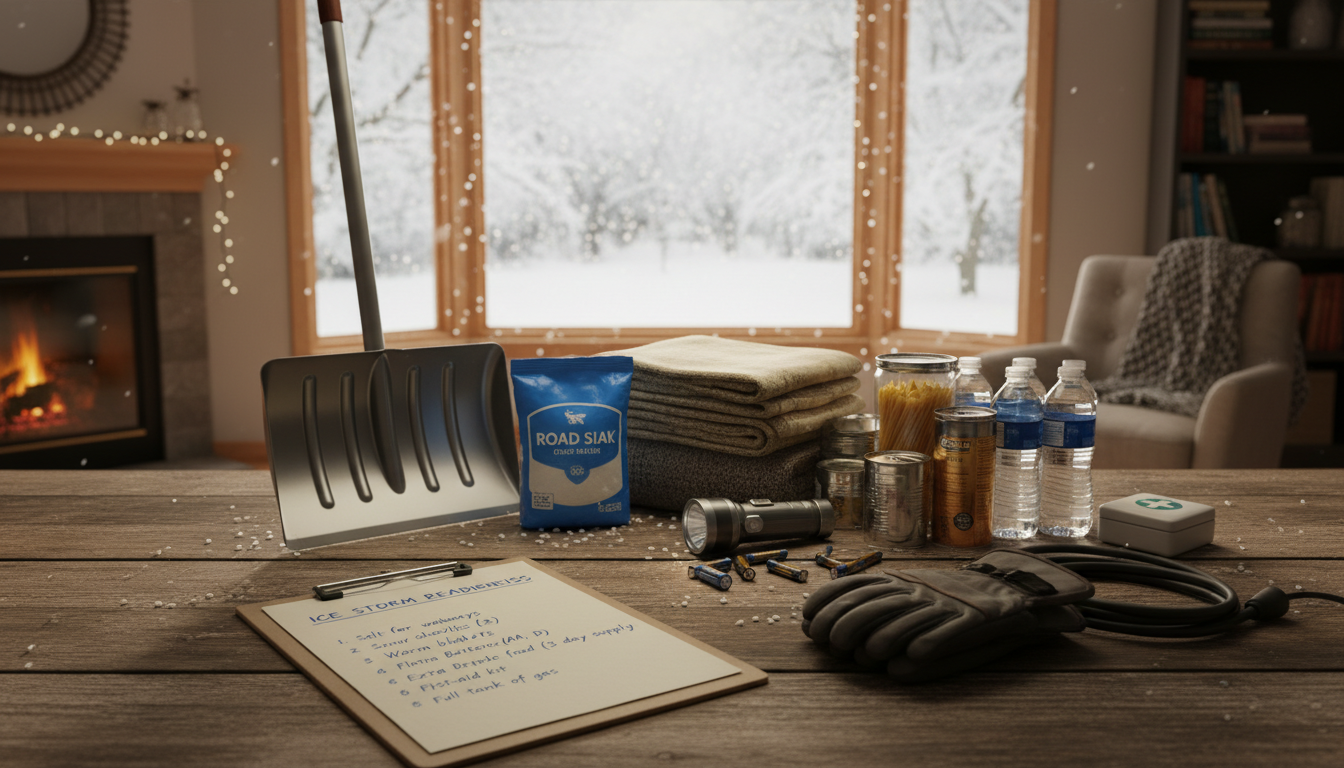
Having an ice storm preparation checklist helps you stay organized. It ensures you don’t forget anything important. Being prepared keeps your family safe when the weather gets bad.
Start getting ready now, before winter storms hit. The steps are easy. The safety you give your loved ones is worth it. Let’s begin your journey to winter readiness.
Table of Contents
Understanding Ice Storms and Freezing Rain Dangers
Ice storms are different from regular winter weather. Freezing rain makes everything it touches slippery. This includes power lines, trees, roads, and walkways. It turns the landscape into a dangerous place that needs careful preparation.
Winter storms in places like North Carolina can be unpredictable. They bring snow, sleet, freezing rain, and low temperatures. Knowing these differences helps you stay safe.
What Makes Ice Storms Different from Other Winter Weather
Ice storms are not like snowstorms. Snow falls dry and doesn’t stick much. But ice storms create a solid, slippery layer that builds fast. A single storm can leave half an inch or more of ice on surfaces.
The National Weather Service has different warnings for winter threats. A Blizzard WARNING means strong winds and snow. Ice storms have their own dangers that need special safety tips.
- Ice on power lines causes many outages
- Tree branches break under ice weight
- Roads become icy and dangerous
- Walking surfaces are very slippery
- More car accidents happen
The Deceptive Nature of Winter Storm Fatalities
Winter storms are called “deceptive killers” by the National Weather Service. Most deaths don’t come from the cold or storm itself. Secondary effects are the real danger.
When ice storms knock out power, people face health risks. Traffic accidents increase on icy roads. People use unsafe heaters, leading to carbon monoxide poisoning. Hypothermia is a silent killer during long power outages. These indirect dangers kill more than the storm itself.
| Winter Storm Danger | Primary Cause | How to Prepare |
|---|---|---|
| Power Outages | Ice-weighted power lines break | Stock a winter storm emergency kit with flashlights and batteries |
| Traffic Accidents | Black ice on roads | Keep emergency supplies in your vehicle |
| Carbon Monoxide Poisoning | Unsafe indoor heating sources | Maintain proper ventilation for any heat source |
| Hypothermia | Prolonged exposure to cold | Include warm clothing and blankets in emergency kit |
Having a winter storm emergency kit ready is key. These kits help you survive power outages and communication blackouts. Knowing the dangers helps you protect your family with smart safety tips.
How to Prep for Ice Storms
Winter weather can hit fast, leaving you without heat, power, and ways to communicate for days. Being ready ahead of time is key. Knowing how to prepare for ice storms is vital for your safety.
Ice storms bring special challenges that need planning in many areas of your life. Your ice storm preparation checklist should cover emergency supplies, making your home winter-ready, getting your vehicle ready, and planning how to stay in touch with your family. Starting early helps you feel more secure and keeps your loved ones safe.
Keep up with weather changes by listening to NOAA weather radio or local news. The National Weather Service gives important updates to help you act fast. Always listen to local emergency management officials during severe weather.
It’s also key to have a plan for how your family will communicate if you’re not all together. Pick how you’ll reach each other and where you’ll meet if you get separated. Make sure everyone knows the plan.
Your preparation journey includes several key steps:
- Building a complete winter storm emergency kit
- Winterizing your home and pipes
- Preparing your vehicle for icy roads
- Planning for power outages and alternative heating
- Establishing communication methods with family
Breaking down how to prep for ice storms into smaller tasks makes it easier. This way, you can focus on one thing at a time. Each step in this guide helps you get ready for winter weather emergencies.
Building Your Winter Storm Emergency Kit
Ice storms can be very dangerous. They can cause power outages for days, make heat systems fail, and cut off phone lines. It’s important to have a winter storm emergency kit to keep your family safe. Start gathering supplies now, before winter weather hits.
Planning is key to staying safe in freezing weather. Your ice storm survival guide should cover keeping warm, staying fed, getting information, and handling medical needs. Start preparing your supplies today so you’re ready when bad weather comes.
Essential Supplies for Home and Work
Your emergency kit needs items that work without electricity. Think about your daily needs and find non-electric versions.
- Flashlights with extra batteries (test them monthly)
- Battery-powered NOAA Weather Radio and portable radio for emergency alerts
- Extra prescription medications (refill early before storms arrive)
- Baby supplies like diapers and formula for infants
- Complete first-aid kit with bandages and pain relievers
- Fire extinguisher and working smoke alarms
- Extra pet food and warm shelter space for animals
- Heating fuel and safe emergency heat sources
Keep your ice storm survival guide checklist on your fridge. Update it every six months. Replace expired items quickly.
Food and Water Storage Requirements
Water is essential. Store one gallon per person per day. A family of four needs four gallons daily. Don’t forget extra for pets and cooking.
Your kit should have a seven-day supply of non-perishable food at least. Choose items that don’t need cooking or refrigeration.
| Food Type | Shelf Life | Serving Size | Why It Works |
|---|---|---|---|
| Dried fruit and nuts | 6-12 months | 1 handful per person | Energy-rich, no prep needed |
| Granola bars | 6 months | 1-2 bars per meal | Quick calories, easy to store |
| Canned vegetables and fruit | 2-5 years | 1 can per person | Nutrition without cooking |
| Peanut butter | 6-9 months | 2 tablespoons per serving | Protein and healthy fats |
| Crackers and cereal | 2-3 months | 1 cup per person | Satisfying, long-lasting |
Rotate your food supplies every few months. Eat older items and replace them with fresh stock. This keeps everything fresh and ready to use.
Build your ice storm survival guide supplies slowly. Buy a few extra items each week. This spreads costs across your budget and ensures you’re ready before dangerous weather strikes your community.
Winterizing Your Home Before the Storm Hits
Preparing your home for winter is important. It keeps your family safe and warm during ice storms. Start by checking your walls, attic, and basement for insulation. Good insulation keeps the heat in.
Look for gaps and cracks where cold air can get in. Sealing these spots is key.
Sealing doors and windows is also essential. Use weather stripping and caulk to keep drafts out. Adding storm windows or covering windows with plastic sheeting helps too. This saves energy and money.
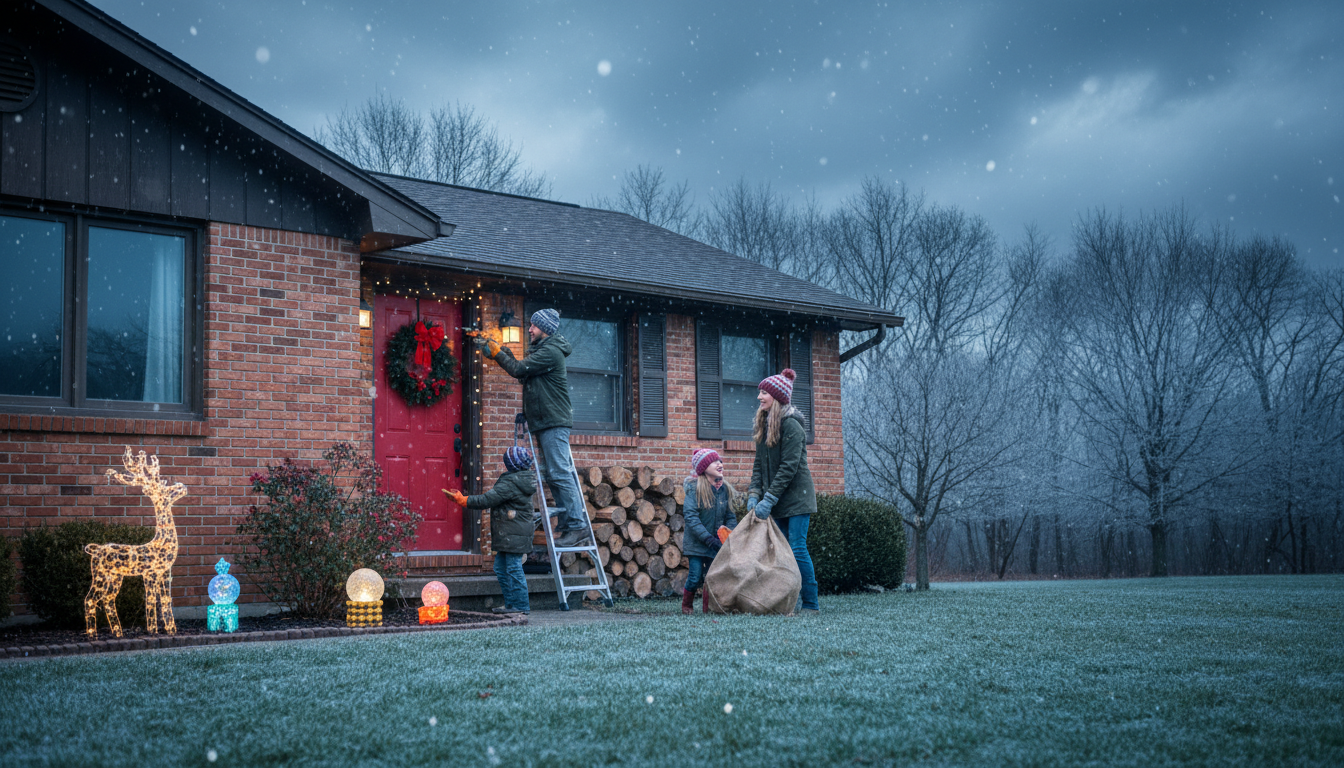
Don’t forget about other structures like barns and sheds. They might need protection too. These places can shelter people, animals, or equipment when it’s cold.
Critical Exterior Tasks for Storm Readiness
Clean your gutters before winter to avoid ice dams. Inspect your roof for leaks and fix them. Trim tree branches to prevent damage from falling ice.
- Clear gutters of leaves and debris
- Repair roof leaks before snow season
- Cut back tree branches over structures
- Check basement for water seepage
- Seal cracks in foundation and walls
Heating System Maintenance and Safety
Get your heating system checked by experts every year. Clean chimneys prevent fires and carbon monoxide. Make sure vents are clear of snow and ice.
| Maintenance Task | Timing | Why It Matters |
|---|---|---|
| Furnace inspection | Before November | Prevents breakdowns during cold weather |
| Chimney cleaning | Annually | Reduces fire risk and carbon monoxide danger |
| Vent clearance | Monthly during winter | Maintains safe operation of fuel-burning appliances |
| Roof inspection | Before October | Identifies leaks before storm season |
Roof Structural Assessment
Flat roofs are at risk from heavy snow and ice. Get a professional to check your roof’s structural capacity. This ensures your roof can handle the weight.
Winterizing your home is a big job, but it’s worth it. It keeps your family safe, your home warm, and saves you money on repairs.
Protecting Your Pipes and Preventing Freezing Damage
Frozen pipes are a big problem for homeowners in winter. Burst pipes can cause thousands of dollars in damage. It’s important to protect your pipes before cold weather hits. Luckily, you can do this without spending a lot or needing a professional.
Insulation Techniques for Vulnerable Pipes
Some areas of your home are more at risk for frozen pipes. Focus on these spots:
- Exterior walls and exposed pipes
- Unheated basements and crawl spaces
- Attics and garages
- Pipes near exterior doors and windows
Foam pipe insulation is a cheap and simple fix. Wrap it around at-risk pipes and seal with waterproof tape. For colder areas, use heating tape made for pipes.
Letting cold water drip from faucets helps. It keeps water flowing and prevents freezing. This trick is cheap but can save you a lot of money.
Find your water shut-off valves before winter. Knowing where they are can help in an emergency. This way, you can turn off the water quickly if a pipe bursts.
What to Do If Your Pipes Freeze
Quick action is key when pipes freeze. Follow these steps:
- Remove any insulation or newspaper wrapped around the frozen pipe
- Wrap the affected area with clean rags or towels
- Open all faucets completely to relieve pressure
- Pour hot water over the pipes, starting at the coldest exposure point
- Work slowly and steadily until water flows normally
Never use open flames, propane torches, or blowtorches to thaw pipes. They can start fires and damage your home.
When you leave your home in cold weather, keep your heating on. Set it to at least 55°F. This keeps your pipes from freezing and saves on energy costs.
Ice Storm Safety Tips for Drivers and Vehicle Preparation
Winter driving requires caution and respect. Each year, over 5,000 people die in weather-related crashes. More than 418,000 are injured. These numbers highlight the importance of ice storm safety tips for drivers.
Staying home during severe weather is the best choice. If you must travel, slow down and stay alert. Black ice is a major threat on winter roads. It forms when rain freezes on pavement.
Before you go, check your vehicle. Make sure all fluids are full and lights, heater, and wipers work. Keep your gas tank full to avoid ice in fuel lines. Never travel alone in winter storms.
Tell someone you trust your travel plans. Share your departure time, main route, and backup route. Call 511 for traffic and road conditions before you leave.
Essential Winter Storm Survival Kit for Your Vehicle
Keep these items in your car during winter:
- Mobile phone with charger and extra batteries
- Blankets or sleeping bags
- Flashlight with extra batteries
- First-aid kit and knife
- High-calorie, non-perishable food
- Extra clothing to stay dry
- Large empty can for emergency toilet use
- Small can with waterproof matches to melt snow
- Sand or cat litter for traction
- Shovel and windshield scraper
- Tool kit, tow rope, and battery booster cables
- Water container and candles with matches
Safe Driving Techniques When Roads Ice Over
If your car starts to slide, stay calm. Immediately take your foot off the gas. Turn the steering wheel in the direction of the slide. Never hit the brakes, as it makes things worse. These tips could save your life on icy roads.
Preparing your vehicle for ice storms is key. With proper maintenance and emergency supplies, you and your passengers will be safer during winter.
Power Outage Preparation and Alternative Heating Safety
Ice storms can leave families without power for days or weeks. It’s key to prepare for power outages when it gets cold. People use alternative heat sources to stay warm. But, it’s important to use these safely to avoid serious harm.
Carbon monoxide poisoning is a big risk during winter storms. Learning how to safely use heating sources can save lives.
Carbon Monoxide Prevention During Power Outages
Carbon monoxide is a silent killer. It’s invisible, odorless, and tasteless. Every winter, it claims lives when people misuse heating equipment.
Never run a generator inside your home, garage, basement, or near windows and doors. Generators must stay outside, at least 20 feet away from your house. The exhaust contains deadly carbon monoxide that enters homes through walls and ventilation systems.
Do not use charcoal grills, camp stoves, or ovens for indoor heating or cooking. These produce toxic fumes that can kill your family within hours. Your carbon monoxide detector serves as your first line of defense during power outages. Test your detector monthly and replace batteries twice yearly. Check that outside vents remain clear of leaves and debris before storms arrive. During and after ice storms, clear away accumulated snow from all vents immediately.
Safe Use of Emergency Heat Sources
Proper power outage preparation includes storing adequate heating fuel before winter arrives. Stock plenty of dry, seasoned wood for fireplaces or wood-burning stoves at least six months in advance. Have your chimney and heating equipment professionally cleaned and inspected every year. This prevents fires and ensures equipment operates safely.
Kerosene heaters require special attention. Keep the room well-ventilated when operating these heaters to prevent toxic fume buildup. Refuel them only outside, never indoors. Position kerosene heaters at least three feet away from curtains, furniture, and other flammable materials.
| Heat Source | Safety Requirements | Location |
|---|---|---|
| Generator | Install carbon monoxide detector; keep outside | 20+ feet from home |
| Fireplace/Wood Stove | Annual chimney inspection; use seasoned wood | Interior with proper venting |
| Kerosene Heater | Refuel outdoors only; maintain ventilation | 3+ feet from flammables |
| Space Heater | Keep away from water; plug directly into outlet | Central room location |
Conserve fuel by lowering your home temperature to 65°F during power outages. Close doors to unused rooms and heat only occupied spaces. Keep fire extinguishers accessible throughout your home. Teach every family member how to use them properly. This ice storm safety tip protects against fires that commonly start during winter emergencies when people rely on alternative heating sources.
Conclusion
You now know how to get ready for ice storms. This checklist covers everything you need to do before winter hits. It includes making an emergency kit, winterizing your home, and protecting your pipes.
It also talks about safe heating during power outages. Taking these steps now will help you face winter confidently.
Your state and local government have emergency plans to keep you safe. Learn about these plans for your area. When an ice storm comes, always follow orders from local officials.
They know the dangers in your area and can help you stay safe. Knowing these plans will help you prepare better.
Don’t forget about your pets and animals when preparing. Bring pets inside to warm, safe places before the storm. Make sure outdoor animals have extra food and fresh water.
Most animals die from dehydration, not cold, during winter storms. A comprehensive checklist will help protect all members of your family, including pets.
Ice storms may be called “deceptive killers,” but with the right preparation, you can stay safe and warm. Your home, vehicles, and loved ones can weather the storm well. You have the knowledge and tools you need. Start preparing today and enjoy winter knowing you’re ready for anything.
FAQ
Why are ice storms called “deceptive killers” by the National Weather Service?
Ice storms are called “deceptive killers” because of the dangers they hide. The real threats are from accidents on black ice, carbon monoxide poisoning, and hypothermia. Over 5,000 people die and 418,000 get injured each year from weather-related crashes. Many people don’t see these dangers until it’s too late.
What’s the difference between an ice storm and a blizzard?
Ice storms freeze everything they touch, making them very dangerous. Blizzards have strong winds and heavy snow, but not ice. Ice storms can bring sleet, freezing rain, and very low temperatures, making them hard to prepare for.
How long should my ice storm preparation checklist cover?
Your checklist should cover emergency supplies, home winterization, vehicle readiness, and communication plans. Ice storms can last for days, so prepare for at least seven days. This ensures your family stays safe and comfortable, even without emergency services.
What’s the most important item to include in a winter storm emergency kit?
The most important items are those that address the main concerns of ice storms. Include flashlights, a battery-powered NOAA Weather Radio, extra prescription medications, first-aid supplies, and fire extinguishers. But the most critical item is a working carbon monoxide detector, as carbon monoxide poisoning is a leading cause of winter storm deaths.
How much water and food should I store for ice storm preparation?
Store at least a seven-day supply of non-perishable food and one gallon of water per person per day. For a family of four, that’s 28 gallons of water. Choose foods that don’t need cooking or refrigeration, like dried fruit, nuts, and canned goods.
What does home winterization involve beyond insulation?
Home winterization includes more than just insulation. It involves caulking and weather-stripping, clearing gutters, fixing roof leaks, and cutting tree branches. Also, have your heating equipment and chimneys cleaned and inspected annually. Don’t forget to winterize barns, sheds, and other structures for shelter.
How do I identify which pipes are most vulnerable to freezing?
Pipes in exterior walls, unheated areas, crawl spaces, and attics are most at risk. Insulate these pipes with foam or heating tape. Also, learn how to shut off your water valves before a pipe bursts.
What should I do if a pipe freezes in my home?
If a pipe freezes, stay calm and follow these steps: remove insulation, wrap the pipe in rags, open all faucets, and pour hot water over the pipe. Never use open flames to thaw pipes. If you’re leaving, keep the heat on and set it no lower than 55°F.
How can I stay safe if I must drive during an ice storm?
Avoid driving during ice storms if possible. If you must drive, take it slow and assume you’re driving on ice. Check your fluids, lights, heater, and windshield wipers before leaving. Keep your gas tank full and travel with a friend. If you slide, take your foot off the gas and steer in the direction of the slide.
What items should I keep in my vehicle during winter?
Keep a mobile phone, charger, blankets, flashlight, first-aid kit, knife, food, extra clothing, emergency toilet supplies, snow-melting materials, sand, shovel, and a tool kit in your vehicle. Also, have a water container, candles, and matches for emergency heat.
Why is carbon monoxide prevention so critical during ice storms?
Carbon monoxide is an invisible killer that claims lives every winter. It’s important to have working carbon monoxide detectors and check them regularly. Never use charcoal grills or unvented heating devices indoors, as they produce toxic fumes. Generators should never be run in enclosed spaces.
What are safe alternatives to dangerous heating sources during power outages?
Safe heat sources include fireplaces or wood-burning stoves, which should be professionally maintained. Kerosene heaters can be used safely if you keep the area well-ventilated. Always have fire extinguishers accessible and know how to use them, as house fires are common during winter storms.
How can I conserve heating fuel during an extended ice storm?
Keep your home cooler than normal and close off unused rooms to reduce fuel use. This, along with insulation and weatherization, can extend your fuel supply during prolonged outages.
What preparations should I make for pets during ice storms?
Pet safety is often overlooked but is critical. Move animals to sheltered areas or bring them inside. For outdoor animals, ensure they have extra feed and water, as dehydration is a common cause of death during winter storms. Include extra pet food and supplies in your emergency kit.
Should I have a family communication plan for ice storms?
Yes, having a family communication plan is essential. Include designated meeting places, out-of-area contact information, and methods for checking in during emergencies. Make sure all family members know to listen to NOAA weather radio and local news for updates.
When should I start preparing for ice storms?
Start preparing in the fall before winter storms arrive. Waiting until a storm is imminent may leave you unprepared. Follow a systematic checklist to ensure your home, vehicles, and emergency supplies are ready.
What should I do if ice builds up on my roof?
Ice buildup on roofs can cause damage and is dangerous. Clear your gutters before winter to prevent ice dams. If ice accumulates, don’t try to remove it yourself. Instead, contact a professional to safely remove the ice. For flat roofs, hire a contractor to assess structural ability before winter.
How often should I test my smoke alarms and carbon monoxide detectors?
Test your smoke alarms monthly and replace batteries twice a year. Test carbon monoxide detectors regularly and replace them as needed. Before winter, test all safety devices and replace any that aren’t working, ensuring your family is protected during ice storms.
What role does the National Weather Service play in ice storm warnings?
The National Weather Service issues weather alerts and warnings through NOAA weather radio and local news. Listen to these sources regularly during winter to stay informed. Local emergency management officials provide guidance on preparation and response, so follow their orders and recommendations.
Can I use a space heater safely during an ice storm power outage?
Space heaters can be used safely during power outages if properly ventilated and designed for indoor use. Never use charcoal grills or unvented heating devices indoors, as they produce carbon monoxide. If using a space heater, ensure it has a thermostat and tip-over safety switch, keep it away from flammable materials, and never leave it unattended.
How do I know if I need to winterize my entire property or just my home?
Winterization should include all structures that might provide shelter during an ice storm. This includes barns, sheds, garages, greenhouses, and any other buildings. Ensure heating equipment is safe, seal air leaks, protect pipes from freezing, clear gutters, and maintain adequate insulation for each structure.
What prescriptions and medications should I stock for ice storm preparation?
Maintain at least a seven-day supply of prescription medications for your family. Include medications for chronic conditions and over-the-counter medications for common ailments. Store medications in a cool, dry place and keep a list of all medications and dosages in your emergency kit.
What should be included in a basic first-aid kit for ice storm emergencies?
A first-aid kit should include bandages, gauze pads, medical tape, antibiotic ointment, pain relievers, and other supplies. Keep your kit accessible in your home and vehicle, check it annually, and ensure all family members know where it is. Consider taking a first-aid certification course to feel more confident in handling emergencies.