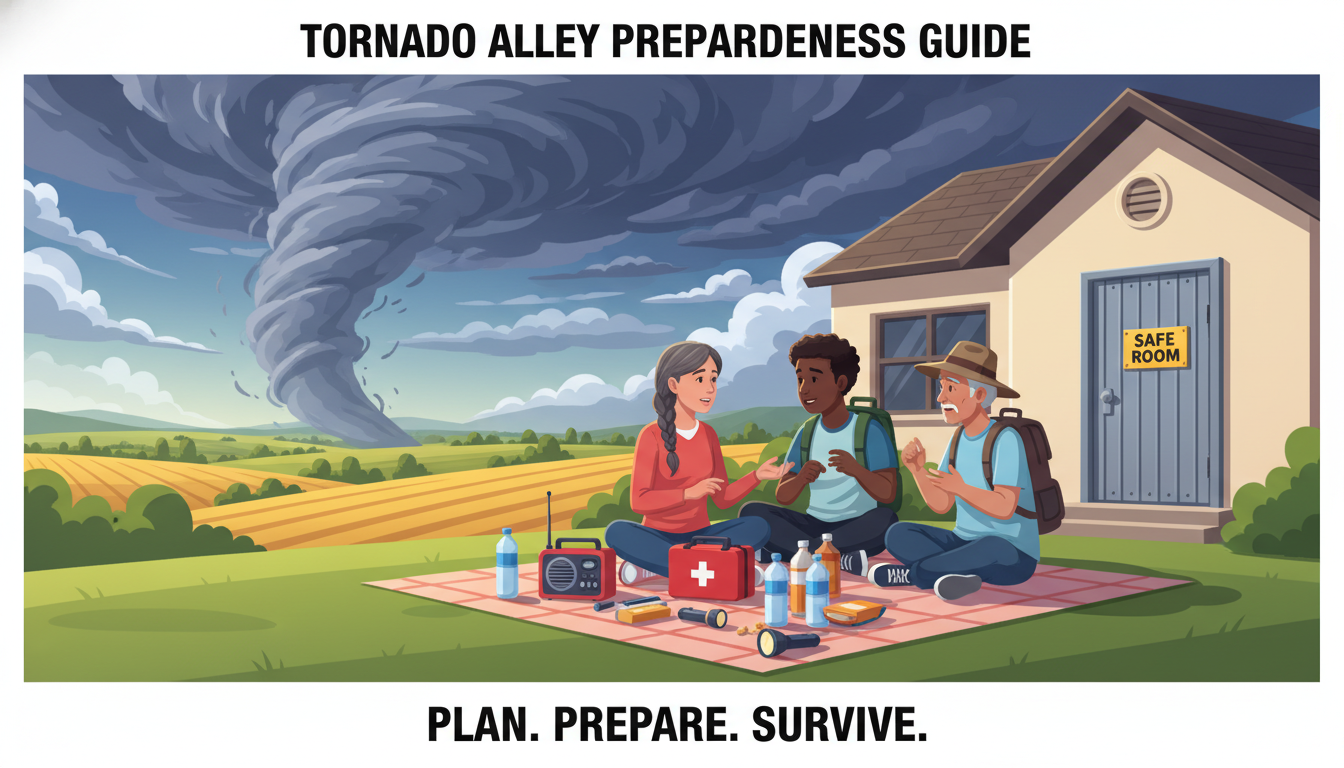
Living in Tornado Alley means facing a serious weather threat. Tornadoes can hit without warning and have winds up to 300 mph. They can flatten buildings and cause damage over 50 miles.
Your family’s safety depends on being prepared before a storm hits.
Tornado season usually peaks from March to May in the U.S. But, the exact timing can vary by location. Knowing your area’s peak season helps you stay alert during the most dangerous months.
The National Weather Service uses the Enhanced Fujita Scale to rate tornado strength. This scale goes from EF0 to EF5, with EF5 being the most destructive. Understanding these ratings shows how powerful tornadoes can be.
Knowing how to prepare for a tornado is key. Preparation is your family’s best chance of staying safe during severe weather. This guide will teach you everything about tornado readiness.
It covers warning signals, building an emergency kit, and more. You’ll learn how to make a family safety plan and find the safest spots in your home. Preparing now brings peace of mind later.
Table of Contents
Understanding Tornado Warnings and Watch Alerts
Knowing the difference between a tornado watch and warning is key to staying safe. These alerts mean different things, and knowing them helps you act fast. Make sure your family knows how to respond quickly when severe weather hits.
What a Tornado Watch Really Means
A tornado watch means conditions are right for tornadoes in your area. It’s your heads up to get ready. Keep an eye on the sky and listen for updates on NOAA weather radios or local media.
A watch is your chance to prepare and review safety rules. Gather your family, check your checklist, and find your safe shelter. Stay alert but calm, as a watch doesn’t mean a tornado is happening now.
How to Respond to a Tornado Warning
A tornado warning is serious. The National Weather Service issues it when a tornado is spotted or detected by radar. It usually covers one or two counties and lasts about an hour or less.
When a warning hits your area, seek shelter right away. Do not delay. Visit official tornado safety rules for shelter guidance. Knowing the difference means you act fast when a warning comes, but prepare when a watch is issued.
- Go to the basement or lowest level of your building
- Move to a small interior room like a bathroom or closet
- Stay away from windows and outside walls
- Protect your head and body with cushions or blankets
Recognizing the Warning Signs of an Approaching Tornado
Don’t wait for official alerts to act. Learn to spot tornado signs:
- A dark or greenish-colored sky
- Large hail falling suddenly
- A large, dark, low-lying cloud
- A loud roar similar to a freight train
Tornadoes can look transparent until they pick up debris. Rain or darkness can hide them. Never wait to see a tornado before seeking shelter. By then, it may be too late. Your checklist should remind you to act fast if the sky looks dangerous or you hear a loud roar.
How to Prep for a Tornado: Creating Your Family Safety Plan
A good tornado safety plan for your home is key to keeping your family safe. Planning ahead means everyone knows what to do before panic sets in. Sit down with your household and talk through each step together. This makes the difference between chaos and calm when a tornado approaches.
First, pick an emergency meeting spot where family members can reunite if separated. Choose a location outside your neighborhood—like a relative’s house or a familiar landmark. Write down this address and keep it in your pocket or phone. Assign one person to take charge of family pets so no animal gets left behind.
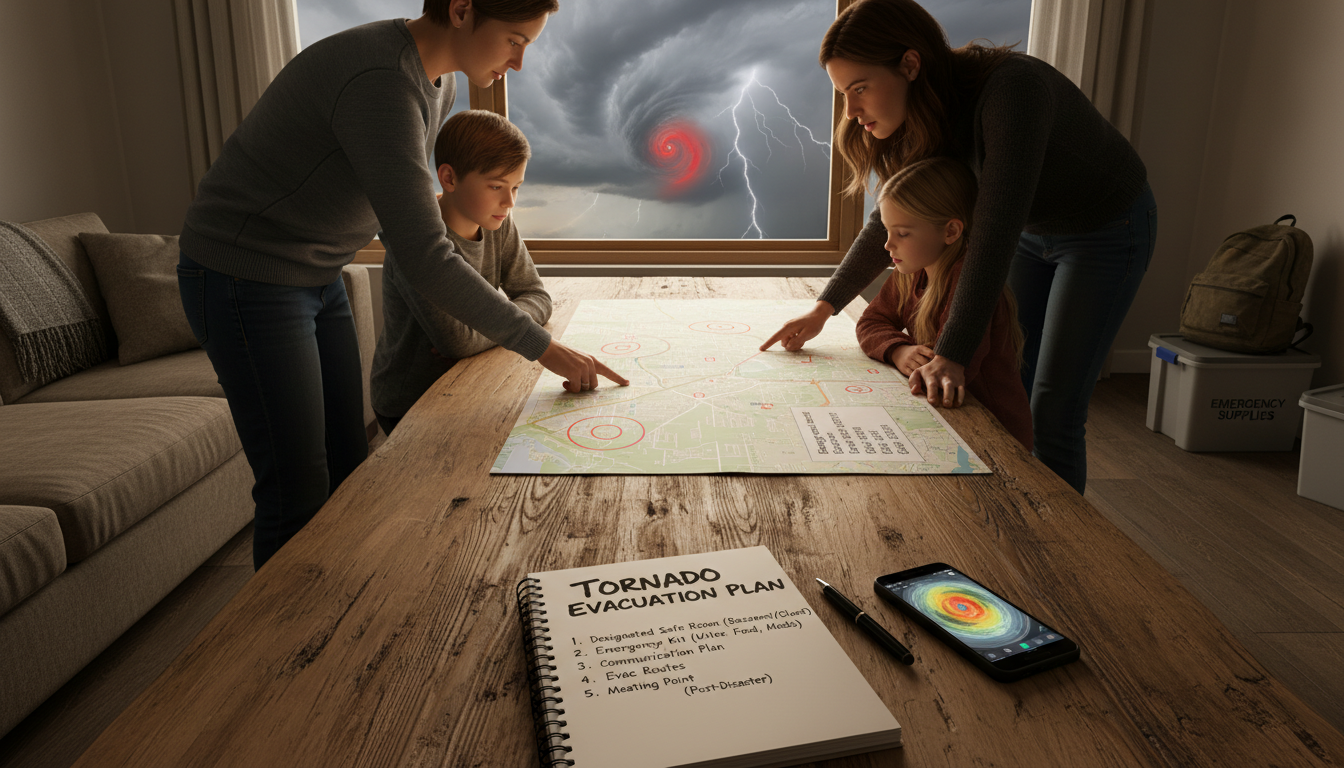
Your family tornado evacuation plan should include a complete contact list in one easy-to-find place:
- Cell phone numbers for all family members
- Workplace phone numbers and addresses
- School contacts and pickup procedures
- Babysitter or caregiver numbers
- Utility company contact information
- Out-of-state friend or relative to serve as a communication hub
Gather important documents and store them in a waterproof container:
- Birth certificates for each family member
- Social Security cards
- Insurance policies and homeowner documentation
- Before photos of your home and belongings
- Medical records and prescription information
Create multiple evacuation routes from your home and neighborhood. Tornadoes can block roads with debris, so having backup paths keeps your family moving safely. Show all capable household members where to find electrical, gas, and water shut-offs. Keep necessary tools nearby and practice turning them off together.
Run family drills at least twice yearly. Practice moving to your safe shelter spot. Rehearse your family tornado evacuation plan so responses become automatic. When real danger arrives, your family acts without hesitation.
Building Your Emergency Tornado Kit and Securing Your Home
Getting ready for tornado season means planning and action. You need to gather emergency supplies, find the best shelter in your home, and make your home safer. These steps help protect your family when severe weather hits.
Essential Supplies for Your Tornado Shelter
Your emergency kit should last at least three days. Have one gallon of water per person each day. Also, include non-perishable food that doesn’t need cooking.
Don’t forget a battery-powered or hand-crank NOAA weather radio for updates when power goes out. First aid kits, extra clothes, flashlights, toiletries, and local maps are must-haves. Families with special needs need extra planning.
Parents with babies should pack formula, diapers, and baby supplies. People with medical conditions need more medications and equipment. Pet owners should bring pet food, water, carriers, and comfort items.
| Supply Category | Items to Include | Quantity Per Person |
|---|---|---|
| Water | Bottled or stored water | 1 gallon daily for 3 days |
| Food | Non-perishable items | 3-day supply |
| Communication | NOAA weather radio | 1 per family |
| Lighting | Flashlights and batteries | Multiple units |
| Medical | First aid kit, medications | Personal prescriptions |
| Protection | Helmets, blankets, pillows | 1 helmet per family member |
| Navigation | Local area maps | Physical paper maps |
Fortifying Your Home Against Tornado Damage
Strengthening your home against severe weather is key. Install impact-resistant windows to prevent shattering. Upgrade exterior doors with at least three hinges and deadbolt locks that extend at least one inch into the frame.
Garage doors are weak points; add permanent wood or metal stiffeners. Have a pro check your roof’s wind resistance. Replace gravel landscaping with mulch or shredded bark to avoid dangerous projectiles. Regularly trim trees and shrubbery to remove weak or dead branches.
- Install impact-resistant windows throughout
- Upgrade all exterior doors with three hinges and 1-inch deadbolts
- Reinforce garage doors with metal stiffeners
- Inspect roof covering for wind resistance
- Replace gravel landscaping with mulch
- Trim dead and weak tree branches
Identifying Safe Shelter Areas in Your House
The safest places in your home are on the lowest floor in an interior room with no windows. Basements are best. If you don’t have a basement, use a bathroom, closet, or hallway on the lowest level.
Your shelter essentials include sturdy furniture to hide under. Use pillows, blankets, and quilts to protect against debris. Wear protective helmets. Keep your emergency supplies in this space for easy access.
- Choose the lowest floor of your home
- Select an interior room with no windows
- Position yourself as close to the building’s center as possible
- Get under sturdy furniture
- Cover yourself with blankets and pillows
- Wear protective helmets
- Keep emergency supplies nearby
FEMA offers detailed plans for building safe rooms that meet engineering standards. For more information, contact local building officials or visit the FEMA website.
What to Do During and After a Tornado Strikes
When a tornado is near, knowing how to act is key. Every second counts. Listen to local radio and TV for updates and safety tips. Turn off utilities if it’s safe and quick. Move outdoor items inside to avoid them becoming dangerous in the wind.
Get to shelter right now. Don’t wait to see or hear the tornado. It might be too late by then. Go to your safe room without delay.
Taking Shelter When a Tornado Hits
If you don’t have a basement, lean a mattress against an interior wall. Keep all windows closed, as opening them is dangerous. Have flashlights ready and within reach.
- Mobile home residents: Leave immediately and find a sturdy building
- People in vehicles: Exit and run to a substantial structure; if unavailable, lie flat in a ditch
- Never take shelter under bridges or overpasses—wind speeds increase there
- Get as low as possible and put maximum walls between yourself and the outside
Recovery After the Tornado Passes
After the tornado, stay away from the area until it’s safe. Check for injured people without risking yourself. Call emergency services if needed.
| Action | Timeline | Priority |
|---|---|---|
| Evacuate unsafe areas | Immediately after tornado | Critical |
| Check for gas, electrical, and sewage damage | Within first hour | Critical |
| Use only flashlights (never open flames) | If power is out | Critical |
| Contact family using emergency list | Within first few hours | Important |
| Document damage with photos | Once area is safe | Important |
| Contact insurance company | Within 24-48 hours | Important |
Understanding what happens after a tornado is part of being prepared. Listen to updates on water safety, structural damage, and weather. Check your property for hazards like gas leaks, electrical damage, or sewage problems. Call utilities and emergency services if you find damage. Never turn power back on without an electrician’s check.
Document everything. Take photos and write down all damage for insurance claims. Contact your insurance agent quickly. For severe damage, consider a professional disaster recovery or property restoration service to help with recovery.
Conclusion
Living in Tornado Alley means severe weather is part of life. But, you can control your family’s safety with tornado preparation. You now know the difference between tornado watches and warnings.
You also know how to spot natural warning signs of an approaching storm. These skills are the base of your tornado readiness.
Your family safety plan brings everything together. You have a meeting spot if your family gets separated. Your emergency contact list is ready.
Important documents are stored safely. Your home is fortified against wind damage. You’ve identified the safest shelter areas inside your house.
Building a well-stocked emergency kit tailored to your family’s needs ensures survival in the first critical hours after a tornado strikes. Visit comprehensive shelter planning resources to strengthen your shelter-in-place preparations and make your home as secure as possible.
Tornado preparation is not a one-time event. Review your family plan every spring as severe weather season approaches. Refresh your emergency supplies yearly.
Practice shelter drills with your family so everyone knows exactly what to do. Stay informed about new tornado safety advances. Taking these steps year after year keeps your readiness sharp.
The time you invest in tornado preparation provides invaluable peace of mind. It could save your life and protect the people you love most. Start today with even small steps.
Assemble a basic emergency kit. Identify your shelter location. Talk to your family about your tornado safety plan. Being prepared isn’t optional for Tornado Alley residents—it’s essential.
FAQ
What’s the difference between a tornado watch and a tornado warning?
A tornado watch means conditions are right for tornadoes in your area. It’s a heads-up to stay alert and review your safety plan. A tornado warning is more urgent. It means a tornado has been spotted or detected by radar, requiring immediate shelter.
Warnings usually cover one or two counties and last an hour or less. So, when you hear one, get to your shelter right away.
How much warning time do residents usually have before a tornado strikes?
Tornadoes can strike with little warning—sometimes just 10-15 minutes. This is why having a shelter and emergency kit ready is key. You won’t have time to gather supplies or figure out where to go when a warning is issued.
What physical warning signs should I watch for that indicate a tornado is approaching?
Look for a dark or greenish sky, large hail, and a large dark low-lying cloud. Also, listen for a freight train-like roar. Tornadoes can appear transparent at first and may be hidden by rain or darkness.
If you see any of these signs, get to your shelter right away.
What should I include in my tornado emergency kit supplies?
Your emergency kit should have three days’ worth of water and non-perishable food. Include a battery-powered or hand-crank NOAA weather radio for updates. Also, have first aid supplies, extra clothing, flashlights, toiletries, and local maps.
Consider special needs like formula for infants, extra medication, and pet supplies. Store everything in an accessible location near your shelter.
Where is the safest shelter location in my home?
The safest shelter is on the lowest floor, like a basement. If you don’t have a basement, use an interior room with no windows. This could be a bathroom, closet, or hallway.
Get as low as possible and use heavy furniture for protection. If you don’t have a basement, lean a mattress against an interior wall for extra protection.
How can I fortify my home to better withstand tornado damage?
To fortify your home, install impact-resistant windows and upgrade doors with deadbolts. Reinforce garage doors and ensure your roof can withstand high winds.
Replace gravel landscaping with safer mulch and trim trees to remove weak branches. While no house can survive a direct hit, these steps can improve your chances.
What should be included in my family tornado evacuation plan?
Your plan should include a meeting spot and contact lists. Gather vital documents and insurance information. Also, assemble an emergency kit and identify your shelter location.
Practice your plan with family drills. Make sure all household members know where utilities are and how to shut them off. Review and update your plan annually.
Why are mobile home residents at higher risk during tornadoes?
Mobile home residents face higher risk because most tornado fatalities occur in mobile homes. Mobile homes lack the strength to withstand tornado winds.
Residents must leave immediately and find a sturdier shelter. Never stay in a mobile home during a tornado warning. Plan your evacuation route and shelter location in advance.
What should I do if I’m caught outside or in a vehicle when a tornado is approaching?
If you’re in a vehicle, abandon it and get to a sturdy building. Never shelter under bridges or overpasses where wind speeds increase and debris concentrates.
If you’re in an open area with no building nearby, lie flat in a ditch or low spot away from the road. Cover your head and neck with your hands and stay low until the tornado passes.
Should I open windows during a tornado to equalize pressure?
No, this is an old myth with no scientific basis. Keep all windows closed during a tornado. Opening windows wastes precious time and allows wind and debris to enter your home.
Your primary defense is reaching an interior, windowless room, not managing air pressure.
What steps should I take immediately after a tornado passes through?
After the tornado passes, stay in your shelter until authorities declare it safe. Check for injured people while keeping yourself safe.
Contact family and friends from your emergency contact list. Monitor broadcasts for updates. Carefully inspect your property for gas leaks, electrical damage, or sewage problems.
Use only flashlights in the dark (never open flames that could ignite gas). Wait for water safety confirmation before drinking tap water. Have an electrician inspect electrical systems before restoring power.
Thoroughly document all damage with photos and written inventories for insurance purposes. Contact your insurance company promptly with your documentation.
When should I turn off utilities after tornado damage?
Shut off utilities only if you can do so safely and quickly. Never stay in a dangerous area longer to manage utilities. Turn off gas immediately if you smell gas or suspect a leak.
Turn off electricity if you see sparking wires, water in electrical panels, or burn marks. Leave water alone unless there’s visible contamination or damage. If in doubt, call professional utilities—they can safely assess and manage your systems during restoration.
How do I document tornado damage for insurance claims?
Thoroughly document all damage with detailed photos and written inventories. Include damaged property, structural damage, belongings affected, and current condition. Write detailed descriptions including dates, costs, and serial numbers where applicable.
Keep this documentation organized and submit it promptly to your insurance company along with your claim. “Before” photos of your property taken before any tornado damage occur are invaluable for insurance claims, so consider taking them now as part of your preparedness plan.
What does the Enhanced Fujita Scale tell us about tornado severity?
The Enhanced Fujita Scale rates tornado severity from EF0 to EF5 based on wind speeds and damage patterns. EF0 tornadoes (65-85 mph winds) cause minor damage; EF1 tornadoes (73-112 mph) cause moderate damage; EF2 tornadoes (111-135 mph) cause considerable damage; EF3 tornadoes (136-165 mph) cause severe damage; EF4 tornadoes (166-200 mph) cause devastating damage; and EF5 tornadoes (over 200 mph) cause incredible damage with winds that can exceed 300 mph.
Understanding these ratings helps residents appreciate tornado danger levels and the importance of proper shelter and preparation regardless of expected severity.
When is tornado season, and should I only prepare during those months?
Tornado season typically occurs from March through May in most of Tornado Alley, though timing varies significantly by region and tornadoes can occur year-round. You should prepare year-round, not just during peak season.
Maintaining your emergency kit, keeping your shelter area ready, reviewing your family plan annually, and staying informed about tornado safety is an ongoing process. Start preparation now and maintain readiness throughout the year.
What’s the best tornado preparedness checklist to ensure I haven’t missed anything?
A complete tornado preparedness checklist should include understanding tornado watches vs. warnings, identifying warning signs, and creating a family safety plan. Gather vital documents and insurance information, assemble an emergency kit, and identify your shelter location.
Fortify your home with stronger doors and windows, ensure all family members know where utilities are and how to shut them off, and practice family drills. Maintain a NOAA weather radio and review and update your plan annually. Check off each item systematically to ensure you’re fully prepared.
How often should I update and practice my family tornado safety plan?
Review and practice your family tornado safety plan at least annually—ideally before tornado season begins. Conduct family drills where everyone practices getting to the shelter location and reviews emergency contacts.
As family circumstances change (new members, moved residences, changed workplaces), update your plan. Keep emergency supplies fresh by rotating water and food annually and checking that batteries work. Staying current with your plan ensures everyone remembers procedures and can execute them automatically under stress.
What should parents teach children about tornado safety?
Teach children to recognize tornado warning signs, understand the difference between watches and warnings, and know their designated shelter location. Teach them to memorize important family contact numbers and understand the importance of staying calm and following instructions.
Practice getting to shelter during family drills, know not to open windows during tornadoes, and understand that hiding under desks is ineffective. Teach children to help younger siblings or family members reach safety. Age-appropriate tornado safety education empowers children to respond correctly during actual events and builds family resilience.
Are professionally constructed safe rooms better than designated shelter areas?
Purpose-built safe rooms meeting FEMA engineering standards offer maximum protection but require significant investment and construction. Designated interior shelter areas (bathrooms, closets, interior hallways) in your existing home provide excellent protection at no additional cost.
For most families, optimizing your existing home’s interior space is practical and effective. If you’re interested in a professional safe room, FEMA provides detailed guidance for those wanting to construct one that meets specific engineering standards.
How much water and food should I store in my emergency tornado kit?
Store at minimum three days’ worth of water and non-perishable food per person. Plan for one gallon of water per person per day for drinking and basic sanitation. Choose non-perishable foods that require no cooking.
Rotate stock regularly to maintain freshness. For families with infants, include formula and baby food; for family members with medical conditions, include extra medications and special dietary foods; for pets, include pet food and water. Store everything in your shelter area so it’s immediately accessible when needed.
What should I do if I’m at work or school when a tornado warning is issued?
Know your workplace and school tornado shelter locations in advance. When a tornado warning is issued, calmly move to the designated shelter area—typically interior rooms on the lowest floor away from windows.
Follow instructions from supervisors or school administrators. If you’re in a vehicle, drive to the nearest sturdy building or shelter; never try to outrun a tornado. Stay calm, stay together with coworkers or classmates, and remain in shelter until authorities declare it safe. Include workplace and school information in your family emergency contact plan.
How can I help neighbors or elderly relatives prepare for tornado season?
Support your community’s tornado readiness by helping elderly neighbors identify shelter locations and assisting with home fortification projects. Provide copies of your family emergency plan as a template for their planning.
Help assemble emergency kits for those with mobility challenges, ensure neighbors have working NOAA weather radios, and conduct neighborhood tornado drills. Share tornado safety information, offer to be an out-of-area emergency contact for neighbors, and check on neighbors during tornado watches and warnings. Strong community preparation saves lives and strengthens neighborhood resilience.
What are the most common mistakes people make in tornado preparation?
Common tornado preparation mistakes include not understanding the difference between watches and warnings, waiting until tornado season to prepare, and neglecting to practice family drills. Storing emergency supplies in inaccessible locations and not designating a shelter location in advance are also mistakes.
Failing to establish emergency contact lists, ignoring mobile home vulnerability, opening windows during tornadoes (the outdated myth), and not documenting property for insurance purposes are other common errors. Avoiding these mistakes dramatically improves your family’s safety outcomes.
Should I have a separate emergency kit for my car?
Yes, a vehicle emergency kit is valuable for any situation where you might be stranded. Include water, non-perishable snacks, a first aid kit, flashlight with extra batteries, jumper cables, basic tools, blanket, phone charger, and local maps.
During tornado season, also include a battery-powered NOAA weather radio. Remember, in a tornado warning situation, you should abandon your vehicle immediately and seek substantial shelter in a building—your car offers virtually no tornado protection. The vehicle kit helps with other emergencies, not tornado survival.
What recovery assistance is available after severe tornado damage?
After significant tornado damage, several resources help with recovery: FEMA disaster assistance (apply at DisasterAssistance.gov or call 1-800-621-FEMA), Small Business Administration loans for homeowners and business owners, insurance claims (submit documentation promptly), nonprofit organizations like the Red Cross and United Way, state and local disaster assistance programs, professional restoration services, and community recovery programs.
Document all damage thoroughly with photos and written inventories to support your claims. Contact your insurance company immediately after verifying your safety, and apply for federal assistance if your area is declared a disaster area.
How do I know if my home’s roof can withstand high winds?
Have a professional roof inspection to assess wind resistance. Your roof should have adequate fastening of the roof covering to the sheathing, solid sheathing securely attached to rafters, quality roof covering rated for high winds, and proper drainage to prevent water damage.
Older homes often have weaker roof systems. If your inspection reveals vulnerabilities, consider roof upgrades. Roof failure during tornadoes often leads to structural damage and failure to withstand the storm. A professional assessment provides peace of mind about your home’s readiness.
Is a basement always safer than other shelter areas during tornadoes?
Yes, basements are typically the safest shelter locations because they’re on the lowest floor, provide maximum structural protection, and offer distance from exterior walls and windows. Avoid basement windows and areas near the exterior foundation.
If your basement has large windows or doors, use an interior bathroom or closet instead. For those without basements, designate an interior room on the lowest floor (bathroom, interior hallway, closet) as your shelter. The key principles: lowest floor, interior location, away from windows, with sturdy furniture overhead for additional protection.