Every year, thousands of American families face unexpected evacuations. Hurricanes hit the Gulf Coast. Wildfires sweep through California neighborhoods. Floods force people from their homes. These aren’t rare events that happen to other people. They happen to families like yours.
If you have kids, elderly relatives, or pets, you need a household disaster plan that works for everyone. Most emergency guides focus on solo survival. They don’t talk about keeping your family together during a crisis. They don’t address the special challenges of moving children, managing different abilities, or splitting supplies fairly.
Family emergency preparedness doesn’t mean becoming an extreme prepper. You don’t need a bunker or thousands of dollars in gear. It means being responsible. It means protecting the people you love by planning ahead.
Many families feel overwhelmed. They think about bugging out and panic. They worry about money. They question whether they have enough time. These concerns are normal. The good news is that practical solutions exist.
A strong household disaster plan starts simple. It grows stronger as your family practices together. This guide gives you actionable steps that fit real life. You’ll learn what to pack. You’ll discover how to teach your kids critical skills. You’ll run drills that feel natural, not stressful.
Your family’s safety depends on having a plan everyone understands and supports. When crisis strikes, your family won’t panic if they’ve practiced before. They’ll know what to do because you’ve trained them. That confidence saves lives.
Table of Contents
Understanding What Bugging Out Means for Your Family
Bugging out means leaving your home fast during an emergency to find a safer spot. It comes from military tactics where troops retreat to safe areas. For families, it’s about keeping everyone safe when danger comes.
When making an emergency evacuation plan for your family, think differently than someone alone. A single person only worries about their own stuff. But families have to manage many people with different needs and ages.
The Difference Between Bugging Out Alone and With Family
Going solo means less gear and quicker moves. You can move quietly and make fast decisions. Your supplies last longer because you only need to feed yourself.
But, family evacuations are harder. Kids move slow and need more food and water. Older family members might find walking hard. Parents have to keep everyone calm and together.
| Factor | Solo Bug Out | Family Bug Out |
|---|---|---|
| Movement Speed | Fast and flexible | Limited by slowest member |
| Supply Needs | Minimal gear required | Substantial food and water |
| Decision Making | Individual choices only | Group consensus needed |
| Emotional Support | Self-reliant mindset | Managing fear and morale |
| Medical Needs | Personal medications | Multiple health requirements |
Why Family Bug Out Plans Require Special Considerations
Creating a good family bug out plan means thinking about your family’s unique needs. Disabilities and health issues affect how you move and what you carry. A family communication plan is key when phones don’t work in emergencies.
Consider these important factors:
- Age differences create varying physical abilities and emotional responses
- Mental stress impacts everyone differently, specially children in their first emergency
- One person’s injury or illness slows the entire group
- Family members need clear roles and responsibilities before panic sets in
- Group morale directly affects survival chances and willingness to follow the plan
Your family bug out plan works best when everyone knows their role. Without practice and clear communication, panic spreads fast. Teenagers might resist moving fast, children freeze from fear, and adults struggle managing everyone while staying calm.
The goal is to build a system that fits your family. Your plan should reflect who you are, where you live, and what challenges your family faces.
How to Build a Family Emergency Plan
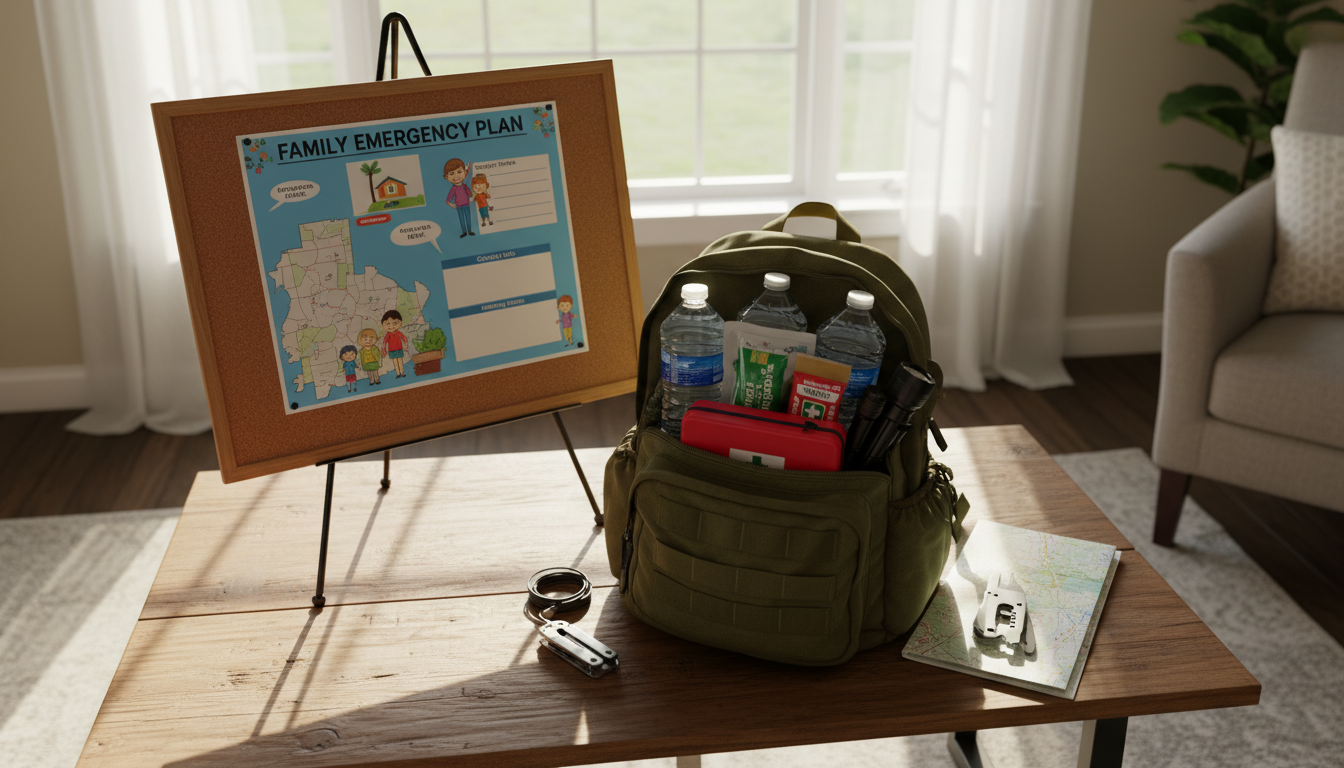
Creating a family emergency plan starts with writing it down. This helps organize your ideas, spot missing parts, and share it with everyone. Your plan will grow with your family.
First, decide what makes you leave quickly. Your checklist should include official orders, wildfires, floods, or long-lasting infrastructure failures. Knowing these helps everyone know when to go.
Give each family member a role. One person gets the bug out bags, another secures pets, and someone helps kids. This way, everyone knows their part in a crisis.
Your plan needs several meeting spots:
- One near your home for small emergencies
- One outside your neighborhood for big local disasters
- One out of town for bigger emergencies
Plan at least three ways to leave your home. Main roads might be blocked, so you need other paths.
Set up how you’ll talk before a disaster. Choose an emergency contact outside your state, set check-in times, and have backup ways to communicate. Write down all important numbers, as devices can fail or get lost.
Don’t worry if you can’t do it all at once. Spend a little time each day on it. Mapping routes one day, talking about roles another, and practicing communication tools another. Small steps add up fast and get you ahead of most families.
Creating Bug Out Bags That Work for Every Family Member
Creating emergency kits for your family means each bag must fit each person’s needs. Everyone has different abilities and needs. A good bug out bag system considers these differences and keeps your family ready.
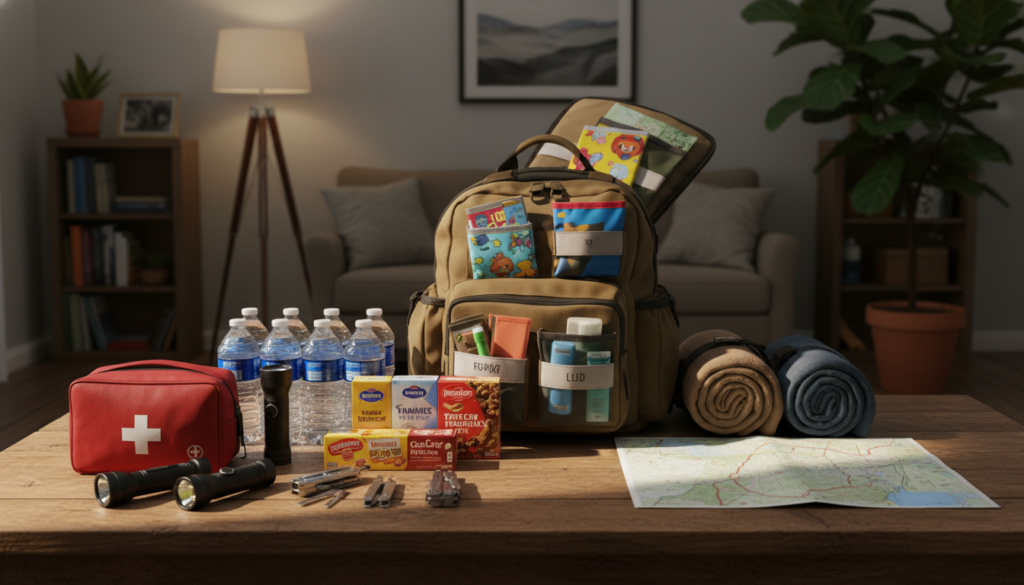
Adults and older teens can carry heavier bags, up to 30 pounds. They should have tools and skills like water filters and first aid. Younger kids need lighter bags, about 10 to 15 pounds, with snacks and a water bottle.
Small kids should carry small backpacks with snacks and clothes. Parents carry baby gear and medications in their bags. This way, kids don’t have to carry heavy survival gear.
Essential Gear for Adults vs. Children
It’s important to match gear to each person’s skill level. A 10-year-old shouldn’t carry a ferro rod if they’re not good at starting fires. Adults should have complex tools, while teens can handle more as they get older.
For kids, focus on items that make them feel confident. A whistle, flashlight, and change of clothes are good. Letting kids carry their own pack makes them feel more involved.
| Age Group | Recommended Pack Weight | Key Items | Skill Focus |
|---|---|---|---|
| Adults | 20-30 pounds | Water filter, tarp, first aid kit, tools, cooking gear | Complex tools and equipment operation |
| Teenagers | 15-25 pounds | Personal gear, lighter load of tools, navigation items | Building responsibility and outdoor skills |
| Children 7-12 | 10-15 pounds | Extra clothes, snacks, water bottle with filter, whistle, flashlight | Basic signaling and personal care |
| Children 3-6 | 5-10 pounds | Comfort items, snacks, spare clothes, toy | Familiarity and ownership of their pack |
| Infants/Toddlers | Incorporated in adult bags | Formula, diapers, bottles, medications, comfort items | Parent-managed care and support |
Dividing Supplies Strategically Across Multiple Bags
You have three main ways to share emergency supplies among your family’s bags. Each method has its own advantages and disadvantages.
The Matching Bags Strategy gives everyone the same bag. This is good for families with older kids and adults. Everyone has what they need, but it means carrying more weight.
The A/B Bag Strategy splits gear into two bags. Bag A has essentials, and Bag B has nice-to-have items. This is for families that practice choosing what’s most important.
The Divided Contents Strategy spreads supplies across bags. One person carries water, another food, and another first aid. This is best if your family stays together. Check out family bug out bag planning resources for examples.
Choose the strategy that fits your family’s age and ability. Families with young kids often prefer to stay together. Families with older kids might choose matching bags for safety if they get separated.
- Keep emergency supply kit essentials organized with compartments and labeled sections
- Place frequently used items in easy-access pockets
- Use zip-lock bags to protect contents from water damage
- Practice the weight distribution with your chosen strategy
- Start with basics and add gear gradually as your family learns
Having something is better than having nothing. Build your bags little by little and practice with your family.
Teaching Your Family Critical Bug Out Skills
Gear sits in a backpack. Skills live in your mind. When an emergency hits, you’ll want family members who can use what they have. They should also know how to improvise when supplies are low.
Building these skills takes time, but it’s worth it. Start now and practice often. Think of it as quality family time, not a chore. Your kids don’t need to be wilderness experts. Just knowing the basics can make a big difference.
The Six Essential Skills Every Family Should Master
Your family emergency plan should include training in these key areas:
- Water Skills—Finding and purifying water is your first priority. Teach children that clear water isn’t safe. Practice finding water sources and collecting rainwater. Use purification tools in your bug out bags on camping trips.
- Fire Building—Practice with lighters, waterproof matches, and other tools. Fire provides warmth, purifies water, cooks food, and boosts morale. Make it fun by building fires using different methods.
- Shelter Setup—Practice assembling emergency shelter components like tarps and emergency blankets. Try it in different weather. Teach children to find good shelter locations.
- Navigation—Teach map reading and compass use. Practice navigating to your bug out location. Show older children how to use landmarks and identify directions.
- First Aid—Young children learn to apply pressure and when to call for help. Older kids master wound care and CPR. Adults should take first aid courses and practice regularly.
- Communication—Practice using two-way radios, whistles, and signal mirrors. Create signal codes like three whistle blasts for emergencies. Practice your check-in protocols together.
Assign Roles and Cross-Train Everyone
Division of labor strengthens your team. Assign roles based on interests and natural abilities. Maybe one parent becomes the medical expert while the other focuses on navigation.
Cross-training is critical. Everyone should have basic proficiency in all areas. If your designated fire-builder gets injured or separated, someone else needs to start a fire. This backup system could save lives.
| Skill Area | Primary Person | Backup Person | Practice Frequency |
|---|---|---|---|
| Water Purification | Parent A | Teenager | Monthly |
| Fire Building | Parent B | Older Child | Quarterly |
| Shelter Assembly | Parent A | Parent B | Every 6 Months |
| Navigation | Teenager | Parent B | Monthly |
| First Aid Response | Parent B | Teenager | Quarterly |
| Communication Systems | Parent A | Older Child | Monthly |
Making Skills Practice Fun and Sustainable
Go camping and practice skills in a low-stress setting. Make activities age-appropriate and celebrate progress. Use these practice sessions as quality family bonding time. Plan camping trips where you test your gear and skills together.
Skills take time to develop. Don’t rush the process. Practice consistently, even in small ways. Your family emergency preparedness grows stronger with each training session. Regular practice keeps everyone confident and ready for whatever comes next.
Practicing Your Family Bug Out Plan Through Regular Drills
Having a plan is just the start. Your family needs to practice it often. This way, they can follow it smoothly when it’s urgent.
Drills also show you what you might not have thought of. Maybe your teenager forgets where the bug out bags are. Or, your youngest child gets scared when the alarm goes off. You might find out your evacuation route is blocked. These discoveries help save lives in real emergencies.
Try to do at least two full drills a year. Do smaller practice sessions every three months. Start with drills where you tell your family you’re practicing. This makes them feel prepared, not scared.
Running Effective Evacuation Rehearsals
Make your drills cover everything from start to finish. Start when someone triggers the alarm. Each family member should grab their bug out bag and meet at a rally point.
Check if everyone is there and has their bag. Then, drive along your evacuation route. Time how long it takes to see how fast you can do it.
After a few drills, do surprise ones at random times. These show what your family really knows. Surprise drills make you truly prepared because they test your reaction without warning.
| Drill Type | Frequency | Purpose | What to Practice |
|---|---|---|---|
| Announced Full Drill | Twice yearly | Build confidence and reduce anxiety | Complete evacuation process from alarm to arrival at meeting point |
| Surprise Partial Drill | Quarterly | Test real readiness without warning | Just grab-and-go portion or navigation only |
| Communication Drill | Quarterly | Verify contact protocols work | Testing your emergency contact list for families and out-of-area contact procedures |
| Skills Check | Quarterly | Assess individual knowledge | Each person demonstrates their role and responsibilities |
Always keep safety first during drills. Don’t speed or run red lights. The goal is to learn and find problems, not create new ones. Learn more about creating a family emergency plan
After each drill, talk about it within a few days. Ask what worked well and what didn’t. Discuss any delays or forgotten steps. Use this feedback to improve your plan and update your emergency contact list.
Building Transparency and Managing Expectations With Children
Children do better in emergencies when they know what’s happening. Explain why you’re preparing and what might happen. Talk about it in a way that’s not too scary for their age.
For younger kids, say something like: “Sometimes we need to leave home quickly because of big storms. We want to make sure everyone knows what to do so we can stay together and stay safe.” For older kids and teens, you can talk about real scenarios more directly.
Avoid being too scary or vague. Don’t describe nightmares, but don’t be too vague either. Explain what evacuation might mean:
- Leaving home for several days or longer
- Staying in unfamiliar places like shelters or hotel rooms
- Limited access to usual comforts and entertainment
- Eating different foods than you normally eat
- Following different routines and schedules
This mental preparation helps reduce panic in real emergencies. Encourage kids to ask questions and take their concerns seriously. If they worry about leaving something behind, find a way to include it in their bag.
Make younger kids feel included and empowered, not scared. Let them help pack their bags and choose their flashlight color. Praise them when they remember their roles during drills. Say it’s “our family learning important skills together,” not “scary things might happen.”
Studies show kids feel more secure when they understand what’s happening and have a plan. Your honesty about preparing for emergencies builds confidence, not fear. Learn more about resilient family preparedness
Regular drills turn your plan into a system your family can use confidently when it counts. When drills become routine, your family will feel calm and prepared, even in a crisis.
Conclusion
Creating an emergency evacuation plan for your family might seem daunting. You need to gather supplies, learn skills, and map out routes. But don’t let it overwhelm you. Start with one small step today.
Maybe talk to your family about why being prepared is important. Or maybe buy a water filter from REI or LifeStraw. Spend 20 minutes mapping escape routes from your neighborhood. Every small action helps.
Take another step tomorrow. In a few months, you’ll see how far you’ve come. Your family will have a solid plan. Everyone will know what to do in an emergency.
This isn’t about being scared or expecting the worst. It’s about being smart and protecting your loved ones. Every year, many American families face evacuations from disasters. Having a plan shows you care about their safety.
Creating an emergency plan teaches your kids valuable lessons. They learn problem-solving and responsibility. Everyone feels more confident and calm.
Children sleep better knowing their family has a plan. Parents worry less when they’re prepared. You build stronger family bonds by working together on these plans.
Start this week with a family meeting about emergency preparedness. Spend this month putting together bug out bags. Run your first evacuation drill this quarter and improve your plan.
Work on skills and finish your complete emergency evacuation plan this year. The best time to prepare was yesterday. The second-best time is right now. You can do this.
FAQ
What’s the difference between bugging out and sheltering in place?
Sheltering in place means staying home during emergencies. Bugging out means leaving quickly to a safer spot. You stay put for small issues like power outages. But, you leave for big dangers like wildfires or floods.
Having a plan for both helps your family know when to stay or go.
Why can’t I just use my family bug out plan as a solo survival strategy?
Solo plans focus on your skills and supplies. But, family plans must consider everyone’s needs. This includes age, health, and how they handle stress.
Family plans work because they’re made for your specific needs, not just for one person.
How do I balance my kids’ safety with their need to feel like they’re helping during an emergency?
Give kids tasks that fit their age and abilities. A seven-year-old can carry their bag and a flashlight. Older kids can help with younger siblings or check doors.
Teenagers might help with navigation or communication. Praise their efforts to boost their confidence and sense of importance.
What’s an out-of-state emergency contact person, and why do I need one?
An out-of-state contact is a trusted friend or family member far away. They help when local phones are down. This way, your family can stay in touch during emergencies.
Make sure they’re okay with this role and teach your kids how to reach them. Practice calling them during drills.
How many evacuation routes do I really need to plan?
Plan at least three routes to your bug out location. The primary route is the fastest. The secondary route is different from the primary.
The tertiary route is your backup. Practice these routes with your family to get familiar.
Should I include pets in my family emergency plan?
Yes, pets are part of your family. Assign someone to take care of their needs. Keep pet supplies ready in case you need to leave.
Practice loading pets into your vehicle. This helps them get used to it. Make sure your bug out location allows pets.
What should I put in a bug out bag for a child ages three to six?
For young children, focus on comfort items. Include extra clothes, shoes, and a favorite toy. Add snacks, a water bottle, and a whistle.
Keep the bag light. Young children carry their items to feel involved. Parents carry the survival gear.
How heavy should each family member’s bug out bag be?
Bag weight depends on age and fitness. Adults should carry 20 to 30 pounds. Teenagers carry 18 to 25 pounds.
Children carry 10 to 15 pounds. The bag should be 10 to 20 percent of your body weight. Adjust as needed.
Should everyone in my family have matching identical bug out bags?
There are three approaches. Matching bags mean everyone has the same gear. This is heavy but ensures everyone is self-sufficient.
A/B bags divide gear between pairs. This is vulnerable if pairs separate. Divided contents means supplies are spread across bags. This is light but requires the group to stay together.
What are the most essential items to include in a family emergency supply kit?
Every family member needs water, food, first aid, shelter, and a way to signal for help. Include a light source and a fire starter.
Add navigation tools, medications, extra clothes, and comfort items for kids. Prioritize reusable gear over consumables.
How often should my family practice our evacuation plan?
Practice at least twice a year, with partial drills quarterly. Start with announced drills for younger kids. Progress to surprise drills.
Time each drill and debrief afterwards. Use feedback to improve your plan. Regular practice makes your plan effective.
What skills should my whole family learn for emergency preparedness?
Essential skills include water, fire, shelter, navigation, first aid, and communication. Everyone should have basic skills, with deeper expertise based on interest.
Make skills practice a family activity. This builds confidence and quality time together.
How do I teach my child about emergency preparedness without frightening them?
Be honest but age-appropriate. Explain natural disasters and evacuation scenarios to older kids. For younger kids, frame it as a family activity.
Answer their questions seriously and include them in the process. This makes them feel included and empowered.
What should I include in my family emergency contact list?
List your out-of-state contact, emergency numbers, and important contacts. Include addresses and insurance information. Keep it in your bug out bags and share with trusted family members.
Update it annually and when contact information changes.
How do I create a family communication plan for emergencies when cell service might be down?
Establish multiple communication layers. Choose a designated out-of-state contact and backup methods like two-way radios or signal mirrors.
Practice using these methods regularly. This ensures your family can stay in touch during emergencies.
What’s the best bug out location for my family?
Choose a location far from your home to escape disasters. It could be a family member’s home, a trusted friend’s property, or a campground.
Scout the location in advance. Make sure your family has visited it before to feel familiar.
How do I account for family members with special medical needs in my family emergency plan?
Document all medications, dosages, and medical equipment. Store extra medications in your bug out bags. Check expiration dates every six months.
Include copies of prescriptions in case of loss. Practice your evacuation plan considering any special needs. Assign a primary medical coordinator.
How do I know if my family is actually prepared or just “feeling” prepared?
The true test is your evacuation drills. If you can execute your plan smoothly, then you’re prepared. Drills reveal what needs improvement.
Feeling prepared is not enough. Real preparedness is shown through successful drills.
How much should I budget for assembling complete family emergency preparedness supplies?
You can start with basics for 0–0 for a family of four. Start with essentials and add more gradually. Check for discounts and use items you already have.
Don’t wait for more money. Start now and build gradually.
What makes family bug out planning different from storing supplies for sheltering in place?
Bug out planning focuses on mobility and portability. Everything must be lightweight and fit in bags. This is different from storing supplies for staying at home.