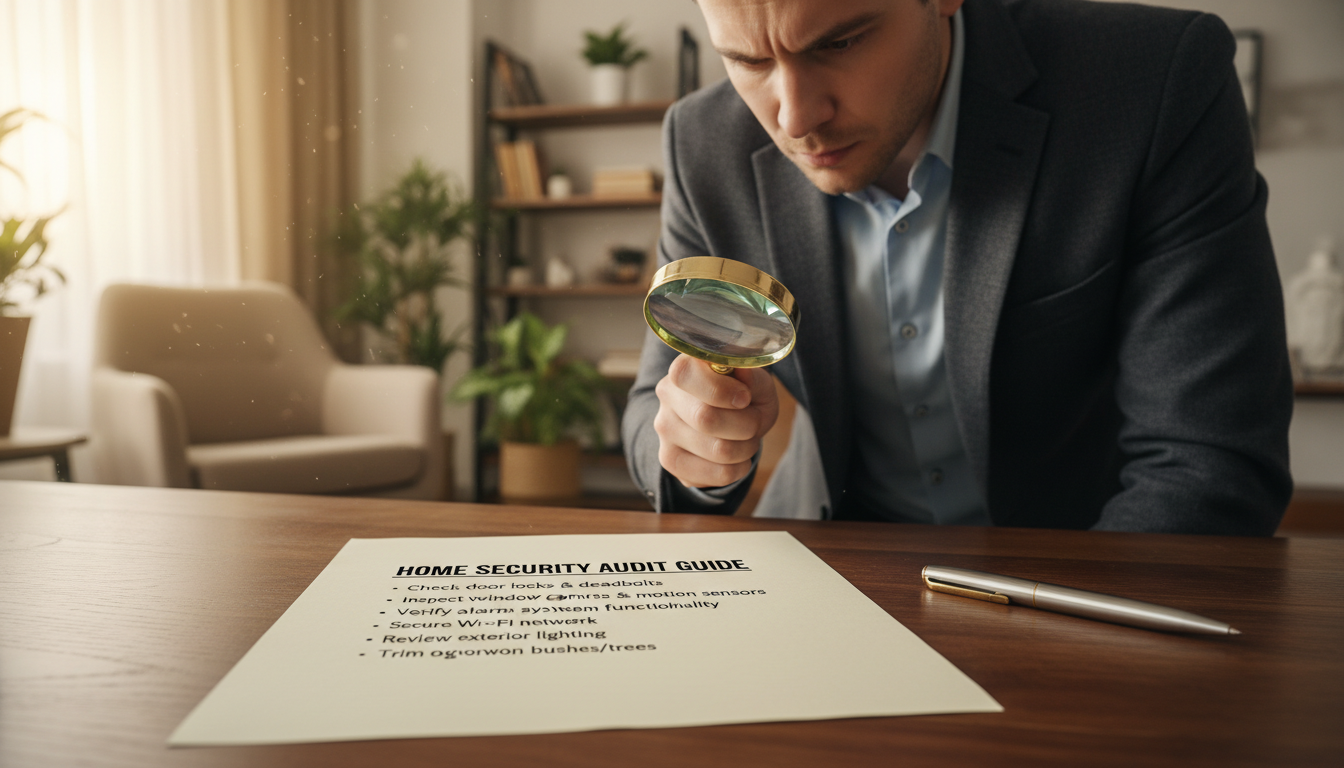
Your home is where your family feels safe. You don’t need to spend a lot or take weeks to make it secure. With items you already have, you can do a full security check in just a few hours.
Many people delay checking their home’s security for years. This puts their families and belongings at risk. But, you don’t need to be an expert to find and fix weak spots in your home’s defense.
This DIY guide will show you how to easily check your home’s security. You’ll find weak spots, test your safety gear, and plan to fix issues. And the best part? You can do it all by yourself, without needing any special skills.
A good home security audit covers three main areas. First, you’ll check for dangers like fires, carbon monoxide leaks, and water damage. Then, you’ll see if you’re ready for emergencies that might cut off power or water. Lastly, you’ll check your home’s defenses against break-ins and burglaries by looking at locks, windows, and lighting.
Doing your audit during both day and night is important. Darkness helps you spot lighting issues you might miss in the day. Daytime checks show how visible your home is from the street.
By the end of this afternoon, you’ll know exactly how secure your home is. You’ll also have a clear plan to make it even safer.
Table of Contents
Why Every Homeowner Needs a Home Security Audit Guide
Your home is your most valuable asset. It needs protection from threats you might not even realize exist. A security audit for homeowners lets you see your home from a burglar’s perspective. Most break-ins happen at homes with obvious security gaps.
These gaps don’t announce themselves. They hide in plain sight until someone discovers them the wrong way.
Think about your home right now. When was the last time you checked your door locks? Do your window sensors work? Is your landscaping creating dark hiding spots around your property? These details matter.
Without a home protection evaluation guide, you’re making assumptions about your safety instead of knowing the facts.
Homes change over time. Locks wear out. Batteries die in security systems. Plants grow and block light from outdoor areas. New weaknesses develop without you noticing them.
A regular security audit catches these problems before they become expensive emergencies.
The benefits go beyond just stopping burglars. A thorough security assessment also reveals fire hazards, carbon monoxide risks, and emergency preparedness gaps. You’re protecting everything that matters to your family.
When you work with experienced home security professionals, you gain peace of mind backed by real knowledge.
Small fixes today prevent costly damage tomorrow. Identifying and fixing minor issues now stops break-ins before they happen. This smart approach to home protection is practical, not fearful. You’re being prepared, not paranoid.
- Know your home’s exact security status
- Find problems before burglars do
- Save money on emergency repairs
- Protect your family and belongings
- Create a clear action plan for improvements
Evaluating Your Property from a Burglar’s Perspective
Changing how you see your home is key to a good security check. Burglars look for easy targets. By thinking like a criminal, you can spot weaknesses before they do. This mindset helps you find and fix security gaps.
Start by walking your property at different times. Check it during the day and then at night. Lighting changes a lot, and break-ins can happen anytime. Bring a friend to help you spot details you might miss.
Walk from your front door to the back. Don’t forget areas like garages, sheds, laundry rooms, and side entrances. These spots are often overlooked.
Ask yourself if you could break into your home. If yes, you’ve found a weakness. This question helps you quickly find and fix security gaps.
Assessing Outdoor Lighting and Dark Spots
Darkness helps burglars hide. Walk your property to find dark spots. Look for these lighting issues:
- Burned-out bulbs near doors and windows
- Trees or shrubs blocking light from reaching the house
- Motion-sensor lights that don’t activate properly
- Corners and side yards that remain dark at night
- Garage and shed entrances without adequate illumination
Well-lit exteriors scare off intruders. They prefer darkness. Install lights above doors, along walkways, and around the perimeter. Use motion-activated lights where you don’t go often.
Checking Doors, Windows, and Entry Points
Your doors and windows are prime targets. Examine each entry point carefully:
| Entry Point | What to Check | Common Weaknesses |
|---|---|---|
| Front Door | Frame strength, lock condition, hinges | Hollow core doors, weak strikes, visible hinges |
| Back Door | Deadbolt installation, frame damage, glass panes | Missing deadbolts, rotting frames, breakable glass |
| Windows | Latch condition, glass integrity, locks | Broken locks, cracked glass, stuck latches |
| Garage Door | Automatic opener security, manual lock | Disabled sensors, missing locks, gaps |
| Sliding Doors | Track condition, lock function, glass security | Loose tracks, broken locks, brittle glass |
Test each lock by trying to open it from outside. Push on door frames to check for damage. Check if doors open inward or outward. Inward-opening doors are stronger. Look for daylight around door edges, which signals poor sealing and weak security.
Examining Landscaping and Hiding Places
Overgrown bushes and dense shrubs are perfect for burglars. Complete your home vulnerability assessment by evaluating your landscape design:
- Trim bushes and trees away from windows and doors
- Remove branches that reach roof lines or second-story windows
- Eliminate dense shrubs near entry points
- Clear visibility lines around gates and side yards
- Remove piles of wood, pallets, or garden equipment that offer hiding spots
Check fences and gates for locks and if they open freely. Look for gaps that let someone peek into your yard. Keep sightlines clear so neighbors can see your property and notice suspicious activity. Burglars avoid homes where they feel exposed or observed.
Don’t forget detached structures. Sheds and outbuildings need the same attention as your main home. These areas hold tools and equipment that thieves want. Secure all doors, windows, and padlocks on these spaces during your residential security evaluation.
Inspecting Your Interior Security Measures
After checking your home’s exterior, it’s time to look inside. Your home security checklist should include a detailed check of your interior defenses. Think of your home as a fortress with many walls. The outside is your first defense, but inside systems catch intruders who get past that.
Interior sensors and detectors alert you when something is wrong. A good checklist includes checking every door and window sensor, testing motion detectors, and making sure your control panel shows no errors. These tools work best when placed right and kept up to date.
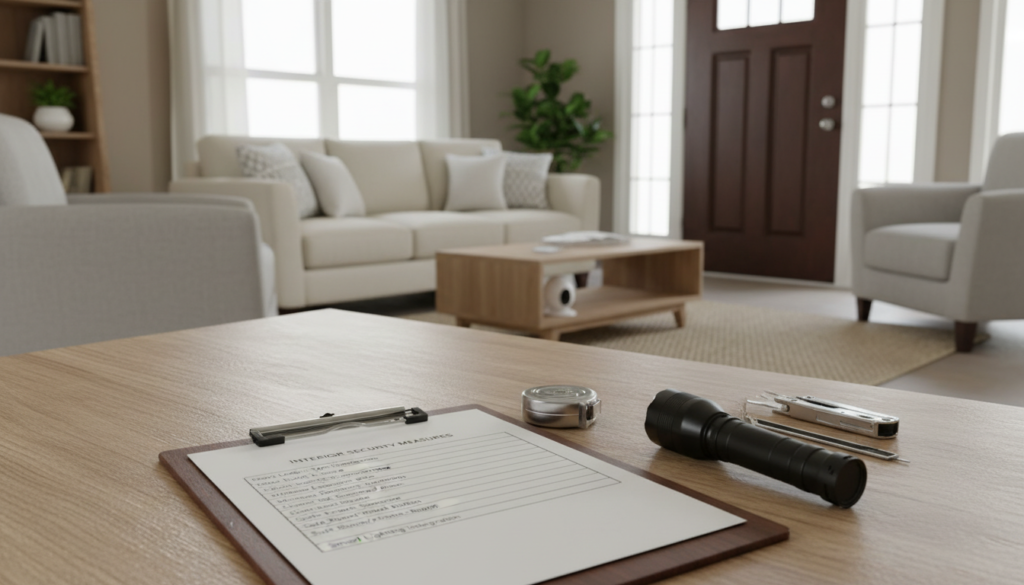
Start by walking through your home and finding all ground-floor entry points. Every door leading outside needs protection. Windows on the ground floor and upper-floor windows that are easy to reach should also have sensors. Your checklist should note which entry points have sensors and which need them.
Door and Window Sensors
Door and window sensors are your first alert system. When someone opens a protected door or window, the sensor sends a signal. This could be a chime, a phone notification, or an alarm sound. Test each sensor by opening the door or window slowly. Listen for the chime or check your phone for a notification. If there’s a delay of more than two seconds, the sensor might need adjustment or a new battery.
Magnetic sensors work best when aligned properly. The magnet and sensor should be within one-quarter inch of each other. Clean the sensor contacts sometimes to remove dust and debris that can block the signal.
Motion Detectors and Smart Lighting
Motion detectors protect your home’s interior paths. Place these sensors in hallways, bedrooms, and living areas. These are spaces intruders must pass through to reach valuables. Position detectors high on walls, away from vents and heat sources that might trigger false alarms.
Smart lighting enhances your home security. Use timers or smartphone-controlled bulbs to make it seem like someone is home when you’re away. Set lights to turn on in different rooms at different times. This unpredictable pattern looks more natural than lights that stay on all night.
| Interior Security Component | Best Placement | Maintenance Task | Testing Frequency |
|---|---|---|---|
| Door Sensors | All exterior doors, ground-floor windows | Check battery level, clean contacts | Monthly |
| Window Sensors | Ground floor and accessible upper floors | Verify magnet alignment, replace batteries yearly | Monthly |
| Motion Detectors | Hallways, bedrooms, main living areas | Clear dust, adjust angle if false alarms occur | Every three months |
| Control Panel | Central location near main entry | Check for error messages, test backup battery | Monthly |
| Smart Lights | Living room, bedroom, kitchen | Update app settings, check WiFi connection | As needed |
Control Panel and System Verification
Your security system’s control panel is the brain of your home defense. Check it weekly for error messages or warning lights. Low battery indicators mean replacement batteries are needed. Communication errors might indicate connectivity problems that prevent alerts from reaching your phone. A home security assessment checklist must include testing your control panel’s backup battery at least once monthly.
- Open the control panel and look for red or yellow warning lights
- Press the test button to verify the system responds correctly
- Check that all sensors show as “armed” or “ready” in the system menu
- Replace any batteries showing low charge warnings
- Verify your smartphone app receives notifications when sensors are triggered
- Test the backup battery by unplugging the panel and confirming it stays powered
Interior security isn’t just about catching burglars. It’s about making your home difficult enough to target that intruders move on to easier prey. Combined with your exterior defenses and a solid emergency plan, strong interior security gives you peace of mind and real protection.
Testing Your Existing Security Equipment and Sensors
Having security equipment in your home is only good if it works when you need it. The residential safety audit process means testing every device to keep your home safe. Many forget that equipment needs regular checks to work right.
Make a testing routine to keep your security system in top shape. Write down when you test each device and note any problems. This helps you stay organized and remember what needs fixing.
Verifying Door and Window Sensors
Door and window sensors protect against break-ins. During your safety audit, slowly open each protected door and window. You should hear a beep or chime from your security panel. If you don’t, the battery likely needs replacing.
Test every entrance, including basement windows and side doors. People often forget about these.
- Open doors and windows one at a time
- Listen for beep or chime sounds
- Check the security panel for alerts
- Replace batteries if you hear no sound
- Test basement and back entrance sensors
Checking Smoke Alarms and Carbon Monoxide Detectors
Safety is more than just theft protection. Your safety audit must include smoke alarms and carbon monoxide detectors. Press the test button on each alarm and listen for the sound. Most alarms need new batteries once a year.
Mark your calendar to test these devices every month. This way, you never forget.
| Device Type | Testing Frequency | Battery Replacement | Location Check |
|---|---|---|---|
| Smoke Alarms | Monthly | Yearly or when low battery beeps | Every bedroom and hallway |
| Carbon Monoxide Detectors | Monthly | Yearly or when low battery beeps | Near bedrooms and furnaces |
| Door Sensors | Quarterly | As needed when alerts show | All main entrances |
Testing Motion Detectors and Surveillance Cameras
Motion detectors and surveillance cameras add extra protection. Walk in front of motion detectors to trigger them during your safety audit. Check that your camera feeds display clearly on your monitor or mobile app.
Make sure cameras point at the right angles. This catches activity at entrances and dark corners.
If you have a monitored security system, contact your monitoring company before testing. Tell them you are conducting a test so they do not send emergency responders. Many companies recommend testing the signal to their monitoring station at least once a month.
Check your security panel regularly for notifications. This includes low batteries, communication problems, or other issues that need fixing.
Keep your contact information current with your monitoring company. Update your home phone number, cell phone numbers, and emergency contacts at least once every year. This ensures the monitoring station can reach you quickly during a real emergency.
- Test motion detectors by walking across the detection area
- Verify camera feeds work on all devices
- Check camera angles and visibility
- Call monitoring company before signal tests
- Review all panel alerts and warnings
- Update contact information annually
Testing equipment takes time, but protecting your family is worth it. Replace old devices that fail tests and update information with monitoring companies. Your residential safety audit process protects your home by identifying weak spots before criminals do.
Preparing for Emergency Situations Beyond Break-Ins
Protecting your home is more than just stopping burglars. Your family faces many dangers like fires, floods, and natural disasters. It’s important to plan for these emergencies just like you do for burglaries. Both need you to find weak spots and fix them before trouble hits.
First, check your fire safety. Make sure you have fire extinguishers in key places like the kitchen and garage. Each floor should have one. Learn how to use them: Pull the pin, Aim, Squeeze, and Sweep.
Also, keep your fireplace clean. Schedule yearly cleanings and make sure drapes and carpets are far from the fireplace.
Water damage is another big risk. Test your sump pump often if you have a basement. Use water sensors in places like basements and kitchens to catch leaks early.
Building Your Emergency Supply Kit
Every home needs basic supplies for emergencies. A good security plan includes checking what you have.
- One gallon of water per person per day
- Non-perishable food items with expiration dates checked quarterly
- Battery-powered or hand-crank radio and flashlight
- First-aid kit and prescription medications
- Important documents in a fireproof safe
- Pet food and infant supplies if needed
Keep your water in food-grade containers in a cool spot. Check your food every six months. Mark the dates so you know when to replace items.
Creating Your Family Emergency Plan
Talking with your family is key to a good security plan. Meet once a year to plan what to do in emergencies.
| Emergency Type | Interior Safe Room | Exterior Meeting Point | Communication Plan |
|---|---|---|---|
| Fire or Evacuation | Not applicable | Designated tree or mailbox outside | Call or text a family member outside the area |
| Tornado or Severe Storm | Interior basement room or bathroom | Not applicable | Stay sheltered until all-clear signal |
| Flood or Water Emergency | Upper floor or attic area | Higher ground location nearby | Emergency services or family hotline |
Make sure everyone knows where to meet in an emergency. Give each person a job. Young kids should know important phone numbers. Keep important documents in a safe or with a trusted person outside your home.
This way of preparing for emergencies works with your security plan. You’re not just fighting crime. You’re also ready for any unexpected event life might throw at you.
Creating Your Home Security Improvement Action Plan
You’ve done your home security audit and found some weak spots. Now, it’s time to make those fixes real. You need a solid plan to tackle these issues. Your Home Security Audit Guide will be your guide.
You don’t have to fix everything at once. Most audits reveal many problems, some big, some small. It’s normal to feel overwhelmed. The goal is to make a plan that focuses on the biggest threats first.
Prioritizing Vulnerabilities You’ve Discovered
First, list all the security weaknesses you found. Organize them by where they are and how risky they are. This helps you see where burglars might target your home first.
- Critical issues: Broken locks, missing deadbolts, or unsecured entry doors
- High priority: Broken windows, poor outdoor lighting, or overgrown landscaping
- Medium priority: Worn weatherstripping, non-functioning sensors, or weak window frames
- Lower priority: Cosmetic improvements or convenience upgrades
Fix critical issues quickly, within days or weeks. Tackle high-priority items in a month. This keeps you safe while you plan bigger changes.
Deciding Between DIY Fixes and Professional Upgrades
Some fixes you can do yourself, others need a pro. Think about your skills, time, and budget when choosing.
| Improvement Type | DIY Option | Professional Option |
|---|---|---|
| Deadbolts and locks | Install basic deadbolts yourself | Smart locks with remote access |
| Outdoor lighting | Add motion-sensor lights | Integrated smart lighting systems |
| Door reinforcement | Install security strike plates | Full frame and door upgrades |
| Security system | Basic window and door sensors | Comprehensive monitoring with cameras |
Professional security companies offer comprehensive solutions. They design modern systems with outdoor cameras, motion sensors, smart door locks, and automation. These systems boost security and add convenience. An upgraded system gives you peace of mind, whether you’re home or away.
Make a budget for your upgrades. Spread costs over the year if needed. Your safety is more important than rushing to fix everything at once.
Conclusion
You’ve taken a big step to protect your family and home. This guide helped you understand your property’s strengths and weaknesses. You’ve seen your home from a burglar’s perspective and tested your equipment.
You now know where to focus your efforts. This guide covered many important areas. You looked at outdoor lighting and landscaping, checked doors and windows, and tested sensors.
You also created an action plan with priorities. Each step is vital for keeping your family safe. Remember, real security work is ongoing.
Your home changes, and equipment gets older. New vulnerabilities can appear. Plan to repeat this audit at least once a year, or twice when seasons change.
Start with your action plan today. Even small fixes are important. Replace smoke alarm batteries, trim bushes, and fix broken locks.
Small actions build momentum. Every improvement makes your home safer. This gives you real peace of mind.
The goal is not to make your home a fortress. You want a safe and welcoming space. Smart security measures protect what matters while keeping your home inviting.
If your audit revealed big problems, that’s good news. You caught issues before trouble started. You can fix them now. Being aware and taking action shows you care about your family’s safety.
FAQ
How long does a complete home security audit take?
A thorough home security check can be done in one afternoon. It usually takes three to four hours, depending on your home’s size and complexity. This guide helps you check all important areas without getting lost in details.
By following the steps, you can find most vulnerabilities quickly. Focus on the most important areas to make your audit efficient. This way, you can create a detailed checklist in just one session.
Do I need to hire a professional security consultant for a home security audit?
You don’t need to hire experts for a good home security audit. This DIY guide helps homeowners find vulnerabilities themselves. Most security weaknesses are easy to spot, like poor lighting or weak locks.
Professional services might be needed for complex systems or after you’ve identified gaps. But, you can do the initial assessment yourself, even if you’re not tech-savvy.
What makes my home attractive to burglars, and how can I identify these vulnerabilities?
Burglars look for easy targets. They seek dark areas, unlocked doors, and overgrown bushes. They also look for homes that seem empty or have non-working security systems.
This guide teaches you to see your home from a burglar’s perspective. Walk your property at different times to find vulnerabilities. Spotting these weaknesses helps you protect your home like a pro.
Should I conduct my home security assessment only during the day?
No, it’s important to check your home at different times. Daylight hides some vulnerabilities, but darkness reveals them. Check your home in the evening or early morning.
Test outdoor lighting and motion-activated lights to see if they work. This ensures you catch all weaknesses, no matter the time.
What’s the most important thing to check on doors and windows during my security audit?
Make sure every entry point has a working lock and sensor. Test locks, frames, and sensors during your audit. Don’t forget to check side gates, back windows, and patio doors.
Many homeowners overlook these areas, but burglars target them. A complete checklist includes all possible entry points.
How often should I replace batteries in my security sensors and safety equipment?
Most devices need battery replacement annually. Check each device’s battery status and note the replacement date. Change batteries when switching to daylight saving time for a simple reminder.
Smoke alarms and carbon monoxide detectors should be tested monthly and replaced annually, even if they seem fine.
What should I do if I find that my security system sensors aren’t working properly?
Don’t panic if sensors aren’t working. This is why you’re doing the audit. Check alignment and replace batteries first. If sensors are faulty, contact your system provider.
For monitored systems, let them know before testing to avoid false alarms. Widespread problems might mean your system needs an update or replacement.
Are interior motion detectors worth installing, and where should they be positioned?
Motion detectors add valuable protection. They’re most effective in hallways and common rooms. Place them about six feet high, angled to cover approach routes.
They should detect human movement while avoiding false alarms. Use them as a complement to door and window sensors for layered security.
How do I test my security system without triggering false alarms that alert the monitoring company?
Before testing, contact your monitoring provider. Inform them you’ll be conducting a test. They’ll temporarily disable the alarm response.
This prevents false alarms and saves emergency resources. Many companies have specific procedures for testing—ask when you contact them.
What’s the PASS method for using fire extinguishers, and why does it matter for my home security audit?
PASS is an acronym for using fire extinguishers: Pull the safety pin, Aim the nozzle, Squeeze the handle, and Sweep side to side. Ensure your family knows this method and that extinguishers are accessible and labeled.
Fire safety is critical, as fires are a major threat. Verify that fire extinguishers are present in high-risk areas and that everyone understands their operation.
Should I worry about carbon monoxide detection as part of my home security audit?
Absolutely. Carbon monoxide is invisible and odorless, posing serious risks. Treat carbon monoxide protection as essential security infrastructure.
Verify that every level of your home has a functional detector. Test them monthly to ensure they’re working correctly. Carbon monoxide detection is fundamental to protecting your family.
How should I store emergency supplies as part of my security risk assessment home?
Assemble emergency kits with supplies for at least 72 hours during disasters. Store one gallon of drinking water per person per day in a cool, dark location. Include non-perishable foods, a manual can opener, and important documents.
For families with pets, include pet food and supplies. Store these kits in an accessible location that every household member knows about. This prepares you responsibly, like maintaining insurance.
What should I include in my family emergency plan during this security audit for homeowners?
Your plan should cover what to do if family members are separated during emergencies. Designate an interior safe room and an exterior meeting point. Ensure everyone knows how to communicate and has an out-of-state contact person.
Write down important phone numbers and practice your plan with family members. This ensures your physical security measures are backed by practical emergency procedures.
Should I keep important documents in my home, and how should they be protected?
Keep originals of important documents in a fireproof safe or a safe deposit box. For documents you need regular access to, keep copies in your safe and originals off-site. Taking photos or digital scans of critical documents provides backup protection.
When conducting your residential security evaluation, assess whether your current document storage meets these standards. Protecting your family includes protecting the documentation that proves ownership and establishes rights.
How should I prioritize the vulnerabilities I discover during my home security audit?
Create a prioritized action plan after your audit. Start with immediate risks like non-functioning locks or missing sensors. Then, focus on significant improvements like new deadbolts or security system installation.
Address longer-term enhancements last. This approach ensures you tackle the most urgent issues first, using your limited resources effectively.
When should I tackle DIY fixes versus calling a professional during my home security improvement plan?
This guide recognizes that not all improvements are DIY-friendly. Simple fixes like replacing locks or trimming landscaping are suitable for homeowners. But, complex installations or structural changes may require professional help.
Consult professionals for complex security systems or if you’re unsure about addressing vulnerabilities. Your comfort level and expertise determine whether you handle it yourself or hire experts.
How often should I repeat this home security audit process?
Home security is an ongoing responsibility. Conduct a complete audit at least annually, ideally seasonally. Changes like worn locks or new vulnerabilities emerge constantly.
Seasonal audits catch these changes before they become risks. In addition to full audits, do monthly checks of critical safety equipment. If you make significant changes or experience break-ins, do an additional audit.
What’s the difference between security measures that create a safe home versus one that feels like a fortress?
The goal is to create security that provides peace of mind without making your home feel imposing. Reasonable measures like locks, lighting, and sensors enhance security without looking like a fortress.
Avoid excessive measures like bars on windows or high-voltage fencing. Modern solutions like Ring or SimpliSafe offer discreet protection. Your home should feel safe and welcoming while being unappealing to burglars.
What should I do if my home security audit reveals concerning vulnerabilities I feel unprepared to address?
Finding vulnerabilities might feel overwhelming, but it’s a chance to fix problems before they become bigger issues. Start with quick fixes like replacing batteries or trimming bushes.
For bigger issues, create a timeline for addressing them. Don’t hesitate to contact professionals for help. Taking small steps creates momentum toward meaningful improvement.
Can I use my smartphone or smart home devices as part of my home security audit findings?
Absolutely. Modern smart home technology integrates well into a home security audit. Smart doorbell cameras and locks provide additional protection.
Motion sensors and door sensors work with platforms like Amazon Alexa or Google Home. Smart lighting systems create the illusion of occupancy when you’re away. Evaluate if smart devices fill identified gaps effectively.
Should my home security audit include checking for signs of previous break-in attempts?
Yes. Look for signs of previous attempts during your audit. Evidence like pry marks or broken screens indicates burglars have targeted your home before.
Address these vulnerabilities immediately and consider filing a police report. This information helps you focus on the most vulnerable areas for improvement.
What role does neighborhood awareness play in my home security audit?
Neighborhood conditions affect your security. Note the presence of street lighting, foot traffic, and engaged neighbors during your audit. Well-maintained neighborhoods are less attractive to burglars.
Getting to know neighbors creates a surveillance network. Consider your neighborhood’s broader context when planning your security measures.
How do I test my security system without triggering false alarms that alert the monitoring company?
Before testing, contact your monitoring provider. Inform them you’ll be conducting a test. They’ll temporarily disable the alarm response.
This prevents false alarms and saves emergency resources. Many companies have specific procedures for testing—ask when you contact them.
What’s the PASS method for using fire extinguishers, and why does it matter for my home security audit?
PASS is an acronym for using fire extinguishers: Pull the safety pin, Aim the nozzle, Squeeze the handle, and Sweep side to side. Ensure your family knows this method and that extinguishers are accessible and labeled.
Fire safety is critical, as fires are a major threat. Verify that fire extinguishers are present in high-risk areas and that everyone understands their operation.
Should I worry about carbon monoxide detection as part of my home security audit?
Absolutely. Carbon monoxide is invisible and odorless, posing serious risks. Treat carbon monoxide protection as essential security infrastructure.
Verify that every level of your home has a functional detector. Test them monthly to ensure they’re working correctly. Carbon monoxide detection is fundamental to protecting your family.
How should I store emergency supplies as part of my security risk assessment home?
Assemble emergency kits with supplies for at least 72 hours during disasters. Store one gallon of drinking water per person per day in a cool, dark location. Include non-perishable foods, a manual can opener, and important documents.
For families with pets, include pet food and supplies. Store these kits in an accessible location that every household member knows about. This prepares you responsibly, like maintaining insurance.
What should I include in my family emergency plan during this security audit for homeowners?
Your plan should cover what to do if family members are separated during emergencies. Designate an interior safe room and an exterior meeting point. Ensure everyone knows how to communicate and has an out-of-state contact person.
Write down important phone numbers and practice your plan with family members. This ensures your physical security measures are backed by practical emergency procedures.
Should I keep important documents in my home, and how should they be protected?
Keep originals of important documents in a fireproof safe or a safe deposit box. For documents you need regular access to, keep copies in your safe and originals off-site. Taking photos or digital scans of critical documents provides backup protection.
When conducting your residential security evaluation, assess whether your current document storage meets these standards. Protecting your family includes protecting the documentation that proves ownership and establishes rights.
How should I prioritize the vulnerabilities I discover during my home security audit?
Create a prioritized action plan after your audit. Start with immediate risks like non-functioning locks or missing sensors. Then, focus on significant improvements like new deadbolts or security system installation.
Address longer-term enhancements last. This approach ensures you tackle the most urgent issues first, using your limited resources effectively.
When should I tackle DIY fixes versus calling a professional during my home security improvement plan?
This guide recognizes that not all improvements are DIY-friendly. Simple fixes like replacing locks or trimming landscaping are suitable for homeowners. But, complex installations or structural changes may require professional help.
Consult professionals for complex security systems or if you’re unsure about addressing vulnerabilities. Your comfort level and expertise determine whether you handle it yourself or hire experts.
How often should I repeat this home security audit process?
Home security is an ongoing responsibility. Conduct a complete audit at least annually, ideally seasonally. Changes like worn locks or new vulnerabilities emerge constantly.
Seasonal audits catch these changes before they become risks. In addition to full audits, do monthly checks of critical safety equipment. If you make significant changes or experience break-ins, do an additional audit.
What’s the difference between security measures that create a safe home versus one that feels like a fortress?
The goal is to create security that provides peace of mind without making your home feel imposing. Reasonable measures like locks, lighting, and sensors enhance security without looking like a fortress.
Avoid excessive measures like bars on windows or high-voltage fencing. Modern solutions like Ring or SimpliSafe offer discreet protection. Your home should feel safe and welcoming while being unappealing to burglars.
What should I do if my home security audit reveals concerning vulnerabilities I feel unprepared to address?
Finding vulnerabilities might feel overwhelming, but it’s a chance to fix problems before they become bigger issues. Start with quick fixes like replacing batteries or trimming bushes.
For bigger issues, create a timeline for addressing them. Don’t hesitate to contact professionals for help. Taking small steps creates momentum toward meaningful improvement.
Can I use my smartphone or smart home devices as part of my home security audit findings?
Absolutely. Modern smart home technology integrates well into a home security audit. Smart doorbell cameras and locks provide additional protection.
Motion sensors and door sensors work with platforms like Amazon Alexa or Google Home. Smart lighting systems create the illusion of occupancy when you’re away. Evaluate if smart devices fill identified gaps effectively.
Should my home security audit include checking for signs of previous break-in attempts?
Yes. Look for signs of previous attempts during your audit. Evidence like pry marks or broken screens indicates burglars have targeted your home before.
Address these vulnerabilities immediately and consider filing a police report. This information helps you focus on the most vulnerable areas for improvement.
What role does neighborhood awareness play in my home security audit?
Neighborhood conditions affect your security. Note the presence of street lighting, foot traffic, and engaged neighbors during your audit. Well-maintained neighborhoods are less attractive to burglars.
Getting to know neighbors creates a surveillance network. Consider your neighborhood’s broader context when planning your security measures.