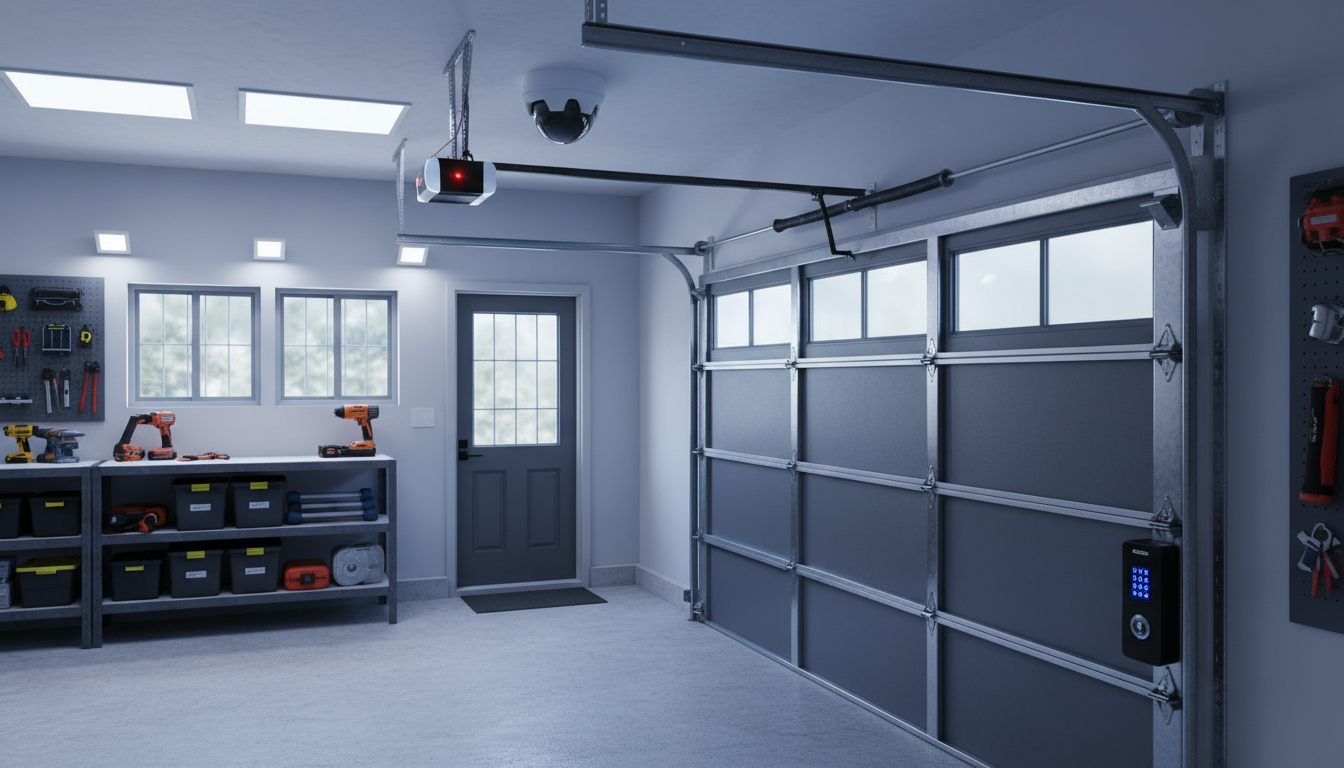
Your garage is a special case when it comes to home safety. It’s not fully inside or outside. This makes it often overlooked in home security plans. People focus on doorbell cameras and alarms for the front door, but ignore the garage.
Security experts warn that burglars see garage doors as an easy way in. These doors open quickly and have fewer defenses than other entry points. Plus, many garages connect to living areas through doors that are often left unlocked.
Your garage is a treasure trove for thieves. It’s filled with valuable items like power tools, bicycles, and more. Many homeowners store thousands of dollars’ worth of goods without proper protection. This makes it easy for burglars to grab valuable items and quickly enter your home.
But, securing your garage doesn’t have to be hard or costly. Learning about garage security basics can help protect your home. Simple changes in hardware, technology, and upkeep can make your garage a strong security point. This article will show you how to improve your garage security easily.
Table of Contents
Why Your Garage Is a Burglar’s Preferred Entry Point
Your garage might seem safe, but thieves see it as an easy target. They like the quick access, the hidden view from the street, and the direct path to your home. Knowing why burglars choose this spot is key to keeping your garage safe.
Garage doors are big and made of thin materials. Many old openers are easy to hack. And once inside, thieves often find an unlocked door to your home.
The Middle Ground That Homeowners Forget
Your garage is a middle ground in your mind. It’s not fully inside or outside. This makes it a security risk that many forget.
You lock your front door but often leave the garage door open. You park your car and feel safe, not realizing you’ve left your home open to thieves.
This false sense of security is common. Homeowners lock their main doors but not their garage. Burglars know this and use it to their advantage.
High-Value Items in an Accessible Space
Your garage likely holds thousands of dollars worth of items. Think about what’s in there right now:
- Power tools and equipment
- Bicycles and sporting gear
- Automotive parts and accessories
- Lawn mowers and yard equipment
- Recreational items and electronics
Thieves target these items because they’re easy to steal and sell. Unlike home items, garage valuables can be grabbed quickly without breaking in.
Preventing garage break-ins is critical to protect your valuables. A single theft can cost you hundreds or thousands of dollars. These items can vanish in seconds after a break-in.
Common Vulnerabilities in Garage Door Systems
Your garage door faces specific security challenges that many homeowners overlook. Understanding these weak points helps you take action before criminals exploit them. Most residential garage doors share similar vulnerabilities that make them attractive targets for break-ins.
The technology powering your garage door opener plays a major role in garage door security. Older systems rely on fixed code technology, which transmits the same signal each time you press the remote. Thieves can capture these codes with inexpensive devices costing under $100 and replay them to gain entry. Newer rolling code technology changes the signal each time, making this attack much harder.
Physical weaknesses present serious concerns. Builder-grade garage doors feature thin metal panels that bend or dent easily. Once damaged, these panels can be pried open. The metal tracks and hinges often lack robust reinforcement, leaving them vulnerable to determined intruders. Weak garage door locks provide minimal resistance to forced entry attempts.
Many garages have another critical vulnerability: the manual release cord. This red handle hangs from the opener mechanism and disengages the automatic system during power outages. Burglars can break a window or squeeze through gaps to access this cord, then use a wire hanger to pull it from outside.
Installation and maintenance issues create additional problems. Misaligned tracks, loose brackets, and gaps between the door and frame give criminals prying points. Worn springs prevent doors from closing completely. Damaged weather sealing creates openings for entry.
- Fixed code openers that can be intercepted
- Thin metal panels susceptible to bending
- Accessible manual release mechanisms
- Weak or outdated garage door locks
- Poor installation with gaps and misalignment
- Deteriorating springs and cables
Recognizing these vulnerabilities puts you ahead. The next sections show you practical solutions to strengthen your garage door security and protect your home.
Garage Security Basics
Cameras and alarms catch problems after they happen. But, garage safety is best when you add strong physical barriers. Making it hard for someone to break in from the start is key. You can do most of these upgrades yourself with basic tools.
Think of your garage security like layers of protection. The outside layer stops forced entry attempts. The inside layer keeps intruders away from your home. When you combine these physical improvements with detection systems, you create a complete security plan.
Reinforcing Your Garage Door Hardware
Your garage door is only as strong as its weakest part. Standard hinges and brackets bend under pressure. Upgrading to heavy-duty hardware makes a real difference.
- Install reinforced hinges and brackets rated for high security
- Add horizontal bracing bars inside the door to prevent panel bending
- Use bolts and anchors that connect to wall studs, not just drywall
- Consider multi-layer steel doors with internal bracing for maximum strength
- Install slide locks or deadbolts on the inside when the garage sits empty
Premium garage doors use materials and construction methods that dramatically increase resistance to impact and forced entry. If you’re not ready to replace your door, focus on the hinges and brackets first. These upgrades alone stop most casual break-in attempts.
Securing the Manual Release Mechanism
The manual release cord is a major vulnerability. Thieves know they can pull it through the top panel gap and open your door from outside. This is one of the easiest garage security basics to fix.
Slide a zip tie or small padlock through the release cord when you leave for extended periods. This prevents the cord from being pulled outside while keeping it accessible for emergencies inside. For longer vacations, use C-clamps on the garage door track to lock the door completely, even if someone bypasses the opener.
You can also install a shield or guard that blocks access to the release mechanism through windows. Some modern openers include vacation lock features that disable the manual release entirely until you turn it back on.
Strengthening the Interior Connecting Door
This door is your final barrier between a garage intruder and your living space. Many homes have weak hollow-core doors here. That’s a serious gap in your garage safety measures.
| Door Type | Security Level | Cost Range | Best For |
|---|---|---|---|
| Hollow-Core Door | Very Low | $50-$100 | Interior rooms only |
| Solid-Core Door | High | $150-$300 | Garage entry points |
| Metal Security Door | Very High | $300-$600 | Maximum protection |
Upgrade to a solid-core or metal door that resists kicks and prying. Install a high-quality deadbolt lock with a reinforced strike plate. Add a door reinforcement kit that strengthens the hinges and frame.
Most importantly, keep this door locked at all times. Treat it exactly like your front door. Many people lock their home doors but leave the garage door to the house unsecured. That’s an open invitation. When combined with the garage security tips outlined here, this habit creates serious protection.
These three areas of improvement work together. Strong hardware stops forced entry. Secured release mechanisms prevent remote bypass. A locked interior door stops intruders before they reach your family. Start with the improvements that fit your budget and situation. Each step makes your garage significantly harder to breach.
Camera Placement for Complete Garage Coverage
Placing cameras right is key for garage security. The right spot can catch threats and scare off intruders. Many forget how important camera angles are for protecting their garage.
A single camera in the right spot can make your garage safe. The main camera should be eight to ten feet high and a bit off to the side of your garage door. This height stops tampering and shows faces clearly.
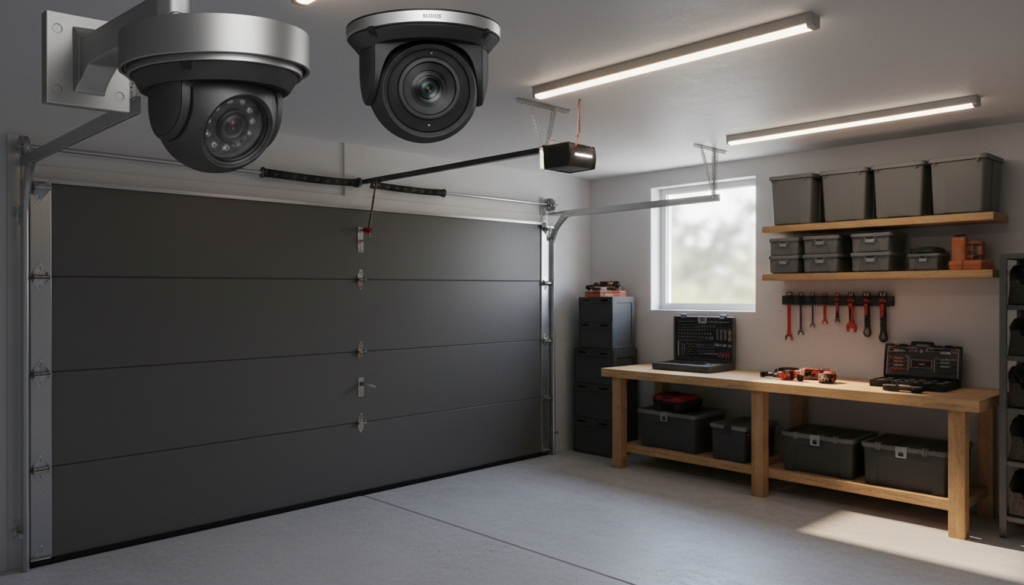
- Exterior front-facing camera capturing the garage door and approach
- Side camera covering any secondary doors or windows
- Walkway camera for detached garages (the path between garage and house)
- Driveway camera documenting vehicles and license plates
- Interior camera mounted high in a corner for complete home garage protection
Don’t forget about the inside of your garage. Place a camera high in a corner to see the whole space. This camera also watches over your valuables and the door to your house.
Visible cameras do more than just watch. They send alerts when they see motion. Just seeing cameras can make intruders look elsewhere. Make sure your cameras can see at night and can handle the weather all year.
Smart Technology Integration for Enhanced Protection
Your garage door security has entered a new era. Modern garage security systems turn your garage into an active defense. Smart technology quietly watches your door and alerts you to any unusual activity. These systems make protecting your home easier than ever.
Upgrading to smart garage door technology gives you real-time updates on your garage. You get notifications on your phone right away. You can see when your door opens and closes. Plus, you can control everything from anywhere.
Modern Garage Door Controllers and Alerts
Retrofit smart controllers add connectivity to your existing garage door opener. They work with your current system and add new features instantly.
Smart controllers offer several key features:
- Smartphone control to open or close your door from anywhere
- Real-time alerts whenever your door operates
- Activity logs showing exactly when your door was used
- Geofencing that automatically closes your door when you leave home
- Scheduled auto-close features to prevent overnight exposure
- Integration with security cameras for visual verification
With cameras, you get smarter alerts. Imagine getting a notification with a photo of who’s opening your door. You can instantly check if it’s family or an unauthorized entry. Some systems even send alerts if your garage door stays open longer than you set.
Rolling Code Technology vs. Outdated Openers
Older garage door openers send the same code every time. Thieves can capture this code and use it repeatedly. This fixed-code system is a serious risk.
Rolling code technology changes everything. Modern systems create a new code each time. Even if someone captures one code, it becomes useless right away. The next use requires a different code, making theft nearly impossible.
| Opener Type | How It Works | Security Level | Typical Age |
|---|---|---|---|
| Fixed-Code System | Transmits identical code every time | Vulnerable to code grabbing | Before 1995 |
| Rolling Code System | Generates new code with each use | Nearly impossible to duplicate | 1995 and newer |
Check your garage door opener for a “learn” button. If you can’t find one, it’s outdated. Upgrading to rolling code capability is a top security improvement. It’s part of your overall home security strategy.
Modern smart technology is getting more affordable and easy to use. Most systems install easily without needing technical skills. You get professional-level security with minimal hassle. Your peace of mind is worth the investment.
Professional Installation and Maintenance Considerations
Getting your garage security right starts with proper installation. If a garage door isn’t installed right, burglars can find weak spots. Professional installers make sure tracks are strong, hardware is tight, and settings are correct.
Many homeowners try to save money by installing themselves. But, this can lead to gaps where intruders can get in. Also, hardware might not stay in place, and settings might not work right. These mistakes can cost more than hiring a pro.
What should you look for in a professional installer? Look for someone with the right licenses and insurance. Choose installers who know about security-focused garage systems. They should explain the security features and offer support after installation.
Garage safety doesn’t stop after installation. Regular maintenance keeps your door working right. Check it in spring and fall to catch problems early.
| Maintenance Task | Security Impact | Frequency |
|---|---|---|
| Test automatic reversal systems | Prevents manual forcing of door | Monthly |
| Inspect and tighten mounting hardware | Keeps door secure against pulling | Seasonally |
| Lubricate moving parts | Ensures smooth operation, alerts to malfunction | Quarterly |
| Test locking mechanisms | Confirms door stays locked when closed | Monthly |
| Inspect door panels | Identifies weak points and damage | Seasonally |
| Test rolling code technology | Prevents unauthorized remote access | Twice yearly |
Sometimes repairs fix security issues. Other times, a new door is better. Replacing springs, realigning tracks, or upgrading openers can improve security. But, if damage is big or materials are old, a new door is safer.
- Professional installation prevents security gaps from poor alignment
- Regular maintenance catches problems before they compromise residential garage security
- Proper garage safety measures require both initial setup and ongoing care
- Seasonal inspections keep your system working as designed
Think of professional installation and maintenance as investments in protection. They’re not optional expenses. They’re what makes all your other security choices actually work.
Affordable Security Upgrades That Make a Real Difference
Many people think securing your garage costs a lot of money. They believe you need to spend thousands on new systems. But, this isn’t true. You can improve your garage security with smart, budget-friendly upgrades.
These upgrades offer real protection without breaking the bank. The key is to know which ones give you the most security for your money.
Protecting your garage valuables doesn’t mean you have to spend a lot. Making smart choices about repairs and upgrades can keep your belongings safe. Here are some practical ways to strengthen your garage security without spending too much.
Cost-Effective Physical Improvements
Start with upgrades that offer strong security without costing a lot. Many of these improvements are easy to install and won’t break the bank.
- Add slide locks or deadbolts to your garage door ($15–$40)
- Secure the manual release cord with zip ties or small padlocks ($5–$15)
- Install door and window sensors that work with current alarm systems ($20–$50 per sensor)
- Upgrade to a smart garage door controller for existing openers ($80–$150)
- Replace hollow-core interior doors with solid-core versions ($150–$300 installed)
- Add motion-activated lighting inside and outside ($30–$80)
- Install a peephole or small camera in the interior connecting door ($25–$100)
- Apply window film to block views into your garage ($50–$150)
You don’t have to do everything at once. Start with small steps as your budget allows. Each step adds to your security.
When to Repair vs. Replace Your Garage Door
Don’t assume you need a new garage door if it breaks. Making smart choices can save you money while keeping your home secure.
Repairs make sense when:
- The door frame is solid but springs or cables need replacement
- Your opener is outdated but the door structure is sound
- Individual panels are damaged while the system works overall
- Track alignment or hardware issues need straightening
Replacement becomes smart when:
- The door has structural damage that weakens security
- It’s made from thin, outdated materials that can’t be properly secured
- Repeated failures drain your budget consistently
- Repair costs reach 50% or more of replacement price
- Modern security features cannot be added to your current door
| Situation | Best Choice | Cost Range |
|---|---|---|
| Broken spring or cable | Repair | $150–$400 |
| Outdated opener with solid door | Upgrade opener only | $300–$600 |
| Structural damage throughout | Replace | $800–$2,500 |
| Worn panels, good frame | Replace panels | $200–$500 |
| Multiple yearly repairs needed | Replace | $800–$2,500 |
Protecting your garage valuables is about making smart choices. Work with experts who suggest repairs when they’re the best option. This way, you can keep your garage safe without spending too much.
Conclusion
Your garage is the biggest entry point in your home. Most burglars start here because it’s often left unsecured. You spend money on locks and windows but forget about your garage. This oversight risks your valuables and family.
But there’s good news. You now know the problem and how to solve it. Garage security is simple. Start by making your garage more secure with better hardware and doors. Next, add security cameras for full coverage. Lastly, use smart tech for alerts.
You don’t have to do everything at once. Begin with small steps like securing your manual release or adding a camera. These changes offer much better protection than an unsecured garage.
Take action today based on what you’ve learned. Check your garage for weak spots and plan your budget. Don’t wait for a break-in to act. Your garage is a direct path to your home and valuables. Protecting it is a smart move.
You have the knowledge to make your garage safe. Even small steps can make a big difference. Start today and make your home feel safer.
FAQ
Why should I be concerned about garage security if I have a strong front door lock?
Your garage is a big entry point to your home. It often has a door that leads directly into your house. This door is often left unlocked.
Garages hold thousands of dollars worth of valuable items. Burglars find these items attractive. They also provide easy access to your home’s interior.
Securing your garage protects your belongings and keeps your home safe.
What makes garages such attractive targets for burglars compared to other entry points?
Garages are appealing to burglars for several reasons. Homeowners often overlook their garages, thinking they’re not part of the house.
Garages have valuable items that are easy to steal and sell. The garage door system has known weaknesses, like the manual release cord.
The door between the garage and the house is often left unlocked. This makes it easy for burglars to get inside.
What is the difference between fixed-code and rolling-code garage door openers in terms of security?
Fixed-code openers send the same code every time. This makes them easy to hack.
Rolling-code technology changes the code with each use. This makes it harder for burglars to gain access.
If your opener is old, it might use fixed-code technology. Upgrading to a rolling-code opener is a good security move.
How can I secure the manual release cord on my garage door opener?
The manual release cord is a common weak spot. You can use zip ties or small padlocks to secure it.
This prevents burglars from opening the door from outside. It’s also easy to access from inside for emergencies.
Installing a shield or guard can also prevent access. Some openers have vacation lock features.
What should I know about the interior door connecting my garage to my home?
This door is a key barrier between your garage and home. It’s often overlooked.
Most homes have hollow-core doors here. These offer little security. Upgrading to solid-core or metal doors is a good idea.
Install a high-quality deadbolt lock and add reinforcement kits. Always keep this door locked.
Where should I place security cameras for optimal garage coverage?
Place your main camera 8-10 feet high, angled down. It should cover the garage door and driveway.
Secondary cameras should cover side doors, windows, and the walkway. Interior cameras can cover valuables and the connecting door.
Even a few good cameras can make a big difference.
How do smart garage door controllers improve my home security?
Smart controllers add rolling-code technology and alerts to your opener. They allow remote control and real-time monitoring.
They integrate with home automation systems and provide activity logs. Geofencing and auto-close features are also available.
These controllers work with cameras to provide alerts. They offer a cost-effective way to enhance security.
What physical reinforcements can I make to my garage door to resist forced entry?
Several improvements can make your door more secure. Reinforced hinges and brackets are a good start.
Upgrade panels with bracing bars and add slide locks or deadbolts. Ensure all hardware is securely anchored.
Choosing multi-layer steel doors is also a good option. These improvements work with detection systems to enhance security.
Should I hire a professional for garage door installation and maintenance, or can I do it myself?
Professional installation ensures your door is set up correctly. DIY might save money but can lead to security issues.
Look for licensed and insured installers with security experience. They can assess your needs and provide the right solutions.
Regular maintenance is key. Inspect and test your door and opener regularly.
What is the most cost-effective first step I can take to improve my garage security?
Securing the manual release cord is a simple and effective first step. It costs -15.
Next, consider a smart garage door controller for -150. Adding a security camera for 0-300 is also a good move.
These three steps can significantly improve your garage’s security. You can add more improvements as you go.
When should I repair my garage door versus replace it entirely?
Repairs are a good option if the door structure is sound but has component failures. Upgrading the opener technology is also a good choice.
Consider replacement if the door has structural damage or is made of thin materials. Professional installers can help you decide.
Can motion-activated lighting improve my garage security?
Yes, motion-activated lighting is an effective and affordable security measure. It costs -80.
It makes your garage less appealing to burglars. It works well with cameras and other security measures.
What should I look for in a professional garage door installer focused on security?
Look for installers who are licensed, insured, and have security experience. They should explain and demonstrate security features.
Ask about their experience with security-focused installations. Request references and check their knowledge of vulnerabilities.
Reputable providers like Marvin Allan Doors offer honest assessments and security-conscious installations.
Are there any garage security measures that serve dual purposes for both protection and convenience?
Yes, several measures offer both security and convenience. Smart garage door controllers provide remote control and alerts.
Automatic close schedules and geofencing features are convenient and secure. Motion-activated lighting improves security and provides convenience.
Security cameras serve as deterrents and documentation. These integrated approaches make security and convenience work together.
How often should I test and maintain my garage security systems?
Test and maintain your systems seasonally. Check automatic reversal systems, tighten hardware, and lubricate parts.
Test locking mechanisms and inspect door panels. Check opener technology and camera angles regularly.
Regular maintenance ensures your security systems work effectively. Neglecting maintenance can undermine your security.
What’s the best way to protect valuable items stored in my garage?
Store valuable items in a locked cabinet or storage unit. This adds an extra layer of protection.
Consider using a safe or a fireproof box for high-value items. This provides maximum security.