Floods are the most common and costly natural disasters in the United States. Even a small amount of water can cause a lot of damage. Just one inch of water can damage a home by over $25,000. This affects millions of people across the country.
Many Americans are not ready for flooding events. A 2020 FEMA survey found that nearly 52 percent of Americans lack a plan for floods or other disasters. This lack of preparation puts families and property at serious risk.
Flooding can happen almost anywhere. You don’t need to live near a river or coastal area to experience flood damage. Climate change is making floods more frequent and intense across the United States. These events are becoming more unpredictable and dangerous.
The good news is that you can take action now. Flood preparedness for homeowners starts with understanding your risk and knowing what to do. Natural disaster preparedness does not need to be overwhelming or expensive. This guide will help you learn the steps to protect your family and property.
In this article, you will discover how to assess your flood risk. You will learn about insurance options that fit your needs. You will also create an emergency plan and learn ways to protect your property. Taking these steps today can save you from disaster tomorrow.
Table of Contents
Understanding Your Flood Risk and Insurance Options
Protecting your home or rental property from flood damage starts with knowing your flood risk. Many people don’t know that standard insurance doesn’t cover floods. By assessing your flood risk and looking into flood insurance, you can save thousands when water damage happens. This guide will help you understand your property’s flood risk and find the right insurance.
Assessing Your Property’s Flood Vulnerability
First, find out if your property is in a flood-prone area. Flood risk disclosure rules vary by state. In California, sellers must tell you if a property has a high flood risk. But in Arizona, Nevada, and Oregon, only sellers in floodplains must disclose.
Don’t just rely on what sellers tell you. Use FEMA’s online flood map to check your flood risk. Just enter your address to see if your building is in a flood zone. Properties near rivers or storm drains are at the highest risk.
FEMA also looks at Base Flood Elevation (BFE) to measure flood risk. This is the floodwater level expected in a one in one-hundred year flood. Knowing your BFE shows how serious your flood risk is.
Navigating Flood Insurance Coverage
Most homeowners and renters policies don’t cover flood damage. Standard policies exclude flood-related losses. This means you could face huge repair costs without insurance.
Flood insurance covers:
- Structural damage to walls, cabinets, and carpets
- Functional systems like electrical wiring, plumbing, and HVAC units
- Major appliances including water heaters and furnaces
- Personal belongings damaged by floodwater
Flood insurance costs about $700 a year on average in the U.S. But your premium depends on your location and coverage level. Most policies start 30 days after you buy them, so don’t wait for a storm to buy insurance.
The Difference Between NFIP and Private Insurance
You can get flood insurance from the National Flood Insurance Program (NFIP) or private providers like AAA. The NFIP has building standards for flood resistance. Buildings that follow these standards have 80% less damage than those that don’t.
| Feature | NFIP | Private Insurers |
|---|---|---|
| Backing | Federal government | Private insurance companies |
| Coverage Available | All flood-prone areas | Selected areas and properties |
| Building Standard Compliance | Requires adherence for best rates | Varies by company |
| Damage Reduction | 80% less damage for compliant buildings | Depends on coverage level |
| Waiting Period | 30 days after purchase | 30 days after purchase |
Both options have a 30-day waiting period before coverage starts. This means you need to plan ahead, not wait for weather warnings. Knowing your flood risk helps you choose between NFIP and private insurance based on your property and budget.
Choosing the right flood insurance is a smart move for property owners and renters. By taking these steps now, you protect your finances and have peace of mind when it rains heavily.
Flood Preparedness for Homeowners: Essential Protection Strategies
Protecting your home from flooding starts with simple steps. Home flood protection includes quick fixes and big investments. These strategies help keep water out of your home, whether it’s a damp basement or a flood-prone area.
Start with affordable, immediate actions and plan for bigger upgrades later. Tackling these projects one at a time makes it easier. This way, you can protect your property from flooding today, even if you plan bigger upgrades later.
Starting with Basement Waterproofing and Interior Fixes
Waterproofing your basement is key for home flood protection. Begin by sealing cracks in foundation walls with hydraulic cement. Then, apply waterproof sealant to all basement walls and floors.
Inside your basement, swap out porous materials for flood-resistant ones. Replace carpet with ceramic tile or vinyl flooring. Use flood-resistant insulation and drywall to make recovery easier if water enters your home.
- Seal foundation cracks with hydraulic cement
- Apply waterproof coating to basement walls and floors
- Install water alarm systems in basements and crawl spaces
- Replace carpet with tile or vinyl flooring
- Use flood-resistant insulation and sheetrock
- Install check-valves and backflow valves in plumbing lines
Improving Drainage and Water Flow Away From Your Home
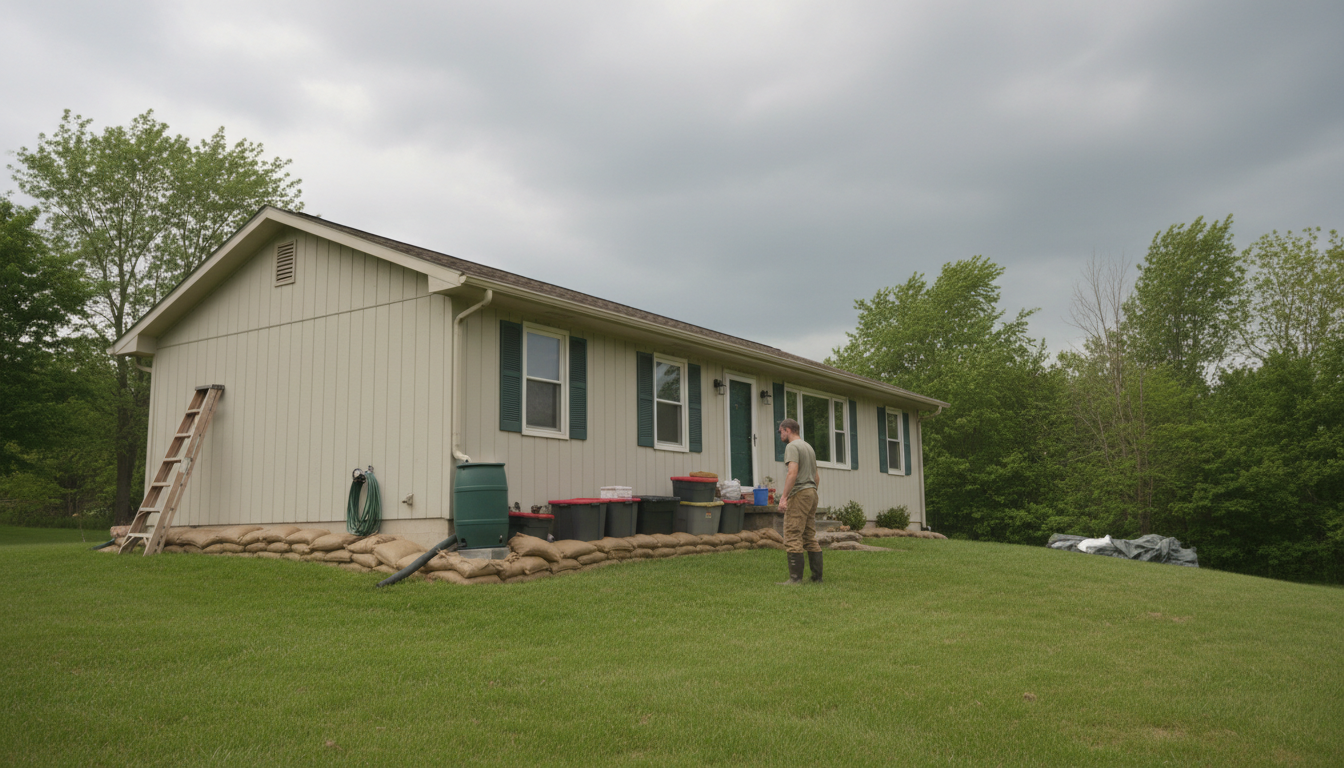
Proper drainage keeps water away from your foundation. Clean gutters regularly and ensure downspouts extend at least four to six feet from your foundation. Keep storm drains clear of leaves and debris to ensure water flows away quickly.
Landscape improvements are also key. Grade your yard so water slopes away from the house. Consider installing swales to direct runoff toward storm drains. Rain barrels connected to downspouts capture runoff for later use in gardens.
- Clear gutters and downspouts of leaves and debris
- Position downspouts to direct water away from foundation
- Clear nearby storm drains of blockages
- Install rain barrels to manage runoff
- Grade landscaping to slope away from house
- Create swales to guide water toward storm drains
Elevating Systems and Installing Protection Devices
Raising critical systems above flood levels protects your home. Move your furnace, water heater, and electrical components above the Base Flood Elevation recommended by FEMA. Sump pumps with battery-powered backups remove rising water automatically from basements and crawl spaces.
Install flood vents in foundation walls and enclosed areas. These openings allow water to flow through during floods, preventing structural damage. For homes in high-risk areas, backflow check valves on sewer and storm drain connections prevent contaminated water from backing up into your home.
| Protection Method | Cost Range | Installation Effort | Effectiveness |
|---|---|---|---|
| Waterproof sealant and hydraulic cement | $200–$500 | DIY-friendly | Good for minor seepage |
| Sump pump with battery backup | $1,500–$3,000 | Professional recommended | Excellent for basements |
| Check-valves and backflow prevention | $300–$800 | Professional installation | Prevents sewage backup |
| Flood vents in foundation | $500–$1,500 | Professional installation | Reduces structural pressure |
| Home elevation on stilts or blocks | $25,000–$100,000+ | Major construction project | Most complete protection |
| Exterior floodwalls (concrete or masonry) | $5,000–$25,000 | Professional installation | Highly effective barrier |
Major Structural Investments for High-Risk Areas
Homeowners in flood-prone zones may benefit from substantial upgrades. Elevating your home’s lowest living floor above the Base Flood Elevation using stilts or concrete blocks keeps living spaces dry during major floods. While expensive, this investment often qualifies you for significant insurance premium reductions.
Exterior floodwalls made from concrete or masonry create a barrier against rising water. Secure fuel tanks with non-corrosive supports to prevent ruptures and spills during floods. Waterproof veneer applied to foundation, exterior walls, windows, and doorways strengthens your home’s resistance to water intrusion.
Working with FEMA-compliant building standards means your investments in home flood protection pay dividends through lower insurance costs and dramatically reduced damage during flood events. Start with the measures that fit your budget and timeline, then build toward more extensive protection as resources allow.
Creating Your Emergency Flood Plan and Safety Kit
When flood warnings come, you must act fast. Having a plan ahead of time can save you. An emergency flood plan tells your family where to go and what to do. Adding flood safety kit essentials means you can respond quickly and safely.
Start preparing now before disaster hits. Sign up for alerts like Nixle by texting your ZIP code to 888777. Download the Red Cross apps for updates. Stay informed with NOAA radio for weather news.
Building a Complete Emergency Kit
Your flood safety kit should last three days without power or water. Stock up on food and water for everyone. Include medications and first-aid supplies. Keep cash handy because ATMs might not work.
Your kit should have:
- Batteries, flashlights, and a solar or hand-crank charger
- Blankets and emergency blankets
- Can opener and eating utensils
- Rubber boots and waterproof gloves
- Wrench or pliers to shut off utilities
- Laminated local maps showing evacuation routes
- First-aid kit with bandages and medications
- Any special items children or pets need
Keep your kit in a cool, dry spot. Make sure everyone knows where it is. Check it twice a year to replace expired items. Have one at home, one in your car, and a backup elsewhere.
Use apps like HomeZada to make a home inventory. Document every room with photos and videos. Include proof of renovations for insurance claims.
Store important papers in a safe. Keep financial and legal documents together. Create digital copies for safety.
Developing Your Family Evacuation Plan
Your emergency flood plan starts with a family talk. Discuss where to go, how to get there, and what to do if separated. Choose two or three alternate routes.
Create a practical plan by mapping routes:
| Planning Element | Action Steps |
|---|---|
| Primary Evacuation Route | Identify the main road or path to higher ground or designated shelter areas |
| Alternate Routes | Plan two backup routes in case roads are flooded or blocked |
| Meeting Place | Choose a safe location where separated family members will reunite |
| Out-of-State Contact | Select someone living far away to relay messages between family members |
| Pet-Friendly Shelter | Research hotels and shelters in your area that accept animals |
| Go-Bag Items | Assign responsibility for grabbing documents, medications, and valuables |
Program an out-of-state emergency contact into everyone’s phone. Label it “ICE-FirstName LastName” for first responders. Practice your plan twice yearly so everyone knows what to do.
When preparing for extended emergencies, create safe areas in your home. Identify a room for sheltering in place. Stock it with supplies and ensure ventilation and communication.
Pet owners must plan ahead. Find pet-friendly hotels and shelters. Include pet food, medications, carriers, and medical records in your supplies. Your pets depend on you to include them in your plan.
Protecting Your Property Before and During a Flood
When flood warnings come, act fast to protect your property. First, charge all phones and devices right away. Then, turn off your utilities in a certain order to avoid gas leaks, electrical fires, and water damage.
Shutting Off Utilities Safely
Here’s how to disable each utility system:
- Gas: Use a crescent wrench to turn the valve counter-clockwise until it sits perpendicular to the pipe
- Propane tanks: Turn the shutoff valve clockwise
- Electricity: Switch off individual circuits first, then the main breaker
- Water: Turn the main shutoff valve clockwise
Unplug all electronics and move them up high. Move furniture, including patio items, and valuables to upper floors or higher ground. Fill clean bottles with drinking water and fill bathtubs and sinks for cleaning and flushing toilets after the flood passes.
Preparing for Evacuation and Using Sandbags
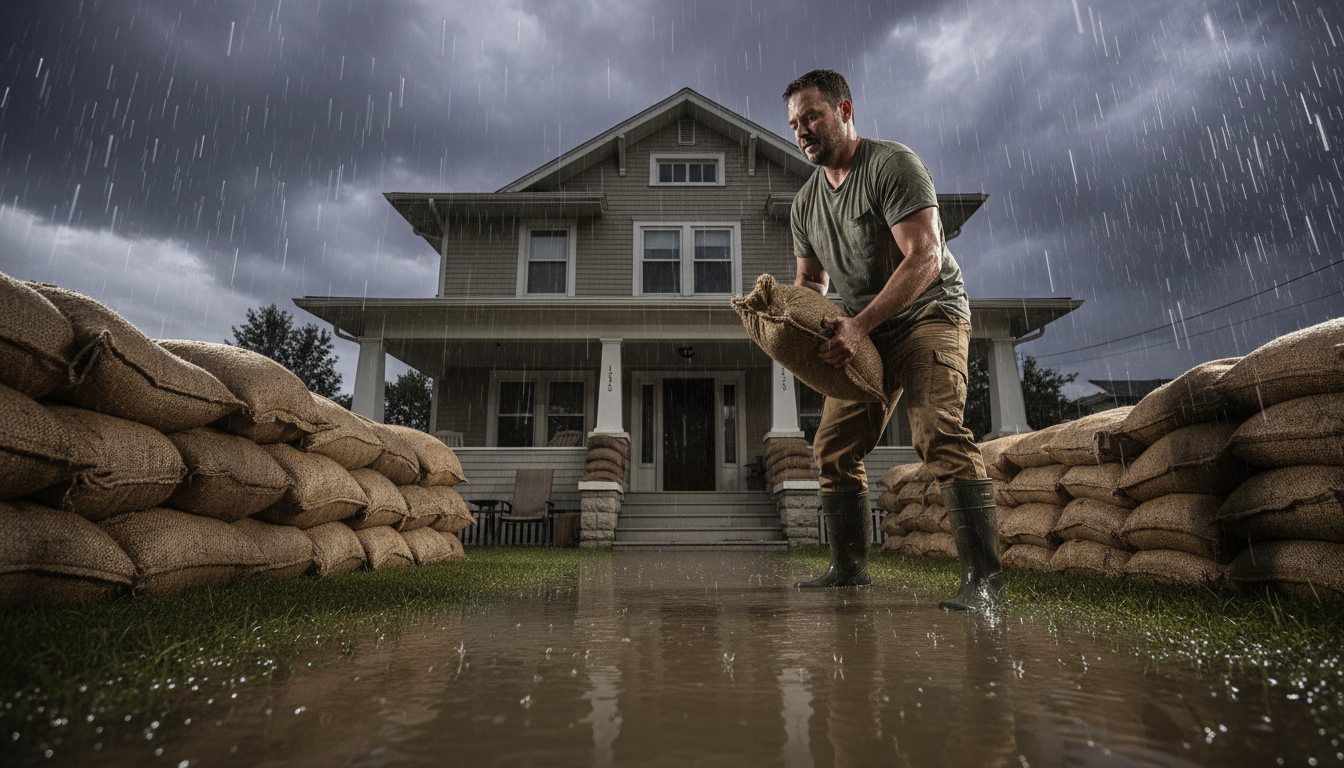
Fill your car’s gas tank in case you need to leave. Sandbags are great for home flood protection when used right. Two adults can fill and place about 100 sandbags in an hour, making a one-foot-high wall that’s 20 feet long. Many cities give out free sandbags, while Lowe’s and Home Depot sell them.
If you’re told to evacuate, leave right away. Never drive through floodwater. Just 12 inches of moving water can sweep vehicles off the road. Many flood deaths happen in cars because drivers underestimate water’s power. Don’t walk in floodwater either. Six inches of moving water can knock down an adult. The water may be electrified from downed power lines or deeper than it looks.
If You Get Trapped
Go to the highest point in your home and call 911. Find emergency shelters through the FEMA disaster recovery center locator, Red Cross shelter locator, or text “Shelter” with your ZIP code to.
Returning Home and Documenting Damage
Be very careful when returning home. Electrical hazards, structural damage, and hazardous materials like chemicals and oil may be present. Standing water lasting more than 24 hours breeds bacteria, viruses, mold, and mildew on carpets and porous surfaces. Take photos of all damage before cleaning for your insurance claim. These steps help you document damage and support your recovery after the flood ends.
Conclusion
Flood preparedness is more than just protecting your home. It’s about making your neighborhood and community stronger. When you prepare, you encourage others to do the same. This teamwork leads to better water management and less damage.
By understanding your flood risk and getting the right insurance, you’re well-prepared. Knowing that insurance is required in high-risk zones helps you make informed decisions. Even if you’re not in a flood zone, insurance is key because federal help usually comes in the form of loans, not grants.
When disaster strikes, help is available. The Texas General Land Office offers support at 1-844-893-8937 or Recovery.Texas.gov. HUD provides foreclosure relief and housing counseling at 1-800-225-5342 and 1-800-569-4287. Fannie Mae’s Disaster Response Network at KnowYourOptions.com/relief offers relief options.
Special programs like HUD Section 203(h) provide 100% financing for disaster victims. HUD Section 203(k) lets you combine purchase or refinance with repair costs. USDA Rural Development can be reached at 1-800-414-1226. Many lenders offer mortgage forbearance and deferment programs through FHA, Fannie Mae, Freddie Mac, and the VA.
Floods are the most common natural disaster in America. But with the right preparation, they don’t have to be devastating. Start by checking your flood zone, getting an insurance quote, assembling an emergency kit, or discussing evacuation routes with your family. The best time to prepare is before the rain starts.
FAQ
How much damage can just one inch of floodwater actually cause to my home?
A single inch of water can cause over ,000 in damage. This shows why flood preparedness is so important. Even a little water can cause big problems like structural damage and mold.
When you add more water, the damage gets worse. That’s why you need flood insurance and to waterproof your basement.
Why doesn’t my standard homeowners insurance policy cover flood damage?
Standard policies don’t cover flood damage because floods are seen as separate events. Insurance companies handle floods differently from other water damage. This is why you need special flood insurance.
Don’t wait until a storm hits to get insurance. Most policies have a 30-day waiting period.
How do I know if my property is in a flood zone?
You can check your flood zone on FEMA’s online map at flood.fema.gov. Just enter your address. But remember, floods can happen outside of flood zones too.
More than half of Americans aren’t ready for floods. They think they’re safe just because they’re not in a flood zone. Check your state’s rules for flood risk information.
What is Base Flood Elevation and why does it matter?
Base Flood Elevation (BFE) is the water level in a 100-year flood. Knowing your BFE is key to protecting your home. It helps you decide where to put utilities and how to elevate your home.
Items below the BFE are at high risk of damage.
What’s the average cost of flood insurance, and how often should I review my coverage?
Flood insurance costs about 0 a year. But rates vary based on your location and risk. Review your coverage every year, or after making changes to your home.
Don’t wait until a storm hits to get coverage. The 30-day waiting period is too long.
What’s the difference between NFIP and private flood insurance options?
The National Flood Insurance Program (NFIP) is a government-backed option. Private insurers like AAA offer other choices. NFIP-compliant buildings have 80% less damage than non-compliant ones.
Private insurance may offer different coverage and prices. It’s wise to compare both options.
What are the most cost-effective ways to start waterproofing my basement?
Start with simple, affordable steps like sealing walls and filling cracks. Use waterproof sealant and install water alarms. These steps are cheaper than fixing water damage later.
How do drainage improvements help protect my home from flooding?
Good drainage is key to protecting your home. Clear gutters, position downspouts correctly, and keep storm drains clear. Use rain barrels and proper grading to direct water away.
Should I replace my carpet with flood-resistant flooring in high-risk areas?
Yes, replace carpet with flood-resistant flooring like tile in high-risk areas. Tile and sealed concrete can withstand water better than carpet. This reduces damage costs if flooding happens.
What are check-valves and backflow valves, and why do I need them?
Check-valves and backflow valves prevent sewage backup. They let water flow out but not back in. Installing these is part of protecting your home from flooding.
How does a sump pump protect my basement, and do I need a battery backup?
A sump pump keeps your basement dry by pumping out water. A battery backup is essential for power outages. It keeps your sump pump running when you need it most.
What systems should I elevate above flood levels?
Elevate critical systems like furnaces and electrical panels above flood levels. This prevents expensive replacements and keeps your home running during floods.
Is elevating my entire home really necessary, and how much does it cost?
Elevating your home can save on insurance and reduce damage. It’s a big investment, but can be cost-effective over time. NFIP-compliant elevated homes get lower premiums and less damage.
How should I secure my fuel tank to prevent flooding-related hazards?
Secure your fuel tank to prevent spills and fires during floods. Use straps or brackets rated for your tank’s weight. This prevents environmental damage and fire hazards.
What should be in my flood safety kit essentials?
Your flood safety kit should have food, water, and medications for three days. Include cash, batteries, flashlights, and tools. Don’t forget comfort foods and items for children and pets.
Store kits in cool, dry places and check them twice a year. Make sure everyone knows where they are.
How do I create a home inventory for insurance purposes?
Document your home and belongings with apps or photos and videos. Include remodels and upgrades. Store important documents in fireproof safes and keep digital backups.
This inventory is key for insurance claims after flooding.
What should my family evacuation plan include?
Your evacuation plan should answer where to go, how to get there, and what to take. Designate an emergency contact and practice your plan twice a year.
How do I receive flood warnings and emergency alerts in my area?
Sign up for Nixle alerts by texting your ZIP code to 888777. Download Red Cross apps and get a NOAA weather radio. Know the difference between watches and warnings.
Having multiple alert methods ensures you get critical information.
What’s the first thing I should do when a flood warning is issued?
First, charge all your devices. Then, shut off utilities to prevent damage. This is the first step in protecting your home.
How should I safely shut off my home’s utilities before a flood?
Use the right wrench to turn off gas lines. Turn off electrical panels and water valves. Know where these are before a flood warning.
Should I fill my bathtub with water before a flood, and why?
Yes, fill containers with drinking water and bathtubs for cleaning. This water won’t be drinkable but is useful for sanitation after the flood.
How effective are sandbags at preventing flood damage, and how many do I need?
Sandbags can help, but they’re not a complete solution. Two adults can deploy about 100 sandbags in an hour. Many places offer free sandbags during flood season.
Order sandbags early to be prepared.
What’s the most dangerous mistake people make during floods?
The biggest mistake is ignoring evacuation orders and driving through floodwater. Just 12 inches of water can sweep away most vehicles. Always follow the “Turn around, don’t drown” rule.
What should I do if I’m trapped during a flood despite my precautions?
If trapped, move to the highest point in your home and call 911. Stay visible and wait for rescue. Don’t try to swim to safety.
Find emergency shelters using FEMA’s locator or the Red Cross app.
How should I approach my property after floodwaters recede?
Approach with caution due to structural damage and hazards. Document all damage before cleaning. Never touch wet electrical appliances or power lines.
Wear protective gear like gloves and boots, and consider a respirator if mold is present.
What documentation do I need for flood damage insurance claims?
Photograph and video all damage before cleaning. Your pre-flood inventory is key for your claim. Keep receipts for repairs and document water damage.
Contact your insurance company immediately with this documentation.
Are there special insurance programs for homes with repetitive flood losses?
Yes, there’s Increased Cost of Compliance (ICC) coverage for up to ,000. It helps fund structural improvements to reduce flood risk. Ask your agent if your policy includes ICC coverage.
What federal disaster assistance is available after a flood?
FEMA offers disaster recovery centers and HUD housing programs. There are loan options like Fannie Mae’s Disaster Response Network. USDA Rural Development also offers assistance.
Texas residents should contact the Texas General Land Office for help.
How does climate change affect my flood risk?
Climate change makes floods more frequent and severe. It increases intense rainfall and unpredictable weather. Your flood risk may increase, so be prepared.
Do renters need flood insurance and evacuation plans too?
Yes, renters need flood insurance and evacuation plans. Standard policies don’t cover flood damage. Renters should also participate in family plans and have emergency kits.
Coordinate with your landlord for evacuation procedures.
How often should I update my emergency flood plan?
Review and practice your flood plan twice a year. Update it for changes in your family or property. Practice evacuation routes so everyone knows what to do.
What’s the relationship between flood preparedness and property insurance rates?
Flood protection can lower your insurance premiums. NFIP-compliant buildings have less damage and may get premium discounts. Ask your agent about discounts for upgrades.
Can I prevent all flood damage with proper preparation?
Proper preparation can reduce flood damage, but not eliminate it. It’s important to have a plan and take steps to protect your home.