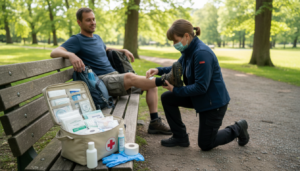
Keeping seniors and those with special needs safe is key. The American Red Cross says a first aid kit is vital for emergencies.
For families with kids who have special needs, a ready emergency bag is very important. It helps them stay calm and safe in tough times. This plan takes into account the health risks these families face.
Key Takeaways
- Having a well-stocked first aid kit is key for seniors and special needs folks.
- It’s important to have a plan that fits their health needs.
- Emergency bags can save lives in urgent situations.
- The American Red Cross offers great tips for first aid.
Table of Contents
Understanding the Unique Health Vulnerabilities of Elderly and Disabled Individuals
It’s key to know the health risks of seniors and people with disabilities for good first aid. They often have complex health needs that need careful thought in emergencies.
Common Medical Conditions in Seniors
Seniors face many health issues, like heart disease, diabetes, and dementia. These problems make first aid tricky, needing special care and medicines.
| Condition | First Aid Consideration |
|---|---|
| Heart Disease | Watch for heart signs, have nitroglycerin ready if needed |
| Diabetes | Check blood sugar, have glucose or insulin on hand |
| Dementia | Give simple, clear directions, keep the area calm |
Special Considerations for Various Disabilities
People with disabilities need special first aid steps. For example, those who can’t move well might need help getting out or staying stable.
Why Standard First Aid Approaches May Not Be Sufficient
Regular first aid training doesn’t cover the needs of seniors and people with disabilities well. We need tailored first aid plans to meet these unique challenges.
First Aid Prep for Seniors and Special Needs: Essential Components
First aid is very important for seniors and special needs people. A good plan has key parts that meet their needs.
Specialized First Aid Kit Contents
A first aid kit for seniors and special needs should have:
- Medications and medical equipment for their conditions
- Important documents like medical histories and emergency contact info
- Basic first aid items, like bandages, antiseptic wipes, and pain relievers
Hope Force International says to organize these items well. This way, nothing is missed.
Medical Information Documentation
Keeping medical info up to date is key. This includes:
- Medical history records
- Lists of current medications and dosages
- Contact info for healthcare providers
Emergency Contact Systems
Having a good emergency contact system is vital. This can be done through:
Digital Alert Options
Using medical alert wearables or apps. They can quickly alert emergency contacts in an emergency.
Non-Digital Alternatives
For those not into tech, printed emergency contact cards work well.
Key to Effective Preparation: Always check and update the first aid kit, medical info, and emergency contacts. This keeps them useful and up to date.

Creating an Accessible Emergency Response Plan
It’s key to have a good emergency plan for seniors and people with disabilities. This plan must be easy for everyone to understand.
Developing Clear Communication Protocols
Good communication is very important in emergencies. You need to pick a main way to talk and make sure everyone knows it. For seniors and those with special needs, use simple words and write down instructions.
Establishing Evacuation Procedures
Evacuation plans should fit the needs of everyone. Find safe ways out and assign roles to caregivers or support staff. Practice drills to make sure everyone knows what to do.
Coordination with Caregivers and Support Networks
Working with caregivers and support networks is very important. This means:
- Family Member Roles: Make it clear what each family member should do in an emergency.
- Professional Caregiver Integration: Make sure professional caregivers know and are part of the plan.
By making a detailed and inclusive emergency plan, we can better protect seniors and those with special needs. It’s important to review and practice the plan often to make sure it works.
Medication Management in Emergency Situations
Seniors and those with special needs face big challenges in emergencies. It’s key to manage their meds well. This helps avoid health problems and keeps them safe.
Organizing and Storing Critical Medications
Medications should be kept in a special, easy-to-reach spot. Labeling and sorting meds helps caregivers give the right meds fast in emergencies.
Creating Medication Schedules and Instructions
Having a clear plan for meds is very important. Caregivers need written guides on how to give meds, like how much and how often.
Handling Medication During Power Outages or Evacuations
For those needing cold meds, a backup plan like a portable cooler is vital during power cuts. Always take all meds and important health info when you have to leave.
Adaptive First Aid Techniques for Common Senior Emergencies
Seniors and those with special needs face unique health challenges. It’s key to adapt first aid for common emergencies. Knowing how to handle falls, cardiac and respiratory issues, and confusion can greatly improve outcomes.
Fall Response and Prevention
Falls are a big risk for seniors, leading to serious injuries. Immediate response is checking for injuries, providing support, and calling for help if needed. To prevent falls, remove tripping hazards and install grab bars.
Managing Cardiac and Respiratory Distress
Cardiac and respiratory emergencies need quick action. For distress, check for responsiveness and breathing. If unresponsive, call emergency services and start CPR if trained.
Addressing Confusion or Disorientation
Confusion or disorientation can signal many conditions, like dementia. Clear communication and a calm space can ease distress.
Techniques for Dementia Patients
For dementia patients, use simple, clear language. Also, validate their feelings to manage confusion.
Approaches for Individuals with Cognitive Disabilities
Those with cognitive disabilities may benefit from visual aids and structured communication. This helps them understand their situation.
| Emergency Situation | Adaptive First Aid Technique |
|---|---|
| Falls | Check for injuries, provide support, call for help if needed |
| Cardiac/Respiratory Distress | Check responsiveness, begin CPR if trained |
| Confusion/Disorientation | Use clear communication, validate feelings |
For more info on first aid for special populations, visit CPR Certification Now.

Assistive Technology and Devices for Emergency Preparedness
Assistive technology is key for keeping the elderly and those with disabilities safe. It helps them get help fast when emergencies happen.
Medical Alert Systems and Wearables
Medical alert systems and wearables are very important. They let users call for help quickly. They have cool features like:
- GPS tracking for finding where you are
- Fall detection and alerts
- Two-way communication for clear instructions
Communication Aids for Various Disabilities
Good communication is key in emergencies. There are many assistive technologies for different needs. For example:
- Speech-generating devices for speech issues
- Visual alert systems for the deaf or hard of hearing
- Simple interfaces for cognitive disabilities
Smart Home Features for Emergency Response
Smart home tech can also help in emergencies. Things like voice-controlled lights and remote monitoring make homes safer. They help in emergency responses.
Using these assistive technologies in emergency plans makes seniors and those with special needs safer. They get better help in emergencies.
Conclusion: Building Confidence Through Comprehensive Preparation
Getting ready for emergencies is very important. It helps caregivers feel more confident when dealing with seniors and those with special needs. Knowing what they need and having a good first aid kit is key.
A senior emergency response plan is also very important. It makes sure help comes fast and right.
Caregiving for seniors and special needs people needs a special plan. You must know their health, have a way to talk to each other, and be ready for emergencies. This way, you can keep them safe and happy.
The American Red Cross says being ready and knowing how to act is very important. By following the tips in this article, caregivers can feel more confident. They can give good care to seniors and those with special needs.
FAQ
What are the most common medical emergencies that require special consideration for seniors and individuals with special needs?
Seniors and those with special needs face risks like falls and breathing problems. They might also get confused easily. It’s key to be ready for these emergencies.
How can I create a specialized first aid kit for seniors and individuals with special needs?
A special first aid kit should have bandages and antiseptic wipes. Don’t forget pain relievers and any needed medications. Also, include emergency contact numbers and medical info.
What is the importance of medical information documentation in emergency preparedness?
Keeping medical info handy is vital. It tells responders about your health, allergies, and meds. This helps them give the best care.
How can assistive technology enhance emergency preparedness for seniors and individuals with special needs?
Tech like medical alert systems and smart homes can help. They offer quick help, make talking easier, and boost safety.
What are some strategies for clear communication during an emergency?
For clear talk in emergencies, have a plan and use simple words. Use devices that are easy for everyone to use, like wheelchair-accessible ones.
How can I ensure that my emergency response plan is accessible to seniors and individuals with special needs?
Make sure your plan meets their needs, like for mobility or thinking issues. Include evacuation and communication plans that work for them.
What are some tips for managing medications during emergency situations?
Keep a list of your meds and where they are. Have a plan for power outages or leaving your home. This helps manage your meds safely.
How can I involve family members and caregivers in the emergency preparedness planning process?
Involve them by having meetings and sharing tasks. Make sure they know the plan and the person’s needs. Also, share emergency contact info.