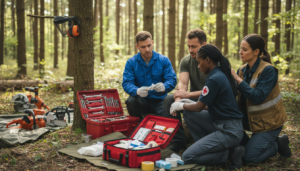
It’s very important to be ready for emergencies with kids and babies. The Canadian Red Cross says having a good first aid kit is key. Knowing how to use it is also very important for kids’ emergencies.
Learning the basics of children’s first aid can really help in emergencies. It’s not just about having the right stuff. It’s also about knowing how to give pediatric emergency care when it counts.
Key Takeaways
- Having a well-stocked first aid kit is key for kids’ emergencies.
- Knowing how to use first aid kit items is as important as having them.
- The Canadian Red Cross is a trusted resource for first aid guidelines.
- Pediatric emergency care needs special knowledge and skills.
- Being ready can really change the outcome of an emergency.
Table of Contents
Understanding Pediatric First Aid Basics
Pediatric first aid is very important. It helps us know how to care for kids at different ages. This knowledge is key for parents, caregivers, and doctors to act fast in emergencies.
Why Child-Specific First Aid Knowledge Matters
Knowing first aid for kids is vital. Kids are smaller and their bodies work differently than adults. This means standard first aid might not work or could even hurt them. For example, infant CPR basics are special for babies, showing we need to learn specific skills.
It’s important to understand these differences to give good first aid. The Canadian Red Cross says we must adjust first aid based on the child’s age and how they develop.
Developmental Considerations by Age Group
Children grow fast, and their needs change a lot. Knowing these changes is key for good first aid.
Infants (0-12 months)
Infants rely on us completely and need special care. Their first aid must consider their delicate bodies and lack of words.
Toddlers (1-3 years)
Toddlers are curious and touch and taste everything. This makes them more likely to get hurt or poisoned. Their first aid must match their curious nature.
School-Age Children (4-12 years)
School-age kids are more on their own but need help with safety and first aid. Knowing their age helps us give the right first aid.
Essential First Aid Prep for Kids and Infants
Keeping kids and infants safe means having a good first aid kit. A first aid kit is more than a box. It’s a key tool for emergencies.
Creating Age-Appropriate First Aid Kits
First aid kits need to match the age and needs of the kids. Infants and toddlers need different things.
Home Kit Essentials
- Bandages and band-aids in various sizes
- Antiseptic wipes for cleaning wounds
- Pain relievers for kids
- Gauze pads and rolls for dressing wounds
- Medical tape to secure bandages
Travel/Car Kit Components
- A compact version of the home kit
- Any personal medications
- A list of emergency contact numbers
- A small flashlight or glowstick
Must-Have Supplies for Different Stages
First aid kits need to change as kids grow. Infants and toddlers have unique needs because of their age.
Infant-Specific Supplies
- Thermometer (digital or temporal)
- Nasal aspirator for clearing noses
- Infant pain relievers
Child-Specific Supplies
- Cold and flu medications for their age
- Antihistamines for allergic reactions
- Assorted band-aids and bandages
First Aid Connect says it’s important to have a first aid kit for kids and infants. The right supplies help parents act fast in emergencies.

Responding to Common Childhood Emergencies
When kids face emergencies like cuts, burns, or allergic reactions, staying calm is key. Knowing first aid can really help keep them safe.
Cuts, Scrapes and Bleeding
For small cuts and scrapes, clean them gently with mild soap and water. Put on a thin layer of antibiotic ointment and cover with a bandage. For big bleeding, press a clean cloth on it until it stops.
Key steps for managing cuts and scrapes:
- Clean the wound
- Apply antibiotic ointment
- Cover with a bandage
Burns and Scalds
For minor burns, cool them with lukewarm water for 10-15 minutes. Don’t use ice or ice water. Use a non-stick dressing to cover it. For serious burns, get medical help right away.
First aid for burns:
| Burn Severity | First Aid |
|---|---|
| Minor | Cool with lukewarm water, apply non-stick dressing |
| Severe | Seek immediate medical attention |
Falls and Possible Fractures
If a child falls and might have a fracture, keep the area steady and get medical help. Watch for signs of a head injury, like concussion.
Allergic Reactions and Poisoning
For allergic reactions, give antihistamines if you have them and get medical help if it gets worse. If someone is poisoned, call the Poison Control Center at 1-800-222-1222.
Action plan for allergic reactions and poisoning:
- Allergic reactions: Administer antihistamines, monitor symptoms
- Poisoning: Call Poison Control Center
Life-Saving Techniques for Children and Babies
Pediatric emergency care needs special knowledge and skills, mainly for infants and young kids. Knowing the right techniques is key in emergency situations.
Infant CPR Basics
Infant CPR is vital for babies from 0 to 12 months. It starts with checking if they are awake and breathing. Then, it involves chest compressions and rescue breaths.
Checking Responsiveness and Breathing
Gently wake the baby and check if they are breathing. Listen for sounds and feel for air on your cheek.
Proper Hand Placement and Compression Depth
For infants, use two thumbs to press the chest. Press it to about one-third of its depth. Do this at a rate of 100-120 times per minute.
Child CPR Procedures
For kids aged 1-8 years, CPR is similar to adults but with some differences.
Key Differences from Adult CPR
Use one or two hands for chest compressions based on the child’s size. Use a 30:2 ratio for compressions to breaths.
When to Use AED with Children
Automated External Defibrillators (AEDs) can be used on kids over 1 year old. Use pediatric pads if you have them.
Choking Management for Different Ages
Choking management changes a lot between infants and kids.
Back Blows and Chest Thrusts for Infants
For infants, use back blows and chest thrusts to clear the blockage.
Heimlich Maneuver for Children
For kids, use the Heimlich maneuver like adults but with less force.
| Age Group | CPR Technique | Compression Depth |
|---|---|---|
| Infants (0-12 months) | Two-thumb technique | One-third of chest depth |
| Children (1-8 years) | One or two hands | One-third of chest depth |
Knowing these life-saving techniques can save lives in emergencies.
Prevention and Preparation Strategies
To avoid accidents, it’s key to take steps ahead of time. Parents and caregivers can lower the chance of emergencies in kids.
Childproofing to Prevent Emergencies
Childproofing is a big step in stopping accidents. It means making sure furniture and appliances are safe. Also, using safety gates and keeping harmful stuff away from kids.

Teaching Children About Safety
Teaching kids about safety is very important. They need to know not to touch hot stoves or electrical outlets. They should also be careful around strangers.
When to Call 911 vs. Handle at Home
It’s important to know when to call 911 and when to handle things at home. For serious injuries or breathing problems, call 911. But, for small cuts or scrapes, home treatment is okay. Having a first aid guide helps make this choice.
Emergency Contact Information
Having emergency contact numbers ready is vital. This includes numbers for 911, poison control, and a trusted neighbor. Having this info easily found can save time in emergencies.
Communicating Effectively with Emergency Services
When calling emergency services, stay calm and give clear info. Say where you are, what’s happening, and about the child’s condition. Good communication helps get a quick and right response.
Conclusion
Being ready for emergencies is key for kids’ safety. Having the right First Aid Prep for Kids is very important. It helps manage common injuries well.
A good pediatric first aid kit is a must. Make sure it has bandages, antiseptic wipes, and any medicines your child needs. This can really help in emergencies.
Knowing basic pediatric first aid and having the right tools helps parents. They can deal with small injuries and big emergencies. First Aid Connect offers training to help parents learn these skills.
Stay up to date and be ready. Start making a safer place for your kids. Check out First Aid Connect’s resources and training.
FAQ
What are the most essential items to include in a pediatric first aid kit?
A pediatric first aid kit should have bandages and antiseptic wipes. It should also include pain relievers and antihistamines. Don’t forget any medications your child needs, like EpiPens or inhalers.
How do I perform CPR on an infant?
To do CPR on an infant, first check for breathing and a pulse. If they’re not breathing, start CPR. Do 30 chest compressions then two breaths. Keep doing this until help arrives.
What are the signs of a severe allergic reaction in children?
Signs of a severe allergic reaction include trouble breathing and a fast heartbeat. Dizziness, confusion, and a drop in blood pressure are also signs. If you think this is happening, use an EpiPen and call 911 right away.
How can I prevent emergencies from occurring in the first place?
To prevent emergencies, make your home safe. Secure furniture and appliances, and use safety gates. Keep dangerous things out of reach. Teach kids about safety, like staying away from hot stoves and sharp objects.
When should I call 911 instead of handling an emergency at home?
Call 911 if your child has severe symptoms like trouble breathing or chest pain. Also call if you’re not sure how serious it is or if your child’s condition gets worse fast.
What are the key differences between infant and child CPR procedures?
Infant CPR uses two thumbs for chest compressions, while child CPR uses one or two hands. This depends on the child’s size.
How often should I check and update my pediatric first aid kit?
Check your pediatric first aid kit every six months. Make sure all supplies are good to use and not expired. Update it as your child’s needs change.
What are some common choking hazards for children, and how can I prevent them?
Choking hazards include small toys, coins, and foods like nuts or popcorn. To prevent choking, watch mealtime closely. Cut food into small pieces. Avoid giving kids small objects that can be swallowed.