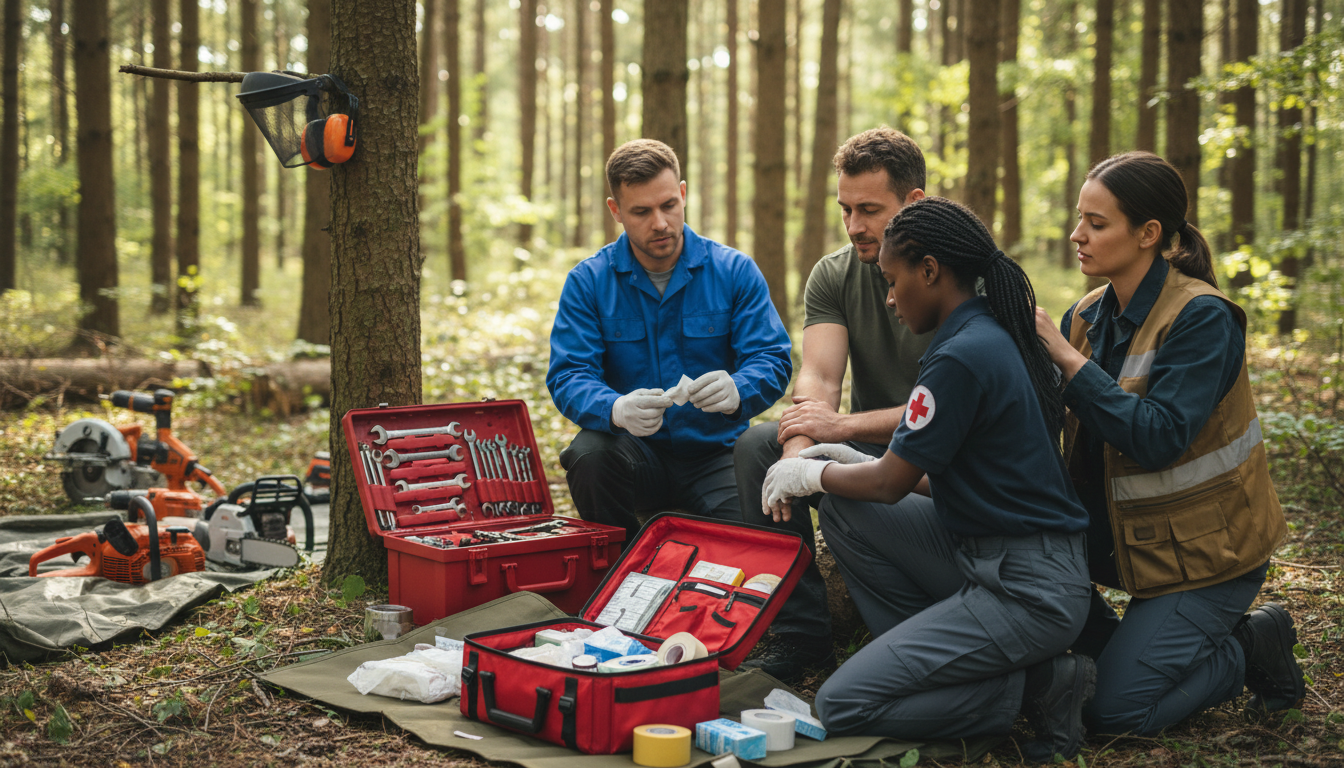
Chainsaw and power tool accidents are more common than you might think. A Penn State University study found that U.S. hospital emergency rooms treated 127,944 chainsaw-related injuries between 2018 and 2022. These injuries came from the tools themselves or from being struck by branches and debris after a cut.
Power tools are essential for many jobs around your home and property. They make work faster and easier when used correctly. But accidents can happen at any time, even when you know what you are doing.
That’s why first aid for tool injuries is so important. Knowing how to respond quickly to an accident can save lives and reduce serious damage. You don’t need to be a doctor to help someone in an emergency situation.
This guide teaches you real-world tool injury first aid skills. You’ll learn how to recognize different types of injuries. You’ll discover how to give immediate care before emergency responders arrive. You’ll also understand when to call for professional medical help.
Being ready with knowledge and supplies makes you valuable in an accident. Combined with safe tool practices, strong first aid skills give you confidence and peace of mind. Let’s explore what you need to know about tool injury first aid.
Table of Contents
Understanding the Risks of Chainsaw and Power Tool Accidents
Chainsaw and power tool injuries are more common than you might think. They can lead to serious harm that needs quick care and first aid. Knowing the most common injuries helps you prepare for accidents. The dangers come from the tools themselves and from flying debris or falling branches.
Common Types of Tool-Related Injuries
Power tool accidents can cause many different injuries. Some are minor, while others are very serious. It’s important for workers and homeowners to know these injuries to provide the right care after an accident.
- Deep cuts and lacerations on legs, arms, and hands
- Puncture wounds from sharp tool parts
- Crush injuries from falling logs or heavy branches
- Fractures and broken bones
- Eye injuries from flying wood chips and debris
- Hearing damage from loud engine noise
- Kickback injuries, where the tool violently thrusts backward toward the operator
Kickback is the most dangerous chainsaw accident. It happens when the top tip of the cutting bar strikes an object or gets stuck. The chainsaw then bucks upward and backward with extreme force. This can cause severe lacerations or puncture wounds to the chest, face, or neck. Knowing about kickback is why tool accident first aid training is so important.
Statistics on Chainsaw Emergency Room Visits
The numbers show a serious story about chainsaw injuries in America. Between 2018 and 2022, U.S. emergency rooms treated 127,944 chainsaw-related injuries. That’s about 25,000 injuries per year. This data comes from a Penn State University study and shows how common these accidents are.
| Injury Type | Frequency | Primary Cause |
|---|---|---|
| Lacerations and cuts | Most common | Direct blade contact |
| Crush injuries | Frequent | Falling timber or branches |
| Kickback injuries | Most severe | Top bar tip striking objects |
| Flying debris injuries | Common | Wood chips and debris |
| Hearing damage | Widespread | Prolonged noise exposure |
Not all injuries come from the blade. Many happen when falling branches, logs, or flying wood chips strike a worker. Even struck-by incidents can be severe. The OSHA chainsaw safety guidelines outline how proper protective equipment and training can prevent many of these accidents.
Understanding these risks prepares you for emergency tool injury care. Knowing what injuries are most likely helps you keep the right first aid supplies nearby. This knowledge is invaluable when every second counts during a tool accident first aid situation.
Immediate Response to Tool Injuries
The first moments after a tool injury are key. Quick thinking and calm actions can greatly affect the outcome. Stop all work immediately and turn off equipment to prevent more injuries.
Make sure the scene is safe before doing anything. Turn off the chainsaw or power tool. Move the injured person away from dangers like unstable trees or electrical lines. Stay calm and focused to think clearly.
Check the injured person’s condition without moving them unless it’s necessary. Ask these important questions:
- Is the person conscious and breathing?
- Is there severe bleeding?
- Are they showing signs of shock (pale skin, rapid heartbeat, confusion)?
- Can they speak or respond to questions?
Call 911 immediately for any serious injury. Don’t wait to see if symptoms improve. Paramedics need to know what happened and how much time has passed. Having a second person present makes calling for help easier.
Keep first aid supplies and your phone easily accessible. Do not leave these items in a distant vehicle or building. Learn how to handle a tool injury properly by reviewing common workshop injuries and emergency response. Having fire extinguishers and a complete first aid kit nearby gives you the tools needed to respond quickly and effectively.
Stay with the injured person until paramedics arrive. Keep them calm and keep them from moving. Begin basic first aid while you wait, but remember your main job is to prevent the situation from getting worse and get professional help as fast as possible.
First Aid for Tool Injuries
Knowing how to act fast when a tool injury happens is key. Treating tool injuries starts with staying calm and acting quickly. Whether it’s a small cut or a big wound, knowing the right steps is important. This section covers common scenarios with power tools or chainsaws. The right action depends on the injury type and quick response.
OSHA training says workers using chainsaws must know how to handle emergencies and bloodborne pathogens. Your quick first aid can stop serious problems before help arrives.
Treating Cuts and Lacerations
Cuts and lacerations are common tool injuries. The good news is many cuts can be treated with basic first aid.
First, rinse the wound with clean water if you can. This removes dirt that could lead to infection. Then, apply direct pressure with a clean cloth or gauze for 5 to 10 minutes. Keep the pressure steady—don’t look under the cloth to check the bleeding.
Chainsaw chaps and protective clothing have special fibers to jam the chain. But, serious cuts can happen, so treating injuries carefully is important even with protective gear.
- Elevate the injured area above your heart if possible
- Once bleeding stops, clean around the wound gently
- Apply an antibiotic ointment to prevent infection
- Cover with a sterile bandage and change it daily
- Watch for signs of infection like increased redness or warmth
Managing Severe Bleeding
Severe bleeding needs quick, strong action. It can cause shock and organ failure in minutes. This is why treating tool injuries is so critical.
Apply firm, continuous pressure directly over the wound with a clean cloth. Don’t remove blood-soaked dressings—add fresh gauze on top and keep pressing. Keep pressure for 10 to 15 minutes to help blood clots form.
If blood soaks through your dressings, add new cloth on top without lifting the original. Lifting the cloth can disrupt clotting.
| Bleeding Severity | First Aid Response | When to Apply Tourniquet |
|---|---|---|
| Minor (steady oozing) | Direct pressure with gauze, elevate limb | Not needed |
| Moderate (steady flow) | Firm pressure, pressure point application, elevation | Only if direct pressure fails |
| Severe (spurting blood) | Immediate tourniquet or pressure points | Apply within 2-3 inches above wound |
| Uncontrollable (won’t stop) | Apply tourniquet, call 911 immediately | Yes—note exact time applied |
For limb injuries where direct pressure fails after 5 minutes, consider a tourniquet. Place it 2 to 3 inches above the wound, never directly on joints. Tighten until bleeding stops. Write the time of application on the tourniquet or patient’s skin so emergency responders know exactly how long it’s been in place.
Addressing Crush Injuries and Fractures
Crush injuries happen when logs, branches, or heavy equipment pin limbs or the torso. These injuries are dangerous because internal damage may be far worse than external signs suggest.
Recognize fractures by watching for these signs:
- Obvious deformity or unusual bend in the limb
- Severe pain that worsens with movement
- Inability to move or use the injured area
- Rapid swelling within minutes
- Bruising that spreads quickly
When treating tool injuries involving fractures, immobilize the injured area right away. Use rolled-up blankets, pillows, or improvised splints made from branches or cardboard. Never try to straighten or realign broken bones—this can cause severe internal bleeding and nerve damage.
For crush injuries, watch closely for signs of internal bleeding and shock. Keep the person warm, quiet, and as comfortable as possible. Monitor breathing and consciousness. Even minor-looking crush injuries need emergency evaluation because hidden internal damage can develop suddenly.
- Stop all movement of the injured area immediately
- Apply ice wrapped in cloth if available (15 minutes maximum)
- Elevate the injury if it doesn’t cause pain
- Watch for signs of shock: pale skin, rapid breathing, confusion
- Call 911 for any significant crush injury
Remember: proper tool injury treatment in the first few minutes can prevent shock, infection, and permanent damage. Always call emergency services for serious injuries, even if they seem manageable.
When to Seek Emergency Medical Care
Knowing when to call 911 is key in tool safety first aid training. Power tool and chainsaw injuries might seem minor but can be serious. Always call for help if unsure. Emergency responders would prefer to respond to a minor call than arrive too late for a serious one.
Your workplace has rights under OSHA standards. Employers must provide medical services and first aid protocols. You have the right to request emergency care without fear of losing your job or facing punishment.
- Bleeding that won’t stop after applying direct pressure for several minutes
- Deep cuts showing muscle, bone, or tendons
- Any amputation or partial amputation, even of fingertips
- Head injuries with loss of consciousness or confusion
- Chest or abdominal injuries
- Difficulty breathing
- Signs of shock including cold clammy skin, rapid weak pulse, or altered consciousness
- Foreign objects embedded in the wound
- Rapidly worsening condition
Seek professional medical evaluation for injuries that seem stable but need expert assessment. All chainsaw cuts require professional evaluation regardless of visible depth because of contamination risk and hidden tissue damage. Suspected fractures, crush injuries, eye injuries, and wounds needing stitches also require professional care.
When you call for help, provide emergency responders with clear information about what happened, which tool caused the injury, the nature of injuries, and any first aid already given. Learning basic first aid skills for power tool prepares you to give accurate information while waiting for professional help.
Prevention Through Proper Safety Equipment and Training
The best way to handle construction injuries is to prevent them. Workplace safety is key, and it starts with the right equipment and training. OSHA makes sure employers give workers the right gear and teach them how to use it.
Preventing injuries is better than treating them. Accidents with chainsaws or power tools can be very serious. But, most serious injuries can be avoided with smart choices and preparation.
Essential Personal Protective Equipment
Wearing the right gear is very important when using chainsaws and power tools. OSHA requires employers to give workers specific protection for free:
- Hard hats protect your head from falling branches and debris
- Safety glasses or face shields keep high-speed particles away from your eyes
- Hearing protection (earplugs or earmuffs) prevents long-term hearing damage from loud equipment
- Steel-toe or composite-toe boots protect feet from heavy falling objects
- Heavy-duty work gloves with safety cuffs shield hands and prevent debris from entering sleeves
- Chainsaw chaps contain special fibers that jam the chain and stop it instantly
Chainsaw chaps are very important. They have special fibers that stop the chain quickly. This can save your legs from serious injury. Some hard hats now come with eye and ear protection for extra safety.
Workers have the right to training in a language they understand. Employers must teach everyone why and how to use protective equipment correctly.
Safe Operating Procedures for Chainsaws
Learning how to use chainsaws safely is key. The right techniques protect you and others nearby:
- Use the boxer stance with feet shoulder-width apart and knees slightly bent for stability
- Keep both hands on the saw at all times without exception
- Avoid the kickback zone at the bar’s tip where the chain moves fastest
- Start cuts with the bottom edge of the bar near the middle of the log
- Plan every cut before you start, knowing where the bar will exit and where debris will fall
- Maintain proper chain tension so it has slight give but doesn’t dangle from the bar
- Never cut directly overhead or at awkward angles
- Engage the chain brake when walking more than 50 feet between cuts
- Take regular breaks as fatigue causes more accidents
Sharp tools are safer than dull ones. Dull blades need more force, leading to fatigue and mistakes. Keep your tools sharp and well-maintained.
OSHA requires training on job safety, hazards, and tool maintenance. This training keeps you safe and healthy. With the right equipment and procedures, serious injuries become rare.
Check out quality safety equipment sources for reliable gear that meets standards and keeps you safe.
Creating a Safe Work Environment
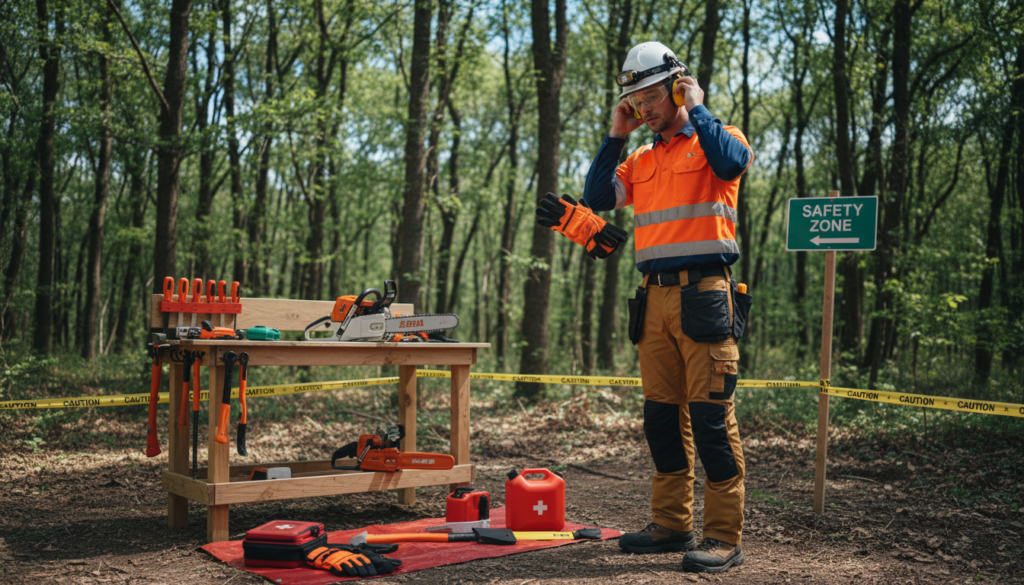
Creating a safe workspace is key to avoiding injuries from chainsaws and power tools. Before starting any project, make sure your work area is well-prepared. A clean and organized space reduces accidents and ensures help is nearby if needed.
First, mark your work area clearly. Keep others at least twice the height of any trees away from your cutting zone. For example, if you’re cutting a 40-foot tree, everyone should stay at least 80 feet back. This creates a safe space and prevents others from getting too close.
Preparing Your Worksite
Look for hazards in your work area. Remove any obstacles that could trip you or block your way. Also, check for electrical lines overhead and underground. Look for dead branches that could fall without warning.
Stable ground is essential for power tool safety. Make sure your feet are on solid ground and you can move easily. Clear away rocks, roots, and debris to avoid tripping while using a chainsaw.
Managing Multiple Workers Safely
Never work alone with a chainsaw. OSHA requires someone to be there to help in emergencies. When working with others, stay at least two vegetation-lengths apart. For example, if cutting 6-foot brush, keep at least 12 feet between workers.
Use a system where one person cuts while others remove brush. This keeps everyone safe from flying debris.
| Worker Separation Requirements | Distance Needed |
|---|---|
| Single vegetation length (example: 6-foot brush) | 6 feet minimum between workers |
| Two vegetation lengths (recommended safety distance) | 12 feet minimum between workers |
| Tree felling safety zone | Twice the tree height away from cut area |
| Certified arborist requirement | Trees larger than 8-inch diameter |
Knowing When to Call Professionals
For trees over 8 inches in diameter, you need a certified arborist. They have the skills and insurance for complex jobs. Call a professional for trees that lean, show signs of rot, sit on steep slopes, or are beyond your skill level.
Emergency Readiness and First Aid
Keep first aid kits close to your work area. Don’t lock them in vehicles. Have charged cell phones or two-way radios for communication. Know your exact location so you can tell emergency dispatchers where to send help.
Keep fire extinguishers nearby. Chainsaws can create sparks that start fires. Before starting work, discuss emergency procedures with your team so everyone knows what to do.
- Stock first aid supplies within arm’s reach
- Test cell phones or radios before work begins
- Know the address or GPS coordinates of your location
- Position fire extinguishers at the worksite
- Brief all workers on emergency procedures
- Keep contact information for local emergency services
Knowing your rights is part of power tool safety. OSHA protects workers who refuse unsafe work or request proper safety measures. Safety is about practical thinking that keeps people healthy and jobs running smoothly.
Conclusion
Chainsaw and power tool injuries harm thousands of workers yearly. In just five years, nearly 128,000 chainsaw injuries occur. These numbers are alarming. But, knowing how to prevent injuries can greatly reduce your risk.
Prevention and first aid readiness are key to staying safe. Wearing the right protective gear, like chainsaw chaps, can prevent many cuts. Safe practices and regular training also play a big role in preventing injuries.
First aid skills are just as important. They help control bleeding and spot emergencies. Both prevention and first aid are essential for your safety.
Your rights and responsibilities are important. OSHA rules protect workers from unsafe conditions and retaliation. Employers must ensure a safe workplace. You must wear protective gear, work with others, and keep first aid supplies ready.
Always follow safety rules, even when in a hurry. Remember, safety should always be your top priority. Stay updated on first aid and equipment maintenance. Create a workplace culture that values safety above all.
By understanding how to prevent and respond to injuries, you can work safely and confidently. Protect yourself and your coworkers. Make sure everyone goes home healthy every day.
FAQ
How common are chainsaw and power tool injuries in the workplace?
Chainsaw injuries are very common. Over 127,944 happened in just five years in the U.S. It’s important to know first aid for tool injuries to stay safe. Even experienced workers can get hurt, making emergency tool injury care a vital skill.
What are the most common types of tool-related injuries I should know how to treat?
You’ll often see deep cuts, puncture wounds, and crush injuries. Fractures, eye injuries, and hearing damage are also common. Knowing these helps you act fast during tool accident first aid and use the right first aid for construction injuries techniques.
What is chainsaw kickback and why is it the leading cause of serious injuries?
Kickback happens when the chainsaw hits wood too hard. It makes the saw jump back towards the person using it. This is why knowing how to handle a tool injury quickly is so important. It helps prevent injuries by using the right stance and technique.
What’s the most important first step when a tool injury occurs?
Stop work and turn off the equipment first. This is your top priority in tool injury first aid. Only after it’s safe should you check the injured person. Never move an injured person unless it’s absolutely necessary, and always have someone call 911 for you.
When should I call 911 for a tool injury?
Call 911 right away for serious injuries. Never wait hoping the situation gets better. Call for uncontrolled bleeding, deep cuts, amputations, head injuries, chest or abdominal injuries, breathing problems, shock, and embedded objects. Also, get professional help for all chainsaw cuts, no matter how small they seem.
How do I control severe bleeding from a chainsaw or power tool injury?
Use firm, direct pressure with a clean cloth or gauze on the wound. If it gets soaked, add more material on top. Keep applying pressure for several minutes. For severe bleeding, use a tourniquet 2-3 inches above the wound, tightening until bleeding stops. Remember the time you applied it for emergency responders.
How should I treat a minor cut from a chainsaw or power tool?
Rinse the wound with clean water if you can, then apply direct pressure. Elevate the injured area and cover with a sterile bandage once bleeding stops. Even small cuts from chainsaws need a doctor’s check-up because of the risk of deeper damage.
What should I do if someone has a crush injury from a falling log or tree?
Crush injuries might look minor but can be serious. Watch for signs of internal bleeding and shock. Keep the person calm and wait for emergency responders. Never move a crushed area, and seek medical help for proper care.
How do I recognize and immobilize a fracture from a power tool accident?
Look for deformity, severe pain, and swelling. Use available materials to immobilize the injured area. Never try to straighten broken bones. Keep the injured limb supported until help arrives.
What personal protective equipment is essential for preventing tool injuries?
You need a hard hat, safety glasses, hearing protection, and steel-toe boots. Chainsaw chaps are also key to prevent amputations. Some tools come with integrated protection for convenience and safety.
What safe operating procedures should I follow to prevent tool injuries?
Use the boxer stance, keep hands on the saw, and avoid kickback zones. Start cuts carefully and plan each step. Keep tools sharp and take breaks to avoid fatigue. OSHA requires this training for safety.
Is it safe to work alone with a chainsaw or power tools?
No, working alone with chainsaws is dangerous. Having a partner means someone can help while you call 911. A partner also watches for hazards and provides support.
What should I do to prepare a worksite for safe tool operation?
Clearly mark the work area and keep others away. Identify hazards and have a first aid kit ready. Keep phones charged and have emergency plans in place. Call certified arborists for big jobs or complex situations.
What first aid supplies and emergency equipment should I keep at the work site?
Keep a fully stocked first aid kit and have phones, radios, and fire extinguishers ready. Make sure supplies are easy to reach. This helps you respond quickly to emergencies.
How often should I refresh my first aid skills for tool injuries?
Refresh your skills every one to two years, or when required by your workplace. Regular practice keeps your skills sharp. Many organizations offer courses for workplace injuries.
What information should I provide to emergency responders when calling about a tool injury?
Tell them what happened, the tool involved, and the injuries. Give the exact location and what first aid you’ve done. This helps responders prepare with the right equipment and personnel.
What are the signs of shock that might accompany a serious tool injury?
Look for pale skin, cold skin, rapid pulse, shallow breathing, and confusion. Shock needs immediate medical care. Keep the person warm and calm until help arrives.
Why should I seek professional medical evaluation even for seemingly minor chainsaw cuts?
Even small cuts need a doctor’s check-up. Chainsaw blades can introduce contamination, and tissue damage goes deeper than visible. Professional care ensures proper healing and prevents complications.
What should I do if an object is embedded in a wound from a power tool accident?
Never try to remove an embedded object. It can cause more harm. Apply gentle pressure around the object, call 911, and cover the area. Professional removal is needed for proper care.
Do I have the right to refuse unsafe tool work or request safety measures?
Yes, you have the right to refuse unsafe work and request safety measures. OSHA protects workers’ rights to a safe work environment. Report concerns to your supervisor or OSHA if necessary.
How can I tell the difference between an injury requiring immediate emergency care versus one that needs professional evaluation?
Call 911 for uncontrolled bleeding, deep cuts, amputations, head injuries, chest or abdominal injuries, breathing problems, shock, and embedded objects. Seek professional evaluation for all chainsaw cuts, suspected fractures, crush injuries, eye injuries, and wounds needing stitches.
What’s the correct way to apply a tourniquet for severe limb bleeding?
Apply a tourniquet 2 to 3 inches above the wound. It should be wide and tightened until bleeding stops. Note the time you applied it for emergency responders.