A torn seam before a big meeting can ruin your day. A broken zipper on your favorite jacket is a small disaster. These moments show why having an emergency sewing kit is key for everyone. You don’t need to be a survival expert to use a portable sewing kit.
Sewing kits have been around for thousands of years. Archaeologists found bone needles over 30,000 years old. These tools have evolved into smart, portable kits for your pocket or backpack.
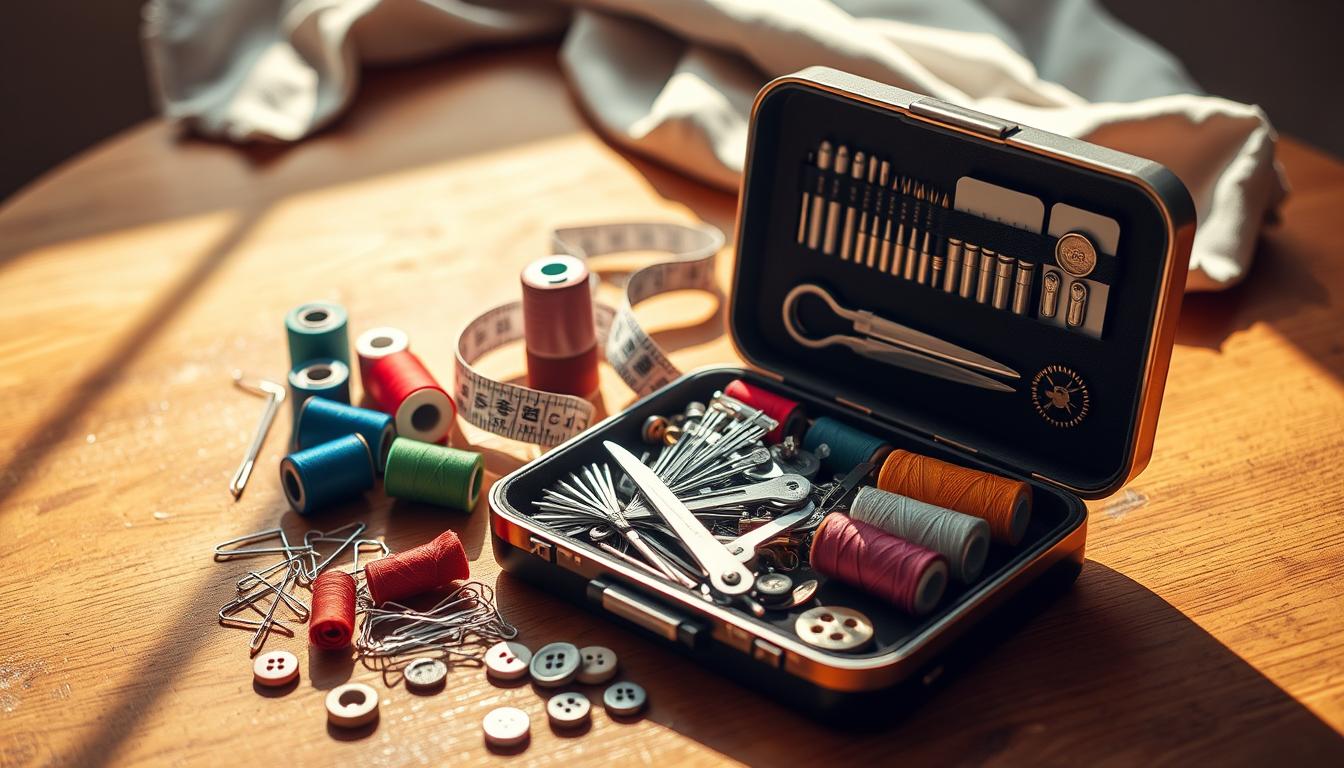
An emergency sewing kit isn’t just for camping or survival. It’s useful for home, travel, work, and daily life. Quality kits include needles, thread, scissors, safety pins, and extra buttons. Some kits also have thimbles, needle threaders, and heavy-duty thread for tough fabrics.
What sets emergency sewing kits apart is their portability and focus. They have only what you need in a compact case. This means you can fix things quickly without carrying a big sewing box.
In this article, you’ll learn what to look for in a portable sewing kit. You’ll find out which tools are best for different repairs. Plus, you’ll see that sewing repairs are easy with the right tools.
Table of Contents
Why Every Preparedness Plan Needs an Emergency Sewing Kit
Your clothes do more than just look good. They protect you from cold, heat, wind, and sun. A small tear or missing button can quickly become a big problem. That’s why a quick fix kit is key in every emergency plan.
Military and first responders carry these kits. They know that clothes are vital in survival situations. Being able to fix them quickly is a survival skill.
Clothing as Survival Shelter
Think of your clothes as wearable shelter. They keep you safe from hypothermia, heat exhaustion, sunburn, and cuts. When disaster hits, clothes take a beating.
A single tear in your jacket means lost insulation. A ripped backpack strap means you can’t carry what you need. These aren’t just small problems. They’re serious.
With travel sewing supplies, you can fix these issues right away. You won’t have to spend hours finding a tailor during a crisis.
From Wardrobe Malfunctions to Disaster Readiness
A quick fix kit is great for everyday problems too. Fix a split seam before a big presentation. Handle a torn backpack strap during a trip.
You don’t have to be a “prepper” to use these kits. Everyone loses buttons and gets wardrobe malfunctions. Travel and malfunctions happen at the worst times.
A compact quick fix kit is perfect for everyday use and emergencies. It’s in your desk, car, or luggage. You’ll use it for small fixes often. When emergencies happen, you’ll be ready.
| Situation Type | Quick Clothing Fix Kit Use | Impact Level |
|---|---|---|
| Office Wardrobe Malfunction | Repair seam before meeting | Professional confidence |
| Travel Mishap | Fix torn luggage strap | Trip continuity |
| Outdoor Adventure | Patch gear damage | Comfort and function |
| Emergency Shelter Need | Repair protective clothing | Survival protection |
These practical tools should be in your home, car, and bag. Travel sewing supplies are smart and versatile. They’re cheap, light, and solve many problems.
Emergency Sewing Kit Basics
An effective emergency sewing kit has five key qualities. It must be affordable but not cheap. It should have reliable tools that work when you need them. The kit should be small enough to carry anywhere.
It should have enough items to fix different problems. The best part is, you don’t need electricity or machines. This makes these kits reliable in any situation.
Many people think sewing is hard. But, basic hand sewing is easy. If you can tie your shoes, you can do simple stitches. These kits are for quick fixes, not big projects.
Choosing quality is more important than spending a lot. Cheap kits often have bad needles, weak thread, and dull scissors. These fail when you need them most.
Good sewing notions cost more but are worth it. They last longer and work better. You want a balance between price and quality.
Basic hand sewing items in a good kit include:
- Multiple needle sizes for different fabric weights
- Strong thread in neutral colors
- Sharp scissors or thread cutters
- Seam ripper for undoing stitches
- Safety pins for temporary holds
These items help fix wardrobe emergencies, gear damage, and unexpected problems. A good emergency sewing kit makes small issues easy to fix.
Essential Components for Your Portable Sewing Kit
Creating a reliable portable sewing kit means picking the right tools. These tools should fix everyday clothes and unexpected emergencies. Your kit should be small but strong enough for any repair, from a loose button to a torn backpack.
Quality is key when choosing items for your kit. It doesn’t have to be big, but it should have tools that do many jobs. Think about what could go wrong and build your kit for those situations.
Needles and Thread for Every Repair Scenario
Start with at least two large sewing needles for different fabrics. Having various needles and threads is important. This way, you can fix many things.
Thread choice is also important for lasting repairs. Keep these colors in your kit:
- White thread for light-colored fabrics
- Black thread for dark garments
- Army green for outdoor gear and utility items
- Dark gray for blending with most materials
For light fabrics, regular thread works well. But for heavy materials, use upholstery-grade thread. This thread is stronger and lasts longer.
Supporting tools are just as important as needles and thread. A needle threader makes threading easy, even in the dark. Safety pins are for quick fixes. A thread picker helps fix mistakes without starting over. Learn about essential tools to see how they all work together.
Heavy-Duty Tools for Canvas and Gear Repair
For backpacks, tents, and canvas, you need special tools. Curved upholstery needles are perfect for thick materials.
For heavy repairs, you need heavy-duty tools:
- Curved upholstery needles (3-4cm) for thick materials
- Sharp scissors for heavy thread and fabric
- Durable thimbles for finger protection
- Measuring tape for precise repairs
These tools are not just for sewing. They’re for survival too. A good kit is small but has everything you need. It’s about being ready for anything.
Choosing the Right Emergency Sewing Kit for Your Needs
Finding the perfect emergency sewing kit is all about your lifestyle and needs. Not every kit fits everyone. A small kit for your purse is different from a big one for your car.
Think about where you’ll carry it and what repairs you need most. This choice affects if you’ll use your emergency sewing supplies when needed.
Understanding Your Three Main Options
Emergency sewing kits come in three main types. Each has its own purpose and benefits.
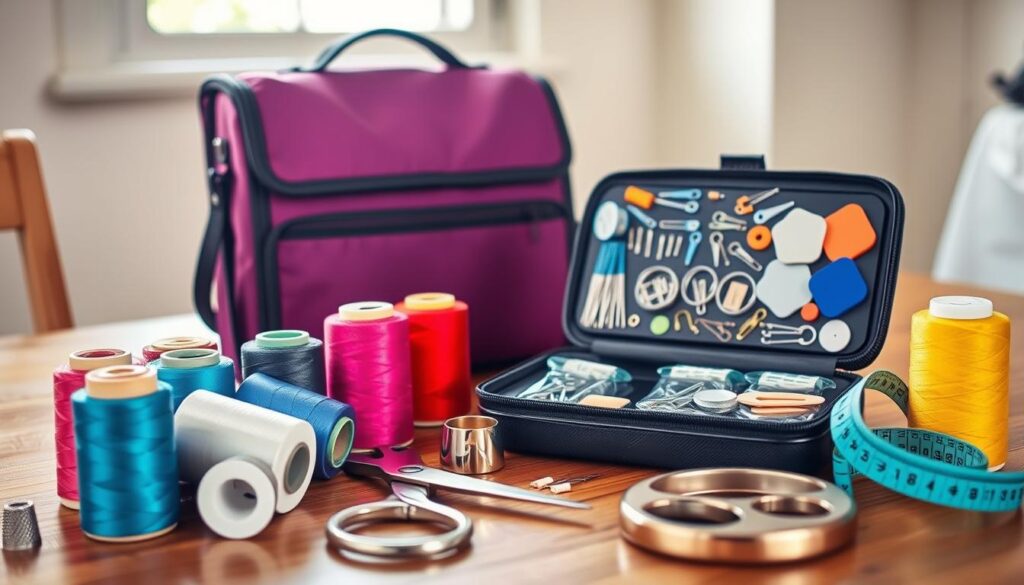
- Budget kits weigh about 1.3 ounces and have 27 pieces. They’re perfect for quick fixes and fit in any bag. Prices start around $6.
- Mid-range kits have 19 heavy-duty pieces for fixing gear and canvas. They cost about $11 and are great for outdoor use.
- Comprehensive kits include 47 pieces with many thread spools and special needles. Priced near $12, they can handle almost any repair.
Matching Kits to Your Life
| Your Situation | Best Kit Type | Key Features | Storage Style |
|---|---|---|---|
| Everyday purse or briefcase | Ultra-compact budget kit | Minimal weight, basic thread colors, small scissors | Slim pouch or twist-tube |
| Outdoor and hiking trips | Mid-range heavy-duty kit | Strong needles, durable thread, canvas repair capability | Canvas pouch with belt clip |
| Car emergency kit | Comprehensive full-size kit | Multiple needle types, varied thread colors, upholstery needles | Hinged protective case |
| Travel and vacations | Compact balanced kit | Portable size with good thread variety, basic tools | Lightweight pouch |
Think about your daily activities. Office workers might prefer a kit in their desk or briefcase. Outdoor lovers need strong supplies for backpacks and tents. Car kits should be full-featured because you have more space.
Storage Matters More Than You Think
Where you store your kit is key. Canvas pouches with belt clips are great for outdoor use. Hinged cases protect needles and keep threads untangled. Twist-tube containers fit well in tight spaces in bags.
Any emergency sewing kit is better than none. Choose one that suits your lifestyle, and you’ll use it when repairs are needed.
Conclusion
An emergency sewing kit is both affordable and useful. Brands like Fiskars and Gear Aid offer quality kits for $6 to $12. This small investment can help fix torn clothes or damaged gear.
Most kits are light, weighing just a few ounces. They easily fit in backpacks, emergency bags, or luggage. This makes them perfect for travel or outdoor adventures.
Your clothes can act as a shelter in survival situations. Keeping them in good condition is key to staying safe from the weather. A quality emergency sewing kit basics lets you fix rips, holes, and seams on the go. You don’t need to wait for a sewing shop or have fancy tools.
Basic needles, thread, and scissors can handle most repairs. For tougher jobs, like fixing packs and tents, use heavy-duty tools like curved needles and upholstery thread.
Learning simple stitches before an emergency is smart. Practice basic repairs now. This way, you’ll be ready when you need to sew under stress.
Knowing how to sew is part of being prepared. It goes hand in hand with first aid, water, and other essentials. Whether you’re in the city, traveling, camping, or just fixing clothes, a good kit is essential.
Choose a kit that fits your lifestyle. Keep it in your emergency kit and practice with it. Knowing you can fix clothes and gear anywhere will give you peace of mind.
FAQ
What exactly is an emergency sewing kit and how is it different from a regular sewing kit?
An emergency sewing kit is made for quick fixes, not for crafting. It’s small, durable, and has the basics for fast repairs. Unlike regular kits, it’s meant to be carried with you. It has high-quality tools that work well in emergencies, not cheap items that fail.
Do I really need to know how to sew to use an emergency sewing kit?
No, you don’t need to know how to sew. These kits are for beginners. If you can tie your shoes, you can use them. They’re simple to use and come with basic instructions.
Why should clothing repair be part of my preparedness plan?
Clothing is like a wearable shelter. It keeps you safe from the elements. Keeping it in good shape is important for survival and daily life. A torn jacket or missing buttons can be dangerous.
What are the most essential components I should look for in a mini sewing kit?
Look for quality needles, thread in different colors, sharp scissors, and safety pins. Also, consider needle threaders, thread pickers, thimbles, and curved needles for heavy-duty repairs.
Why does thread quality matter in an emergency sewing kit?
Good thread is key for lasting repairs. Cheap thread can break easily. Quality thread ensures your fixes last, even under stress.
What’s the difference between basic thread and upholstery-grade thread?
Basic thread is for light fabrics, while upholstery thread is for heavy ones. Upholstery thread is stronger and better for gear repair.
Can one emergency sewing kit work for both clothing and gear repair?
Yes, a good kit can do both. It should have basic tools and specialized ones like curved needles for gear.
How much should I expect to spend on a quality emergency sewing kit?
Kits range from to . The best value is finding a kit that’s affordable but reliable. Avoid cheap kits and expensive ones with too much.
What size emergency sewing kit should I choose for travel?
Choose a small kit for travel. It should be light and fit in your bag. A small kit is enough for most travel repairs.
What’s the best storage solution for keeping an emergency sewing kit organized?
Use a belt-clip pouch for easy access. Twist-tube containers are good for tight spaces. Choose based on where you’ll carry it.
How do I know if a kit has enough variety for my needs?
Think about what you need. A basic kit is good for clothes, but a larger one has more for gear. Check for specialized tools.
What thread colors are most important for an emergency sewing kit?
White, black, army green, and dark gray are essential. They match most fabrics and are less visible.
Are safety pins really useful in an emergency sewing situation?
Yes, they’re great for quick fixes. They hold things together until you can do a proper repair. They’re lightweight and useful.
Why would I need a needle threader in an emergency situation?
Threading needles is hard in emergencies. A needle threader makes it easy. It saves time and reduces frustration.
Can a curved upholstery needle repair my backpack effectively?
Yes, curved needles are perfect for thick materials. They make strong stitches that last. They’re essential for gear repair.
What makes heavy-duty thread different from regular sewing thread?
Heavy-duty thread is stronger and thicker. It’s for materials like canvas and leather. Regular thread won’t work for these.
Should I keep my emergency sewing kit in my car, home, or carry it with me?
Keep kits in different places. A small one in your bag, a bigger one in your car, and a full one at home. This way, you’re always prepared.
Can I use an emergency sewing kit for complex sewing projects?
No, emergency kits are for quick fixes, not complex projects. They have basic tools and are not designed for detailed sewing.
What should I look for in quality scissors for an emergency sewing kit?
Look for sharp blades that can cut through thick thread and fabric easily. Stainless steel is best for durability. Test them before buying.
How often should I replace my emergency sewing kit?
Check your kit every year. Replace needles, thread, and safety pins as needed. A well-maintained kit lasts a long time.
Is a needle threader really necessary or just a convenience item?
In emergencies, a needle threader is essential. It saves time and reduces frustration. It’s a must-have for quick repairs.
What materials can emergency sewing kits actually repair?
Kits can fix many fabrics, including cotton, denim, and nylon. They also work for leather and outdoor gear. The right tools make a big difference.
Why should someone with minimal sewing experience carry an emergency sewing kit?
Emergency repairs are simple. They don’t need advanced sewing skills. A kit helps fix small problems and keeps you safe.