
Emergencies can feel overwhelming and stressful. Natural disasters, accidents, and disease outbreaks strike without warning. For people with disabilities, these events bring extra challenges that others might not face.
You might worry about getting the help you need when disaster strikes. First responders could be delayed. Medical services might be stretched too thin. These situations affect people with disabilities in serious ways.
The good news is that emergency preparedness for disabilities puts power back in your hands. Planning ahead gives you real control over your safety and well-being.
Some areas have emergency registries. These registries try to track people who may need help during a crisis. But here is the truth: you should not count on registries alone to keep you safe. Responders might not reach you even if your name is on a list.
Your own personal plan is your best defense. When you take steps now to prepare, you build real protection for yourself. This article walks you through each part of emergency preparedness for disabilities. You will learn how to create a support network, build your emergency kit, and make a custom evacuation plan.
Getting ready is not as hard as it sounds. You are already taking the first step by reading this. Let us show you how to feel ready and confident for whatever comes next.
Table of Contents
Understanding Emergency Preparedness for Disabilities
Emergency preparedness is about getting ready for unexpected events that can disrupt your life. For people with disabilities, it’s about planning for unique challenges. It’s not just about survival; it’s about preparing in ways that fit your needs.
The first step is to know what emergencies might happen in your area. Different places face different risks. Knowing your local risks helps you prepare better.
Types of Emergencies and Natural Disasters
Many emergencies can affect your community and home. These events come in different forms and strike without warning:
- House fires and structure fires
- Severe thunderstorms and lightning
- Tornadoes and strong winds
- Hurricanes and typhoons
- Flash floods and water emergencies
- Earthquakes and ground movement
- Blizzards, ice storms, and extreme cold
- Heatwaves and extreme heat
- Landslides and volcanic activity
- Hail storms and damaging weather
Your location determines which emergencies you should focus on. For example, someone in tornado country needs different preparations than someone in an earthquake zone. Check the risks near your home and plan around those threats.
Why Planning Ahead Matters for People With Disabilities
People with disabilities face unique challenges during emergencies. Advance planning is essential. Consider these critical situations:
| Emergency Scenario | Why It Matters for People With Disabilities |
|---|---|
| Power outages | Medical equipment, oxygen machines, and mobility aids stop working without electricity |
| Water supply interruptions | Personal care routines and medication management become difficult or impossible |
| Sudden evacuation orders | Leaving quickly requires special planning and accessible transportation options |
| Pharmacy access blocked | Medication refills become unavailable when roads are unsafe or stores are closed |
| Personal Care Attendant unavailable | Dangerous road conditions prevent caregivers from reaching you when needed most |
During major disasters, emergency responders get overwhelmed. Fire departments, police, and ambulances can’t reach everyone right away. This makes planning ahead critical for people with disabilities.
When you plan ahead, you build self-sufficiency for the initial emergency period. You won’t need to wait for help that may not arrive quickly. Disability emergency planning gives you independence and peace of mind, knowing you’re prepared.
Building Your Personal Support Network
No one should face emergencies alone. Having trusted people who know your needs is key. A personal support network, or self-help team, offers the help you need to stay safe.
Think about who could help you in a crisis. Your network could include family, friends, neighbors, caregivers, and coworkers. Choose people who live nearby for quick help. Also, include those who live farther away to help from afar.
For caregiver emergency coordination to work, everyone needs to know your specific needs. Share detailed info about your abilities and needs before, during, and after disasters. Plan based on your lowest functioning level to stay prepared on tough days.
Store contact info in two places:
- Digitally in your phone with email addresses and phone numbers
- In writing inside your emergency kit for backup access
Have regular check-ins with your network. Review your plans together at least once a year. Keep conversations open and honest about your needs. Trust, mutual support, and community strength are key to effective coordination.
Creating Your Individual Emergency Plan
Creating a good emergency plan takes time and thought. It should fit your specific needs and lifestyle. Start by thinking about your daily routines and what you need to stay safe and healthy.
Write down your daily routines, medications, equipment needs, and support systems. Share your plan with trusted friends, family members, and emergency contacts. Review your plan at least once a year and update it when your needs change.
Daily Living Considerations During Emergencies
When emergencies happen, your daily routines change. Think about how you handle personal care tasks like bathing and grooming. What will you do if water service stops for several days?
Consider storing extra water for cleaning and drinking. If you use adaptive equipment such as shower chairs or tub-transfer benches, plan for how you’ll manage without them or identify backup options.
Adaptive feeding devices help you eat independently. Ask yourself what happens if these tools aren’t available during an evacuation. Can you eat other foods? Keep some non-perishable items that work with your setup.
Medical Equipment and Electricity-Dependent Devices
Medical equipment emergency backup is critical for your safety. Many devices need electricity, including dialysis machines, electrical lifts, ventilators, and oxygen concentrators. Power wheelchairs also require regular charging. If you lose power, your health could be at risk.
Create a backup power plan right now. Research these options:
- Portable generators that can run your equipment
- Battery backup systems designed for medical devices
- Uninterruptible Power Supply (UPS) units for smaller equipment
- Charging stations for mobility devices and communication tools
Calculate how long your backup power will last. Test your backup systems monthly to ensure they work properly. Know which medical equipment and assistive technology you must take during evacuation. Create a priority list and keep it accessible.
Transportation and Evacuation Planning
Evacuation plans for disabled individuals must include realistic transportation options. Do you need a specially equipped vehicle? Contact your local transportation services now to understand accessible options. Know which companies offer wheelchair-accessible vans or have lift equipment.
Plan your exit routes from home and work. If you use ramps, check that they’re secure and stable. Identify alternative exits in case main routes are blocked by disaster debris. If you rely on mobility aids, keep backup options available.
Building evacuation requires advance planning:
- Know if you need assistance leaving your home or office
- Learn where alarms are located and how to activate them
- Check if emergency exits are readable in print or Braille
- Confirm that emergency alarms have both audible and visible features
- Identify backup exits like stairs, windows, or secondary ramps
Plan how you’ll communicate during an emergency. If you use sign language interpreters, hearing aids, communication boards, or augmentative devices, identify backup plans for each. Know the locations of text telephones and amplified phones. Share your communication needs with emergency contacts.
Create a written emergency plan and keep copies in multiple locations. Share it with family, coworkers, neighbors, and emergency services. Your preparation today saves critical time during a real emergency.
Essential Supplies for Your Emergency Kit
Creating a special needs emergency kit requires careful planning. It’s important to gather everything you might need during a disaster. This way, you can stay safe and healthy. Your kit should include basic items and supplies specific to your needs.
Medications are a top priority in your emergency kit. Make sure you have at least 7 to 14 days’ worth of all prescription medications. Include a card with the medication names, dosages, and your doctor’s information. Also, save your pharmacy’s phone number in your phone and in a written list in the kit. This helps if you can’t reach your regular pharmacy.
Medical Supplies and Equipment
Include medical supplies specific to your needs in your kit. Think about what you use every day. Diabetics should pack testing supplies, insulin, and cooling packs. People with hearing aids need extra batteries. Those who wear glasses or contacts should include backup pairs.
It’s also important to have backup power for medical equipment. Keep batteries, chargers, and power banks in your kit. Hand-crank or battery-powered devices can run important equipment if electricity goes out during a disaster.
Care for Service Animals and Pets
Your service animal or pet depends on you during emergencies. Pack food and water for at least two weeks. Include medications your animal takes. Keep vaccination records and licensing documents to prove your animal can stay with you in emergency shelters. Have a backup caregiver identified who can care for your pet if you become unable to do so.
| Item Category | What to Include | Quantity/Duration |
|---|---|---|
| Medications | All prescription medications in original bottles with labels | 7-14 day supply |
| Medical Records | Doctor contacts, pharmacy numbers, medication list | Copies in kit and phone |
| Mobility Aids | Extra canes, crutches, batteries for power equipment | Full replacements plus extras |
| Communication Devices | Chargers, batteries, communication boards, picture cards | Multiple power sources |
| Sensory Aids | Hearing aid batteries, backup glasses, contact lenses | Extras beyond daily needs |
| Pet Supplies | Food, water, medications, vaccination records, licenses | 14-day supply |
| Important Documents | Insurance cards, ID, proof of residence, medical records | Copies in waterproof container |
Communication and Important Documents
If you have a communication disability, include devices you rely on in your special needs emergency kit. Pack communication boards or picture cards. Bring extra batteries and chargers for speech devices or tablets. Keep backup power sources so your communication tools work even without electricity.
Store copies of important documents in waterproof containers inside your kit. Include insurance cards, identification, medical records, and proof of residence. Write contact information for family members, doctors, and your pharmacy. Keep digital copies saved on your phone as well.
- Review your special needs emergency kit every six months
- Replace expired medications
- Check that batteries are working
- Update contact information if it changes
- Refresh pet food and supplies
- Test communication devices and backup power
Your special needs emergency kit is personal to you. Customize it based on what you use and need every day. Talk with family members and caregivers about what should be in your kit. Keep your kit in an easy-to-reach location that everyone knows about. Being prepared means you can respond quickly if a disaster strikes.
Understanding Your Rights During Emergencies
When emergencies happen, people with disabilities need equal access to info and shelter. Your rights don’t go away in disasters. The Americans with Disabilities Act (ADA) makes sure emergency services are for everyone. This means emergency info for people with disabilities must be clear, timely, and in many formats.
Knowing these rights helps you stand up for yourself and your family when it matters most.
Accessible Communication and Information
Getting emergency info fast can save lives. Emergency communication for people with disabilities is a must, not a favor. Local officials must provide American Sign Language (ASL) interpreters and live captions during press conferences about evacuations or severe weather.
Emergency info should come to you in the best way for you. You have the right to get alerts through:
- Text message notifications
- Visual alarm systems
- Accessible mobile apps
- TTY devices for deaf and hard-of-hearing individuals
- Large print materials
- Simple, plain language explanations
All emergency messages must be clear and easy to understand. Avoid using technical terms when explaining dangers or evacuation procedures. Local emergency management agencies must provide info in ways that reach people who are blind, deaf, hard-of-hearing, or have cognitive disabilities.
Shelter Access and Service Animal Rights
When you need to evacuate, finding shelter should not mean losing your independence. An accessible emergency shelter must meet ADA standards. These shelters need ramps, accessible restrooms, and pathways without barriers.
You have the right to stay in a community shelter with everyone else. No one can force you into a separate “special” shelter or nursing home unless your medical condition truly requires it. Separation based solely on disability is illegal.
When planning your accessible emergency shelter needs, review resources about creating safe spaces that meet your specific requirements.
If you have a service animal, that animal stays with you. Service dogs are not pets—they’re working animals that help you live independently. During evacuation and in shelters, your service animal must be allowed to accompany you, just like in hospitals, restaurants, and other public places. Keep your service animal documentation readily available to show shelter staff.
Know what to do if your rights aren’t respected. Contact your local disability rights organization or the ADA National Network immediately if a shelter denies you access, segregates you, or refuses your service animal. These organizations can help you assert your rights and find appropriate shelter quickly.
Staying Informed About Emergency Events
Getting accurate information during an emergency is key to your safety. Knowing what’s happening around you helps you make quick decisions. For those managing disability disaster response, staying connected to reliable sources can be a lifesaver. It’s important to set up your information channels before an emergency hits.
Start with traditional methods like watching local news. Look for stations that offer captions and ASL interpretation for accessibility. Also, download apps on your smartphone for instant alerts. The FEMA app sends emergency warnings and safety tips to your device.
AccuWeather tracks real-time weather, and checking your state’s Department of Transportation website during severe weather shows current road conditions. This helps you know if your caregiver can safely reach you or if evacuation routes are open.
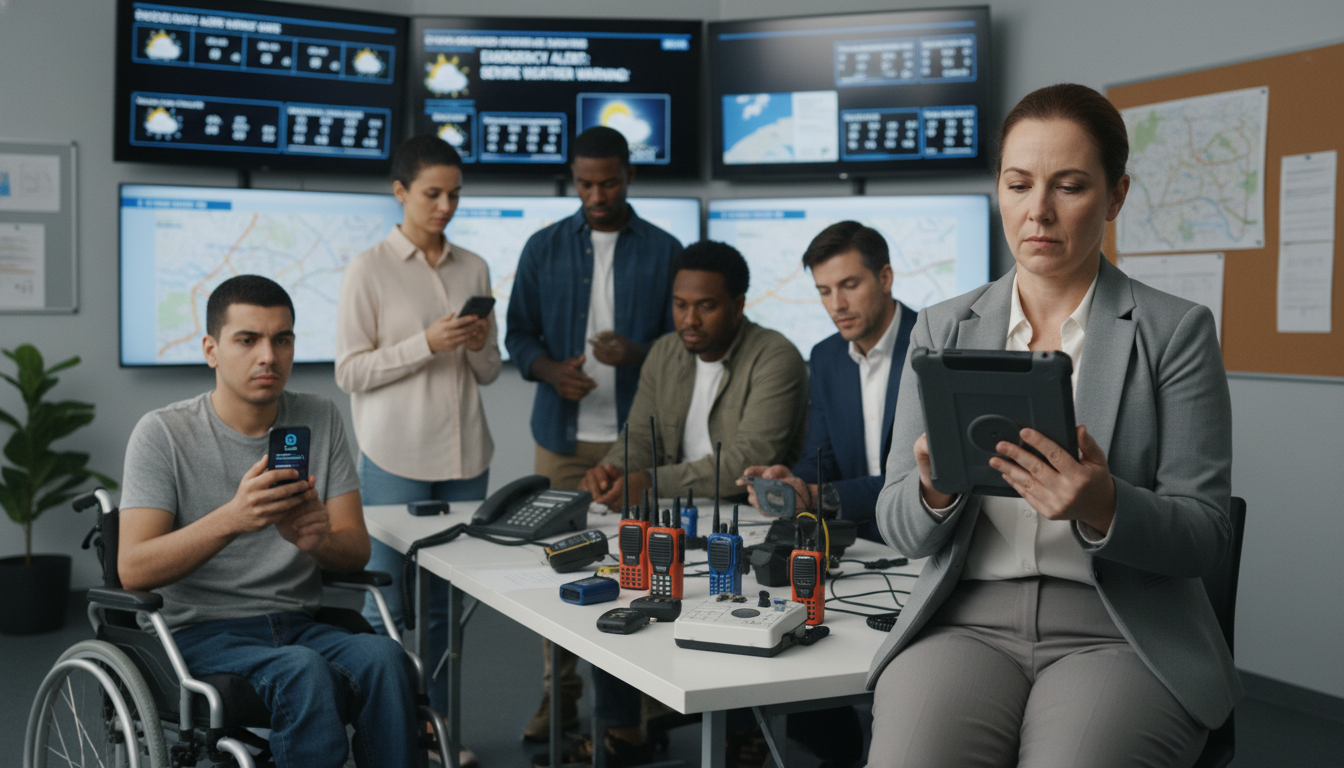
A battery-operated weather radio is vital when power goes out. Look for models with flashing lights if you are deaf or hard of hearing. These radios work without electricity, keeping you informed when other systems fail. Enable emergency alerts on your phone and customize your notification settings for different warning types.
| Information Source | Best For | Access Method | Works During Power Outages |
|---|---|---|---|
| Local News Stations | Detailed emergency updates with captions | Television or streaming app | No (unless using app) |
| FEMA App | Official emergency alerts and guidance | Smartphone download | With cell service |
| AccuWeather App | Real-time weather tracking | Smartphone download | With cell service |
| Battery Weather Radio | Emergency broadcasts without power | Battery or hand-crank powered | Yes |
| DOT Website | Road conditions during severe weather | State government website | With internet access |
| American Red Cross | Shelter locations and emergency services | Website or mobile app | With cell service |
Practical emergency planning resources help you understand evacuation strategies and family coordination during emergencies. Sign up for local emergency notification systems in your area. Follow your city and county emergency management accounts on social media. These accounts share real-time updates when disasters happen.
The American Red Cross offers a shelter locator to help you find safe places during evacuations. Visit their website or download their app to discover open shelters near you. This is important for disability disaster response planning because you need to know shelter locations that offer accessible accommodations.
In immediate emergencies, always dial 911 first. This connects you with emergency responders who can send help right away. Build your information network now so you are prepared when emergencies arrive.
Conclusion
You now have the tools to build a strong plan for emergency preparedness for disabilities. This article covered many important topics. You learned about different types of emergencies that could happen in your area.
You discovered how to build a support network of people you trust. You created a personal emergency plan that fits your specific needs.
Emergency preparedness for disabilities is not about being scared. It is about feeling ready and confident. You do not need to do everything at once.
Start with one small step. Maybe you build a basic emergency kit this week. Next week, you could identify three people for your support network.
Small actions add up to big protection for your safety and health. Your preparedness plan will grow stronger over time.
Keep in mind that during major emergencies, first responders and healthcare workers might not be able to reach you right away. Your personal plan becomes your lifeline. This is why emergency preparedness for disabilities matters so much.
Review your plan at least once each year. Update it when your health changes or when you get new medical equipment. Share what you learned with friends and family in your community.
Push for accessible emergency planning in your local area.
You have the knowledge and power to prepare well. Taking these steps is an act of self-care and strength. Use the resources available to stay safe and healthy before, during, and after an emergency.
Your effort today protects your future. You are building a foundation of safety and peace of mind for yourself and those you care about.
FAQ
What types of emergencies should I prepare for if I have a disability?
You should prepare for many emergencies like house fires and severe storms. Check your local emergency agency for specific risks. Also, think about power outages and situations where you can’t get to pharmacies or hospitals.
Why is emergency preparedness critical for people with disabilities?
People with disabilities face unique challenges during emergencies. Power outages can stop medical equipment. Water issues can make personal care hard. Evacuations might be tough without accessible transport.
Emergency services can be overwhelmed, making self-sufficiency key. This can save lives.
How do I build an effective personal support network for emergencies?
Your support network should know your needs and can help before, during, and after emergencies. Include family, friends, and caregivers. Make sure they know how to assist you.
Plan for different scenarios and share your evacuation preferences. Keep contact info in digital and written forms. Schedule regular check-ins to review your plan.
What daily living considerations should I address in my emergency plan?
Your plan should cover daily needs like bathing and grooming. Consider adaptive equipment and backup options. Plan for hygiene and dressing with limited resources.
Document your routines and necessary adaptations. This helps your support network understand your needs.
Which medical equipment emergency backup options should I consider?
Backing up medical equipment is key. Identify all equipment you rely on, like ventilators and power wheelchairs. Determine how long your backup power must last.
Options include portable generators and battery backup systems. Know which equipment to take with you during evacuations. Develop relationships with suppliers for disaster recovery.
How should I plan for evacuation with a disability?
Evacuation planning is critical. Arrange for accessible transport in advance. Plan for debris blocking exit routes.
Ensure you can reach and activate fire alarms. Identify alternative exits when elevators fail. Verify emergency signs are accessible.
Plan for communication with emergency personnel. Consider what to do if mobility aids are lost or damaged. Create detailed evacuation procedures and share them with emergency responders.
What should be included in my special needs emergency kit?
Your kit should have more than just basic supplies. Include a 7-14 day supply of medications and medical supplies. Don’t forget food, water, and important documents.
Customize your kit for your needs. Review supplies every six months to ensure they’re current.
What are my legal rights regarding accessible communication during emergencies?
Emergency communication for people with disabilities is a legal right. Emergency broadcasts must include ASL interpreters and captions. Information must be provided in multiple formats.
You have the right to receive emergency alerts through accessible means. If communication isn’t accessible, contact your local emergency management office and file complaints with the Department of Justice.
What are my rights regarding shelter access during emergencies?
Under the ADA, emergency shelters must be accessible. You have the right to stay in community shelters. Service animals must be permitted in shelters.
Having proper service animal documentation can help. You have the right to reasonable accommodations during emergencies. If rights aren’t respected, contact the American Red Cross or your state’s disability rights office.
How can I stay informed about emergency events before and during a disaster?
Use multiple channels for emergency communication. Watch local news broadcasts with captions and ASL interpretation. Download the FEMA app and AccuWeather app on your smartphone.
Enable emergency alerts on your phone. Invest in a battery-operated or hand-crank weather radio. Check your state Department of Transportation website for road conditions.
Use the American Red Cross shelter locator and app. Sign up for local emergency notification systems. Follow local emergency management social media accounts.
What’s the difference between emergency registries and personal emergency planning?
Emergency registries are helpful but not enough. Personal emergency planning is essential. It ensures you, your network, and first responders understand your needs.
Personal planning empowers you to be self-sufficient during emergencies. Register with your local emergency management office if available. Develop your personal support network and create detailed emergency plans.
How often should I update my emergency plan and supplies?
Update your plan at least once a year or when your circumstances change. Update your plan when your medical equipment changes or your caregivers change.
Check your emergency kit supplies every six months. Replace expired medications and test batteries. Review your evacuation procedures and transportation arrangements periodically.
Involve your personal support network in these reviews. Schedule an annual check-in to discuss changes and confirm roles.
What should I do if my caregiver cannot reach me during an emergency?
Develop a caregiver emergency coordination plan. Identify backup caregivers who can assist with personal care and medical equipment management.
Create detailed written instructions for your daily care routine. Practice these procedures with your backup support network. Keep copies of your care instructions in multiple locations.
Establish communication protocols for checking in with your support network during emergencies. Consider wearable medical alert devices. If road conditions prevent caregiver travel, ensure you have enough supplies to sustain yourself for several days.
How do I address accessibility needs for service animals during evacuations?
Service animals must accompany you during evacuations. Include your service animal in your evacuation planning. Ensure your service animal has proper documentation.
Include service animal supplies in your emergency kit. Know that emergency shelters must accommodate service animals. During evacuations, keep your service animal on a leash or harness.
If your service animal becomes lost or injured, report this to emergency officials and local animal control. Consider microchipping your service animal and keeping current vaccination records accessible.
What medical documentation should I keep in my emergency kit?
Keep a waterproof container with your medical documentation. Include a current medication list and recent medical records. Include your insurance card information and contact details for your primary care physician and specialists.
Document all medical equipment you use with specifications about power requirements and maintenance needs. List any allergies to medications or materials. Include immunization records and vaccination status. Document assistive devices you use with model numbers and repair information.
Keep copies of any legal documents like healthcare power of attorney or medical directives. Ensure at least one copy remains in your emergency kit and provide copies to trusted family members and caregivers, with a digital backup accessible from multiple devices.
How do I ensure my emergency communication needs are met if my device fails?
Develop backup communication strategies for disability emergency planning. Keep spare batteries or a portable charger in your emergency kit. Identify alternative communication methods like picture cards or simple gestures.
If you use an interpreter for ASL communication, establish relationships with local interpreters. For people who are deaf-blind, work with your support network to develop tactile communication methods. Create a document explaining your communication method and how to interact with you.
Register with your local emergency management office and local police department if you have significant communication needs. During evacuations, carry this communication information document with you. Alert emergency responders upon first contact about your communication needs so appropriate accommodations can be arranged.
What should I include in my evacuation go-bag for quick emergency exit?
Keep a compact evacuation go-bag packed and easily accessible. Include enough medications for at least three to seven days, with copies of prescriptions. Pack essential medical supplies like blood glucose testing supplies and EpiPens.
Include copies of critical documents like insurance cards and medical records. Pack phone chargers and backup power banks. Include hearing aid batteries, glasses or contact lenses, and other sensory aids you absolutely need.
Ensure your go-bag is lightweight enough to carry or that you have a wheeled bag if you use a wheelchair or walker. Include a flashlight, whistle for signaling, and a battery-powered radio. Pack several days’ worth of non-perishable food and at least one gallon of water per person for three days.
Add a change of clothing, comfortable shoes, and a light jacket. For service animals, pack food, water, and medications in the go-bag. Keep this bag in an easily accessible location—near your bedroom if fire is the primary concern, or near an exit if evacuation is more likely. Review and refresh contents every six months, and practice grabbing and evacuating with your go-bag to ensure you can execute it under stress.
How can I advocate for accessible emergency planning in my community?
Advocate for accessible disaster preparedness by working with your local emergency management agency. Contact your city or county emergency management director and request a meeting to discuss accessibility gaps in emergency plans. Share your personal experiences and the unique challenges you face.
Encourage your local emergency management office to establish relationships with disability organizations. Request that emergency alerts be provided in multiple accessible formats. Advocate for accessible emergency shelter standards including physical accessibility and availability of service animals.
Work with disability rights organizations in your state to monitor emergency management compliance with the Americans with Disabilities Act. Share information about Emergency Preparedness for Disabilities with others in your disability community. When you encounter accessibility barriers during actual emergencies, document these problems and report them to your state’s disability rights office and the Department of Justice.