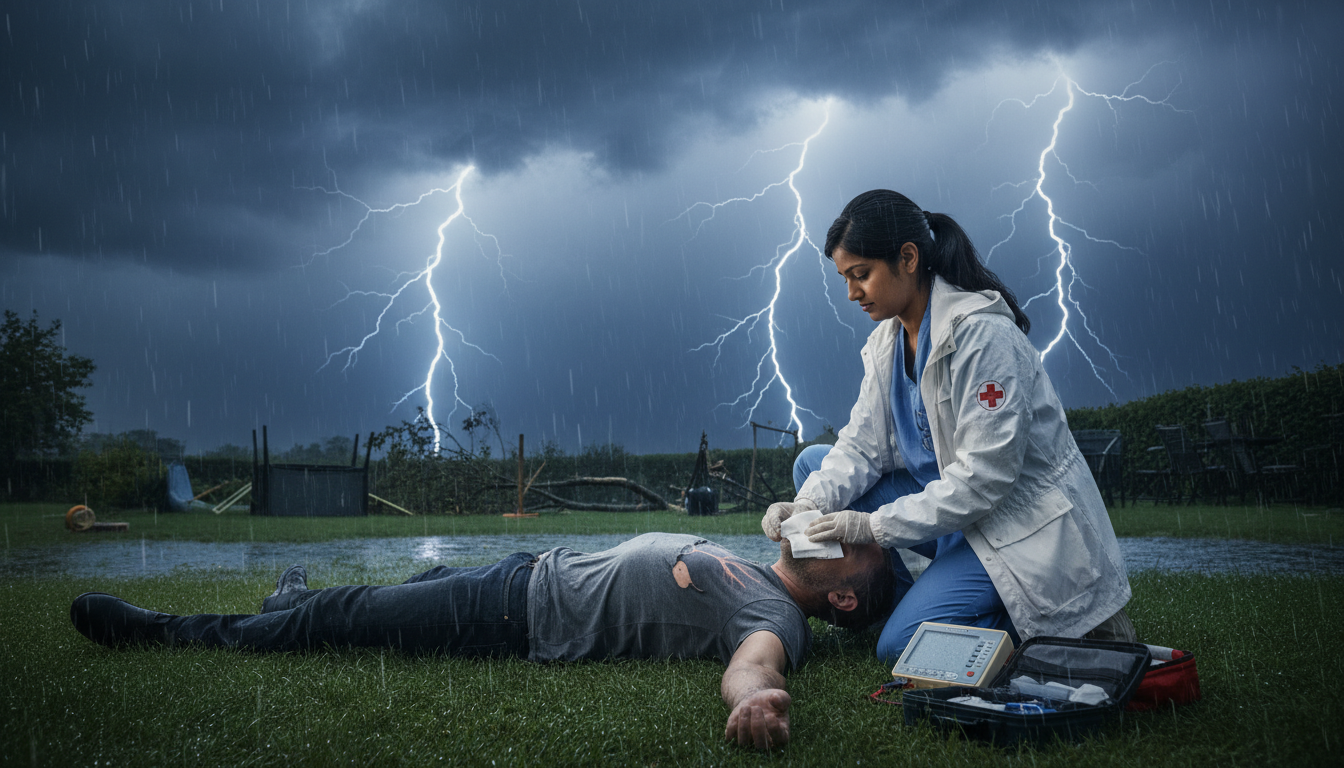
Lightning can move at speeds up to 300 miles per second. It can easily find its way through tall objects like trees and towers. People outside during storms are also at risk.
The National Weather Service says the U.S. sees about 25 million lightning flashes each year. Around 300 people get struck by lightning annually. Sadly, about 30 of them die from their injuries. Many others suffer lifelong disabilities.
Most of these tragedies can be prevented. The Centers for Disease Control and Prevention say knowing what to do and acting fast can save lives. Learning about electrical injury first aid is key when every second counts.
Many people think lightning strike victims carry electrical charges. But this is not true. They are safe to touch and can be helped right away. The main cause of death from lightning strikes is cardiac arrest. Quick CPR can save a life.
This article will teach you what you need to know. You’ll learn how to spot signs of electrical shock. You’ll also learn the right steps for electrical emergency procedures. Plus, you’ll learn how to protect yourself and your family during storm season.
Knowing what to do during dangerous weather is powerful. By learning these skills, you can save a life. Read on to become prepared for anything storm season brings.
Table of Contents
Understanding Electrical Injuries During Storms
Storm season brings dangers that many people don’t take seriously. Lightning strikes and electrical hazards can cause serious injuries in seconds. Knowing how these injuries happen helps you spot dangers and act fast. This knowledge is key for managing voltage injuries and knowing when to seek treatment for electric shock or electrical trauma.
How Lightning Strikes Affect the Human Body
Lightning carries millions of volts of electrical energy. When it hits a person, the electricity can travel in two ways. It can flash over the skin on the outside or penetrate deep through blood vessels and nerves toward the ground. Both types cause serious damage.
The massive electrical discharge affects your heart and nervous system instantly. Lightning can cause cardiac arrest—meaning the heart stops beating. The electrical current disrupts the heart’s normal rhythm. Survivors of electrical trauma treatment often face long-term complications. The National Weather Service reports that while only about 10% of lightning victims die, many survivors live with intense pain, neurological disabilities, and depression.
The force of a lightning strike can throw a person through the air. This secondary impact causes traumatic injuries like fractures and dislocations. Your body experiences both electrical damage and physical trauma at the same time.
Common Types of Electrical Injuries in Storm Season
Different types of electrical injuries require different approaches to voltage injury management. Understanding each type helps you prepare for emergencies.
| Injury Type | What Happens | Main Effects |
|---|---|---|
| Surface Burns | Lightning flashes over skin | Visible burns on body surface |
| Deep Tissue Burns | Current travels through body | Internal organ damage, invisible injuries |
| Cardiac Complications | Heart rhythm disrupted | Arrhythmias or complete cardiac arrest |
| Neurological Damage | Nerves affected by electrical current | Memory loss, concentration problems, motor difficulties |
| Traumatic Injuries | Body thrown by force of strike | Broken bones, dislocations, head injuries |
| Sensory Damage | Electrical energy damages sense organs | Hearing loss, vision problems, balance issues |
| Psychological Effects | Mental impact of trauma | PTSD, anxiety, depression, emotional distress |
Electric shock treatment becomes necessary when any of these injuries occur. Some injuries appear immediately, while others develop over time. Neurological problems may not show up for days or weeks after the strike. This is why proper electrical trauma treatment from medical professionals is so important.
When preparing your home and family for storm season, consider creating a safe shelter plan that includes protection from electrical hazards. Understanding these injury types helps you make smart safety choices for voltage injury management before storms arrive.
- Always seek professional medical help after any lightning strike
- Watch for delayed symptoms that appear after the initial injury
- Keep emergency numbers easily accessible during storm season
- Take first aid courses to improve your response skills
This knowledge prepares you for quick action when electrical emergencies happen. The next section covers how to recognize the signs of electrical injuries and shock.
Recognizing the Signs of Electrical Shock and Lightning Strike
Knowing what to look for after an electrical injury is key for helping victims. The first moments after someone is struck by lightning or electrocuted are critical. You must spot warning signs quickly to call for help and start the right treatment. The American Red Cross lists specific symptoms that need immediate action.
First, look for serious signs. If a victim is unresponsive and not breathing, they need urgent help. Check for these life-threatening conditions first:
- No response when you call out or touch the person
- Stopped breathing or gasping for air
- No pulse at the carotid artery in the neck or femoral artery in the groin
- Blue or pale skin color
Also, watch for serious injuries that need emergency care. Lightning can cause burns, shock, and blunt trauma. Look for these warning signs:
| Symptom Type | What to Look For | Urgency Level |
|---|---|---|
| Burn Injuries | Entry and exit wounds, Lichtenberg figures (fernlike patterns on skin) | Immediate |
| Mental Status Changes | Confusion, disorientation, dazed appearance, memory loss | Immediate |
| Shock Signs | Rapid weak pulse, shallow breathing, cold clammy skin, pale appearance | Immediate |
| Trauma Injuries | Visible fractures, dislocations, bleeding, open wounds | Immediate |
| Temporary Effects | Temporary paralysis, tingling, vision or hearing loss, muscle weakness | Urgent |
Even if a victim seems okay, they need a professional medical check. Internal injuries might not show right away but can be serious. Never think someone is fine just because they’re awake and talking.
Learning to check for vital signs properly is important. Use two fingers on the side of the neck to find the carotid artery pulse. Press gently for 10 seconds. You can also check the groin area for the femoral artery. These are the most reliable pulse points on the body.
Act fast when you see these signs. Call 911 immediately. The time between the injury and medical treatment affects survival and recovery.
Electrical Injury First Aid
When you find someone hurt by electricity or lightning, act fast. Quick action can save lives. Knowing what to do right away is key.
Initial Emergency Response Steps
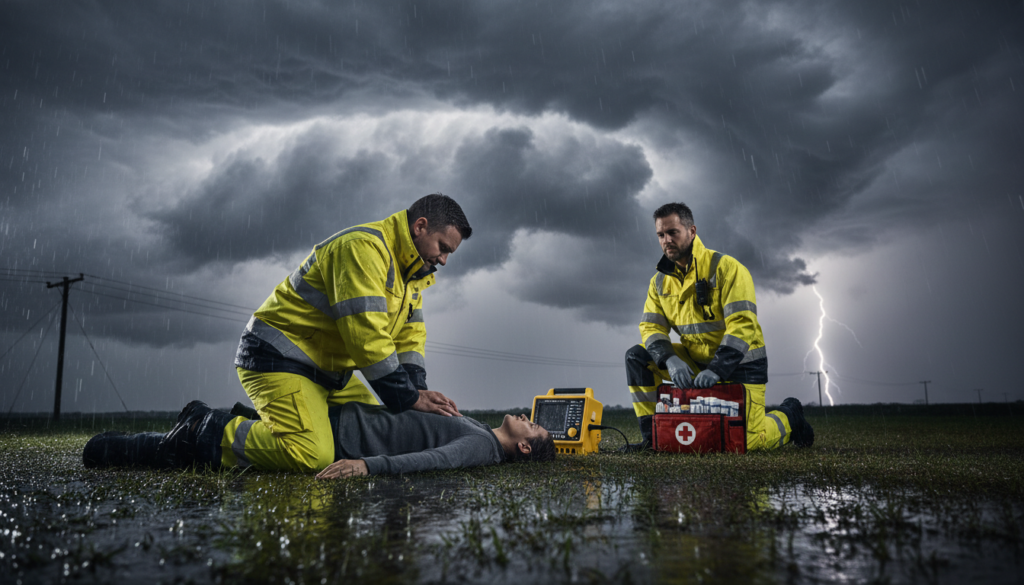
Your safety is the first thing to consider. Look for dangers like live wires or water before you go near the victim. If there’s a live wire, turn off the power at the source. Never touch someone who’s in contact with electricity.
Call 911 right away. Tell them where you are, how many people are hurt, and what happened. Remember, lightning strike victims do not carry an electrical charge, so it’s safe to touch them right away.
Check if the victim is okay by calling out and tapping their shoulders gently. Look for chest movement and listen for breathing sounds. Check the pulse at the neck. For more information, see the electrical injury first aid guide.
- Check for entry and exit wounds on the skin
- Look for burns that may be small on the surface
- Assess for signs of shock like pale, cool, or clammy skin
- Note any confusion or altered consciousness
Performing CPR on Lightning Strike Victims
Cardiac arrest is a big risk from lightning strikes. CPR helps keep blood flowing and oxygen to the brain and heart. Start CPR right away if the victim isn’t breathing and has no pulse.
Put the victim on their back on a firm surface. Place your hands on their chest. Push hard and fast, aiming for 2 inches deep at 100 to 120 times per minute. Think of the beat to “Stayin’ Alive”—that’s the right pace.
If you know full CPR, do 30 chest compressions followed by 2 rescue breaths. Repeat this. If you only know hands-only CPR, keep doing chest compressions without breaths. Keep going until help arrives or an AED is used.
| CPR Step | Details |
|---|---|
| Hand Placement | Center of chest between the nipples |
| Compression Depth | At least 2 inches (5 centimeters) |
| Compression Rate | 100 to 120 compressions per minute |
| Compression Ratio | 30 compressions to 2 rescue breaths (if trained) |
While doing CPR, cover electrical burns with a clean, dry cloth once the victim is stable. Don’t remove clothing stuck to burns. Avoid using ice, ointments, or creams. Keep the victim warm and elevate their legs to prevent shock.
Lightning strike victims often do better with CPR than those from other causes. Their hearts might start again with the right help. Never give up on CPR until help arrives or the victim shows signs of life.
Safety Precautions to Prevent Electrical Injuries During Thunderstorms
It’s always better to prevent electrical injuries than to treat them. Storms bring dangers inside and outside your home. Learning how to protect yourself and your family is key.
The Red Cross suggests the 30/30 rule. Seek shelter when lightning and thunder are 30 seconds apart. Wait 30 minutes after the last thunder before going outside. This rule helps keep people safe during storms.
Learning how to manage voltage injuries starts with planning and awareness. Electrical dangers can hide in unexpected places during storms. Your quick actions can prevent serious injuries.
Indoor Safety Measures
Being inside doesn’t mean you’re completely safe during thunderstorms. Lightning can travel through pipes and wiring into your home. About one-third of lightning injuries happen indoors, so knowing about indoor risks is important.
Follow these indoor safety steps during storms:
- Avoid all water contact including showers, baths, and dishwashing
- Stay away from electrical equipment and unplugged outlets
- Do not use corded phones (cell phones and cordless phones are safe)
- Keep distance from windows, doors, porches, and concrete walls
- Bring pets indoors and remove metal collars and chains
Lightning can travel through metal in concrete floors and walls. Water and plumbing systems can conduct electricity into your home. These precautions might seem extreme, but they work. Avoiding these common pathways is key to managing voltage injuries indoors.
Outdoor Lightning Protection Strategies
Outdoor safety requires different tactics and constant awareness. Planning ahead can prevent most electrical injuries outside. Check the weather forecast before going out and find safe places to take shelter.
Protect yourself outdoors by:
- Watching for towering clouds and darkening skies
- Listening for distant thunder as your warning sign
- Seeking full shelter in buildings or hard-topped vehicles immediately
- Staying away from open fields, hilltops, and isolated tall trees
- Avoiding water and metal objects during storms
| Location | Safe Action | Unsafe Action |
|---|---|---|
| Beach or Lake | Get indoors or to a vehicle | Stay near water or under umbrellas |
| Golf Course | Head to clubhouse immediately | Continue playing or seek shelter under trees |
| Hiking Trail | Descend to low ground safely | Stay on ridges or near tall isolated trees |
| Boat or Jet Ski | Return to shore and go indoors | Stay on water or seek shelter on boat |
The National Weather Service warns that lightning strikes can happen 10 miles from rainfall. Many injuries occur before rain arrives. Never assume you are safe just because storms seem distant.
If caught outside with no shelter, crouch low with your feet together. Never lie flat on the ground. This position reduces your risk when no other options exist.
Sports teams, camps, and outdoor event organizers need lightning safety plans. Activities should pause when thunder is heard. Your voltage injury management strategy must include knowing when to stop outdoor work and wait for clearance. Waiting 30 minutes after the last thunder protects everyone from delayed strikes.
After storms pass, watch for downed power lines as part of power line injury care. Never touch fallen wires or assume they are dead. Call your utility company immediately if you spot damage.
When to Seek Emergency Medical Treatment
Electrical injuries can be tricky. A person might feel okay after being shocked but could have serious internal damage. It’s key to know when to call 911 and get emergency help. Even small-looking injuries need a doctor’s check-up.
Some situations need quick action. Call 911 right away if you see these signs in someone who’s been shocked:
- The person is unconscious or unresponsive
- Breathing has stopped or is very difficult
- No pulse can be felt
- Visible burn marks on the skin
- Chest pain or irregular heartbeat
- Confusion or altered mental state
- Seizures or convulsions
- Severe muscle weakness or paralysis
- Signs of spinal injury with neck or back pain
Even if someone seems fine after an electrical shock, they should see a doctor. A high-voltage shock (500 volts or more) needs a hospital visit. Doctors can run tests to find hidden injuries to muscles, the heart, or the brain.
For low-voltage shocks, get emergency help if there’s any burn, brief unconsciousness, numbness, tingling, vision changes, hearing problems, or trouble breathing. Pregnant women should also get checked after any electrical shock. Learn more about electrical emergency procedures to know when to seek help.
Don’t wait for a doctor. Electrical injuries can hide dangers. Heart problems can show up hours later. Neurological damage might not be immediate. Burns from electricity often cause more damage beneath the skin than what you see.
Share all you know with emergency responders: the injury’s details, the voltage if known, how long the person was out, any first aid given, and any changes in their condition. This helps doctors give the best care.
Some effects of electrical injury appear later—chronic pain, cognitive problems, or emotional trauma. This is why follow-up care is important. Don’t skip medical evaluation thinking the injury seems minor. Professional assessment now prevents serious complications later.
Conclusion
You now know how to handle electrical injuries and storms confidently. Learning about electrical injury first aid helps you save lives when lightning strikes. The American Red Cross says over 4.6 million people learn first aid and CPR each year.
Storm safety is not just smart. It’s the difference between life and death for many in the U.S. The most important thing is to remember: knowledge saves lives.
Lightning victims don’t carry an electrical charge, so you can help them safely. If someone’s heart stops, CPR can save them. The 30/30 rule and “when thunder roars, go indoors” are your guides.
The National Weather Service says most lightning tragedies can be prevented with planning and smart choices. These tips are easy to learn and remember.
Your next steps are clear and easy. Take a CPR and first aid course through the American Red Cross or a local center. Download weather and emergency first aid apps for quick help during storms.
Make a family emergency plan and practice it. Share this life-saving info with friends, family, and your community. You can’t control when storms come, but you can be ready.
Storm safety gives you power. Learning electrical injury first aid is a skill everyone should have. It’s not about living in fear. It’s about being responsible and protecting what matters most.
With the right knowledge and a solid plan, you can protect yourself and others. Make the choice today to prepare, learn, and share. Your actions could save a life this storm season.
FAQ
Is it safe to touch someone who has been struck by lightning?
Yes, it’s safe to touch someone who’s been struck by lightning. They don’t carry an electrical charge after being hit. Quick help can save their life. But, don’t touch them if they’re near a live wire.
What is the most common cause of death from lightning strikes?
The main cause of death from lightning strikes is cardiac arrest. The shock can stop the heart. Knowing CPR is key to saving lives.
How does electrical current affect the human body during a lightning strike?
Electrical current from lightning can cause burns on the skin’s surface or deeper damage. It mainly affects the heart and nerves. It can also cause injuries from the force of the strike.
What are Lichtenberg figures and what do they indicate?
Lichtenberg figures are patterns on the skin from lightning strikes. They show where the current went. Seeing these patterns means someone has been seriously injured.
What should I check for when assessing a lightning strike victim?
First, check if the person is awake and breathing. Look for pulse and visible injuries. These checks help decide if CPR is needed.
What is the proper hand placement and technique for performing CPR on a lightning strike victim?
Place your hands on the chest to do CPR. Push down hard and fast. Keep going until help arrives.
What should I do about burns on a lightning strike victim during initial first aid?
Don’t remove stuck clothes from burns. Cover them with clean cloth or dressings. Keep the victim warm and avoid ice or ointments.
Why is the 30/30 rule important for lightning safety during storms?
The 30/30 rule helps you know when to seek shelter. If thunder is close, go inside. This rule keeps you safe during storms.
What locations are considered safe shelter from lightning during a thunderstorm?
Safe places include buildings and hard-topped metal vehicles. Avoid small shelters and open areas. If no shelter, crouch low and stay away from water.
Is it safe to stay indoors during a thunderstorm without taking any precautions?
No, indoor safety is important too. Avoid water, electrical items, and windows. Keep pets inside and remove metal collars.
What should I unplug before a thunderstorm to protect my electronics?
Unplug important devices before a storm. Leave corded phones unplugged. This prevents damage to your electronics.
What should I do if I’m caught outside during a thunderstorm with no shelter available?
Move to lower ground and avoid tall trees and water. If no shelter, crouch low and stay away from water. Keep moving to safety.
Why is it important to avoid water during a thunderstorm?
Water conducts electricity, making it dangerous. Avoid showers, baths, and swimming during storms. Lightning can strike water and harm anyone in it.
Should outdoor activities like sports practices be cancelled during thunderstorms?
Yes, cancel outdoor activities during storms. Use the 30/30 rule and “when thunder roars, go indoors” to keep everyone safe.
Can someone who feels fine after a lightning strike have serious injuries?
Yes, internal damage can be hidden. Even if someone feels okay, they need immediate medical help. Internal injuries can be severe.
What are the signs that someone needs immediate CPR after a lightning strike?
Look for no response, no breathing, and no pulse. Start CPR right away. Keep going until help arrives.
What information should I provide to emergency responders when calling 911 for an electrical injury?
Tell them the location, number of victims, and injury details. Mention if the storm is ongoing. Stay on the line and follow their instructions.
Can electrical injuries cause long-term psychological effects?
Yes, they can lead to PTSD, depression, and anxiety. Survivors may have nightmares and avoid storms. Mental health support is key in recovery.
Why might someone have hearing or vision loss after a lightning strike?
Lightning can damage the ears and eyes. Some vision and hearing changes may appear later. A full medical check is needed.
What should I do if someone is showing signs of shock after a lightning strike?
Keep them warm and calm. Call 911. Shock is serious and needs immediate medical help.
How can I tell the difference between entry and exit wounds from a lightning strike?
Entry wounds are small and charred. Exit wounds are larger. Not all strikes show these wounds. Always get a medical check.
Is it ever safe to approach someone in contact with a downed power line?
No, it’s not safe. The area around the person is charged. Call 911 and keep away. Wait for trained responders to handle it.
What are the differences between surface burns and deep tissue burns from electrical current?
Surface burns are visible. Deep tissue burns are hidden but more dangerous. Always get a medical check for electrical injuries.
What should I know about neurological complications after a lightning strike?
Neurological damage can cause many problems. Memory, concentration, and mood changes are common. Follow-up care is important for recovery.
When should I call 911 versus seeking urgent care for an electrical injury?
Call 911 for serious injuries like unconsciousness or no pulse. For less severe cases, go to urgent care. Always get a medical check.