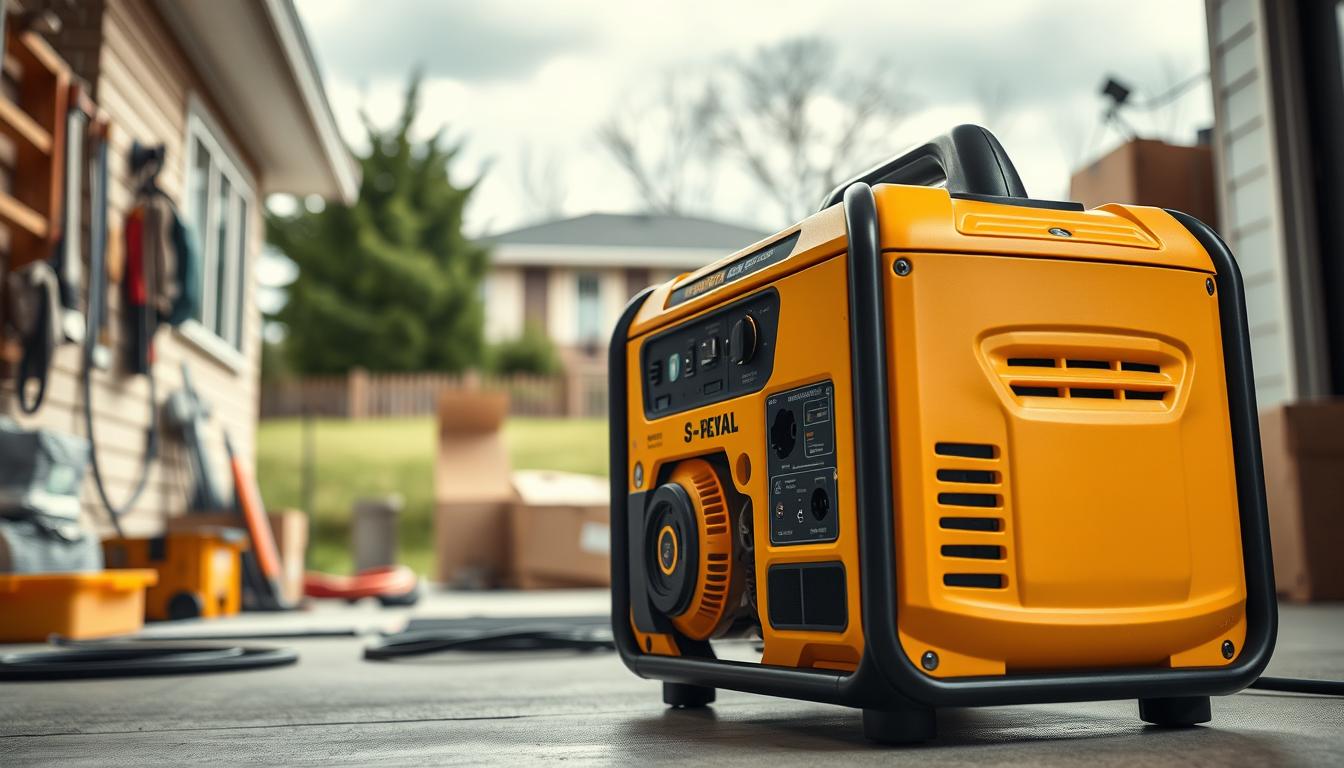
Power outages are common in American homes. The U.S. Energy Information Administration says families lost power for about 5½ hours in 2022. This is almost double the 3 hours lost in 2013. Severe weather, like hurricanes and ice storms, makes these numbers go up every year.
When the power goes out, your family loses more than just electricity. Food spoils in your fridge. Sump pumps stop, risking basement floods. Heat and air conditioning stop working. WiFi goes down. For those with electrically powered medical equipment, a power outage is a serious health risk.
An emergency power generator makes a big difference during an outage. These machines keep your important systems running when the power goes out. They power your lights, appliances, heating, air conditioning, sump pumps, and internet. Most importantly, they can keep life-saving medical devices running without stopping.
Choosing a generator for emergencies doesn’t have to be hard. You can learn what type is best for your home, how to pick the right fuel, and how to use it safely. The Consumer Reports buying guide has great tips for picking an emergency power generator that meets your needs and budget.
Preparing now is better than scrambling during a crisis. This guide covers everything you need to know about generators. By the end, you’ll be ready to make the right choice for your family’s safety and comfort.
Table of Contents
Why Every Home Needs Backup Power During Emergencies
Power outages are getting more common in America. Families need to know why a backup generator is important. Weather events, old power systems, and natural disasters can cut off electricity for hours or days.
A home generator keeps your family safe, saves money, and keeps important services running when the power goes out.
The Rising Frequency of Power Outages in America
American homes face longer and more frequent power cuts. In 2022, people lost power for an average of 5½ hours. This is up from 3 hours in 2013.
Weather like hurricanes, ice storms, and severe weather causes many outages. Smaller storms also damage trees and power lines often.
Climate change makes extreme weather worse, making power outages more unpredictable. Almost every home is at risk of outages from natural disasters. Some outages last for days or weeks, leaving families without essential services.
Essential Services That Depend on Electricity
Electricity is key for more than just lights. When it goes out, many important systems stop working:
- Refrigeration – Food spoils in four hours without power, costing families hundreds of dollars
- Water systems – Well pumps and filters fail, cutting off drinking and bathing water
- Heating and cooling – HVAC systems can’t run, making temperatures dangerous in extreme weather
- Sump pumps – Without power, basements and crawlspaces flood, causing thousands in damage
- Medical equipment – Ventilators, oxygen concentrators, and other life-support devices stop working
- Communication devices – Phones, internet routers, and emergency radios lose power
- Home security systems – Alarm systems and surveillance cameras go offline
An emergency backup generator keeps these vital services running during outages.
Protecting Your Family and Property During Outages
Power loss makes homes unhealthy and unsafe. A home generator for emergencies keeps your family safe in many ways. It prevents carbon monoxide poisoning by avoiding unsafe indoor grills.
It keeps temperatures safe for the elderly and young children in extreme weather. It also keeps medications refrigerated and medical devices working for people with health conditions.
Protecting your property is also important. Frozen pipes can burst without heat, causing damage. Sump pump failures can flood basements. Spoiled food is a waste and expense. An emergency backup generator prevents these damages, keeping your home safe and your finances secure.
Having backup power is not just convenient—it’s essential for keeping your family safe and secure.
Choosing a Generator for Emergencies
Finding the right generator for emergencies can seem hard at first. There are many options, each with its own features and prices. Knowing what you need before you start shopping can save you time and money.
A good generator selection guide focuses on three main things. These factors help you narrow down your choices and find the perfect generator for your home.
Three Key Factors to Consider
Before you buy, think about what your family needs during a power outage:
- Energy Requirements: Make a list of all the important appliances you want to keep running—like your fridge, medical devices, lights, and heating or cooling systems. Add communication tools too. Then, figure out how much power they all need together.
- Fuel Source Options: Different fuels have their own benefits. Gasoline, propane, natural gas, diesel, battery, and solar each have their own advantages. Think about what’s available, how you’ll store it, its cost, and how easy it is to use in your area.
- Power Usage Needs: Pick a generator that’s more powerful than you think you need. Many appliances need extra power when they start up. This causes a temporary power surge.
This guide helps you avoid getting a generator that’s too small for your needs.
Professional advice is important. Talk to a licensed electrician who can check your home and give you advice. They know about local building codes and safety rules. The next parts will look at each type of generator in detail, making it easier to choose the best one for emergencies.
Understanding Different Types of Generators for Your Home
Choosing the right backup power solution depends on your home’s needs, budget, and lifestyle. There are three main types of generators for power outages. Each has its own advantages and limitations, making them suitable for different situations. Reading emergency generator reviews helps you compare features and find the best fit for your home.
Home Standby Generators for Whole-House Power
An emergency standby generator is a permanent setup that connects to your home’s gas line or propane tank. These units turn on automatically within 10 to 15 seconds after a power loss, requiring no effort from you.
Standby generators offer between 7,000 and 20,000 watts of power. This is enough to power your entire home, including heating, air conditioning, refrigerators, and lights. They are perfect for those with medical equipment, disabilities, or who travel often, as they ensure complete peace of mind.
Annie Streit shares her experience with her Generac unit: “Within seconds of the power going out, the Generac kicks on and I have power to my entire house. My power wheelchair, bed, and home elevator all require power. I now have peace of mind.”
The main drawbacks include high costs—typically $3,000 to $15,000 with professional installation—and substantial space requirements for equipment placement and concrete pads.
Portable Generators for Flexibility and Affordability
A portable generator for emergencies offers budget-friendly backup power without installation costs. These wheeled units cost between $400 and $2,000, making them accessible for most homeowners.
You control portable generators manually. This means moving them outside, connecting appliances via extension cords, adding fuel, and starting them yourself. They typically produce 3,000 to 10,000 watts, powering essential items like refrigerators, lights, and several outlets during short-term outages.
Benefits of portable models include:
- Lower upfront investment
- Easy storage when not needed
- Portability for camping or recreational use
- Quick setup without professional help
Brands like Champion and Briggs & Stratton offer quality portable options. These generators suit homeowners who can manage manual operation and don’t need whole-house coverage.
Inverter Generators for Sensitive Electronics
Inverter generators produce clean, stable power ideal for protecting sensitive electronics. Phones, laptops, tablets, and medical devices with microprocessors run safely on these units.
The inverter technology adjusts engine speed based on power demands, resulting in quieter operation and superior fuel efficiency compared to standard models. These units typically range from 1,000 to 4,000 watts and come in portable or full-sized versions.
Emergency generator reviews consistently praise inverter models for their:
- Quiet operation—ideal for residential areas
- Reduced fuel consumption
- Safe power for computers and communication devices
- Compact, portable designs
Popular brands include Honda, DeWalt, and Ryobi. While more expensive per watt than conventional generators, inverter units excel at protecting valuable electronics during power disruptions.
| Generator Type | Power Range | Cost Range | Best For | Installation |
|---|---|---|---|---|
| Home Standby (Emergency Standby Generator) | 7,000-20,000+ watts | $3,000-$15,000 | Whole-house power, medical equipment, peace of mind | Professional installation required |
| Portable (Portable Generator for Emergencies) | 3,000-10,000 watts | $400-$2,000 | Budget-conscious homeowners, temporary outages | No installation needed |
| Inverter | 1,000-4,000 watts | $500-$3,000 | Electronics protection, quiet operation | No installation needed |
Your choice depends on your specific situation. Homes with medical needs benefit from a permanent emergency standby generator. Budget-conscious households appreciate the affordability and flexibility of a portable generator for emergencies. Those prioritizing electronics protection choose inverter models. Reading emergency generator reviews from verified users helps confirm which type matches your household requirements and lifestyle.
Selecting the Right Fuel Source for Your Generator
Choosing the right fuel for your generator is key. It affects how easy it is to use, the cost, and if you can fuel it when power is out. Consider fuel availability, storage, shelf life, and costs.
Different fuels work better in different situations. Some stay available during emergencies, while others quickly disappear. Knowing your options helps pick the right generator for your family.
| Fuel Type | Availability | Storage Life | Best Use | Key Advantage |
|---|---|---|---|---|
| Gasoline | Readily available at stations | 3-6 months (up to 3 years with stabilizer) | Portable generators | Easy to purchase and transport |
| Diesel | Widely available | 6 months to 1 year | High-powered generators | More energy per gallon |
| Natural Gas | Usually unaffected by outages | Unlimited through pipelines | Home standby generators | Most cost-effective and convenient |
| Propane | Available in tanks | Indefinite storage | Standby and portable generators | Does not deteriorate |
| Solar and Battery | Weather dependent | N/A | Low-power needs and indoor use | Clean, quiet, no emissions |
Gasoline: Portable and Accessible
Gasoline is common for portable generators. You can buy it in small cans at gas stations. It’s everywhere and easy to find.
But, gasoline breaks down fast. It lasts only three to six months without treatment. Using fuel stabilizer can extend this to three years, but you need to rotate your supply. Gas stations can’t pump fuel during power outages, so your stored cans are your only option.
Diesel: More Power Per Gallon
Diesel fuel gives more energy than gasoline. This means your generator uses less fuel overall. Diesel also lasts longer in storage, staying good for six months to a year.
Diesel generators are louder and less common in homes. They cost more upfront. They’re better for larger needs than typical home use.
Natural Gas: The Standby Generator Choice
Natural gas is best for permanent standby generators. Your gas supply comes through utility lines, so you never need to refuel or store dangerous things. During outages, natural gas usually keeps flowing.
Running costs are lower than gasoline or diesel. The tradeoff is that natural gas requires professional installation and connection to your home’s gas lines. This makes sense only if you already have gas service.
Propane: Clean and Long-Lasting
Propane never deteriorates, so you can store it indefinitely. It burns clean, making it safer for your family and the environment. You can buy propane in various tank sizes and use it for other home appliances.
Propane contains less energy per gallon than gasoline, so you use more fuel. You also need dedicated tank storage space and regular maintenance checks.
Solar and Battery Systems: The Quiet Option
Solar-powered generators and battery systems are the newest choice for emergency power. They produce zero emissions, making them completely safe to run indoors. No fuel smell, no noise pollution, and no oil changes needed.
The costs are higher upfront. Power output stays lower than traditional generators, and solar panels depend on sunlight. Recent technology improvements help panels work in low-light conditions, but recharging takes longer than refueling a gas tank.
Homeowners choosing solar appreciate the simplicity. One real-world user selected a 700-watt solar generator with a 100-watt solar panel, stating the investment eliminated concerns about fuel, fumes, noise, and maintenance entirely.
Dual-Fuel Generators: Flexible Power
Some emergency power generator models offer dual-fuel capability, switching between gasoline and natural gas based on what is available. This flexibility helps during extended emergencies when one fuel type runs short.
- Choose gasoline for occasional portable use
- Select natural gas for permanent home standby systems
- Pick propane for rural homes without gas lines
- Consider solar and battery for environmentally conscious families with modest power needs
- Explore dual-fuel options for maximum flexibility
Your local climate, emergency patterns, and personal comfort with equipment maintenance should guide your final choice. The best generator for emergencies is one you can reliably fuel and operate whenever you need it most.
Critical Safety Guidelines for Generator Operation
Using a generator during power outages is serious business. Generators make electricity and heat. Without care, they can be deadly. Knowing how to use them safely keeps your family and home safe when power is out.
Preventing Carbon Monoxide Poisoning
Carbon monoxide is a silent killer. It’s made by fuel-burning engines and can’t be seen, smelled, or tasted. This gas kills many people each year because of generator misuse.
Never run a generator indoors. This rule is strict. Generators must be outside, at least 20 feet from your home. Make sure exhaust goes away from windows, doors, and vents. A cracked garage door or window is not enough to keep carbon monoxide out.
Signs of carbon monoxide poisoning include dizziness, headaches, nausea, and feeling tired. If you feel these symptoms, get to fresh air fast and see a doctor.
Put battery-powered carbon monoxide detectors on each floor, near bedrooms. Check them often. Even generators with CO sensors need to be used outside and follow safety rules.
Avoiding Fire Hazards and Electrocution Risks
Generators get hot and need fuel. Storing gasoline safely prevents fires. Keep it in approved containers outside your living area. Keep it away from things that could start fires.
Turn off your generator and let it cool before refueling. Gasoline on hot parts can catch fire quickly. Place generators on dry, level ground, away from flammable stuff. Keep at least 4 feet of space around them for air.
Keep generators dry to avoid electrocution. Don’t use them in the rain or wet without protection. Use heavy-duty, outdoor-rated extension cords with three-prong plugs and no cuts or damage.
Never plug a generator into a wall outlet. This can send electricity back through power lines, risking electrocution for workers, neighbors, and family. It also damages home electronics when power comes back.
Proper Installation and Ventilation Requirements
Portable generators need space to operate safely. Place yours 20 feet from your home with exhaust away from buildings. Make sure there’s 3 to 4 feet of space on all sides.
For permanent backup power, get a licensed electrician to install it. Standby generators need professional setup. Use a transfer switch to manage power safely between your generator and the grid. Transfer switches prevent dangerous backfeeding. Interlock kits are cheaper, costing $100 to $200 less than transfer switches.
Standby generators need concrete pads and proper grounding. Place them at least 10 feet from windows and air intakes. In flood areas, keep them above flood levels.
| Safety Requirement | Portable Generators | Standby Generators |
|---|---|---|
| Distance from Home | At least 20 feet | At least 10 feet from windows |
| Side Clearance | 3-4 feet on all sides | Professional installation required |
| Outdoor Operation | Always outside | Exhaust directed away safely |
| Professional Installation | Not required | Licensed electrician required |
| Transfer Equipment | Heavy-duty extension cords | Transfer switch or interlock kit |
Read your generator’s manual well. Different models have special needs. Practice using your generator before a power outage. This way, you can use it safely, even in dark times. Generator safety tips are simple but save lives when followed.
Preparing Your Home Before a Power Outage Strikes
Acting now, while you have electricity, is the best way to protect your family. It helps avoid stress when the power goes out. You can think clearly, work safely, and get everything ready before an emergency happens.
This section guides you through practical steps. You’ll learn how to ready your home, your emergency backup generator, and your household for any power outage.
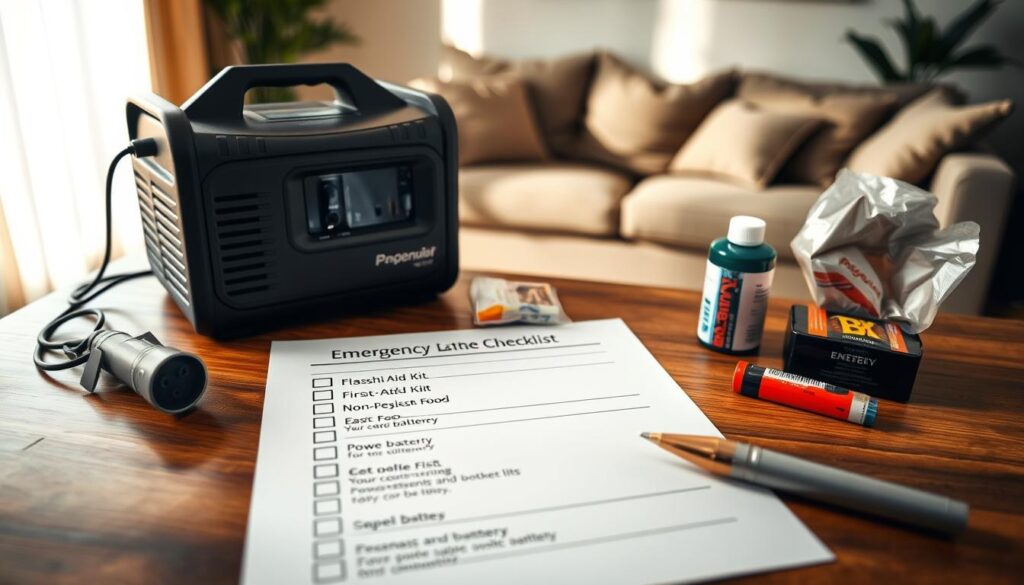
Start with your generator setup right now. If you have a backup generator, get it installed before storm season. A professional will install the necessary equipment for safe use. Practice starting and running it to feel confident.
Run your generator monthly for 15 to 30 minutes. This keeps it working smoothly and catches any problems early.
Fuel preparation is key. For gasoline generators, keep fresh, stabilized fuel in approved containers outside. For propane systems, fill tanks before storm season. For natural gas standby units, confirm everything works properly with your utility company.
Building Your Disaster Supply Kit
Create a detailed emergency kit with essential items your family will need:
- Water: one gallon per person per day for at least three days
- Non-perishable food and a manual can opener
- Essential medications and first aid supplies
- Flashlights with fresh batteries in known locations
- Hand-crank or battery-powered radio for emergency information
- Hand-crank cell phone chargers and backup power banks
- Important documents in waterproof containers
- Baby formula, diapers, and pet food if needed
- Cash and credit cards for when ATMs don’t work
- Personal hygiene items and medications
Protecting Your Home and Property
Keep your property in good shape to prevent power loss. Trim trees and remove dead branches that could fall on power lines during storms. Keep your vehicle’s gas tank full, as gas stations cannot pump without electricity.
For homes with electric garage doors, learn how to use the manual release handle for alternative entry.
Install whole-house surge protectors to guard expensive electronics and appliances from damage when power returns. Turn off major appliances during outages, leaving just one light on to signal when electricity comes back. Back up important computer files regularly to cloud storage or external hard drives.
Food Safety During Outages
Before power goes out, adjust your refrigerator and freezer to their coldest settings. Fill plastic containers with water and freeze them. These ice blocks help keep food cold longer during outages. Have coolers and ice readily available.
| Appliance Type | Time Food Stays Safe | Key Condition |
|---|---|---|
| Refrigerator | 4 hours | Door closed |
| Full Freezer | 2 days | Door closed, fully stocked |
| Half-Full Freezer | 1 day | Door closed, partially stocked |
| Refrigerated Food | Never safe above 40°F | More than 2 hours |
Use a refrigerator thermometer to monitor temperatures. Follow the rule: when in doubt, throw it out. Discard any perishable food above 40°F for more than two hours.
Special Needs and Medical Equipment
Households with medical equipment need detailed plans. Work with your healthcare provider to ensure your home generator for emergencies has enough power capacity for all essential devices. Maintain backup batteries for equipment and register with your power company’s priority restoration list if available. Identify alternative locations like family members’ homes or medical facilities if extended outages occur.
Community Connection and Communication
Sign up for automatic power company alerts to receive notifications about outages and estimated restoration times. Learn about local emergency management plans and cooling or warming shelter locations for extreme weather situations. Check on elderly or disabled neighbors who may need help during outages.
Create an emergency plan with your family. Make sure everyone knows where supplies are kept, how to operate your emergency backup generator safely, and how to communicate if separated. Review and update your preparation annually. Replace expired food and medications, test equipment, and refresh your knowledge of procedures.
Preparation is an investment in peace of mind. When power goes out, your prepared household can focus on staying safe and comfortable, not scrambling in the dark.
Conclusion
Choosing a generator for emergencies might seem daunting at first. You now know the different types of generators. Standby models provide full-house power and are convenient. Portable generators are flexible but cost less. Inverter generators are quiet and protect your electronics.
The right generator for emergencies depends on your needs. Think about your budget, power needs, and physical abilities. Consider the fuel type that fits your lifestyle best. Natural gas, propane, gasoline, solar, and battery systems are options.
Safety rules are essential, not just suggestions. Generators are lifesavers during outages but can be dangerous if not used right. Always run your generator outside, at least 20 feet from windows and doors. Never connect it directly to your home’s wiring without a proper transfer switch.
Keep carbon monoxide detectors near sleeping areas. Check vents and covers to prevent fire hazards. These steps protect your family from dangers you cannot see or smell.
Start preparing now instead of waiting for the next storm warning. Get your equipment installed and test it before an emergency hits. Stock fuel and supplies while they are available. Talk with your family about your backup power plan.
If you rely on medical equipment, make generators a top priority. Explore funding options through local programs. Reach out to a licensed electrician for guidance tailored to your home. Power outages will come, but with the right generator and smart planning, you can face them with confidence and peace of mind.
FAQ
Why has choosing a generator for emergencies become so important for American homeowners?
Power outages are getting more common and last longer in the U.S. The time without power has almost doubled, from 3 hours in 2013 to 5½ hours in 2022. This is due to climate change, old infrastructure, and extreme weather.
An emergency power generator is now a must-have. It keeps your family safe from spoiled food, property damage, and medical equipment failures.
What are the real consequences of losing power during an emergency?
Power loss affects many important things in our homes. Refrigerators stop working in hours, causing food to spoil and costing hundreds of dollars. Sump pumps fail, risking basement flooding and foundation damage.
HVAC systems shut down, making homes too hot or cold. Medical equipment like ventilators and oxygen concentrators stop working, which is dangerous. Communication devices fail, leaving you unable to call for help.
Home security systems also fail, and food, including medications, becomes unusable.
How do I know which type of generator is best for my home?
The right generator depends on your energy needs, budget, and physical ability. First, list all essential appliances and devices you need during an outage. Check the wattage requirements in manuals or on labels.
Consider different fuel sources based on availability and cost. Decide if you want a standby generator for automatic operation, a portable generator for flexibility, or an inverter generator for clean power.
Consulting with a licensed electrician can help you choose the best generator for your home.
What is a home standby generator, and who should choose one?
A home standby generator is a permanent unit that connects to your home’s gas or propane line and electrical system. It turns on automatically within 10-15 seconds of a power loss. These generators provide enough power to run your entire home.
Standby generators are great for those who travel a lot, have medical equipment, or want peace of mind. They are expensive, but they’re a lifesaver for people with disabilities or medical equipment needs.
Are portable generators a good choice for emergency preparedness?
Yes, portable generators are a good option for those on a budget who can handle manual operation. They cost 0–,000 and don’t need professional installation. They have enough power for essential appliances but not for the whole house.
You’ll need to move them outside, connect appliances, add fuel, and start them yourself. They’re cheaper, easy to store, and can be used in different situations.
Why would someone choose an inverter generator for emergencies?
Inverter generators produce clean, stable power for sensitive electronics. They adjust their speed based on power demand, making them quieter and more fuel-efficient. They’re more expensive but ideal for keeping electronics running during outages.
They’re also great for camping or RV use because they’re quiet and efficient.
What fuel source is best for my generator?
The best fuel depends on your generator type, location, and needs. Gasoline is widely available but has a short shelf life. Diesel is more energy-dense but noisier and less common for homes.
Natural gas is excellent for standby generators—it’s unlimited, requires no storage, and is clean. Propane offers long storage life and clean combustion but requires professional installation. Solar and battery systems are clean and quiet but have higher costs and lower power output.
Dual-fuel generators offer flexibility based on fuel availability and cost. Choose based on your local climate, emergency patterns, and fuel access.
Why is carbon monoxide poisoning the leading danger with generators?
Carbon monoxide is invisible, odorless, and tasteless. It can cause dizziness, headaches, and confusion within minutes. You can’t detect it without special equipment.
Generators must always be used outdoors, at least 20 feet from your home. Install battery-powered carbon monoxide detectors on every floor, near bedrooms. Even generators with CO sensors aren’t enough protection without proper placement.
What safety protocols must I follow when operating a generator?
Several safety rules apply to all generators. Always use them outdoors, at least 20 feet from your home. Keep them at least 3–4 feet away from all sides for airflow.
Store fuel in approved containers outside, away from heat sources and electrical equipment. Always let generators cool before refueling. Keep them on dry, level surfaces away from combustible materials.
Never use wet generators or touch them with wet hands. Use heavy-duty, outdoor-rated extension cords. Never backfeed electricity without proper transfer switches or interlock kits.
Professional installation is required for standby generators. Hire licensed electricians for installation, including transfer switches and grounding.
What is backfeeding, and why is it so dangerous?
Backfeeding occurs when you plug a generator into a wall outlet without proper transfer equipment. It sends electricity backward through power lines, risking electrocution of utility workers and neighbors. It also damages home electronics when power returns.
Always use a transfer switch or interlock kit to safely isolate generator power from grid power. Transfer switches cost 0–0, while interlock kits are more affordable but require manual operation.
How should standby generators be professionally installed?
Professional installation is required by local building codes for standby generators. The generator must be mounted on a concrete pad for stability. It needs proper grounding and electrical connections, often requiring a dedicated circuit breaker.
The installation must include a transfer switch or interlock kit for safe operation. Position the generator at least 10 feet from windows and air intakes. In flood-prone areas, elevate it above flood levels. All work must comply with the National Electric Code and local electrical codes.
What preparation should I complete before emergencies strike?
Effective emergency preparedness involves several areas. Prepare your generator by having it professionally installed before storm season. Practice starting it in good conditions so you can do it in the dark if needed.
Run your generator monthly for 15–30 minutes to keep components lubricated and identify issues. Check oil levels, replace air filters, and maintain fresh, stabilized fuel if using gasoline. Keep generators on dry, level surfaces away from combustible materials.
Prepare your home by creating a disaster supply kit with essentials like water, non-perishable food, and medications. Keep a cash supply, flashlights, hand-crank or battery-powered radios, and a family communication plan. Trim trees and remove dead branches that could fall on power lines during storms.
Adjust refrigerators and freezers to coldest settings before storm season. Fill plastic containers with water to freeze for longer cold storage. Have coolers and ice ready for emergencies. Remember, refrigerated food stays safe for 4 hours with the door closed, full freezers for 2 days, and half-full freezers for 1 day.
For households with medical equipment, develop detailed plans with healthcare providers. Ensure backup power for all devices, maintain backup batteries, and register with the power company’s priority restoration list if available. Sign up for automatic alerts from your power company about planned and unplanned outages. Learn about local emergency management plans and community cooling/warming shelters. Check on elderly or disabled neighbors who may need assistance.
How do I prevent food spoilage during power outages?
Proactive preparation before outages is key. Adjust your refrigerator and freezer to the coldest settings before storm season. Fill plastic containers or bottles with water and freeze them for cold storage.
Keep coolers and bags of ice ready for emergencies. When an outage occurs, keep refrigerator and freezer doors closed to preserve cold temperatures. Refrigerated food remains safe for 4 hours with the door closed (2 hours if the door opens frequently).
A full freezer maintains freezing temperatures for about 2 days without opening the door; a half-full freezer for about 1 day. Use a refrigerator thermometer to monitor temperatures and follow the “when in doubt, throw it out” rule for food safety. A portable generator or standby generator can eliminate this problem entirely by keeping your refrigerator running during extended outages.
What special considerations apply to people with medical equipment needs?
People who depend on medical equipment during power outages face life-threatening situations. Develop detailed emergency plans with your healthcare providers, identifying which devices are absolutely essential and their power requirements. Ensure your backup generator has enough capacity to power all critical devices.
Maintain backup batteries for portable medical equipment like wheelchairs, nebulizers, and oxygen concentrators. Many power companies offer priority restoration lists for customers with medical equipment needs—register immediately if available in your area. Consider identifying alternative locations for extended outages.
People like Annie Streit rely on backup generators to power wheelchairs, hospital beds, and home elevators—recognizing that generators are truly life-changing for people with disabilities and medical equipment dependencies. Explore funding options through Medicaid waivers or assistive technology programs that may help cover generator costs.
When should I have my generator professionally installed?
Schedule professional generator installation well before storm season arrives, ideally during spring or early summer. Waiting until severe weather approaches guarantees that electricians will be overwhelmed with emergency installations, leading to longer wait times and potentially higher prices. Having installation completed in advance allows time for thorough testing, practice operation, and any necessary adjustments before you actually need the generator during a power outage.
What emergency generator reviews should I consider when shopping for models?
When evaluating specific generator models, look for reviews from reputable sources that discuss real-world performance, reliability, customer service, and long-term durability. Leading brands in the generator market include Generac, Honda, Champion, and Ryobi, each with different models across various price points and power ranges. For standby generators, research reviews focusing on automatic operation reliability, customer experiences with professional installation, and long-term ownership satisfaction.
For portable generators, prioritize reviews discussing ease of operation, noise levels, fuel efficiency, and durability during extended use. For inverter generators, read reviews addressing power quality for sensitive electronics, noise levels, and fuel efficiency compared to conventional portable units. Customer testimonials discussing real emergency experiences prove valuable—like Annie Streit’s experience with her Generac standby generator providing reliable power for critical medical equipment.
What emergency backup generator features should I prioritize in my selection?
When evaluating your best generator for emergencies, prioritize features based on your specific situation. Power capacity should match your calculated wattage needs, including both continuous power and surge capacity. Automatic operation through standby generators eliminates manual startup worries but requires professional installation.
Fuel source should offer convenient access during emergencies—natural gas through utility lines is ideal if available, propane if storing fuel on-site, or solar/battery systems for environmental consciousness. Quiet operation matters if you have close neighbors; inverter generators and newer models generally run quieter. Portability becomes important if you want to use the generator for camping or power tools beyond emergency backup.
Noise level is critical in residential neighborhoods, with inverter generators being significantly quieter than conventional models. Maintenance requirements vary—solar and battery systems require less maintenance than fuel-powered generators. Durability and warranty indicate manufacturer confidence; quality brands like Generac and Honda typically offer longer warranties and better customer support than budget alternatives.
How often should I perform maintenance on my emergency backup generator?
Regular maintenance ensures your emergency backup generator operates reliably when you need it most. Run your generator monthly for 15–30 minutes to keep internal components lubricated and allow you to identify any operational issues before an actual emergency. This monthly run also helps prevent fuel degradation in the carburetor.
Check the oil level before each operation and change oil according to manufacturer specifications, typically every 50–100 hours of operation or annually. Replace air filters as recommended in your owner’s manual—typically annually or more frequently in dusty conditions. Fuel management is also important—use fresh, stabilized fuel and rotate fuel supplies regularly.
For propane systems, ensure tanks remain adequately filled before storm season. For natural gas standby units, have annual professional maintenance contracts to ensure the system functions properly. Consider hiring professionals for annual maintenance, which is more complex and valuable for standby generators.
What documents and records should I maintain for my generator?
Keep thorough records of your generator ownership, operation, and maintenance. Store the owner’s manual in an easily accessible location—digital copies are helpful. Keep proof of purchase and document warranty coverage dates and terms.
For standby generators, keep records of installation, including transfer switches and grounding. All work must comply with the National Electric Code and local electrical codes. Having a licensed electrician handle installation ensures safety, code compliance, and proper operation.