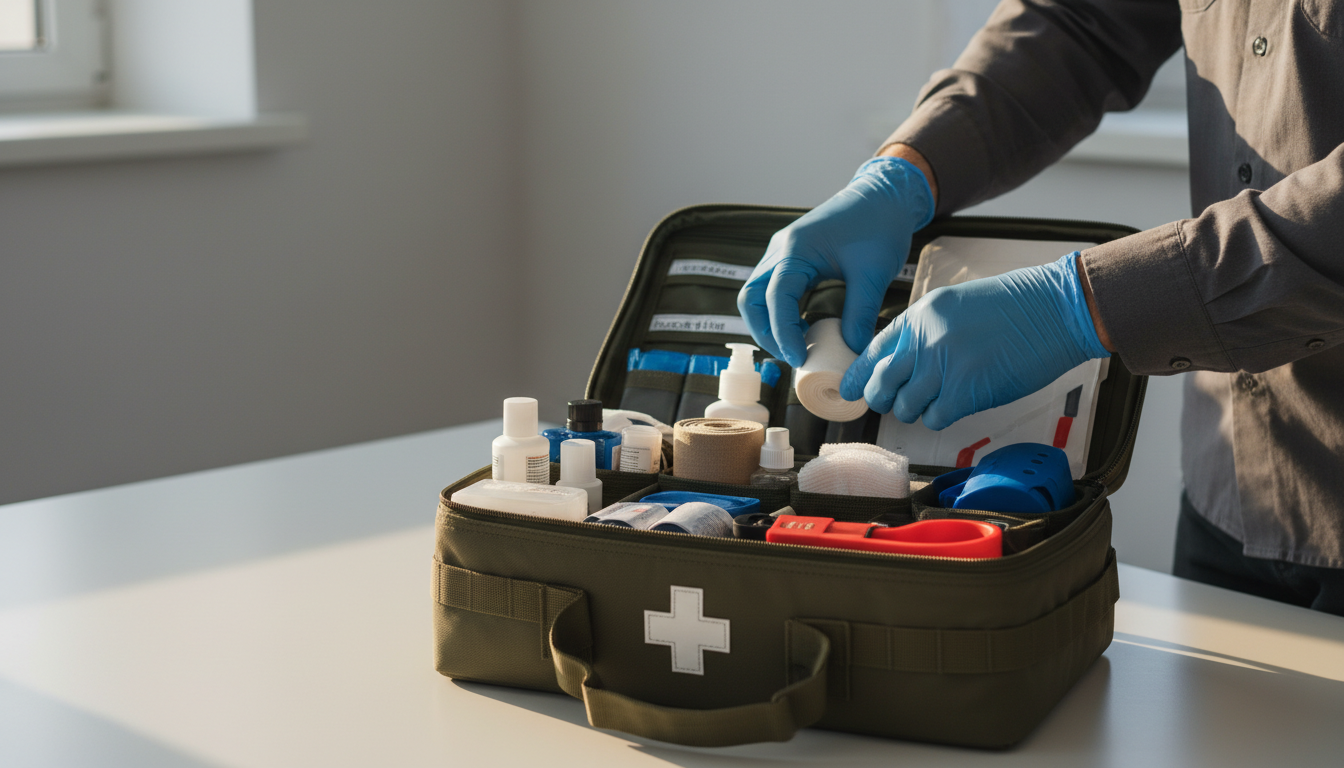
Most people are familiar with basic first aid kits. They’re for minor cuts and scrapes. But a trauma kit is for serious emergencies, focusing on bleeding control and life-saving gear.
Think of it like this: basic first aid kits treat small injuries. Trauma kits, on the other hand, save lives in critical moments. They’re also known as tactical first aid kits, emergency kits, or Individual First Aid Kits (IFAKs). Their main goal is to keep someone stable until help arrives.
Numbers show the importance of trauma kits. About 40 percent of trauma deaths worldwide are due to bleeding issues. This highlights the need for specialized emergency medical supplies in trauma kits.
You don’t have to be in the military or law enforcement to need a trauma kit. Anyone who shoots, hunts, works in remote areas, or wants to be prepared for emergencies should consider one. This guide will help you understand life-saving medical gear, from choosing the right items to knowing when and how to use them.
In this article, you’ll learn what a real trauma kit includes, the most important training, and how to keep your kit ready. Being prepared now means you’ll know what to do in a critical emergency.
Table of Contents
Understanding the Difference Between First Aid Kits and Trauma Kits
Many people confuse “first aid kit” and “trauma kit.” But they have different uses. Knowing the difference is key for a good emergency kit at home, in your car, or at work. First aid kits handle everyday injuries, while trauma kits are for serious emergencies needing special care.
What Traditional First Aid Kits Are Designed For
Standard first aid kits are for minor injuries and common health issues. They have items anyone can use, even without medical training. They’re great for treating many people with everyday problems.
These kits usually have:
- Adhesive bandages in various sizes
- Sterile gauze pads and tape
- Antibiotic ointment
- Antiseptic wipes
- Elastic bandages for sprains
- Pain relievers and antihistamines
- Tweezers and scissors
They’re perfect for camping, home use, and treating small injuries. The Red Cross suggests these basics for everyday readiness.
Why Trauma Kits Are Essential for Life-Threatening Emergencies
Trauma kits are for serious emergencies. Bleeding from severe injuries causes about 40% of trauma deaths. The right equipment can save lives in seconds.
Use a trauma kit for:
- Severe lacerations from machinery or accidents
- Gunshot or stabbing wounds
- Penetrating chest injuries
- Uncontrollable bleeding that won’t stop with pressure
- Catastrophic injuries requiring immediate intervention
Standard first aid can’t handle these critical situations. Trauma kits have special equipment to control bleeding and stabilize patients until help arrives.
Individual First Aid Kits (IFAK) Versus Comprehensive Medical Kits
An individual first aid kit is for one person and has advanced supplies. You need training to use these correctly.
| Feature | Individual First Aid Kit (IFAK) | Comprehensive Medical Kit |
|---|---|---|
| Intended Users | One person | Multiple people |
| Size | Compact and portable | Larger and stationary |
| Primary Purpose | Life-threatening injuries | General injuries and ailments |
| Training Required | Yes, specialized trauma training | Basic first aid knowledge |
| Contents | Tourniquets, hemostatic gauze, chest seals | Bandages, medications, general supplies |
An individual first aid kit is best for personal carry or in vehicles. A medical kit is better for homes or offices where you might treat many people. Choose based on your needs and the emergencies you face.
Critical Components Every Trauma Kit Must Include
Creating an effective trauma kit starts with knowing what to include. Your kit should tackle the main causes of preventable death in trauma: severe bleeding, airway blockage, and tension pneumotharax. Each item has a specific role in saving lives. Think of building your kit as a step-by-step process, not a big task.
A good trauma kit has several key categories. These items help handle serious emergencies that go beyond a basic first aid kit. Knowing each part helps you choose the right items for your kit.
Hemorrhage Control Items
Stopping severe bleeding is your first goal in any trauma case. Your kit should have a good tourniquet, like those from CAT or North American Rescue. These tourniquets are easy to use on yourself or others.
Besides tourniquets, hemostatic dressings help blood clot fast when you can’t use a tourniquet. QuikClot and Celox gauze use special technology for quick clotting. Pressure dressings apply steady pressure on various injuries, useful for wounds not needing tourniquets.
- One or more quality tourniquets (CAT or North American Rescue)
- Hemostatic gauze (QuikClot or Celox)
- Wound packing gauze for deep wounds
- Pressure dressings for general bleeding control
Airway and Chest Injury Supplies
After stopping bleeding, keeping the airway open is key. A nasopharyngeal airway helps keep breathing passages clear in unconscious patients. These devices come in different sizes and often include lubricant for easy use.
Chest injuries need special care. Your kit should have at least two vented chest seals to prevent tension pneumotharax. Chest decompression needles are for trained professionals only, so consider your skills before adding them.
Essential Tools and Accessories
Don’t overlook the importance of trauma shears and protective gear. Heavy-duty trauma shears can cut through tough materials like leather and seat belts. They have blunt tips to prevent accidental cuts. Choose ergonomic models with built-in tools when possible.
| Component Category | Essential Items | Purpose | Training Required |
|---|---|---|---|
| Hemorrhage Control | Tourniquet, hemostatic gauze, pressure dressing | Stop severe bleeding | Basic Stop the Bleed |
| Airway Management | Nasopharyngeal airway with lubricant | Keep airway open | Basic training recommended |
| Chest Injuries | Vented chest seals, decompression needle | Treat tension pneumotharax | Advanced training required |
| Accessories | Trauma shears, nitrile gloves, permanent marker | Support care and documentation | Minimal training |
Protective gear keeps you safe from contamination. Include nitrile or vinyl gloves, protective eyewear or a face shield, and a surgical mask. A Sharpie records tourniquet use times, important for medical teams.
Quality brands are critical when lives are at stake. Investing in proven products ensures reliability in emergencies. Your tactical medical kit is the foundation of trauma care, and building it is achievable.
Building a Trauma Kit: Essential Bleeding Control Supplies
Bleeding is the main cause of death in trauma cases. Knowing what to put in your trauma kit can save lives. This section will cover the three key items: tourniquets, hemostatic gauze, and pressure dressings.
Selecting the Right Tourniquet for Your Kit
A good tourniquet is essential. The Combat Application Tourniquet Generation 7 (CAT-7) and Special Operations Forces Tactical Tourniquet-Wide (SOFTT-W) are top choices. They have a windlass system and a time tag for recording when you applied it.
Don’t use belts or cloth strips as tourniquets. They often fail when needed most. Look for these features:
- A windlass mechanism for effective tightening
- A secure locking system that won’t slip
- A time tag for recording application
- Durable construction tested under real conditions
The SAM-XT by SAM Medical is also a good option. Keep at least two tourniquets in your kit.
Hemostatic Gauze and Wound Packing Materials
Penetrating wounds in sensitive areas need special care. Hemostatic gauze can stop bleeding from inside the body. It’s used to pack wounds tightly.
You have two main options for wound packing:
- Plain wound packing gauze — affordable and effective for basic wound filling
- Hemostatic-treated gauze — impregnated with agents like QuikClot or Celox that speed up clotting
QuikClot Combat Gauze can be used for packing and as regular gauze. Celox Rapid Gauze offers similar benefits. Always pack wounds tightly if you can fit your finger in them. A complete first aid kit for emergencies should have lots of hemostatic gauze.
Pressure Dressings and Emergency Trauma Bandages
Pressure dressings are best for non-arterial bleeding. The Israeli bandage, OLAES Modular Bandage, and North American Rescue Mini Responder 4-inch Emergency Trauma Dressing (ETD) are great choices.
These dressings have three key features:
- An absorbent pad to soak up blood
- An elastic wrap for secure application
- A pressure applicator to direct force onto the wound
Don’t use too much padding. Too much can reduce pressure on the wound. Choose designs that apply pressure directly where needed.
| Product Name | Best For | Key Advantage |
|---|---|---|
| CAT-7 Tourniquet | Limb bleeding | Proven design, military trusted |
| QuikClot Combat Gauze | Wound packing | Hemostatic agent speeds clotting |
| Israeli Bandage | Non-arterial wounds | All-in-one pressure dressing |
| SOFTT-W Tourniquet | Limb bleeding | Wide design prevents pinching |
| Celox Rapid Gauze | Wound packing | Fast clotting without heat |
| ETD 4-inch Dressing | Heavy bleeding | Compact pressure application |
Building a trauma kit requires knowing when to use each tool. Tourniquets stop limb bleeding. Hemostatic gauze packs deep wounds. Pressure dressings handle bleeding where tourniquets can’t be applied. Together, these supplies address the biggest killer in trauma situations.
Chest Seals and Airway Management Tools
Chest seals and airway management tools are key in trauma response. They are vital for saving lives. Knowing how to use them is critical.
The chest cavity is delicate. It has no space between the lungs and the lining. This balance is kept by negative pressure.
Understanding Sucking Chest Wounds and Tension Pneumotharax
A sucking sound is heard when air enters through a wound. This sound is from a sucking chest wound. Air keeps rushing in, making the lung collapse.
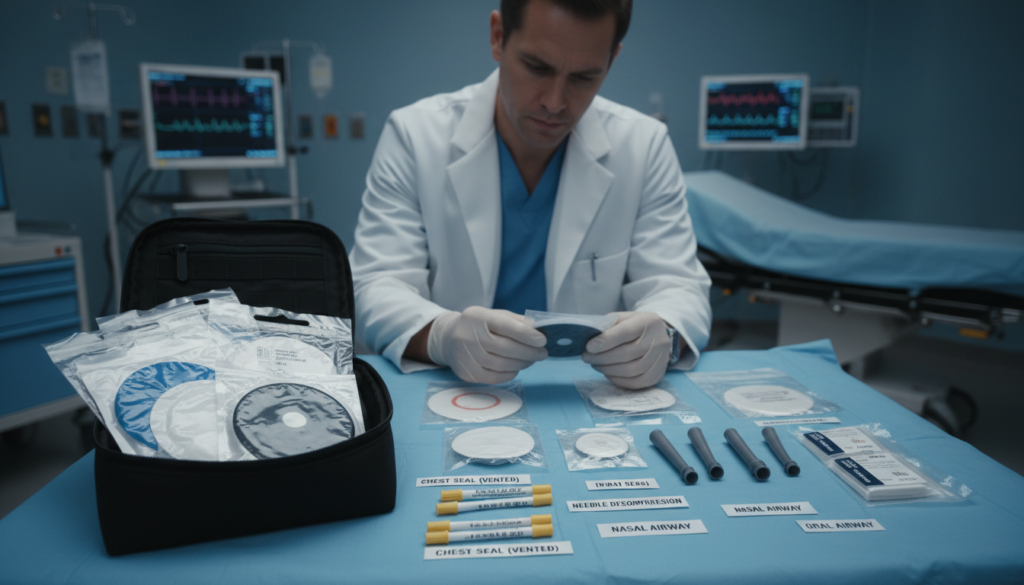
Without sealing the wound, the lung collapses. This creates dangerous pressure inside the chest. It shifts the heart and major blood vessels, stopping blood from returning to the heart. Shock and death can follow quickly without help.
Chest seals create an airtight barrier over wounds. Some have one-way valves to let air out but not in. Both homemade and commercial chest seals work well:
- Improvised chest seals using Vaseline gauze pads and duct tape
- Commercial products like the Compact HyFin Vent chest seal twin pack by North American Rescue
- Purpose-built chest seals designed for trauma response
Check your entire torso for wounds. The chest includes the back, sides, and under the arms. Sealing every penetrating injury is vital to prevent serious problems.
Nasopharyngeal Airways and When to Use Them
Nasopharyngeal airways are vital for life-saving. They bypass upper airway blockages, allowing unconscious people to breathe.
Insertion needs water-soluble lubricant and the right technique. The tube goes through the nostril to keep the airway open. This tool prevents suffocation when someone’s airway closes.
But, there are limits to using these airways. Don’t use them if there’s facial trauma. Broken bones in the face could cause brain damage. Even trained paramedics can make mistakes.
It’s important to be trained before using these tools. They should only be in your trauma kit if you know how and when to use them.
Choosing the Right Container and Organization System
Building a trauma kit is more than just collecting supplies. The right container and organization are key. They can save lives in emergencies. You need to find what you need fast, without getting lost in a mess.
Your container must meet several key requirements. It needs enough space for all your supplies but shouldn’t be too big. It must be strong to protect your items from damage and moisture. It should have sections to keep things organized by function. And, it should be clearly marked so others can find it quickly.
Stationary Versus Portable Containers
Choose your storage based on where you’ll keep your kit. For home or vehicle storage, consider:
- Heavy-duty Pelican cases for maximum protection
- Fishing tackle boxes with multiple compartments
- Multi-drawer carts for easy access
- Sturdy Tupperware containers
- Tool organizers or toolboxes
For portable use, you need small, lightweight, and protective containers. MOLLE pouches from North American Rescue or Blue Force Gear are great. You can also use ziplock bags, compact first aid pouches, and Altoids-style tins for easy carry.
| Container Type | Best For | Capacity | Portability | Organization Features |
|---|---|---|---|---|
| Pelican Cases | Stationary storage at home or workplace | Large | Low | Customizable foam inserts with compartments |
| Fishing Tackle Boxes | Home, garage, or vehicle storage | Medium to Large | Moderate | Multiple drawers and removable trays |
| MOLLE Pouches | Tactical gear, chest rigs, or belts | Small to Medium | High | Internal pockets and compartments |
| First Aid Bags | Vehicle or backpack carry | Medium | High | Multiple pockets with color-coding |
| Ziplock Bags | Minimal carry or emergency backup | Small | Very High | Basic separation by type |
Smart Organization Strategies
An organized kit has three big advantages. You find what you need fast, saving precious seconds. You can fit more in your space. And, it’s easy to check and update your supplies.
Here are some tips for organizing your trauma kit:
- Group items by function (all bleeding control supplies together, airway management separate)
- Use clear bags or color-coded sections for instant identification
- Place frequently needed items in easy-to-reach positions
- Include a quick-reference card listing contents and basic usage instructions
- Label every compartment clearly
Practice finding items in your kit in the dark or with your eyes closed. This simulates real emergency situations. It helps you learn to access your kit quickly when it matters most.
Good organization isn’t just about speed. It also saves space and makes inventory checks simple. It makes restocking easier over time. The effort you put into organizing your kit upfront pays off in emergencies.
Training Requirements for Trauma Kit Components
Having first aid trauma equipment is just the start. The real key is knowing how to use it right. Without training, even the best kits can be useless or even dangerous. Training turns your trauma supplies into real-life savers. Plus, quality training is often free or very affordable.
Learning to use your first aid equipment well takes effort. You need hands-on practice, not just reading. Training classes teach you when to act fast and when to wait. They help you stay calm in emergencies.
Stop the Bleed Certification and Basic Trauma Training
Stop the Bleed is a national campaign by the American College of Surgeons Committee on Trauma. It teaches civilians and first responders how to control severe bleeding. Most courses last 60 to 90 minutes and don’t need any medical background.
The program covers how to spot life-threatening bleeding, apply direct pressure, pack wounds, and use tourniquets. You can find free classes at Bleedingcontrol.org, where you can find training near you. The site also offers downloadable materials and instructor certification programs.
Recently, the American College of Surgeons updated guidelines. Now, tourniquets are the first choice for stopping bleeding that won’t stop with pressure dressings. This change makes tourniquets a key tool in your emergency kit.
Tactical Combat Casualty Care Guidelines
Military and law enforcement should get Tactical Combat Casualty Care (TCCC) training. These protocols were made for trauma care in tactical settings. Civilians can take Tactical Emergency Casualty Care (TECC) courses, which adapt TCCC for civilian responders.
TCCC and TECC training go beyond Stop the Bleed. They teach casualty assessment, airway management, chest seal application, and preventing hypothermia. They prepare you to make smart decisions under pressure.
| Training Type | Best For | Key Topics Covered | Duration |
|---|---|---|---|
| Stop the Bleed | All civilians and first responders | Bleeding control, tourniquets, wound packing, pressure dressings | 60-90 minutes |
| Tactical Emergency Casualty Care (TECC) | Civilians wanting advanced skills | Casualty assessment, airway management, chest seals, hypothermia prevention | 4-8 hours |
| Tactical Combat Casualty Care (TCCC) | Military and law enforcement | Combat trauma protocols, tactical field care, casualty evacuation | 8-16 hours |
Understanding When to Use Advanced Medical Equipment
Some first aid items need special training and careful use. Nasopharyngeal airways and chest decompression needles can be dangerous if used wrong.
Never use a nasopharyngeal airway on someone with facial fractures. It could push bone fragments into the brain. Chest decompression needles are also risky. Used wrong, they can harm a healthy lung or major blood vessels. Even trained paramedics can make mistakes.
- Include advanced items in your emergency kit only if you’ve been trained
- Keep your skills sharp with regular practice and refresher courses
- Know when to use each device
- Understand the risks and complications of each tool
- Never improvise with advanced medical equipment
Your first aid equipment is only as good as your training. Spend time learning. Take a Stop the Bleed class today. Consider TECC training. Regular practice and refresher courses keep your skills sharp and confidence high.
Maintaining and Updating Your Trauma Kit
Building a trauma kit is not a one-time task. It needs regular care to be ready for emergencies. Think of it like a car—regular checks keep it running well. A neglected kit can fail when you need it most.
Make a simple schedule for kit checks. Monthly checks ensure it’s ready and nothing’s damaged. These quick reviews take just a few minutes. Quarterly checks examine expiration dates and supply condition. Annual reviews update your kit with new needs and products.
Understanding Expiration Dates and Product Shelf Life
Many medical supplies have a limited shelf life. Hemostatic gauze like QuikClot expires in three to five years. Chest seals last two to three years. Tourniquets can degrade over time, so expired gear is risky.
Track your kit’s supplies with a spreadsheet or app. Record purchase and expiration dates. Set reminders to replace items before they expire. This keeps your supplies fresh and ready.
| Supply Type | Typical Shelf Life | Storage Condition | Replacement Priority |
|---|---|---|---|
| Hemostatic Gauze (QuikClot) | 3-5 years | Cool, dry location | Check every 6 months |
| Chest Seals | 2-3 years | Away from moisture | Check every 6 months |
| Tourniquets | 5-7 years | Protected from UV light | Check annually |
| Pressure Dressings | 3-5 years | Climate controlled | Check every 6 months |
| Nasopharyngeal Airways | 5 years | Cool, dry location | Check annually |
| Sterile Gauze Pads | 5 years | Sealed packaging | Check annually |
Restocking and Proper Storage Practices
Replace any used items right away. Your kit should always be ready for emergencies. Keep replacement supplies separate. Use older items for training while keeping new supplies in your kit.
Store your kit in a good environment. Use climate-controlled spaces when possible. Avoid extreme temperatures and moisture. Protect from sunlight to prevent damage to plastics and rubber.
Skills Refresher Training and Practice
Staying sharp with your skills is part of maintenance. Take Stop the Bleed courses every one to two years. Practice tourniquet application and wound packing regularly. Stay updated with TCCC and TECC guidelines.
Use expired supplies for practice instead of throwing them away. This turns maintenance into skill development. Practice with old gear before it expires. This keeps your skills sharp without wasting good training materials.
- Check your individual first aid kit monthly for accessibility
- Review expiration dates every three months
- Do a complete kit inventory once each year
- Replace any used emergency medical supplies right away
- Store kits away from heat, moisture, and direct sunlight
- Update your kit based on changing medical needs
- Refresh your trauma training every 1-2 years
- Practice skills with expired supplies before discarding them
Your trauma kit is an investment in preparedness. Regular maintenance keeps it valuable. Small efforts now mean your emergency medical supplies will work when it matters most.
Conclusion
Building a trauma kit is a smart move for emergency readiness. You’ve learned that it’s more than a basic first aid kit. It includes tools like tourniquets, hemostatic gauze, and chest seals for serious injuries.
Having these items ready can save lives. When every second counts, the right gear can make all the difference.
Getting ready isn’t just about the gear. Training is key to using your kit effectively. Classes teach you how to use each tool correctly.
Investing in quality equipment and training is essential. Learning about trauma kits shows their importance for your group or community.
You don’t need everything at once. Start with the basics like a tourniquet and hemostatic gauze. Add more as you learn and get resources.
Keep your kit in good shape by checking expiration dates. It might seem hard at first, but it’s doable. Your effort shows you care about safety.
Acting now shows you’re proactive. You’re not waiting for the perfect time. You’re ready to face emergencies head-on.
Your commitment to safety is powerful. When emergencies happen, you’ll be ready. Your dedication could save a life.
FAQ
What’s the main difference between a basic first aid kit and a trauma kit?
Basic first aid kits treat minor injuries like cuts and burns. They have band-aids and gauze. Trauma kits, on the other hand, have special supplies for serious injuries. They are for emergencies where help might be far away.
Why do I need a trauma kit if I’m not military or law enforcement?
Anyone who uses firearms or works in remote areas needs a trauma kit. Accidents can cause severe bleeding. Having the right supplies can save lives.
What exactly is an IFAK, and do I need one?
An IFAK is a kit for treating serious injuries. It has tourniquets and other essential items. If you want to be prepared, an IFAK is a good choice.
What are the absolute must-have items in a trauma kit?
You need items for stopping bleeding, managing chest injuries, and airway care. These include tourniquets, chest seals, and airway tools. They are key for treating serious injuries.
Which tourniquet should I buy for my kit?
The CAT-7 and SOFTT-W are good choices. They are reliable and easy to use. Look for quality brands like North American Rescue.
What’s the difference between plain gauze and hemostatic gauze?
Plain gauze is good for packing wounds. Hemostatic gauze, like QuikClot, stops bleeding faster. It’s better for deep wounds.
What is a sucking chest wound, and how do chest seals help?
A sucking chest wound happens when air gets into the chest. Chest seals, like HyFin Vent, stop this. They keep the lung from collapsing.
Do I really need a nasopharyngeal airway in my trauma kit?
NPAs are useful for breathing problems. But, they need training to use safely. They’re only for trained responders.
What type of container should I use for my trauma kit?
Choose a container based on how you’ll use it. Hard cases are good for storage. IFAK pouches are better for carrying.
How should I organize my trauma kit for quick access?
Organize by function. Keep bleeding control items together. Use clear bags and a quick-reference card. Practice finding items in low light.
Where can I get Stop the Bleed training?
The American College of Surgeons offers free courses. Visit Bleedingcontrol.org to find classes and learn more. These courses are for everyone.
What’s the difference between TCCC and TECC training?
TCCC is for military and law enforcement. TECC is for civilians. Both teach how to handle emergencies. They cover airway management and more.
Are there any legal concerns with carrying trauma kits?
In most places, carrying trauma kits is legal. But, check local laws. Proper training is important for legal protection.
How do I know if my trauma kit is properly stocked?
Check for essential items like tourniquets and chest seals. Use a checklist. Make sure your kit matches your needs.
What brands should I trust for building a trauma kit?
Trust brands like North American Rescue and CAT. They are known for quality. They make sure your gear works when it matters most.
Should I tell my family members about my trauma kit?
Yes, tell your family about your kits. Teach them basic first aid. This helps in emergencies before help arrives.