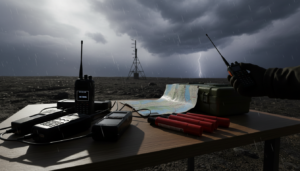
When disaster hits, knowing the weather is key to staying safe. Predicting weather changes can save lives. Learning to read weather signs helps you prepare and make smart choices.
Experts say weather forecasting is vital for surviving outdoors. By watching clouds, wind, and other signs, you can forecast the weather.
Key Takeaways
- Understanding weather patterns is key for survival in emergencies.
- Watching clouds and wind helps predict weather changes.
- Weather forecasting is a must for outdoor survival.
- Being ready for sudden weather changes is important.
- Carrying a portable NOAA weather radio is a great outdoor prep tool.
Table of Contents
Why Weather Reading Is Critical in Survival Situations
In survival situations, knowing the weather is key. Weather can greatly affect the outcome. It’s important to understand and predict it.
The Life-or-Death Impact of Weather Awareness
Weather awareness can save lives. Severe weather like hurricanes or blizzards can be deadly if not seen coming. Knowing weather patterns helps survivalists stay safe.
Weather-Related Survival Challenges in Different Environments
Every place has its own weather challenges. Deserts have huge temperature changes. Mountains can get snowstorms fast. Knowing these helps survival.
Building a Weather Mindset for Survivalists
To be weather-aware, start with basic meteorology basics. Learn to read natural signs of weather. This helps make smart choices and avoid danger.
Using weather tips and survival knowledge makes navigating tough places better.
Basic Weather Reading Skills for Survival
To survive in the wilderness, knowing how to read the weather is key. It’s about understanding signs in the air to guess what’s coming next.
Decoding Cloud Formations
Clouds tell us a lot about the weather. Their shapes, colors, and how they move can hint at what’s to come.
Cumulus Clouds: Fair Weather or Developing Storms
Cumulus clouds are usually seen on sunny days. But if they grow tall, they might turn into storms.
Stratus Clouds: Predicting Rain and Snow
Stratus clouds cover the sky and can bring light rain or snow. A dark layer of stratus means steady rain or snow is coming.
Cirrus Clouds: Early Warning Systems
Cirrus clouds are made of ice and look like thin lines in the sky. They often mean a storm is on its way.

Wind Patterns and Direction Interpretation
Wind direction and speed tell us a lot about the weather. A change in wind direction can mean a weather front is coming.
| Wind Direction | Weather Indication |
|---|---|
| North | Cooler temperatures, possible storms |
| South | Warmer temperatures, might see thunderstorms |
| East | Possible rain or snow, depends on the season |
| West | Usually fair weather, but might signal a storm |
Barometric Pressure Changes and What They Mean
Changes in barometric pressure tell us about the weather. A falling barometer means a low-pressure system is coming, which can bring rain or storms.
- Rising Barometer: Means the weather is getting better, with clearer skies.
- Falling Barometer: Warns of worsening weather, with rain or storms possible.
- Steady Barometer: Suggests the weather will stay the same, with little change expected.
Temperature and Humidity Clues
Temperature and humidity also give us clues about the weather. A big drop in temperature means a cold front is coming. Rising humidity means we might see more rain.
Learning these basic weather reading skills helps us prepare for and deal with different weather in survival situations.
Natural Weather Indicators in the Wild
Knowing how to read natural weather signs is key to surviving in the wild. The world around us gives clues about weather changes. These clues help us stay safe.
Animal Behavior Before Weather Changes
Animals show certain behaviors before the weather changes. Birds might fly lower before a storm. Squirrels get busy, storing food for bad weather.
Watching how animals act can tell us about the weather. Knowing what’s normal for local animals helps us spot changes that mean weather is coming.
Plant Responses to Approaching Weather
Plants also react to weather changes. Some plants fold their leaves or change flower direction before a storm. Seeing these signs helps predict the weather.
Geographical Features and Local Weather Patterns
Places like mountains, valleys, and water affect local weather. Knowing how these features change the weather helps us make better guesses.
| Geographical Feature | Effect on Weather |
|---|---|
| Mountains | Can create rain shadows, leading to varied precipitation on different sides |
| Valleys | Often experience fog and cooler temperatures due to cold air pooling |
| Bodies of Water | Moderate temperatures and can increase humidity, leading to fog or precipitation |
Traditional Weather Folklore That Actually Works
Old weather sayings and observations have been passed down for ages. Some, like “Red Sky at Night,” are based on science.
“Red Sky at Night” and Other Reliable Sayings
The saying “Red sky at night, sailor’s delight; red sky in morning, sailor’s warning” is true. A red sky at sunset means good weather. A red sky at sunrise means a storm is coming.
Moon Halos, Sun Dogs, and Other Visual Phenomena
Moon halos and sun dogs are signs of ice crystals in the air. They usually mean a storm is on its way.
By watching animals, plants, and using old weather sayings, we can learn essential weather skills. These skills help us survive in the wild.
Recognizing and Preparing for Severe Weather
Knowing the signs of severe weather is key for outdoor adventures. Severe weather can come without warning. Being ready is essential for survival.
Severe weather includes thunderstorms, flash floods, hurricanes, tornadoes, and winter storms. Each has its own warning signs and needs special preparation.
Warning Signs of Thunderstorms and Lightning
Thunderstorms start with cumulus clouds turning into tall, flat cumulonimbus clouds. Seeing these clouds means a storm is coming. A sudden cold drop and stronger winds also warn of a storm.
Key indicators of thunderstorms include:
- Darkening skies with towering clouds
- Increasing wind speed
- A sudden drop in temperature
Flash Flood Indicators in Different Terrains
Flash floods can happen anywhere, with little warning. Look for heavy rain in a short time, in rocky or burned areas. Also, watch for rising water in streams and rivers, and murky or dirty water.
Hurricane and Tornado Precursors
Hurricanes start with low-pressure systems over warm oceans. Tornadoes come from rotating thunderstorm clouds (supercells). Knowing these signs helps predict these dangers.
For more on severe weather, like blizzards, check Global Rescue’s Blizzard Survival Guide.
Winter Storm and Blizzard Prediction
Winter storms and blizzards are signaled by cold drops, stronger winds, and snow predictions. Knowing weather forecasts and recognizing winter weather signs helps prepare.
Emergency Response Protocols for Each Weather Threat
Having a plan for emergencies is vital for each severe weather type. Know evacuation routes, have the right gear (like flashlights for storms or snow chains for winter), and stay updated with weather alerts.

Conclusion: Applying Weather Knowledge in Survival Scenarios
Learning Basic Weather Reading Skills for Survival can really help you stay safe outdoors. Knowing how to read weather data lets you make smart choices. This keeps you safe from dangers.
Many natural signs, like cloud shapes, animal actions, and plant changes, tell us about the weather. You don’t have to be a weather expert to use these signs. For example, old sayings like “When cottonwood starts to fly, it’s time to plant corn” can guide you. You can find more weather tips at The Survival Mom.
Getting better at reading the weather helps you stay alert in tough places. This skill is key for understanding weather and making safe choices. It’s all about survival.
FAQ
What are the most important weather reading skills for survival?
Knowing how to read clouds, wind, and changes in pressure and temperature is key. These skills are vital for survival.
How can I use natural indicators to predict weather changes?
Watch how animals and plants act. Also, look at the land. Old weather sayings can help too.
What are the warning signs of severe weather, such as thunderstorms or hurricanes?
Look for dark skies and strong winds. Also, notice when the temperature and humidity change. Look for tall clouds for thunderstorms and low pressure for hurricanes.
How can I prepare for severe weather emergencies?
Know what to do in each weather emergency. For thunderstorms, find shelter. For hurricanes, evacuate.
Can weather reading skills really improve my chances of survival?
Yes, knowing the weather can help a lot. It lets you get ready and act fast in bad weather.
How can I improve my weather reading skills?
Practice watching the weather. Study patterns. Learn from experts in survival and meteorology.
Are there any specific tools or equipment that can aid in weather reading?
Tools like barometers and weather radios can help. But, they’re not needed to read the weather.
How do different environments affect weather patterns and survival challenges?
Places like deserts, mountains, and coasts have their own weather dangers. Knowing these is key to surviving.