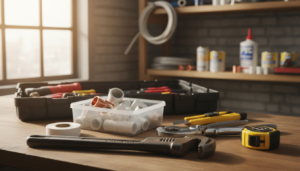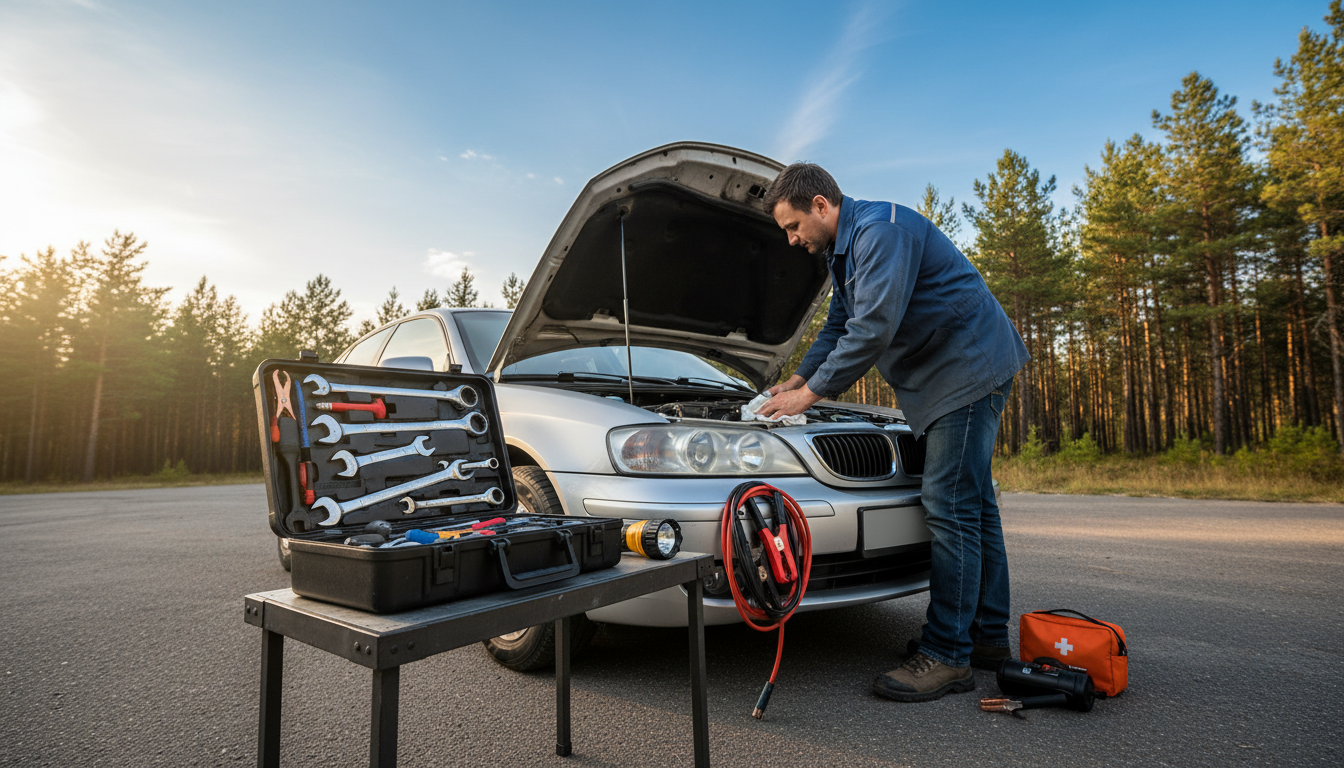
Your car is more than a way to get around. In emergencies, it’s a lifeline for you and your family. So, basic car maintenance for emergencies is just as important as your home supplies and bug out bag.
We don’t drive off-road rigs or survival vehicles. We drive regular cars, trucks, and SUVs. The good news is that regular maintenance keeps your vehicle ready for emergencies.
Disasters can happen anytime. They don’t wait for the right moment. So, prepare every car in your driveway as if it’s your bug out vehicle.
Modern cars are built to last. But, breakdowns can happen. A mechanical failure during an emergency can be a survival problem. Basic car maintenance for emergencies is about keeping your vehicle running when you need it.
This guide teaches you preventive auto maintenance to prevent breakdowns. You’ll learn quick routine checks and emergency repair skills. These skills are practical and help you and your family stay safe.
Whether you drive a Toyota Camry, Ford F-150, or Honda CR-V, these skills apply. Let’s start making your car part of your preparedness plan.
Table of Contents
Why Vehicle Preparedness Is Critical for Every Prepper
Your vehicle is a key survival tool. It’s your lifeline when disaster hits. Knowing how to prepare for car breakdowns is essential.
Many preppers focus on supplies and shelter. But they often forget their vehicle is their main escape route. A breakdown can turn a simple situation into a dangerous one.
The Reality of Road Emergencies
Road emergencies can happen quickly. Mechanical failures, dead batteries, and flat tires leave many stranded. Weather events like snowstorms, floods, and extreme heat make these situations even more dangerous.
Think about times like the Texas winter storm of 2021. Thousands were stuck in their cars without heat or supplies. California wildfires caused traffic jams where cars overheated for hours. These aren’t just rare events—they’re common when people don’t prepare.
Emergencies can happen on any drive. The moment your check engine light comes on is when you wish you’d prepared earlier.
How Proper Maintenance Prevents Disasters
Regular maintenance is key to being ready for emergencies. Simple steps can greatly reduce your risk:
- Regularly check fluid levels to catch problems early
- Monitor tire wear to avoid blowouts
- Keep your gas tank full to have fuel when needed
- Know your vehicle’s warning signs to act fast
Car breakdown preparation isn’t just about fixing your car now. It’s about making sure it works when you need it most. Knowing how to handle emergencies and keeping your car in good shape turns it into a reliable escape tool.
Essential Daily and Monthly Vehicle Checks
Keeping your vehicle in good shape is key. You don’t need a degree to do it. Quick checks each day and month are all you need. These simple steps are the basics for any prepper.
Daily Walk-Around Inspection
Before you hit the road, spend two minutes on a quick check. Start at the front and circle around your car. This is a vital tip for keeping your vehicle in top condition.
- Look at all four tires for damage, low pressure, or objects stuck in the tread
- Check the ground underneath your vehicle for fluid leaks
- Inspect lights to ensure they work properly
- Look for anything unusual like loose trim or damaged parts
Spotting problems early can prevent breakdowns when you need your vehicle most.
Monthly Fluid and Pressure Checks
Once a month, do a deeper check. These skills help you catch issues before they become big problems.
| Fluid or Component | What to Check | Proper Level |
|---|---|---|
| Engine Oil | Check with dipstick when engine is cool | Between minimum and maximum marks |
| Transmission Fluid | Use transmission dipstick, engine running and warm | Between cold and hot marks depending on temperature |
| Brake Fluid | Look at reservoir near the firewall | Close to maximum fill line |
| Coolant | Check when engine is completely cool | Between minimum and maximum marks |
| Tire Pressure | Use a tire gauge on all four tires | Match your vehicle’s recommended PSI |
Proper tire pressure is key for fuel efficiency and handling in emergencies. It affects how your vehicle responds during sudden maneuvers.
The Half-Tank Rule
Never let your gas tank drop below half full. Gas stations might be closed or have long lines in emergencies. Treat the halfway mark as your new empty point. Refill whenever you drop below that threshold. This habit ensures you have enough fuel to evacuate quickly when disaster strikes.
These tips take little time but build trust in your vehicle’s reliability. Learning these skills now means you’ll stay calm and prepared when emergencies happen.
Basic Car Maintenance for Emergencies
When disaster hits, you can’t call a mechanic. Learning basic car maintenance for emergencies gives you control. These skills ensure your car runs when help is far away. Knowing about engine fluids is key to emergency care.
Preppers focus on three main tasks. They regularly check and change oil. They keep an eye on all vehicle fluids. They also check tires for safety and wear. Each task is quick but can save your life in an emergency.
Checking and Changing Your Oil
Clean oil is essential for your engine. It prevents metal parts from grinding and stops major failures. Find your oil cap under the hood, as your manual will tell you where.
Change your oil based on how you drive. City driving needs more frequent changes than highway driving. Keep spare oil bottles in your car for emergencies.
The basic steps are:
- Locate the oil drain plug underneath your engine
- Place a drain pan beneath it to catch old oil
- Remove the drain plug with a wrench
- Let oil drain completely into the pan
- Replace the drain plug
- Use an oil filter wrench to remove the old filter
- Install a new filter and refill with fresh oil
- Dispose of old oil at a recycling center
Monitoring Transmission and Vehicle Fluids
Your car needs several important fluids. Each one has a specific job. Checking them monthly is quick but prevents costly breakdowns.
| Fluid Type | Normal Color | Warning Signs | Location |
|---|---|---|---|
| Transmission Fluid | Bright red | Brown or burnt smell | Driver side engine bay |
| Brake Fluid | Clear to light amber | Dark or contaminated | Back of engine bay |
| Power Steering Fluid | Clear or light red | Dark or murky appearance | Driver side engine bay |
| Coolant/Antifreeze | Green, pink, or orange | Rust colored or cloudy | Side of radiator |
Keep backup bottles of transmission fluid, brake fluid, and antifreeze in your car. These fluids are vital for emergency car maintenance. Check fluid levels when your engine is cold for accurate readings.
Tire Pressure and Tread Inspection
Your tires are your only link to the road. Proper maintenance is key to safety in emergencies. Under-inflated tires wear out faster and affect handling. Over-inflated tires reduce traction and make your ride rough.
Find your vehicle’s correct tire pressure on a sticker inside the driver’s door frame. Check pressure monthly when tires are cold. Use a reliable tire pressure gauge for accurate readings.
Inspect tread depth with the penny test:
- Take a penny and insert it into a tread groove
- Place Lincoln’s head upside down
- If you can see the top of his head, your tread is too shallow
- Replace tires immediately for safety
Look for uneven wear patterns on your tires. Outer edge wear means under-inflation. Center wear means over-inflation. Uneven wear signals alignment issues needing professional help. Always have a properly inflated spare tire in your car—a full-size tire is best.
These emergency car care tasks take practice. Master them before you need them. Being able to maintain your car independently is priceless when roads are impassable and services are unavailable.
Must-Have Tools and Supplies for Roadside Repairs
Having the right tools ready for emergency roadside car repair is key. A well-stocked vehicle kit keeps you safe and self-sufficient. You don’t need to spend a lot at once. Many people build their kits over time.
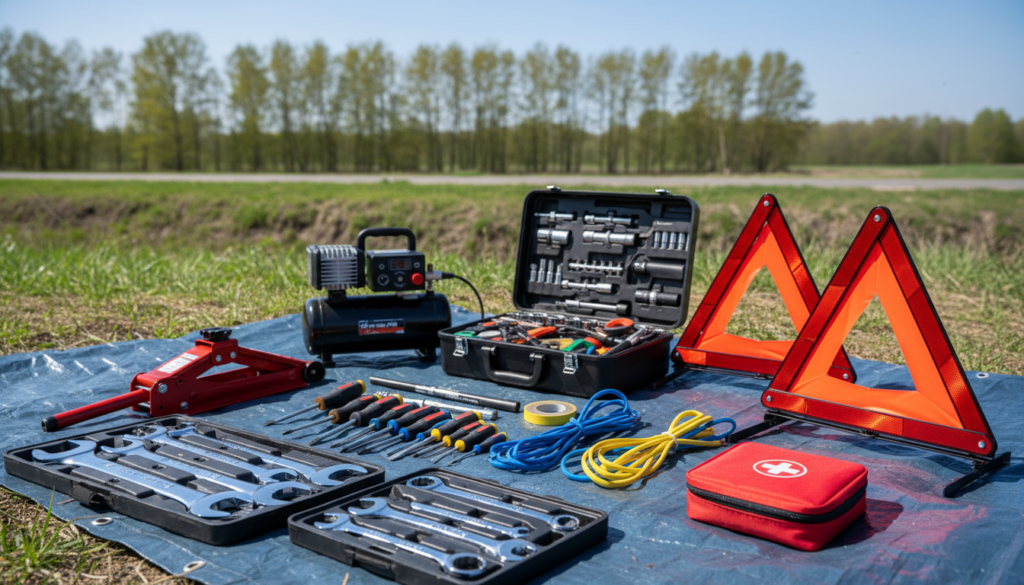
Your emergency roadside car repair kit should focus on five main categories of tools and supplies. Start by prioritizing the items that address your most likely scenarios. This ensures you invest in tools that will actually help you when trouble strikes.
Tire and Jack Equipment
Tire problems are common roadside emergencies. Replace your factory scissor jack with a quality floor jack—it’s safer and faster. Pair this with a proper lug wrench, a tire pressure gauge, and a portable air compressor. Keep your spare tire fully inflated instead of a donut spare.
- Quality floor jack rated for your vehicle weight
- Tire pressure gauge for quick checks
- Portable air compressor (AstroAI models work well)
- Tire repair kit with patches and plugs
- Can of Fix-a-Flat for temporary fixes
- Full-size spare tire, properly inflated
Battery and Electrical Tools
Dead batteries strand countless drivers each year. Heavy-duty jumper cables with lower gauge numbers deliver better conductivity. An all-in-one jump starter like the Stanley Jump Starter eliminates needing another vehicle. Keep spare fuses in various amperages to handle electrical gremlins.
- Heavy-duty jumper cables (4 gauge or thicker)
- All-in-one jump starter with air compressor
- Assorted spare fuses for your vehicle
- Basic socket set and screwdrivers
Fluids and Engine Components
Engine troubles often stem from low fluid levels. Store extra oil, coolant, transmission fluid, and brake fluid matching your vehicle’s specifications. Spare serpentine belts and radiator hoses prevent small problems from becoming major disasters. Check your vehicle’s manual to identify the exact sizes and types you need.
| Fluid Type | Importance Level | Storage Amount |
|---|---|---|
| Motor Oil | Critical | 2-3 quarts |
| Coolant/Antifreeze | Critical | 1 gallon |
| Transmission Fluid | High | 1 quart |
| Brake Fluid | High | 12 ounces |
| Power Steering Fluid | Medium | 1 quart |
Repair and Adhesive Supplies
Quick fixes save lives on the road. Gorilla Tape handles cracked hoses, loose wires, and damaged light covers temporarily. Gorilla Super Glue Gel bonds broken plastic components in minutes. Heavy-duty zip ties in various sizes secure loose parts safely. Paracord serves double duty as emergency tie-downs or towing assists. Quality work gloves like Mechanix Wear protect your hands during messy repairs.
- Gorilla Tape for temporary hose and wiring fixes
- Gorilla Super Glue Gel for plastic repairs
- Heavy-duty zip ties (Gardner Bender HD brand)
- Atwood paracord for tie-downs
- Mechanix Wear work gloves
- Multi-tool with scissors, pliers, and knife
Extraction and Safety Equipment
Getting stuck happens to every prepper eventually. A compact shovel lets you dig out from mud or snow. Traction mats or old carpet pieces placed under tires provide grip on slippery surfaces. Trac-Grabber traction devices attach to tires for serious stuck situations. A quality tow strap rated for your vehicle’s weight handles emergency pulls. A fire extinguisher designed for vehicles protects against engine fires. Including first aid and emergency supplies alongside your repair tools creates a truly complete emergency kit.
- Compact shovel for digging out
- Traction mats or carpet pieces
- Trac-Grabber traction devices
- Heavy-duty tow strap (rated for your vehicle)
- Vehicle-rated fire extinguisher
- Power inverter for AC tools (300W minimum)
- Jerry gas can with extra fuel
DIY roadside repairs become manageable when you have proper tools available. Start building your kit with essentials, adding specialty items based on your needs and climate. Most preppers find that spreading purchases over several months makes the investment painless while dramatically improving their roadside readiness and confidence.
Building a Complete Vehicle Emergency Kit
Creating a good emergency car kit is more than just tools and jumper cables. Your car should have supplies to keep you safe, healthy, and calm in unexpected situations. A well-prepared kit can turn a small problem into a big crisis if you’re far from help.
Think of your emergency kit as a mobile safety net. It should have medical supplies, food, water, and survival items for long emergencies. With the right stuff, you can face almost any road situation.
First Aid and Medical Supplies
A good first aid kit is essential for any car. Road injuries need quick treatment, and a kit helps when medical help is far away. Your kit should include:
- Adhesive bandages in various sizes for minor cuts and scrapes
- Elastic bandages for sprains or securing gauze pads
- Antibiotic ointment to prevent infection
- Antiseptic wipes for cleaning wounds before treatment
- Sterile gauze pads for larger injuries
- Hydrocortisone cream for allergic reactions or skin irritation
- Instant cold packs for reducing swelling
- Nitrile gloves for sanitary wound treatment
- Pain relievers like ibuprofen and acetaminophen
- Medical scissors and tweezers for various needs
Ready-made kits can help you build your emergency kit. The Be Red Cross Ready First Aid Kit has 73 pieces for full coverage. The First Aid Kit PLUS has 93 pieces for families or long trips. For basics, the Swiss Safe First Aid Kit has essential items in a small case. Choose based on your family size and trip length.
Water, Food, and Survival Essentials
Water is key for survival. Plan for at least one gallon per person per day. Aqua-Tainer 7-gallon containers are great for the trunk. Datrex emergency water pouches last years without spoiling.
Choose food that’s easy to eat and doesn’t melt in hot cars. Millennium Bars and pop-top canned goods are good choices. Add granola bars, nuts, and hard candy for quick energy. Rotate your supplies every six months to keep them fresh.
Your kit should have more than just basic supplies. Include essential items for roadside emergencies like Mylar blankets and waterproof ponchos. A windproof arc lighter, Cold Steel survival knife, and Bayite ferro rod help start fires in tough conditions.
| Item Category | Specific Products | Purpose |
|---|---|---|
| Hydration | Datrex Water Pouches, Aqua-Tainer | Maintain proper hydration during emergencies |
| High-Energy Food | Millennium Bars, Pop-Top Canned Goods | Provide calories without preparation |
| Warmth and Protection | Everlit Mylar Blankets, Prepared4X Ponchos | Retain body heat and stay dry |
| Navigation | SUUNTO Compass, Printed Local Maps | Find your way when GPS fails |
| Communication | Hand Crank Weather Alert Radio, SOL Whistle | Stay informed and signal for help |
| Power and Light | Blackout Buddy Flashlight, Portable Power Bank | Maintain visibility and charge devices |
| Escape and Tools | Resqme Escape Tool, SOG Entrenching Shovel | Exit vehicle or handle getting unstuck |
Don’t forget small but important items for your kit. A portable power bank keeps your phone charged. Printed maps work when GPS doesn’t. A hand-crank weather alert radio gives emergency info. A Resqme escape tool helps you get out quickly. Signal flares and reflective triangles make you more visible.
Pack practical clothing items in a compact skivvy roll. Include extra socks, a warm hat, and gloves. Keep cash for when card readers fail. Add entertainment for kids during long waits. A complete emergency kit turns your car into a mobile safety station ready for any roadside emergency.
Winter Weather Vehicle Preparation
Winter driving poses unique dangers. Cold temperatures can cause hypothermia to set in quickly if you’re stranded. Snowstorms also reduce visibility and make rescue hard. Vehicle emergency procedures for winter are vital for drivers everywhere, not just in the north.
Preparation for winter car breakdowns starts with maintenance checks before cold weather hits. Make sure your antifreeze is rated for the coldest temperatures in your area. Check your battery’s condition, as cold weather weakens it. Test your heater and defroster to ensure they work.
- Heavy-duty ice scraper and snow brush combination tool
- Properly sized tire chains like Peerless Auto-Trac (practice installation before you need them)
- Multiple packs of hand warmers for extended heat
- Genuine wool blanket that retains warmth when damp
- Complete change of winter clothes including jacket, hat, gloves, and boots
- Emergency Mylar sleeping bag rated for cold weather
- Chemical light sticks that work in freezing temperatures
- High-calorie food that won’t freeze solid
If stranded, stay with your vehicle for shelter and visibility. Run your engine only 10 minutes per hour to save fuel and prevent carbon monoxide buildup. Clear your exhaust pipe of snow, crack a window slightly for ventilation, and do light exercises to keep circulation. These steps can prevent a dangerous situation.
DIY Roadside Repair Skills Every Prepper Should Master
Being stranded on the road can happen to anyone. Learning basic car troubleshooting skills gives you confidence in emergencies. DIY roadside repairs don’t need expensive training or professional certification. With the right knowledge and tools, you can solve common problems and get back on the road fast. This section teaches you three essential skills that every prepper should practice before an emergency strikes.
Jump-Starting a Dead Battery
A dead battery is a common vehicle emergency. Knowing how to jump-start your car quickly gets you moving again. The process is straightforward when you follow the right steps.
First, park a working vehicle close to your disabled car. Make sure they don’t touch. Turn off both vehicles and all electronics. Find the positive (red, marked +) and negative (black, marked -) terminals on both batteries.
Connect the jumper cables in this exact order:
- Red clamp to the dead battery positive terminal
- Red clamp to the working battery positive terminal
- Black clamp to the working battery negative terminal
- Black clamp to unpainted metal ground on the disabled vehicle (not the negative terminal)
Start the working vehicle and let it run for a few minutes. Then attempt to start your vehicle. Once it starts, remove cables in reverse order. Let the revived engine run for at least 20 minutes to recharge the battery.
A portable jump starter like the Stanley Jump Starter makes this simpler. Just connect the positive clamp to the positive terminal, negative to negative, turn on the unit, and start your vehicle. These devices also include air compressors for flat tires and charging ports for your phone.
Practice this skill before you need it in a crisis. Find a friend and try it in daylight when there’s no pressure.
Changing a Flat Tire Safely
Many people have never changed a tire. This basic car troubleshooting skill is essential for any prepper. The process takes about 30 minutes when you’re familiar with it.
Start by finding a flat, stable location away from traffic. Engage your parking brake and place wheel chocks or large rocks behind the tires. Locate your spare tire, jack, and lug wrench in your trunk.
Follow these steps for safe tire replacement:
- Loosen lug nuts slightly while the tire is on the ground
- Position the jack under the vehicle’s correct jack point (check your owner’s manual)
- Raise the vehicle until the flat tire is completely off the ground
- Remove lug nuts completely and take off the flat tire
- Mount the spare tire by aligning the holes
- Hand-tighten lug nuts in a star pattern
- Lower the vehicle until the tire touches the ground
- Fully tighten lug nuts in a star pattern using the wrench
- Remove the jack completely
Invest in a quality floor jack instead of relying on your factory scissor jack. Floor jacks are more stable, faster, and safer on soft ground or uneven surfaces. They make DIY roadside repairs much easier.
Check your spare tire monthly to ensure it’s properly inflated. A flat spare tire is worthless in an emergency.
| Jack Type | Stability | Speed | Best For |
|---|---|---|---|
| Floor Jack | High | Fast | Emergency use, soft ground |
| Scissor Jack (Factory) | Lower | Slower | Small adjustments only |
Getting Unstuck from Snow, Mud, or Sand
Getting stuck is frustrating, but panic makes it worse. With the right techniques and tools, you can free yourself without waiting for a tow truck that might not arrive for hours during a major emergency.
Never spin your tires excessively. This digs you deeper into the problem. Instead, follow these DIY roadside repairs steps:
- Clear snow, mud, or sand from around and under your tires
- Place traction materials under the drive wheels (old carpet, floor mats, branches, or traction mats)
- Try “rocking” by gently shifting between drive and reverse to build momentum
- Slightly deflate tires to increase grip (remember to re-inflate afterward)
- Use Trac-Grabber Traction Devices that strap to tires for aggressive pulling power
For serious situations, combine basic car troubleshooting skills with tools you have. Use a shovel and floor jack together: dig around the stuck tire, use the jack to lift the vehicle, pack solid material (rocks, wood, or compacted snow) underneath, lower the vehicle onto this new foundation, and drive out.
Practice these recovery techniques in controlled situations. An empty snowy parking lot is perfect for learning. When the real emergency happens, you’ll feel confident and in control. These basic car troubleshooting skills save time, money, and stress when you’re stranded on the road.
Conclusion
You now have the tools to keep your vehicle safe and ready. Preventive auto maintenance is not a one-time thing. It’s an ongoing practice that keeps you and your family safe on the road.
Checking your oil and inspecting your tires are simple tasks. They help your vehicle run strong when you need it most.
Creating the perfect vehicle emergency kit is unique for everyone. Weather and driving conditions vary greatly. Your kit should match your situation, vehicle, and risk level.
Start with the basics from this article. Add to your kit gradually. Some preparation is always better than none.
Vehicle preparedness is as vital as food storage or home security. Your vehicle could be your lifeline in danger. Practice the skills from this article and update your kit as needed.
Begin with a simple vehicle check. Ensure you have a working spare tire and jack. Building your emergency supplies one item at a time is worth it. You’ll feel safer and more confident on the road.
FAQ
Why is vehicle preparedness as important as other prepper skills like food storage?
Your vehicle is a lifeline in emergencies. It’s as important as having a bug out bag. During disasters, it can be the only way to get to safety.
Without the right maintenance and supplies, a breakdown can be deadly. So, keeping your vehicle ready is a must.
How can basic car maintenance help prevent being stranded during an emergency?
Knowing how to handle your car’s warning signs is key. Regular checks can prevent breakdowns. Keeping your gas tank full also helps.
When you know your car’s condition, you’re ready for emergencies. This ensures it works when you need it most.
What should I check during a daily walk-around vehicle inspection?
A quick walk-around can spot issues early. Check tires for damage or low pressure. Look for leaks under the car.
Also, check for any damage or unusual items. These checks can prevent being stranded.
How often should I check my vehicle’s oil and transmission fluid?
Check oil and transmission fluid monthly. Use the dipstick for oil and a special dipstick for transmission fluid. Look for the right color and smell.
Knowing how to do these checks is vital. It helps when you can’t get professional help.
Why should I never let my gas tank drop below half-full?
Keeping gas levels high is a must. Gas stations might be closed or have long lines. Having enough fuel is key to getting to safety.
What’s the best way to check tire pressure and why does it matter?
Use a tire pressure gauge to check PSI. Proper inflation is vital for safety and fuel efficiency. It affects traction and handling.
Regular checks ensure your car handles well in emergencies.
How do I perform the penny test to check tire tread depth?
Insert a penny into the tread grooves. If you see Lincoln’s head, your tires need replacing. Adequate tread is essential for traction.
Worn tires increase the risk of accidents during evacuations.
What tools are absolutely essential for emergency roadside car repair?
Essential tools include a floor jack, lug wrench, and tire pressure gauge. A portable air compressor and tire repair kit are also needed.
Don’t forget jumper cables, spare oil, and a first aid kit. These tools can save you from being stranded.
Why is a quality floor jack superior to a factory scissor jack?
A floor jack is more stable and faster to use. It’s safer on uneven surfaces. Scissor jacks can fail on unstable ground.
A floor jack makes tire changes easier, even in poor lighting.
What first aid supplies should I keep in my emergency vehicle kit?
Keep bandages, elastic bandages, and antibiotic ointment in your kit. Also, include antiseptic wipes, gauze pads, and cold packs.
Don’t forget gloves, pain relievers, and medical scissors. A good kit can treat minor injuries and prevent complications.
How much water should I store in my emergency vehicle?
Store one gallon of water per person per day. Use Aqua-Tainer containers or Datrex pouches. Water is for drinking, cooling engines, and survival.
What foods should I keep in my vehicle emergency kit?
Choose non-perishable items like Millennium Bars, canned goods, and granola bars. Include nuts and sugar packets for energy.
Keep food fresh by rotating supplies. These items provide nutrition when you’re stuck.
What survival essentials should be in every emergency vehicle kit?
Include Everlit Mylar blankets, ponchos, and garbage bags. Add a windproof lighter, Cold Steel knife, and Pennzoil siphon pump.
Don’t forget a spare cell phone charger, maps, and a hand-crank radio. These items ensure you’re prepared for emergencies.
Why is winter vehicle preparation different, and what specific steps should I take?
Winter can be deadly, with hypothermia and reduced visibility. Check antifreeze, use winter oil, and ensure your battery is strong.
Make sure your heater and defroster work. Winter emergencies can happen anywhere, so be prepared.
What winter-specific emergency supplies should I add to my vehicle kit?
Add an ice scraper, snow brush, and tire chains. Include hand warmers, a wool blanket, and insulated clothes.
Also, add emergency blankets, gloves, and chemical light sticks. These items can save your life in cold weather.
What should I do if stranded in my vehicle during winter weather?
Stay with your vehicle for shelter and visibility. Run the engine for heat but not too long to avoid carbon monoxide.
Clear the exhaust pipe and crack a window for ventilation. Use floor mats for insulation and do exercises to stay warm.
How do I properly jump-start a dead battery?
Use jumper cables to connect the batteries. Start the working vehicle and let it run for a few minutes. Then, try to start the dead vehicle.
Remove the cables in reverse order. If you have a portable jump starter, follow the manufacturer’s instructions.
What’s the correct procedure for changing a flat tire safely?
Find a safe place away from traffic. Loosen the lug nuts before raising the vehicle. Use a jack to lift the car.
Remove the lug nuts and flat tire. Put on the spare tire and hand-tighten the lug nuts. Lower the vehicle and tighten the lug nuts.
How do I get my vehicle unstuck from snow, mud, or sand?
Avoid spinning your tires to prevent digging deeper. Clear debris and use traction materials under the tires.
Try shifting between drive and reverse to build momentum. Deflate tires slightly for better traction. Use a shovel and jack for serious situations.
Why should I practice emergency repair skills before an actual emergency?
Practice in a safe area to build muscle memory. This confidence is vital in stressful situations. It helps you avoid mistakes.
How often should I rotate my vehicle emergency supplies?
Vehicle preparedness is ongoing. Check supplies for expiration dates regularly. Rotate water and food every six months.
Check jump starters and flashlights. Update kits as your needs change. Regular maintenance ensures readiness.
Should my vehicle emergency kit be different based on my climate?
Yes, your kit should match your climate. Different climates require different supplies. Start with basics and customize as needed.
Customizing your kit makes it more relevant and maintainable. It’s better than having nothing.
Can basic car maintenance help with everyday emergencies, not just SHTF scenarios?
Yes, these preparations help in everyday emergencies too. They make driving safer and more reliable. These skills are useful for anyone.
Where should I start if vehicle preparedness feels overwhelming?
Start with a simple walk-around check. Make sure you have a working spare tire and jack. Build your emergency kit gradually.
Practice these skills to become more confident. Remember, vehicle preparedness is as important as food storage.
What’s the difference between preventive auto maintenance and emergency automotive care?
Preventive maintenance keeps your vehicle running smoothly. It includes regular checks and fluid changes. Emergency care involves fixing problems when they happen.
Both are important for prepper readiness. Preventive maintenance reduces the need for emergency repairs. Emergency skills keep you safe when problems arise.
Should I invest in a dedicated bug out vehicle or prepare the one I currently drive?
Focus on preparing your current vehicle. Not everyone can afford a dedicated bug out vehicle. Your daily driver is likely the one you’ll be in during emergencies.
Ensure it’s reliable and stocked with emergency supplies. You can add a secondary vehicle later.
How does keeping a full-size spare tire differ from relying on a donut spare?
A full-size spare ensures you can drive normally if you get a flat. A donut spare is only for temporary use. In emergencies, a full-size spare lets you keep driving safely.