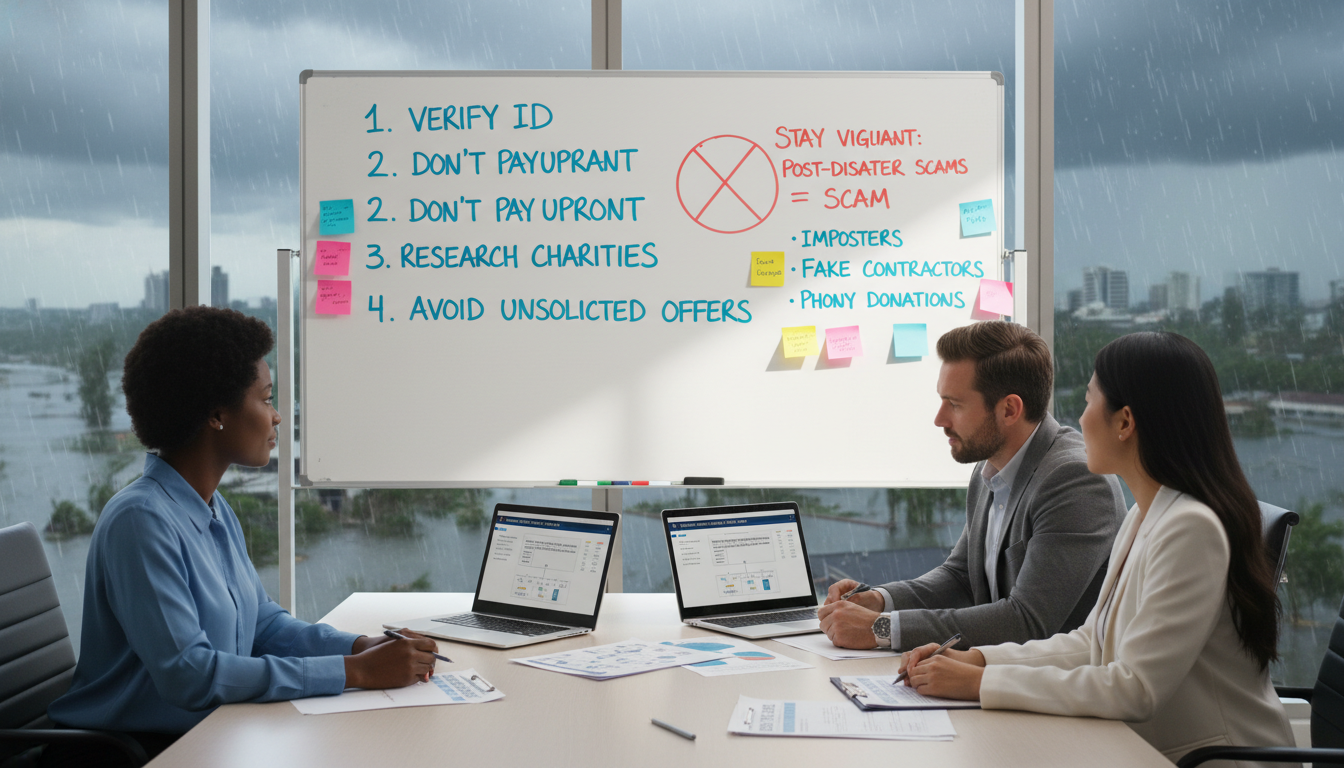
Natural disasters cause chaos and confusion in the United States. Scammers take advantage of people during these times. They target those who are stressed, overwhelmed, and need help.
Knowing how to spot scams can keep you and your family safe. Scammers use tricks to steal money and personal info from victims. Being aware of these tricks is key to staying safe.
This guide will show you the most common disaster scams. You’ll learn how to spot them and protect yourself. We’ll cover everything from fake contractors to scam relief organizations.
Your recovery is important. Always check people and organizations before giving them money or info. The steps in this guide are easy to follow and very effective.
Keep reading to learn how to stay safe during disaster recovery. This knowledge will help you make smart choices when you need them most.
Table of Contents
Understanding the Threat of Disaster Fraud
Natural disasters cause chaos and confusion. When hurricanes, floods, or earthquakes hit, people need help quickly. Scammers take advantage of this to steal money and personal info from those in need.
Recovering from a disaster is tough. People lose homes, businesses, and belongings. Insurance claims and government help take time. In this mess, fraudsters find their chance to scam.
Why Natural Disasters Attract Scammers
Scammers target disaster areas for good reasons. Victims are distracted and emotional. They are less skeptical when worried about survival.
Scammers also know about government funds and insurance payouts. These become targets for theft.
Common Types of Post-Disaster Scams
Several fraud schemes appear after disasters:
- Contractor scams – Unlicensed workers demand upfront payment and disappear
- Fake charity schemes – Fraudulent organizations collect donations that never reach victims
- Government impersonation – Scammers pose as FEMA or insurance adjusters
- Price gouging – Sellers charge extreme prices for basic supplies
- Identity theft – Criminals steal personal information from disaster applications
Knowing these scams helps you spot danger signs. Always check information before paying or sharing personal details.
Recognizing Fraudulent Contractors and Door-to-Door Scams
After a natural disaster, your home needs repairs quickly. Scammers prey on this urgency. They promise fast fixes and low prices, but they take your money first. Knowing how to spot fake contractors can save your wallet and home.
Real contractors act differently than scammers. They give detailed written estimates before starting. They answer your questions truthfully. Look for contractors with reliable references, liability insurance, workers’ compensation, and bonds. These signs show they are professional.
Don’t hire contractors without a physical address or who won’t show ID. Ask for their business license number and check it with your state. In North Carolina, contractors must meet strict rules to work legally. Search their company online for reviews and complaints. Always ask for their Certificate of Insurance before starting work.
Warning Signs of Contractor Fraud
- Demanding full or partial payment upfront
- Refusing to provide written estimates or contracts
- No verifiable business address or phone number
- Unwillingness to show identification or insurance papers
- Pressuring you to decide immediately
- Using high-pressure sales tactics
- No verifiable references from past clients
Trust your instincts. A good contractor wants you to feel sure about hiring them. Verifying their credentials is wise. Never rush to sign contracts or give money without thinking.
Avoiding Scams After Disasters: Essential Protection Strategies
Disasters can be very stressful. Scammers often try to take advantage of people during these times. It’s important to make smart choices to stay safe.
Never Make Decisions Under Pressure
After a disaster, you might want to fix things quickly. Scammers know this and try to rush you. Always take your time to think before making a decision.
Contractors and others may offer help after a disaster. They might push you to decide fast. Slow down and ask for written estimates. Check references and talk to family or friends before signing anything.
Watch out for tactics that try to rush you. Scammers might say prices will go up if you don’t act now. Real contractors give you time to make a choice.
| Red Flag Pressure Tactic | What It Means | Your Response |
|---|---|---|
| Limited time only offer | Price goes up soon | Ask for the offer in writing. Take time to compare prices |
| Material costs rising | Act now or pay more | Get quotes from multiple contractors. Verify costs independently |
| Move to front of line | Special treatment if you pay now | Walk away. Legitimate contractors follow fair schedules |
| Cash discount | Pay cash for a deal | Use tracked payment methods instead |
Safe Payment Methods for Disaster Recovery
Choosing how to pay is very important. It helps protect you if something goes wrong. Avoid wire transfers, gift cards, virtual currency, and cash because they offer little protection.
Pay by credit card if you can. This gives you strong protection. You can ask for a chargeback if the work is not done right. Credit cards have dispute resolution that other methods don’t.
If you can’t use a credit card, pay by check or get a written receipt. Checks and receipts create a paper trail. Keep all documents safe.
Wait to pay the final amount until you’re happy with the work. Never pay the full amount upfront. A common scam is taking your money and disappearing. Pay a small deposit if needed. Pay the rest only after you check the finished work.
- Acceptable payment methods: Credit card, check, debit card with chargeback protection
- Unacceptable payment methods: Wire transfer, gift card, cryptocurrency, cash
- Payment timing: Small deposit upfront, largest payment after work completion
- Always get: Written receipt, itemized invoice, proof of payment
Keep records of every payment and conversation. Take photos of the work before and after. These documents help protect you if a dispute arises.
Verifying FEMA Representatives and Government Officials
When disaster hits, scammers pretend to be from FEMA or other government agencies. It’s important to know how to spot real officials to avoid fraud. They carry proper ID and follow strict rules on how they contact people.
After filing a FEMA claim, keep your application number safe. Any FEMA rep will have it. If someone claims to be from FEMA without your number, don’t trust them. This simple check can stop most scams.
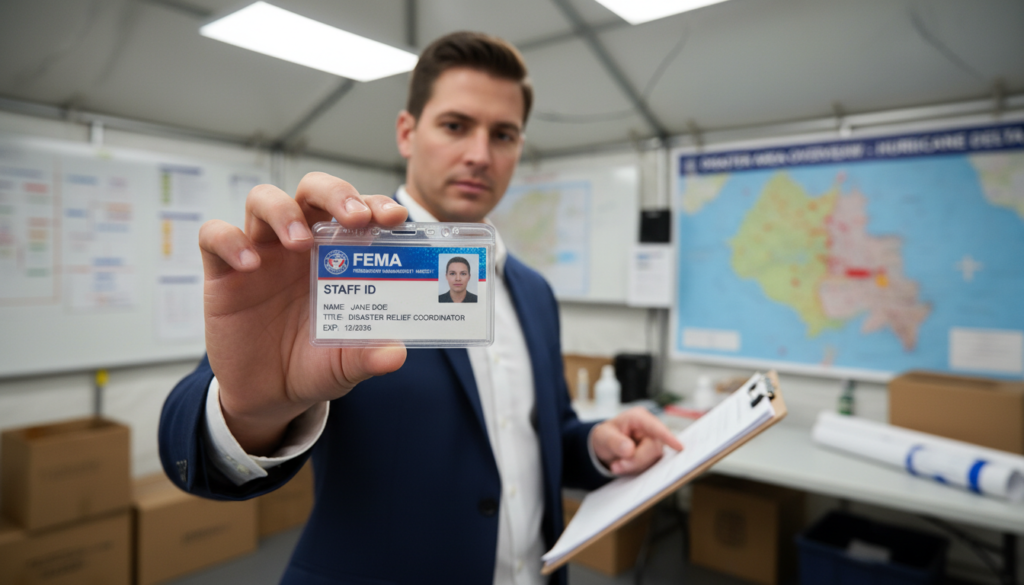
Physical ID is key. Don’t rely on logos on shirts or jackets. FEMA reps have a laminated photo ID badge. If a FEMA rep comes for a home inspection, ask for their ID first. They should welcome this question.
Understanding Contractor Claims and Payment Scams
Scammers say FEMA sent them or approved their work. This is not true. FEMA doesn’t endorse any contractors. If a contractor claims to be from FEMA, get their info and report them to the police.
Be wary of anyone asking for money for help. Federal and state workers don’t ask for money. The U.S. Small Business Administration and FEMA don’t charge for disaster help. Real help is always free.
Verification Steps and Resources
Always verify any contact yourself. Don’t use numbers or websites given by callers. Look up FEMA’s official number and call to confirm. This takes just minutes and stops scams.
- Ask for the person’s name and application number
- Request their laminated FEMA photo ID
- Never share bank account details over the phone
- Verify contact through official FEMA channels
- Check FEMA’s “Rumor Control” pages for accurate information
| Legitimate FEMA Contact | Fraudulent Contact |
|---|---|
| Carries laminated FEMA photo ID | Only shows shirt logos or informal badges |
| Has your application number | Cannot provide your application number |
| Never asks for upfront payment | Requests fees for assistance |
| FEMA endorses the interaction | Claims FEMA sent them without proof |
| Respects credential verification | Becomes defensive when questioned |
If you’re unsure, call the FEMA Helpline at 800-621-3362 (TTY 800-462-7585) from 7 a.m. to 11 p.m. ET. Reporting fraud helps protect your community and others. Being cautious is smart and not rude.
Protecting Your Personal Information and Identity
After a disaster, you might need to share personal info, like your Social Security number. Scammers see this as a chance to steal your identity. Even if you’re careful, protecting your identity, bank account, and credit record is wise. This action keeps you safe from criminals who target disaster victims.
Fortunately, there are strong protections in place. A federal law lets you freeze and unfreeze your credit for free at Equifax, TransUnion, and Experian. This makes it tough for identity thieves to open new accounts in your name.
Credit Freezing and Fraud Alerts
A credit freeze is like locking your financial doors. You can also set a fraud alert for one year, which you can renew. This alert requires lenders to verify your identity before giving out new credit.
If you’ve been a victim of identity theft, you can get an extended fraud alert for seven years. This gives you extra peace of mind.
What Information You Should Never Share
Here are key tips to protect yourself:
- Do not provide personal info over the telephone, including bank account information
- Avoid sharing personal information, such as social security numbers or bank account numbers, with anyone who contacts you first
- Never give credit card details unless you initiated the call
- Always verify caller identity by hanging up and calling official numbers directly
Remember: legitimate organizations won’t pressure you for sensitive details over the phone. If someone calls claiming to be from a relief organization or government agency, look up their official number. Call them to check. This simple step stops identity thieves.
How to Identify Legitimate Disaster Relief Organizations
When disaster hits, real help comes fast. Many volunteer groups help for free. In Florida, the Red Cross shelters those whose homes were lost. World Central Kitchen and Operation BBQ Relief feed survivors and volunteers.
It’s important to know who’s really helping. Groups like Team Rubicon offer free help without asking for money. They get funds from donors and grants.
Teams like Team Rubicon and Samaritan’s Purse help for free. They wear uniforms to show they’re real. They clear debris, fix roofs, and clean homes damaged by Hurricane Ian.
Recognizing Real Volunteers
Real volunteers have clear signs. Team Rubicon members wear grey shirts with a white stripe. Samaritan’s Purse workers are in orange. They also have official ID cards and websites to check.
Checking Organization Credentials
Not sure about a group? Check Charity Navigator. It shows if an organization is trustworthy and transparent.
- Visit the organization’s official website
- Call their main office using numbers from their site
- Ask for volunteer identification and credentials
- Check Charity Navigator for ratings and reviews
Red Flags to Watch For
Be wary if someone asks for money or insurance details. Real disaster relief groups don’t ask for these. If they do, don’t trust them and report them.
Red Flags and Warning Signs of Disaster Scams
After a natural disaster, scammers start to show up. Knowing how to spot them can protect you. They use tricks and pressure to make you act fast. Learning about these warning signs helps keep your money and personal info safe.
High-Pressure Tactics and Scarcity Claims
Be careful of contractors who go door-to-door. They might offer unsolicited deals or push you to decide quickly. Legit contractors wait for you to reach out.
Watch for urgent language like “you must decide today” or “this offer expires soon.” Scammers might say prices will go up if you don’t act fast. Be wary of anyone promising to put you first in line. Real contractors give you time to think and seek second opinions.
- Demands for immediate decisions without time to review
- Claims about rising material costs happening right now
- Promises to prioritize your job if you sign immediately
- Unsolicited visits from people you did not contact
- Refusal to put offers in writing for your review
Requests for Upfront Payment
Payment demands can tell you a lot about contractors. Don’t pay before work starts. Wait until the job is done and you’re happy before paying. Good contractors don’t ask for all the money upfront.
Never pay by wire transfer, gift card, virtual currency, or cash. These methods can’t be traced back if something goes wrong. Scammers like these because they’re hard to track.
Other warning signs include contractors without a physical address or refusing to show ID. Real businesses have offices and proper ID. Anyone claiming FEMA certification or endorsement is lying. FEMA doesn’t endorse individual contractors or services.
| Payment Red Flag | Why It’s Dangerous | What to Do Instead |
|---|---|---|
| Full payment upfront | You lose all leverage if work is poor quality | Pay in stages as work progresses |
| Wire transfer requests | Money cannot be recovered once sent | Use credit card or check |
| Cash payments only | No record of transaction exists | Get written receipt for all payments |
| Gift card or crypto payment | Impossible to dispute or reverse | Demand traditional banking methods |
| No written contract provided | No protection or recourse available | Always get contract in writing |
Visit the FTC resource about avoiding scams after weather for more detailed protection strategies. Trust your instincts. If something feels off, it probably is. It’s always best to walk away from suspicious deals.
Conclusion
Natural disasters are tough on families and communities. Scammers make it worse by targeting victims. Now, you know how to spot fake contractors and protect your info.
Always take your time and don’t rush. Legitimate helpers will give you space to think. They won’t push you to act fast.
If something doesn’t feel right, trust your gut. Ask someone you trust for advice before making a move. Safe payment methods and verifying credentials are key. Use Charity Navigator to check relief groups.
Keep FEMA’s helpline, 800-621-3362, handy and bookmark your state attorney general’s website. If you’ve been scammed, contact your state attorney general right away. Scams are often crimes, so you might also want to call local police.
Being cautious is your best defense during disaster recovery. Always double-check information and credentials. This way, you can rebuild safely and protect your loved ones.
FAQ
Why do scammers target people after natural disasters?
Scammers take advantage of the chaos after disasters. They know people are stressed and focused on recovery. This makes them more likely to fall for scams.
Scammers pretend to be contractors or charity workers. They try to get your financial information or payment.
What are the most common types of scams after a disaster?
Scams include fake contractor offers and FEMA impersonation. There are also fake charity requests and phishing emails. Other scams involve fake disaster assistance and counterfeit insurance adjusters.
How can I identify a fraudulent contractor after a disaster?
Real contractors give written estimates and have proper licenses. They don’t ask for full payment upfront. Be wary of contractors who seem too good to be true.
Always check a contractor’s credentials before hiring them.
What should I do if someone claiming to be from FEMA shows up at my door?
Real FEMA reps have official ID with their photo and agency seal. Don’t pay anything upfront. If unsure, call FEMA at 1-800-621-3362.
Never give personal info to unverified callers.
Why should I avoid making immediate decisions during disaster recovery?
Scammers use high-pressure tactics to trick you. They claim you must act fast. Take time to research and verify information.
Legitimate help won’t disappear if you take a few days to check things out.
What payment methods should I use for disaster recovery services?
Use credit cards or bank transfers for protection. Avoid cash, wire transfers, and cryptocurrency. Never give payment info to unknown contractors.
Legitimate businesses accept standard payment methods and provide detailed receipts.
How can I verify that a relief organization is legitimate?
Check if the charity is registered with the IRS and listed on Charity Navigator. Look for physical addresses and clear financial reports. Be cautious of charities that only accept cash or have no online presence.
What personal information should I never share with anyone claiming to offer disaster assistance?
Never share your Social Security number, bank details, or passwords. Legitimate agencies won’t ask for this info unsolicited. Identity theft is a big risk after disasters.
Should I freeze my credit after a disaster?
Yes, freezing your credit is a good idea. It prevents new accounts from being opened in your name. Contact the three major credit bureaus to freeze your credit. You can also place a fraud alert.
What red flags should I watch for in disaster relief communications?
Be wary of scarcity claims and unsolicited calls. Watch for requests for upfront payment or cash only. Legitimate agencies give you time to decide and provide written documentation.
How do I report a suspected disaster scam?
Report scams to the Federal Trade Commission (FTC) at ReportFraud.ftc.gov. Also, contact your state’s Attorney General and local law enforcement. Keep all communication records for investigators.
What should I look for to identify a legitimate government official?
Real officials have official ID and work from verifiable numbers and addresses. They won’t demand cash or pressure you. Verify their credentials by calling the agency directly.
Are there online resources to check if a charity is legitimate before donating?
Yes, Charity Navigator and GiveWell evaluate nonprofits. The Better Business Bureau’s Wise Giving Alliance also has a database. The IRS website allows you to search for tax-exempt organizations.
What documentation should contractors provide before starting work?
Contractors should give written estimates and proof of insurance. They should have a business license number and references. They should explain warranty coverage and project timeline.
Avoid contractors who don’t provide documentation or insist on starting work without a signed agreement.
How can I protect myself from price gouging scams after a disaster?
Research typical prices before getting quotes. Get multiple estimates to compare. Report suspected price gouging to your state’s Attorney General.
Ask contractors to justify their costs and request itemized invoices before starting work.
What should I do if I’ve already fallen victim to a disaster scam?
Contact your bank or credit card company to report fraudulent charges. File a police report and report the scam to the FTC. Place a fraud alert and consider a credit freeze.
Monitor your credit report for unauthorized accounts. Keep all evidence for investigators.
How do I know if an email about disaster assistance is legitimate?
Legitimate emails come from official government domains or recognized organizations. Check the sender’s email address carefully. Hover over links to see the actual URL before clicking.
Never click links in unsolicited emails. Instead, visit the official website directly. Real agencies won’t ask for sensitive info via email.
What information is safe to include in online disaster relief applications?
Only submit personal info through secure, encrypted websites. Legitimate applications use official government websites. Never paste sensitive info into chat or messaging services.
Legitimate applications clearly explain how your info will be used and protected. If unsure, contact the organization directly before submitting any info online.