Feeling safe in your rental home is important. You might worry about package theft, unwanted entry, and safety in your area. At the same time, you’re scared of losing your security deposit or breaking your lease.
But here’s the good news: you don’t need your landlord’s okay to feel secure. There are modern renter security solutions that don’t need permanent changes to your space. These options help you feel safe without breaking your lease or violating your landlord’s rights.
Legal experts say you can have apartment security without approval if you pick the right method. You can’t use permanent installations like cameras or systems that need to be hardwired without your landlord’s say-so. But, there are temporary devices like sensors, cameras, and smart locks that don’t need permission. They don’t harm your walls or doors and are easy to take with you when you move.
This article will show you how to protect your rental home the right way. First, we’ll cover your legal rights as a tenant. Then, we’ll explore practical security solutions that really work. By the end, you’ll know how to make your apartment safer without breaking your lease or risking your deposit.
Table of Contents
Understanding Your Rights as a Renter When Installing Security Devices
Before you buy security equipment for your apartment, learn the local rules. Rental laws vary by state, and your lease might have specific rules. Knowing these rules protects your safety and tenancy. It helps you make smart choices for your home.
Being informed is key when renting. Knowing your rights lets you talk with your landlord about approved security systems. Many renters don’t know their options or what rules apply. This section explains the legal landscape in simple terms.
State-Specific Laws on Tenant Modifications
Every state has its own rules for what renters can do to their apartments. Some states let renters install certain devices without asking. Others give landlords strict control over any changes. What’s legal in Ohio might not be legal in Indiana or Kentucky.
Recording laws change the most. Some states allow both video and audio recordings in private spaces. Others only allow video recordings. A few states restrict recording entirely without landlord permission. Always check your state and city rules before buying equipment.
- Research your state’s tenant modification laws
- Check local city and county regulations
- Contact your state’s tenant rights organization
- Review housing authority websites for current rules
Lease Agreement Clauses to Review Before Installation
Your lease agreement is a legal contract with your landlord. It often has clauses about modifications, alterations, and property damage. Read these sections carefully before installing any security devices. Some leases ban any changes to walls or doors. Others allow certain upgrades with written permission.
Look for these lease clauses:
- Modification restrictions and alteration policies
- Permission requirements for any property changes
- Rules about removing items when you move out
- Damage liability and repair responsibilities
- Security deposit deductions for unauthorized changes
Understanding these clauses helps avoid expensive mistakes. Installing equipment against lease terms can lead to fines or deductions from your security deposit. Talking with your landlord about approved security systems often leads to better solutions for everyone.
One-Party vs Two-Party Consent Requirements
Recording consent laws fall into two main categories. One-party consent states let you record when only you agree. This means you can install recording devices in your private spaces without landlord permission. Two-party consent states require everyone involved to agree before recording happens.
| Consent Type | What It Means | Your Rights as a Renter |
|---|---|---|
| One-Party Consent | Only you need to agree to record | More flexibility for personal security devices in your space |
| Two-Party Consent | Everyone in the conversation must agree | Landlord approval needed for recording devices |
Your privacy in your bedroom and bathroom is a fundamental right. Courts protect this right in most states. This means recording in private areas has stricter rules. Common areas like hallways and entryways have different privacy expectations.
Knowing whether you live in a one-party or two-party consent state shapes what tenant-friendly security upgrades you can choose. One-party states give renters more freedom to protect themselves without seeking landlord approval first. Two-party states require conversations with landlords about approved security systems before installation.
Apartment Security Without Approval: Non-Invasive Solutions That Work
Renters face a unique challenge when it comes to home safety. You want strong protection for your space without risking your security deposit or getting into disputes with your landlord. The good news is that modern technology has made effective apartment security easier than ever. Temporary security devices now offer robust protection while remaining completely removable, making them perfect for renting situations.
The key to apartment security without approval lies in choosing non-permanent home protection options. These solutions work by using wireless technology that requires no drilling, no wall damage, and no complicated installation. When you move out, you simply pack them up and take them with you to your next place.
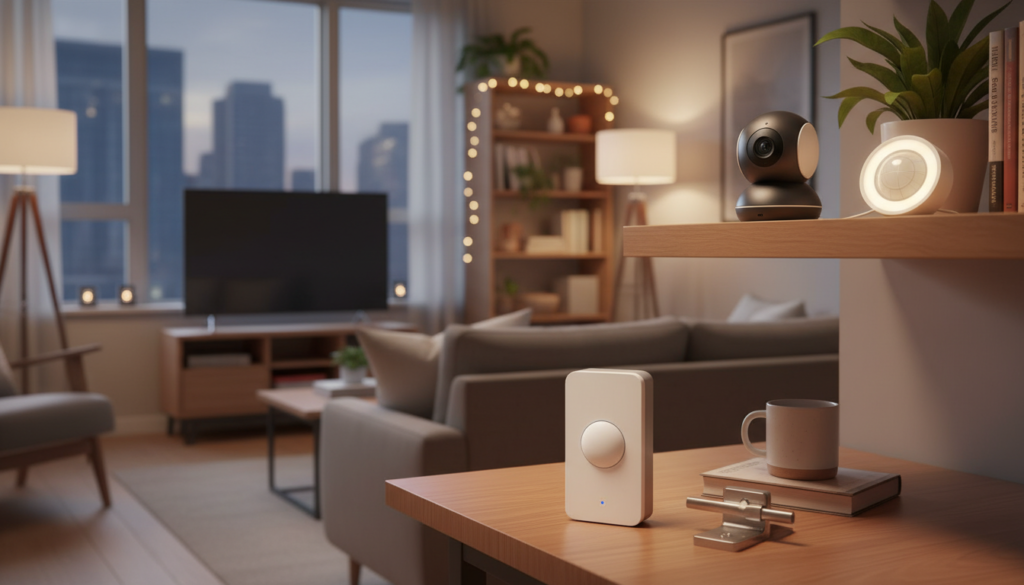
Modern temporary security devices have revolutionized renter safety. Unlike traditional hardwired systems, these tools give you flexibility and peace of mind. You can adjust them as needed, move them between rooms, or remove them entirely without leaving any trace. This approach benefits everyone involved.
- You avoid landlord conflicts and property damage
- Your security deposit stays protected
- You gain portable protection for future homes
- Your landlord avoids repair costs
Effective non-permanent home protection doesn’t mean settling for weak security. Today’s wireless options provide complete coverage for package theft concerns, unauthorized entry detection, and motion monitoring. The word “temporary” no longer equals “ineffective.” Real solutions exist that respect property boundaries while delivering genuine peace of mind.
Affordable wireless cameras, adhesive sensors, and battery-powered devices represent the modern renter’s advantage. These tools work silently in the background, protecting your space without requiring landlord approval or professional installation.
Portable and Wireless Security Options for Renters
Renting an apartment doesn’t mean you have to give up security. Wireless security systems offer flexibility and peace of mind without making permanent changes. These devices are easy to move when you relocate and don’t need drilling or landlord approval. Battery-powered options let you place cameras and sensors anywhere without wires or mess.
Wireless security for renters is simple. You can set it up yourself in minutes. Modern devices connect to your phone through Wi-Fi apps. This means you get alerts whenever motion is detected or doors open, all from your pocket.
Battery-Powered Indoor Cameras
Removable security cameras have changed how renters protect their homes. Devices like the Ring Stick Up Cam Pro connect wirelessly and run on rechargeable batteries. Just place them on shelves, nightstands, or facing your entrance. These cameras capture HD video with motion detection and send smartphone alerts instantly.
Indoor cameras work best near entry points and common living areas. They film your private space, so you usually don’t need landlord permission. No installation means no drilling holes or damaging walls. When you move, just unplug and take your security system with you.
Adhesive Door and Window Sensors
Adhesive door sensors are clever devices that stick to door frames and window edges. They detect when doors or windows open and send instant alerts to your phone. Best of all, they peel away cleanly without leaving residue or damage.
These sensors are very affordable and work as both deterrents and notification systems. You can place them on your apartment entrance, bedroom door, and windows. Many renters use adhesive door sensors from top apartment security because they require zero installation skills. Just clean the surface, peel the backing, and stick them down. They’re among the most landlord-friendly options available.
Temporary Smart Locks and Video Doorbells
No-drill apartment locks sit on top of existing deadbolts without any permanent modification. These innovative devices provide keyless entry without replacing your current hardware. Smart locks work with smartphone apps, letting you unlock doors remotely or grant access to guests.
Video doorbells add another layer of security by letting you see and speak with visitors before opening your door. These devices mount on existing peepholes or door frames. Features include HD video, two-way audio, motion detection, and visitor logs. When you need portable apartment alarms and emergency security, these smart locks and video doorbells deliver reliable protection.
| Device Type | Installation | Power Source | Key Features | Portability |
|---|---|---|---|---|
| Battery-Powered Cameras | Place and position | Rechargeable battery | HD video, motion detection, app alerts | Highly portable |
| Adhesive Door Sensors | Peel and stick | Replaceable battery | Open/close detection, instant alerts | Fully portable |
| Smart Locks | Mount on existing lock | Battery powered | Keyless entry, remote access, guest codes | Portable with reinstallation |
| Video Doorbells | Mount on door frame | Battery or wired | Two-way audio, visitor logs, motion alerts | Portable with reinstallation |
Setting up your renter-friendly security system takes just minutes. Most devices need Wi-Fi connectivity and smartphone apps. Battery life typically lasts weeks or months depending on usage. Keep spare batteries on hand for door sensors. Charge cameras weekly or monthly based on activity levels.
- Position cameras at entry doors and windows
- Place adhesive sensors on all accessible entry points
- Install smart locks on main entrance doors
- Mount video doorbells where visitors approach
- Test all devices monthly to ensure proper function
- Keep backup batteries and chargers accessible
These wireless solutions work together to create a complete security setup. You don’t need expensive professional installation or long-term contracts. Renter-friendly security gives you control and protection while respecting your lease agreement and your landlord’s property rights.
Privacy Considerations and Common Area Restrictions
Setting up renter security solutions means respecting your neighbors’ privacy. Knowing where you can and cannot place cameras is key. This helps you follow your lease and local laws. Shared spaces in apartment buildings need special care when setting up your security.
Common areas include hallways, lobbies, and shared yards. These spaces belong to everyone, not just you. Installing cameras here without permission breaks your lease and can lead to trouble. Your neighbors expect privacy in these areas, and recording them without consent is wrong.
But, you don’t have to monitor common areas. Focus your cameras on your own space instead. Place indoor cameras to see only your doorway from inside. Make sure they look inward, not outward into hallways. This way, you protect yourself without invading others’ privacy.
Smart Camera Positioning Strategies
Modern cameras come with useful features. They have privacy zones or masking to block out unwanted areas. Use these to avoid recording neighboring units or hallways by accident. For outdoor cameras, point them downward to focus on your door, not the parking lot.
- Direct cameras only at your personal rental space
- Use privacy masking features in camera apps
- Angle outdoor cameras downward toward your door
- Avoid pointing cameras at neighboring windows
- Check that doorbell cameras don’t capture shared pathways
Audio Recording and Legal Boundaries
Recording audio has stricter rules than video in many places. Some places require all parties to agree to being recorded. This means recording audio in common areas or near neighbors’ units can break wiretapping laws. For areas near shared spaces, choose video-only options. If your camera records audio, turn off this feature near common areas or neighboring units.
| Security Device Type | Best Location | Privacy Considerations | Common Area Placement |
|---|---|---|---|
| Indoor Security Cameras | Inside your unit pointing at entry door | Never capture bathrooms, bedrooms, or hallways | Not permitted without landlord approval |
| Video Doorbell Cameras | Mounted on your apartment door frame | Angle downward to avoid recording neighbors | Check lease before installation |
| Door and Window Sensors | On your unit’s doors and windows | No privacy concerns with motion sensors | Permitted on your own entry points |
| Smart Locks | Your front door only | Only monitors your personal entry | Your door is not a common area |
| Outdoor Cameras | Only your balcony or patio space | Never point toward neighbors’ windows or shared areas | Strictly prohibited in hallways or parking areas |
Respecting Neighbor Privacy Rights
Being a good neighbor helps your standing in your rental community. When neighbors feel respected, they’re less likely to complain. Avoid pointing outdoor cameras toward neighboring windows or properties. This shows you respect privacy and avoids conflicts.
Privacy-focused security solutions protect your safety and your good standing as a tenant. Balancing security with respect for others shows responsibility. This approach helps you avoid resistance when discussing your security measures.
Conclusion
You now know how to add security to your apartment without breaking any rules. First, understand your rights. Your lease and state laws guide what you can do. This knowledge helps you pick the best security solutions for your place.
Using non-invasive devices can really help protect you. Tools like battery cameras, adhesive sensors, and smart locks are easy to use. They don’t need drilling or wiring, and you usually don’t need your landlord’s okay. Start with a few devices to tackle your biggest safety concerns.
Modern tech makes it simple to keep an eye on your space. Whether it’s to stop package theft or see who’s at your door, there’s a solution. Learn more about security cameras to find what’s best for you.
It’s all about finding a balance. You want to feel safe, your neighbors need privacy, and your landlord wants their property safe. When everyone’s needs are met, it works out for everyone. Solutions that respect privacy build trust and keep your rental relationship strong.
Feeling secure doesn’t mean you’re breaking the rules. With the right approach, you can have both. This way, you can enjoy peace of mind knowing you’ve taken care of your safety responsibly.
FAQ
Can I install security cameras in my apartment without my landlord’s permission?
It depends on your state’s laws and your lease. Many renters use battery-powered cameras and removable sensors. These don’t need drilling or permanent installation. Always check your lease and local laws first.
States like Ohio and Indiana have different rules. Knowing your local laws is key. Many non-permanent solutions exist that don’t violate leases.
What are the best temporary security devices for apartments?
Good options include removable cameras, adhesive sensors, and no-drill locks. These don’t damage your space. Video doorbells are also great, as they hang on door peepholes.
These devices offer strong protection without causing damage. They’re easy to take with you when you move.
Will adhesive door sensors damage my apartment walls or door frames?
No, they’re safe for renters. These sensors stick to frames without nails or screws. They leave no marks when removed.
They’re a good choice because they’re easy to use and don’t harm your space. They also alert you to any unauthorized entry.
Are video doorbells legal for renters to install?
Most video doorbells are legal for renters. They usually hang on your door without drilling. But, check your lease and local laws first.
Some states require landlord approval for recording. Make sure your camera only captures your entry area.
What’s the difference between one-party and two-party consent for security cameras?
One-party consent means you can record in your own space without telling others. Two-party consent requires everyone’s agreement.
Knowing your state’s laws is important. This affects your options for renter security solutions.
Can I put cameras in common areas like hallways or the parking lot?
No, you can’t record common areas without permission. This is a lease violation. You can, though, place cameras inside your unit.
Position your camera to capture your doorway without recording others. This way, you protect your space while respecting others’ privacy.
Will my landlord find out if I install non-permanent security devices?
Not necessarily. Devices like battery cameras and adhesive sensors are often unnoticeable. But, if you’re worried, talk to your landlord.
Understanding your rights and lease is key. Many landlords appreciate tenants who take security precautions responsibly.
How much does it cost to set up renter security solutions?
You can get effective security affordably. Adhesive sensors cost -50, and cameras range from -300. No-drill locks and doorbells cost 0-250.
These devices require no installation costs. Start with a few devices and add more as needed. The cost is worth the peace of mind.
What should I look for in my lease agreement before installing security devices?
Look for clauses about modifications and property alterations. Some leases prohibit certain types of installations. Check if your lease allows removable devices.
Understanding these clauses helps avoid wasting money on illegal systems. If your lease is vague, you might be okay with non-invasive solutions.
How do I know if my neighborhood requires extra security measures?
Trust your instincts and research your area. If you’re worried about theft or unauthorized entry, consider security solutions. Talk to neighbors and check local crime reports.
Assess your building’s security. If you find vulnerabilities, investing in security is justified. Modern solutions are compatible with your lease.
What’s the best first security device for renters to install?
Start with a device that addresses your main concern. For package theft, a video doorbell is great. For unauthorized entry, adhesive sensors work well.
Begin with one device and understand how it works. Then, add more as needed. This approach is easier than installing a complex system at once.
Will my renters insurance cover losses if I don’t have security cameras?
It depends on your policy. Many policies don’t require security systems for coverage. But, cameras can help with claims.
Video evidence strengthens your claim. Some insurers offer discounts for security devices. So, you might save money on premiums.
Can I use outdoor cameras as a renter?
Outdoor cameras are trickier. They’re more visible and might be noticed by your landlord. Check your lease before installing.
Mounting a camera on your door frame might violate your lease. If you want outdoor security, talk to your landlord. Interior solutions are safer for renters.
How often should I check and test my apartment security system?
Test your system monthly to ensure it works. Check battery levels and app connections. Review recent footage.
Test your doorbell’s audio and motion detection. Regular checks prevent system failures when you need them most. They also help you optimize your system.
Should I tell my neighbors about my security cameras?
Yes, it’s wise to be open about your security setup. Mentioning your cameras can prevent complaints. It shows you respect your neighbors’ privacy.
If a neighbor is concerned, adjust your camera’s angle. Being transparent helps if landlord issues arise.
What is the difference between wired and wireless apartment security systems for renters?
Wired systems require professional installation and drilling. They’re not suitable for renters without landlord approval. Wireless systems are better for renters.
They use battery power and WiFi, requiring no installation. This makes them perfect for temporary living situations while providing good protection.