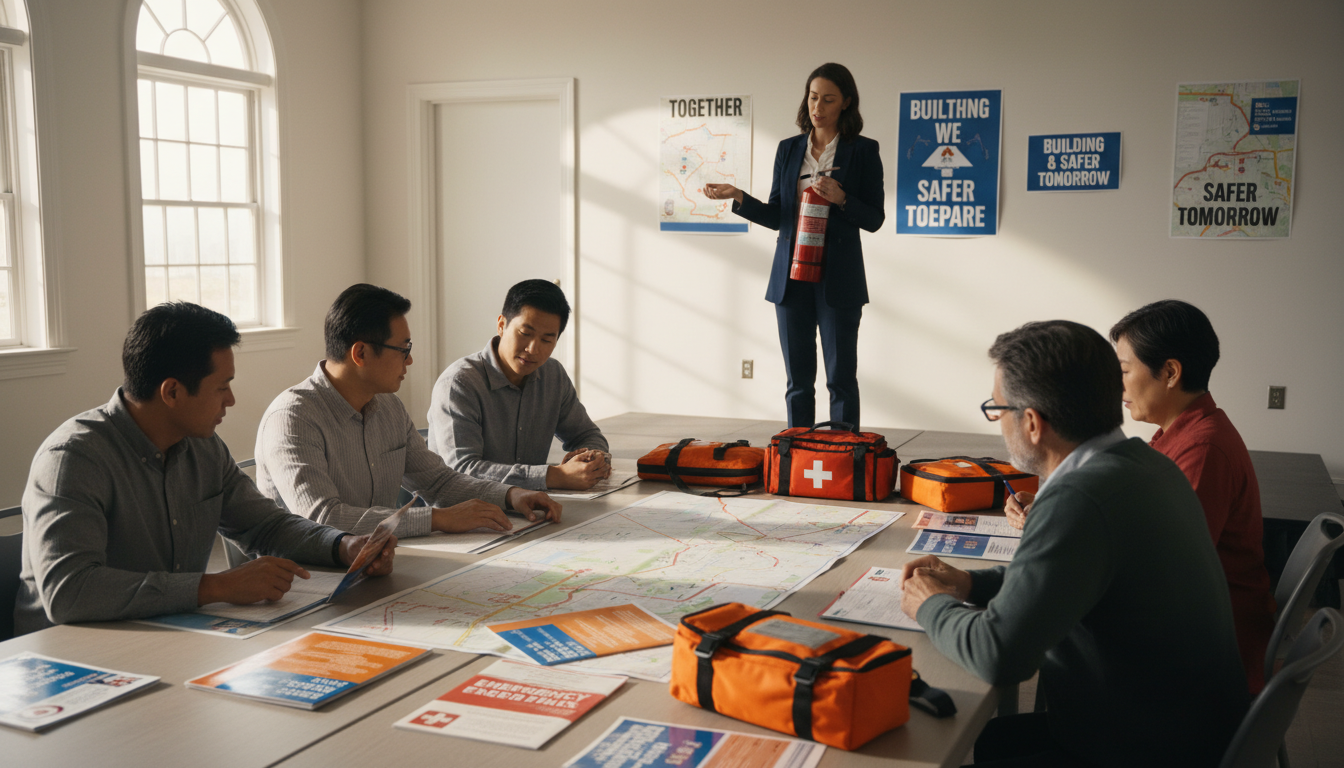
Disasters can happen anytime, without warning. They can separate families and break communication. It’s key to have a strong emergency preparedness plan for everyone’s safety.
Creating a family emergency plan is more than picking a meeting spot. It’s about being ready for any disaster. Habitat for Humanity says a plan helps keep family members together and safe if they get lost.
A good plan lists emergency contacts and a meeting spot. It also teaches how to stay in touch during disasters. These steps help families respond better in emergencies.
Key Takeaways
- Identify emergency contacts and program them into your phone.
- Choose a family meeting place both locally and out of town.
- Understand the importance of texting during emergencies.
- Prepare a family contact sheet with important information.
- Ensure all family members know how to use emergency services.
Table of Contents
The Importance of Family Emergency Preparedness
A good family emergency plan can save lives in a crisis. It’s key to family safety. It makes sure everyone knows what to do in an emergency.
Why Communication Plans Save Lives
A communication plan is essential. It lets family members find each other if they get lost. The American Red Cross says it can greatly reduce risks and save lives.
Common Scenarios When Families Get Separated
Disasters like natural disasters or fires can split up families. A meeting spot and a contact person help them find each other fast.
FEMA and Red Cross Recommendations
FEMA and the Red Cross suggest making a detailed family emergency plan. This includes who to call and where to meet. For tips on making a plan, check out emergency preparedness resources.
| Organization | Recommendation |
|---|---|
| FEMA | Create a family emergency plan, including contact information and meeting places. |
| Red Cross | Practice your emergency plan with all family members to ensure everyone knows what to do. |
Essential Components of an Effective Emergency Plan
An effective emergency plan is key for family safety. It gives a clear plan in crisis times. It has important parts to keep everyone safe and help find each other if needed.
Emergency Contact Information
Having a list of emergency contacts is vital. It should include numbers for family, neighbors, and a contact outside your area. Make sure everyone knows these numbers.
Designated Meeting Locations
Choosing meeting spots is important in emergencies. Pick places based on the emergency type and where family might go.
Neighborhood Meeting Place
Find a safe spot in your neighborhood for family to meet if lost. It could be a neighbor’s, a park, or another easy spot.
Out-of-Neighborhood Location
Choose a place outside your area for family to meet if it’s not safe to go home. It could be a friend’s or a pre-arranged spot.
Regional Evacuation Site
For big emergencies, pick a regional evacuation site. Local authorities usually choose these, like shelters.

Medical Information and Special Needs Documentation
For families with medical needs, include this info in your plan. List allergies, conditions, and special needs. Having this info ready can help a lot in emergencies.
How to Create a Family Emergency Communication Plan
Creating a family emergency communication plan is key to keeping everyone connected in emergencies. It’s a vital part of being ready for emergencies. It makes sure everyone knows how to stay in touch and meet up when disaster hits.
Step 1: Family Meeting and Information Collection
Start by having a family meeting. Talk about why a plan is important. Discuss possible emergencies and get everyone’s contact info.
Step 2: Documenting Your Plan
After gathering info, write down your plan. Include everyone’s contact details, meeting spots, and out-of-area contacts. Make sure everyone has a copy.
https://www.youtube.com/watch?v=VjoVZYj-Yy4
Step 3: Creating Emergency Contact Cards
Make emergency contact cards for each family member. These should have important contact info, medical conditions, and other key details. Give these cards to everyone to carry.
Step 4: Establishing Communication Protocols
It’s important to set clear communication rules. Choose how you’ll communicate in emergencies, like texting or social media. Make sure everyone knows these rules.
Step 5: Coordinating with Schools, Workplaces, and Caregivers
Lastly, share your plan with schools, workplaces, and caregivers. Tell them about your emergency communication plan. Make sure they know their part in it.
| Step | Description | Responsibility |
|---|---|---|
| 1 | Family Meeting and Information Collection | All Family Members |
| 2 | Documenting Your Plan | Primary Caregiver/Parent |
| 3 | Creating Emergency Contact Cards | Primary Caregiver/Parent |
| 4 | Establishing Communication Protocols | All Family Members |
| 5 | Coordinating with Schools, Workplaces, and Caregivers | Primary Caregiver/Parent |
By following these steps and having a communication strategy everyone understands, you can keep your family safe. You’ll be ready to respond well in emergencies.
Communication Methods During Different Types of Emergencies
Different emergencies need different ways to stay in touch. A good disaster response plan helps family members find each other fast.
Cell Phone and Landline Strategies
Cell phones are key in many emergencies. But, having a landline as a backup is smart. Make sure everyone knows important phone numbers by heart.
Text Messaging and Social Media Options
When calls fail, text messaging and social media can help. Texts work better than calls when networks are busy. Social media can also share safety updates.
Alternative Communication When Networks Fail
When usual ways to talk fail, new methods are needed. Think about getting devices that don’t need cell networks.
Two-Way Radios
Two-way radios are great for emergencies. They let family members talk without cell networks.
Satellite Phones
Satellite phones work when all else fails. They use satellites for calls.
Emergency Alert Systems
Many places have emergency alert systems for disasters. Know how to get these alerts.
| Communication Method | Advantages | Disadvantages |
|---|---|---|
| Cell Phones | Widely available, easy to use | Vulnerable to network congestion |
| Two-Way Radios | Reliable, doesn’t rely on cellular networks | Limited range, requires batteries |
| Satellite Phones | Works without cellular networks | Expensive, requires clear sky view |
Out-of-Area Contact Person Protocol
An out-of-area contact person is very helpful in emergencies. They can help everyone find each other.
Special Considerations for Vulnerable Family Members
In emergencies, a plan for vulnerable family members can save lives. This includes kids, the elderly, people with disabilities, and pets. A good emergency protocol is key to keep them safe.
Plans for Children and Teens
Children and teens need special care in emergency plans. Teach them what to do in emergencies. Make sure they know where to meet the family and have important phone numbers.
Elderly Family Members
Elderly family members might need extra help due to mobility or health issues. They should have a personal emergency kit with meds and contact info. For more help, check out Habitat for Humanity’s family preparedness plan.

Family Members with Disabilities
Those with disabilities need special emergency plans. This might include backup power for medical gear and a list of disability services. Make sure emergency shelters are accessible too.
Pet Emergency Planning
Pets are part of the family and need to be included in plans. Have pet carriers, food, water, and meds ready. Also, find pet-friendly places to stay ahead of time.
By adding these details to your emergency protocol, you can lower the risk of harm or getting lost. Being ready and having a plan is everything.
Conclusion
Creating a family emergency plan is key to keeping your loved ones safe. This article shows you how to make a plan that fits your family. It’s a step you must take.
First, list important contact numbers and where to meet. Also, write down medical info. These steps are vital for a good plan.
Next, set up how to talk to each other in emergencies. Make sure schools, work, and caregivers know your plan too. This keeps everyone connected.
Now, it’s time to make your plan real. Check and update it often. This way, you’ll know your family is ready for anything.
FAQ
What is the most important step in creating a family emergency communication plan?
The key step is to have a family meeting. Discuss and agree on the plan. Include emergency contacts, meeting spots, and how to communicate.
How often should we review and update our family emergency communication plan?
Update your plan yearly or when family changes happen. This includes moves or new family members.
What are some alternative communication methods that can be used when networks fail?
Use two-way radios, satellite phones, and out-of-area contacts. These help when networks are down.
How can we ensure that our children know what to do in case of an emergency?
Involve kids in the family meeting. Explain the plan in simple terms. Practice it with them and teach them emergency contacts and meeting spots.
What special considerations should we take into account for family members with disabilities?
Think about their needs, like wheelchair access and medical gear. Include these in your plan. Have a backup for power outages.
Can we rely solely on our cell phones for emergency communication?
No, cell phones aren’t always reliable in emergencies. Try landlines, two-way radios, or satellite phones too.
How can we coordinate with external entities, such as schools and workplaces, in our emergency plan?
Talk to schools and workplaces about their emergency plans. Make sure your plan matches theirs. Give them your emergency contact info and update them on changes.